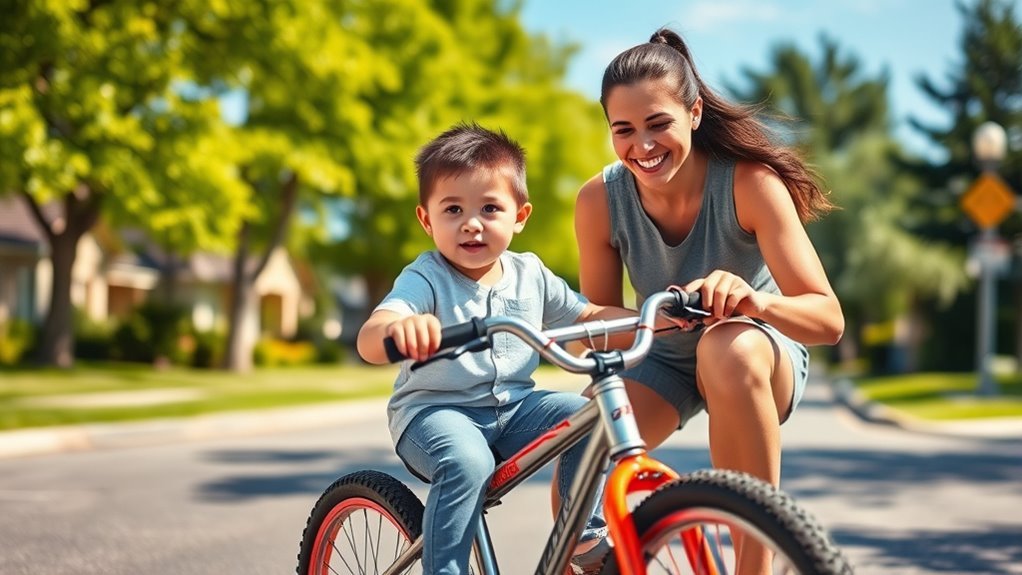
5 Steps to Ride a Bike Without Training Wheels
To help your child ride a bike without training wheels, first make sure they’re ready by checking their balance and willingness. It’s important to choose a bike that fits well and to have proper safety gear, like a snug helmet, to keep them safe.
Next, remove the training wheels and encourage your child to glide to practice balance. This helps them get used to the feeling of riding on two wheels.
Then, work on pedaling and braking gradually. Take it slow and keep things positive so they don’t get discouraged.
Finally, practice turning and riding longer distances to build their confidence. Follow these steps closely, and you’ll find ways to make each stage smoother and more fun for your child.
Key Takeaways
– Assess the child’s readiness by ensuring they can confidently keep their feet on the ground and show motivation to learn.
It’s important they feel ready and excited to give it a try.
– Choose a properly fitting bike with a low seat height and ensure the child wears a snug helmet and protective gear.
Safety first, right? A good fit makes all the difference.
– Remove training wheels and lower the seat so the child can push off and practice balancing by gliding with feet lifted.
This helps them get the hang of balance without worrying about pedaling just yet.
– Teach pedaling by starting with short bursts and introduce gradual braking on flat, open surfaces for safety.
Keep it simple and safe as they get used to the motions.
– Practice turning with wide, gentle curves and increase riding distance to build endurance and confidence gradually.
Before you know it, they’ll be cruising around like pros!
Is Your Child Ready to Ride Without Training Wheels?
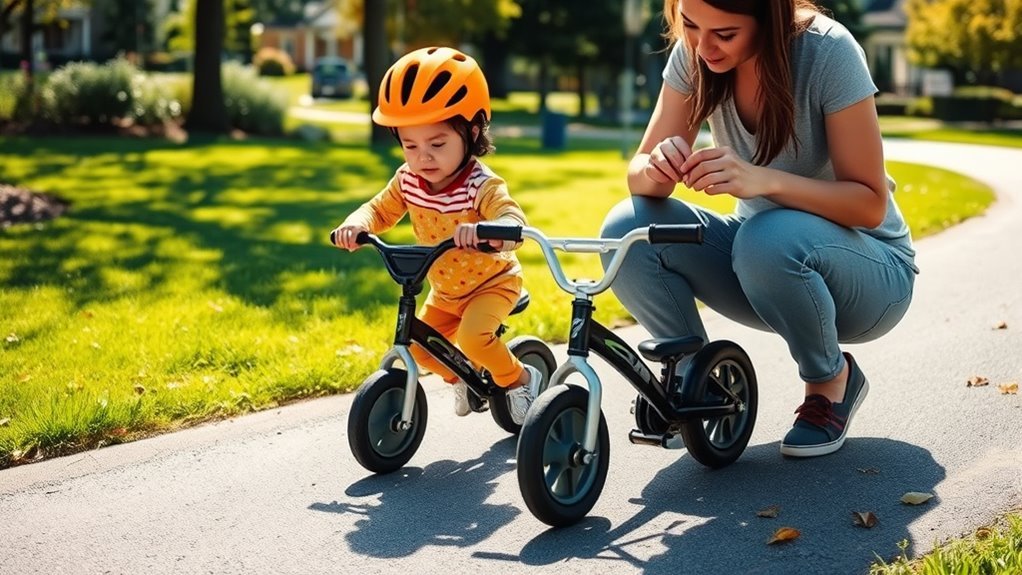
Before you take off the training wheels, make sure your child is physically ready and confident enough to ride solo. Children typically show readiness between ages 3 and 8, but it really depends on their strength, coordination, and willingness to learn.
If your kid can confidently keep their feet on the ground while balancing, that’s a great sign they’re ready for the transition. Using a balance bike before moving to pedal bikes can boost their confidence and help develop core strength essential for riding without training wheels.
Watch for motivation, too—kids eager to practice tend to progress faster. Remember, readiness isn’t just physical; your child should also understand basic safety rules and be able to follow instructions.
Choose the Right Bike and Safety Gear to Ride Without Training Wheels

Picking the right bike and safety gear is essential when your child starts riding without training wheels. Choose a bike with a low seat height so your child can place both feet flat on the ground. This helps them stay in control and feel more confident.
A proper fit is super important too. The bike should be small and lightweight, which makes it easier for your child to handle. Using a balance bike or a bike with training wheels at first can really help develop their coordination before taking the training wheels off completely.
Safety gear is just as important as the bike itself. Always make sure your child wears a helmet that fits well — it should sit snugly just above the eyebrows, with straps tight enough so only one finger fits underneath.
Don’t forget other protective gear like knee and elbow pads, gloves, and long sleeves. These help protect your child from scrapes and bruises when they’re practicing.
Keep these in mind:
- Select a bike with low seat height and a proper fit.
- Use a balance bike or training wheels for initial practice.
- Equip your child with a well-fitting helmet and full protective gear.
Remove Training Wheels and Learn to Balance by Gliding
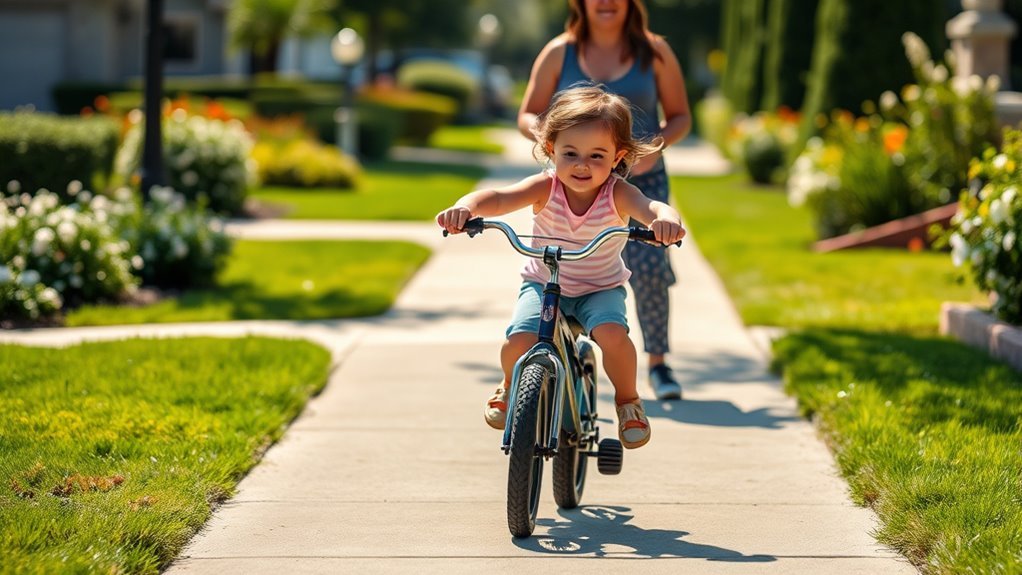
How do you help your child switch from training wheels to balancing on two wheels? First, remove the training wheels and lower the seat so your child’s feet can comfortably touch the ground. This adjustment helps them feel secure while learning to ride a bike without training wheels.
Next, encourage your child to practice pushing off with one foot and gliding forward, focusing on balance instead of pedaling. Using a gentle downhill slope or giving a slight push helps generate momentum for longer glides.
Encourage your child to glide using one foot, focusing on balance with gentle slopes or a slight push.
Remind your child to keep their eyes straight ahead and lift their feet during gliding to develop balance skills. This gliding practice is essential as it trains them to maintain balance before pedaling.
Repeat these sessions multiple times, gradually increasing the distance and confidence. With consistent practice, your child will build the vital balance needed to ride a bike without training wheels smoothly and safely.
Practice Pedaling and Braking Step-by-Step
Once your child has gained confidence balancing, introduce pedaling by having them place one foot at the 2 o’clock pedal position and push down firmly to start moving forward. Practice pedaling in short bursts to build strength and coordination, gradually increasing the distance they can cover.
Make sure the seat height allows your child to touch the ground with both feet, giving them better control and confidence. This really helps them feel more secure while they’re learning.
Next, focus on braking. Teach them to apply gradual pressure on coaster or hand brakes, emphasizing the importance of slowing down before they stop.
Choose flat, open surfaces for practice to minimize distractions and risk. It’s safer and easier for them to concentrate that way.
To help your child master pedaling and braking:
- Encourage repeated, short pedaling sessions to enhance coordination
- Practice braking smoothly to build confidence in stopping
- Use open surfaces to combine balance, pedaling, and braking safely
This step-by-step practice will strengthen their skills and prepare them for independent riding. You’ll see their confidence grow with each session!
Build Confidence With Turning and Riding Longer Distances
As your child masters basic pedaling and braking, introduce turning by encouraging them to navigate wide, gentle curves that build control and confidence. This gradual approach helps improve their steering skills while maintaining balance.
Set up simple courses with cones or markers to make practicing turning fun and engaging. As they get comfortable, increase riding distances on flat, open surfaces to develop endurance and enhance their confidence over longer distances.
Create fun courses with cones and gradually extend rides to build endurance and confidence.
Remind your child to maintain proper body positioning and look ahead, which boosts balance and maneuverability during rides. Celebrate each small success, whether it’s a smooth turn or a longer ride, to motivate continuous practice and skill improvement.
With consistent practice, your child will gain better control, sharpen their steering, and enjoy riding longer distances with confidence. This step not only builds their physical skills but also encourages independence and excitement for biking adventures ahead.
Frequently Asked Questions
At What Age Should a Child Be Able to Ride a Bike With No Training Wheels?
You should expect a child to ride a bike without training wheels around 5 to 7 years old.
However, some kids might be ready earlier if they’ve developed good balance and coordination skills. It really depends on the child.
What Is the 75% Rule in Cycling?
The 75% rule means you should pedal at about 75% of your maximum effort to maintain endurance and avoid fatigue. It helps you pace yourself, especially on long rides or climbs, for consistent performance.
Think of it like keeping a steady, manageable pace so you don’t burn out too quickly. It’s all about riding smart and lasting longer on the bike.
What to Use Instead of Training Wheels?
You should use a balance bike or a small, lightweight two-wheeler with a low seat instead of training wheels. This helps you focus on balance and steering,
making learning to ride faster and more confident.
It’s way easier to get the hang of riding when you’re not worrying about those extra wheels. Plus, you’ll feel more natural and steady on two wheels in no time!
How Long Does It Take to Learn How to Ride a Bike Without Training Wheels?
You’ll learn to balance, pedal, and steer confidently within a few hours to a few days.
With regular practice and motivation, you’ll be riding independently in one to three sessions. Or it might take up to a week if you need a bit more time.
Conclusion
Learning to ride without training wheels might seem scary at first, but remember, every expert was once a beginner wobbling on two wheels. You’ll move from shaky starts to smooth rides, trading uncertainty for confidence.
Each small fall brings you closer to freedom on your bike. So, embrace the challenge—you’re not just losing training wheels; you’re gaining independence, balance, and the thrill of the open road.
Keep pedaling, and enjoy the ride! Learning to ride a bike without training wheels is all about persistence and practice. As you follow these 5 steps to ride a bike without training wheels, you’ll build the skills and confidence needed to enjoy cycling safely and independently. The joy of riding freely is worth every effort, so keep at it and soon, you’ll be cruising with ease and excitement.