
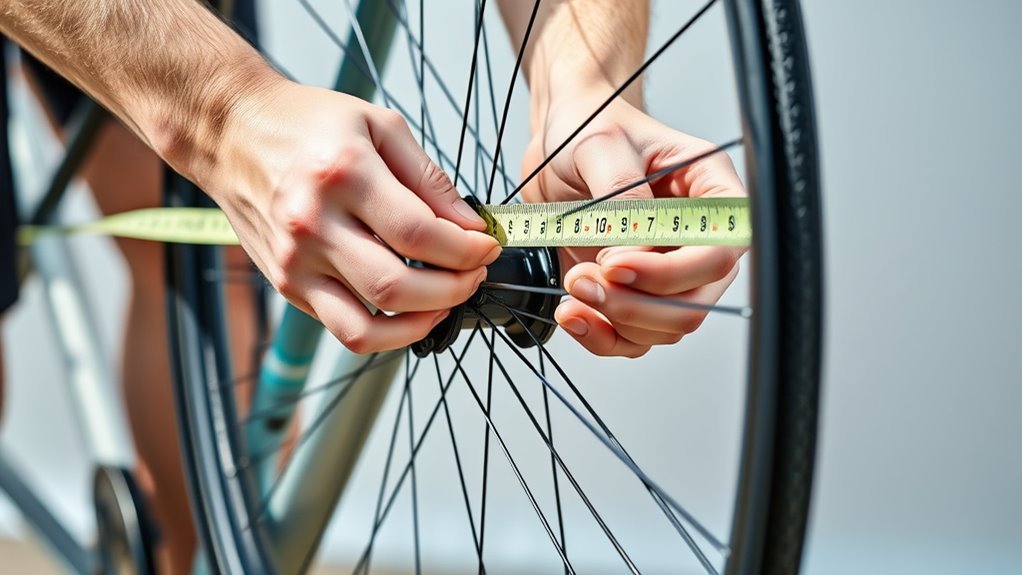
How to Measure Bike Wheel Size in 5 Easy Steps
To measure your bike wheel size, start by removing the tire for the most accurate rim diameter. This step helps you avoid any inaccuracies that the tire thickness might cause.
Next, measure straight across the rim’s bead seats. If needed, convert your measurement to millimeters for consistency. This gives you the exact rim diameter, which is crucial for selecting the right tire or replacement parts.
After that, wrap a wire or tape snugly around the rim to find the circumference. Use that number to calculate the diameter by dividing the circumference by pi (3.142).
Keep these steps in mind, and you’ll easily get precise wheel measurements.
Plus, there’s more detail to help you make perfect sense of it all, making your bike maintenance or upgrades smoother and more accurate.
Remove or Keep the Tire Mounted
Although you can measure your bike wheel size with the tire still mounted, removing the tire gives you a more accurate reading of the rim diameter and width.
Measuring your bike wheel with the tire off ensures a more precise rim diameter and width reading.
If you keep the mounted tire, check the sidewall for tire markings like ETRTO or inches, which can guide your rim measurement. However, for precise sizing, it’s best to deflate and perform tire removal before measuring.
This prevents the tire from interfering with your measurement tools and ensures you get exact rim diameter and tire width.
After measuring, reinstall the tire carefully, making sure of proper seating and inflation to the recommended pressure.
Accurate sizing depends on these steps, so you’ll want to take the time for tire removal when precision matters.
Measure the Diameter Across the Rim
Once you’ve removed the tire to get a clear view of the rim, you can measure the diameter accurately. Use a tape measure to find the rim diameter by measuring straight across from one bead seat to the opposite bead seat. Make sure the tape is taut and positioned at the widest point for measurement accuracy.
Take several bead seat measurements around the rim, then average them to account for any irregularities in wheel dimensions. The rim diameter is usually about 10 millimeters larger than the bead seat diameter, which aligns with standard tire size specifications.
Measuring in millimeters helps guarantee precision when comparing wheel size, rim width, and circumference. This is vital for choosing the right tire size and maintaining proper bike performance. So, take your time and get those measurements right!
Convert and Record Your Measurement
To make certain your bike wheel measurements are accurate and useful, convert any inch measurements to millimeters by multiplying by 25.4. This ensures consistency since wheel size is typically expressed in millimeters.
After measuring the diameter across the rim bead seats, double it for total diameter and convert if needed. Next, record your measurement clearly, noting whether it’s in millimeters or inches. Accurate recording helps avoid confusion later.
Compare your measurement with standard sizes like 622mm for 700c or 559mm for 26-inch wheels to identify the correct category. Keep a written record of your diameter, width, bike model, and date to track changes or replacements.
Proper conversion and recording improve accuracy and make future maintenance easier. It’s a simple step that saves you time and hassle down the road.
Measure the Circumference With Wire or Tape
When you wrap a flexible measuring tape or thin wire around the bike rim’s bead seat, make sure it fits snugly against the outer edge to get an accurate circumference measurement. Carefully follow the rim’s contour at the bead seat to avoid gaps or overlaps.
Once the tape or wire meets the starting point, mark it precisely where it overlaps. Then, remove the wire or tape and use a ruler or caliper to measure the length from the start to the mark in millimeters.
This measurement is the circumference of your rim, which helps determine your wheel’s size. For the most accurate result, repeat the process several times and average your measurements.
That way, you’ll confidently know your rim’s exact circumference for proper sizing.
Calculate Diameter From Circumference
Two simple steps help you calculate the diameter of your bike wheel from its circumference. First, accurately measure the circumference by wrapping a flexible tape measure around the widest part of your bike wheel. Make sure the tape measure is snug but not tight, and record the circumference measurement in your preferred units—either millimeters or inches.
Next, perform the calculation using the formula: Diameter = Circumference ÷ pi (approximately 3.142). Before dividing, verify both your circumference and desired diameter units match. This straightforward formula lets you convert your circumference measurement into the wheel diameter quickly, giving you the exact wheel size.
Conclusion
Now that you’ve learned these simple steps to measure your bike wheel size, you might wonder if tire size really matters that much. The truth is, a precise measurement guarantees better performance and safety, especially if you’re upgrading or replacing parts.
By taking the time to measure correctly, you’re not just guessing—you’re making informed choices that improve your ride. Accurate bike wheel size measurements help ensure your tires fit perfectly, which can boost your bike’s handling and comfort.
So, get measuring and enjoy a smoother, more reliable cycling experience! Knowing your exact bike wheel size is key to maintaining your bike and getting the most out of every ride.