How Does a Hardtail Bike Work?
A hardtail bike works by combining a front suspension fork that soaks up shocks from rough terrain with a rigid rear frame that directly transfers your pedaling power to the wheels.
This design makes hardtail mountain bikes great for tackling technical trails while keeping things efficient. You get the benefit of front suspension to smooth out bumps, but without the extra weight and complexity of rear suspension.
This setup improves your control and comfort on rough paths while maximizing pedaling efficiency. Plus, having fewer moving parts means maintenance is simpler and less frequent.
With a hardtail, you get responsive handling and less upkeep hassle. Pretty cool, right? Keep exploring to discover how these features boost your ride.
Key Takeaways
- A hardtail bike features a front suspension fork that absorbs shocks and keeps the tire in contact with the ground for better control on rough terrain. This setup helps you handle bumps and obstacles more smoothly.
- The suspension fork is made up of parts like stanchions, crown, steerer tube, and a damping system. Together, they work to soften impacts and improve how the bike handles.
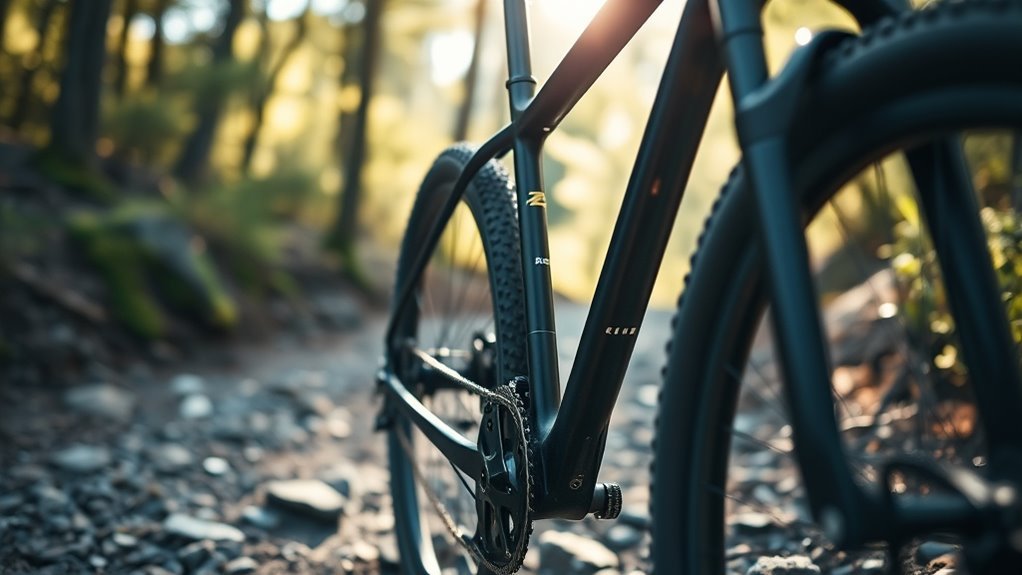
- Since there’s no rear suspension, the rigid frame transfers your pedaling power straight to the wheels. This makes the bike more efficient and responsive when you’re riding.
- The front suspension boosts comfort and control, especially on tricky trails. It basically makes up for the fact that there’s no shock absorption at the back.
- Hardtail bikes are easier to maintain because they have fewer moving parts. That means repairs and upkeep are simpler and quicker to handle.
What Is a Hardtail Bike and How Its Front Suspension Works
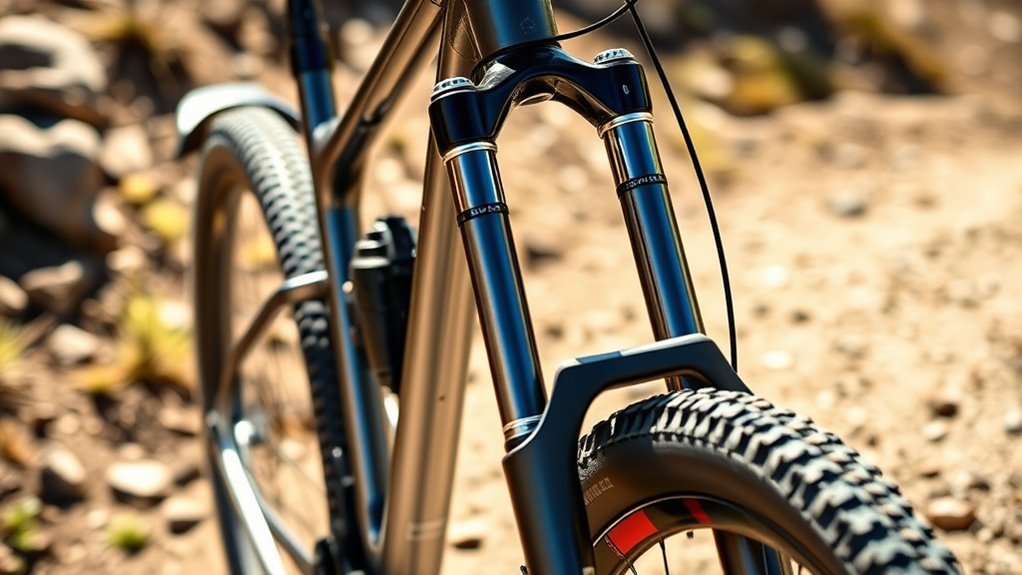
Although a hardtail bike lacks rear suspension, it features a front suspension fork that absorbs shocks from rough terrain, giving you better control and comfort while riding. This setup lets you tackle trail riding with confidence, as the front suspension smooths out impacts and maintains tire contact with the ground.
A hardtail’s front suspension boosts control and comfort by absorbing shocks and keeping tires grounded.
The suspension fork is made up of stanchions, a crown, a steerer tube, and a damping system, all working together to manage shock absorption efficiently. When you hit bumps or rocks, the fork compresses, reducing the jarring effect on your arms and improving steering precision.
This really sharpens your ability to navigate technical sections in mountain biking, allowing you to feel the trail better and respond faster. Since the rear frame is rigid, the front suspension plays a vital role in handling rough terrain.
It makes your ride more comfortable and controlled without sacrificing responsiveness or feedback. So, even though the back end is stiff, the front suspension keeps things smooth and manageable.
How Hardtails Improve Pedaling Efficiency and Make Maintenance Easy
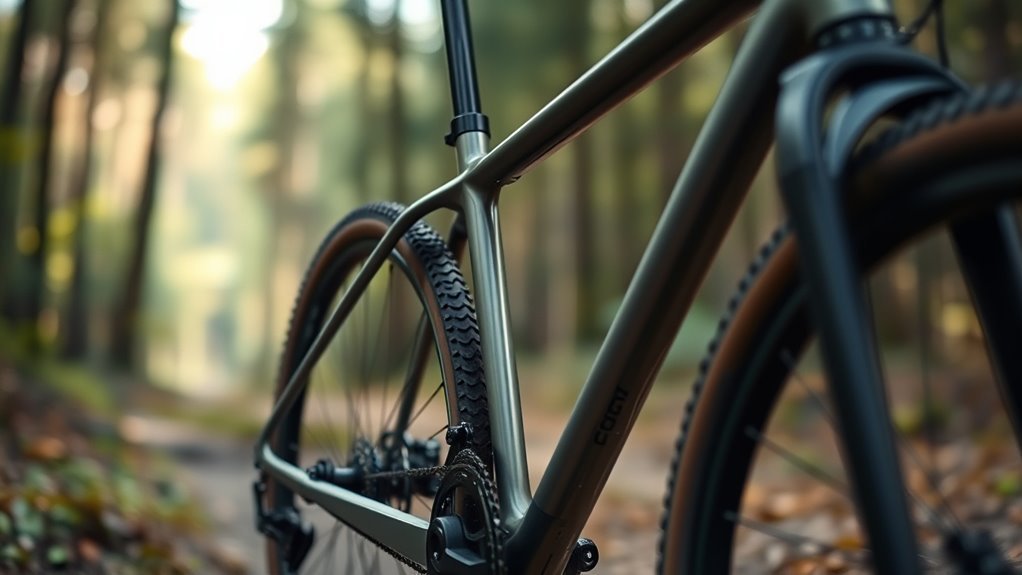
Because hardtail bikes have a rigid rear frame, they transfer your pedaling power directly to the wheels, making each pedal stroke more efficient. Without rear suspension, there’s less energy loss, so your energy transfer is maximized. This improves pedaling efficiency and responsiveness, especially on climbs and smooth trails.
This design means your drivetrain delivers power more effectively, letting you ride with less wasted effort.
Hardtails also simplify maintenance. With no rear suspension components like shock pivots or linkage bearings, you face fewer parts to service.
This low-maintenance setup means you spend less time on bike upkeep and more time riding. Plus, the straightforward design makes repairs and adjustments easier, which is great if you like handling your own maintenance.
Frequently Asked Questions
What Is the Point of a Hardtail Bike?
The point of a hardtail bike is to give you efficient power transfer, lighter weight, and better control on climbs and smooth trails.
You’ll enjoy simpler maintenance while sharpening your handling skills on varied terrain. It’s a great choice if you like keeping things straightforward and focused.
Do Pros Use Hardtails?
Yes, pros use hardtails, especially in cross-country races. You’ll find them choosing hardtails for their lightweight feel, responsive handling, and efficiency.
These features help you pedal faster and improve your technical skills during training or competition. It’s all about getting the most out of every ride.
How Uncomfortable Is a Hardtail?
You’ll find hardtails can feel uncomfortable on rough terrain since they don’t absorb shocks like full-suspension bikes. But with wider tires and good setup, you can reduce discomfort and still enjoy efficient, responsive rides.
It’s all about finding the right balance for you. A few tweaks can make a big difference in how your ride feels. So, don’t worry too much about the bumps!
Are Hardtails Good for Beginners?
About 70% of new mountain bikers choose hardtails because they’re easier to handle. You’ll love their lightweight frame and reliable design, making your learning smoother and your rides more enjoyable without constant mechanical worries.
Honestly, they’re a great way to get started. You’ll spend less time fixing things and more time riding, which is exactly what you want when you’re just beginning.
Conclusion
Riding a hardtail bike feels like gripping the trail’s heartbeat—its front suspension soaks up bumps while your pedaling power flows straight to the wheels. You’ll glide efficiently, feeling every twist and turn without the fuss of complicated maintenance.
Like a trusty steed, it’s built to respond swiftly and keep you moving forward. When you choose a hardtail, you’re choosing simplicity, speed, and a ride that’s as honest as the path ahead.
Hardtail bikes work by combining a front suspension fork with a solid rear frame, giving you the perfect balance of comfort and control. This design makes them lighter and easier to maintain than full-suspension bikes, which is why many riders love the straightforward feel.
In short, a hardtail bike delivers efficient power transfer and reliable handling, making it ideal for riders who want a fast, responsive ride without extra complexity. Whether you’re hitting rugged trails or cruising city streets, the hardtail’s simplicity and speed make it a smart choice for every adventure.