How Long Do Bike Tires Last and When to Replace Them
You can expect your bike tires to last between 1,500 and 4,000 miles, depending on how and where you ride. Factors like rough terrain, aggressive riding, and poor maintenance can wear them out faster.
It’s important to replace your tires if you notice tread wear, sidewall cracks, bulges, or if they’re over 10 years old. Keeping an eye on these signs helps you avoid unexpected flats or accidents.
Proper tire care not only keeps you safe but also ensures your bike performs at its best. Taking a little time to maintain your tires can save you money and improve your riding experience.
There’s actually more to know about keeping your tires in top shape, so don’t hesitate to learn about the best practices for tire maintenance and replacement.
Key Takeaways
- Bike tires typically last between 1,500 to 4,000 miles depending on terrain and riding style. So, how long they last really depends on where and how you ride.
- Replace tires showing visible tread wear, sidewall cracks, bulges, or embedded debris. These signs mean it’s time for a new set.
- Proper tire inflation and regular maintenance extend tire lifespan and performance. Keeping an eye on your tires can make a big difference.
- Tires degrade naturally over 3-5 years, requiring replacement even if mileage is low. Time affects them just as much as miles do.
- Replace tires older than 10 years to prevent safety hazards and maintain grip. Even if they look fine, old tires can be risky.
How Long Do Bike Tires Last? Key Factors Explained
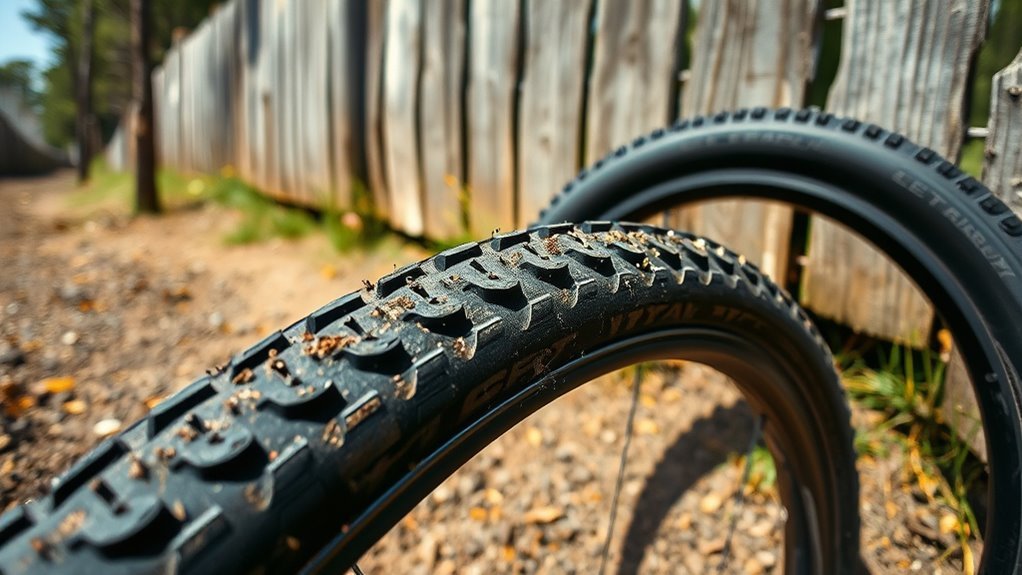
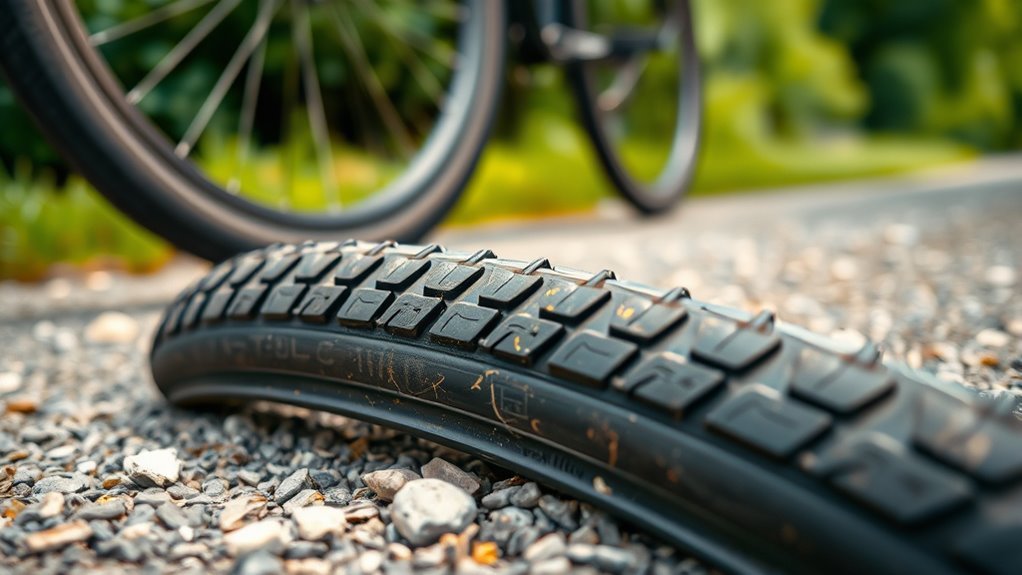
Although bike tires can last anywhere from 1,500 to 4,000 miles, how long they actually hold up depends on several key factors. Your tire lifespan varies greatly based on riding conditions—rough terrain and aggressive riding cause faster tire wear, while smooth roads help preserve tread longevity.
Bike tire lifespan ranges from 1,500 to 4,000 miles, influenced by terrain and riding style.
You should regularly perform tire inspections to catch visible signs of wear like bald tread, sidewall cracks, or cuts. These signs usually mean it’s time for a tire replacement.
Don’t overlook tire degradation due to natural rubber aging. Even if tread wear looks minimal, tires generally need replacing every 3 to 5 years.
Proper bike maintenance, including keeping your tires correctly inflated and checking for damage, can prolong tire longevity considerably. By understanding these factors and staying attentive to your tires, you’ll maximize their lifespan and ensure safer rides without unexpected failures.
How Can You Tell When to Replace Your Bike Tires?
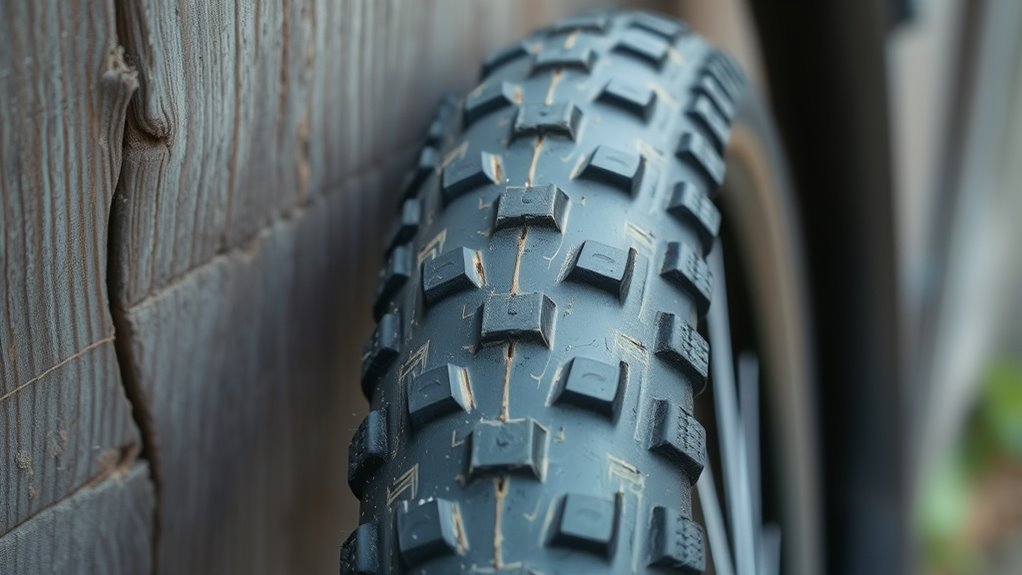
When your bike tires show visible signs of wear like smooth tread or bald spots, it’s time to replace them. Visible tread wear is one of the clearest replacement signs, as it reduces grip and safety.
Check the sidewalls for cracks or splits. These signal rubber hardening and aging tires that may fail unexpectedly.
Bulges or deformities indicate impact damage or structural weakness, making riding unsafe. Also, examine your tires for embedded debris, cuts, or gashes that can compromise tire integrity.
Even if the tread looks fine, tires older than 10 years should be replaced due to rubber hardening and general degradation.
By regularly inspecting these factors—tire wear, cracks, bulges, and embedded debris—you can catch early warning signs and swap out your tires before they cause problems.
Staying alert to these replacement signs ensures your bike remains safe and performs well every ride.
Frequently Asked Questions
Are 7 Year Old Tires Still Good?
Seven-year-old tires can still be good if they show no cracks or damage, but you should inspect them carefully. Even if they look fine, replacing them soon is safer because rubber degrades over time.
It’s kind of like how food might look okay but isn’t fresh anymore. So, it’s better to be cautious when it comes to your tires. Keeping them in good shape helps keep you safe on the road.
How Many Years Do Bike Tires Typically Last?
Think of your bike tires like a ticking clock—they typically last 3 to 5 years.
You’ll want to replace them before they crack or fail, keeping your rides smooth and safe every time you hit the road.
What Is the 105% Rule in Cycling?
The 105% rule means you replace your bike tires once the tread wears down to 105% of the original depth. This helps you avoid flats and maintain traction before the tires get dangerously worn.
It’s a simple way to keep your ride safe and smooth. Staying ahead of tire wear means fewer surprises on the road or trail.
Do Bike Tires Go Bad From Sitting?
Yes, bike tires do go bad from sitting. You’ll notice cracks and dry rot as rubber ages, especially if stored in sunlight or humidity.
Conclusion
Knowing when to nix your tires not only nurtures your nimble navigation but also negates nasty nuisances. Keep keenly checking for cracks, cuts, and constant wear to stay safe and speedy.
Tire troubles tend to take tolls, so timely swaps save stress and sustain smooth spins. Remember, regular reviews reinforce reliability, and replacing worn rubber revitalizes your ride.
Staying sharp with your bike tires is key to a safe and enjoyable cycling experience. Proper tire care helps prevent flats and improves traction, keeping your ride smooth and efficient. So, always keep an eye on tire condition and don’t hesitate to replace them when needed. Your bike tires don’t just last forever—knowing when to replace them ensures you stay safe and maintain peak performance every time you hit the road or trail.