Does Riding a Bike Work These 5 Muscles?
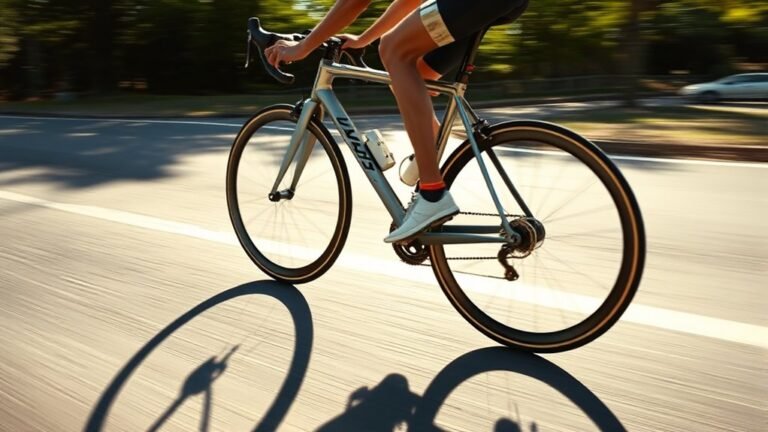
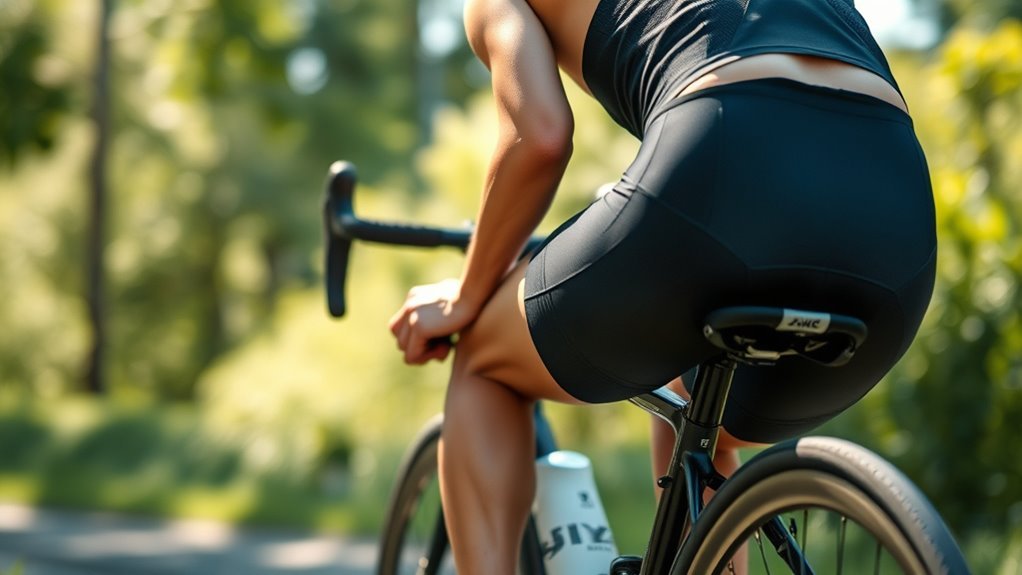
When you ride a bike, you actively engage your quadriceps, glutes, hamstrings, calves, and core muscles. These five key muscle groups work together to power your pedal stroke and keep you balanced.
Your legs do most of the work—quads and glutes push down, while hamstrings help pull up.
Your calves play an important role too, stabilizing your ankles for smooth movement.
At the same time, your core muscles keep your pelvis steady, which helps transfer force efficiently.
Even your upper body gets involved to maintain balance and control on the bike.
Keep exploring to discover exactly how these muscles work in harmony and how you can train them for better cycling performance. It’s pretty cool how riding a bike is such a full-body workout!
Key Takeaways
- Cycling primarily works the quadriceps, glutes, hamstrings, calves, and core muscles throughout the pedal stroke. These muscles all play a part in keeping you moving efficiently on the bike.
- The quadriceps and glutes power the downstroke, which is where most of your cycling force and speed come from. They’re basically your main engines during each pedal push.
- Hamstrings and hip flexors kick in during the upward pedal phase. This helps keep your pedaling smooth and fluid, so you don’t lose momentum.
- Core muscles stabilize your pelvis and spine. This not only improves power transfer but also helps you maintain good posture during your rides.
- Calf muscles support ankle stability and add some extra force, especially when you’re pedaling fast or pushing hard against resistance. They might be small but they’re definitely important!
The 5 Key Muscles Cycling Works Most
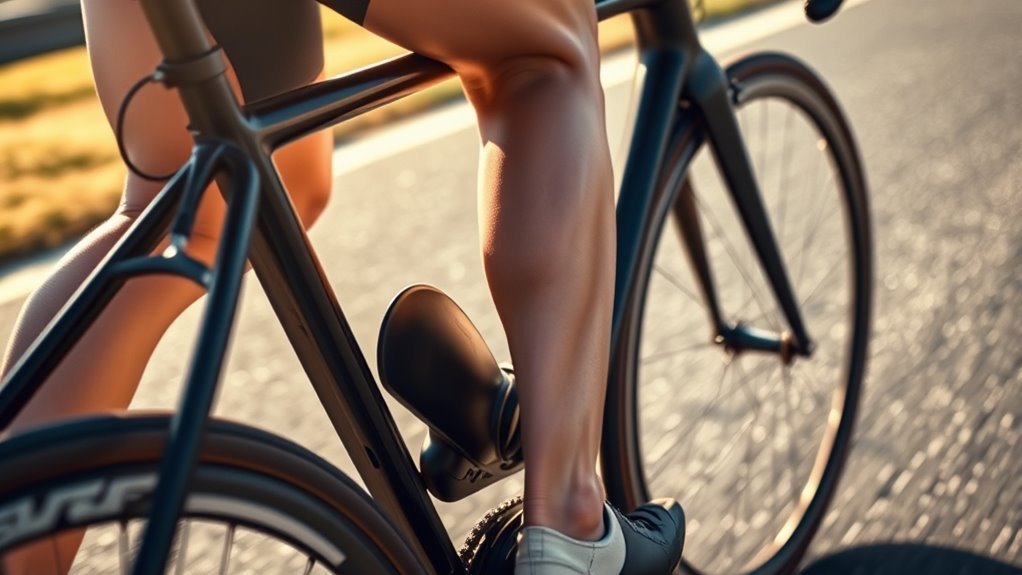
While cycling might seem like a simple activity, it actually engages five key muscle groups that work together to keep you moving efficiently. Your quadriceps take the lead during the downward pedal stroke, generating power through knee extension to drive the bike forward.
The gluteus maximus plays a crucial role in hip extension, especially when you stand up to climb or sprint. It helps transfer power effectively from your legs to the pedals, giving you that extra push when you need it most.
Your hamstrings assist by flexing the knee and extending the hip during the upward pedal stroke phase. This ensures smooth muscle activation throughout the cycle, keeping your pedaling fluid.
Meanwhile, your calf muscles stabilize your ankles and help deliver force throughout the pedal stroke. They keep your motion consistent, so you can maintain a steady pace.
Don’t forget your core muscles—they stabilize your pelvis and spine. This allows for efficient power transfer and helps you maintain proper posture while you ride.
Together, these muscle groups create a coordinated effort that makes cycling both effective and efficient. It’s pretty cool how your body works as a team when you’re out on the bike!
How the Pedal Stroke Activates Key Leg Muscles
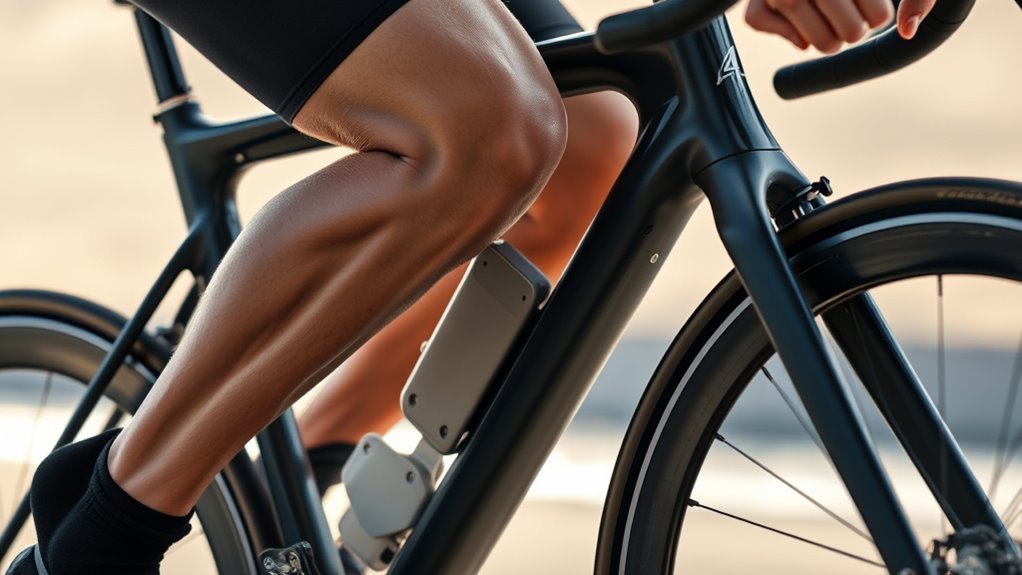
Because the pedal stroke follows a circular motion, it activates different leg muscles throughout its phases, with your quadriceps and glutes powering the downstroke. During this power phase, your quadriceps—especially the vastus lateralis—are highly engaged, delivering the bulk of force to push the pedal down.
The pedal stroke’s circular motion engages quadriceps and glutes, driving powerful downstrokes for efficient cycling.
Your glutes also contribute considerably, and optimizing bike fit can enhance this muscle activation for better power transfer.
As you pull the pedal upward, your hamstrings and hip flexors engage to lift the pedal smoothly, supporting continuous muscle engagement and improving pedal efficiency.
Increasing cadence and resistance further activates your hamstrings and calves, boosting endurance and cycling muscles’ overall performance.
Understanding how the pedal stroke activates key muscles helps you focus on technique and training. This way, you can maximize muscle engagement and pedal efficiency for a stronger, more effective ride.
Why the Core Matters for Cycling Stability and Power
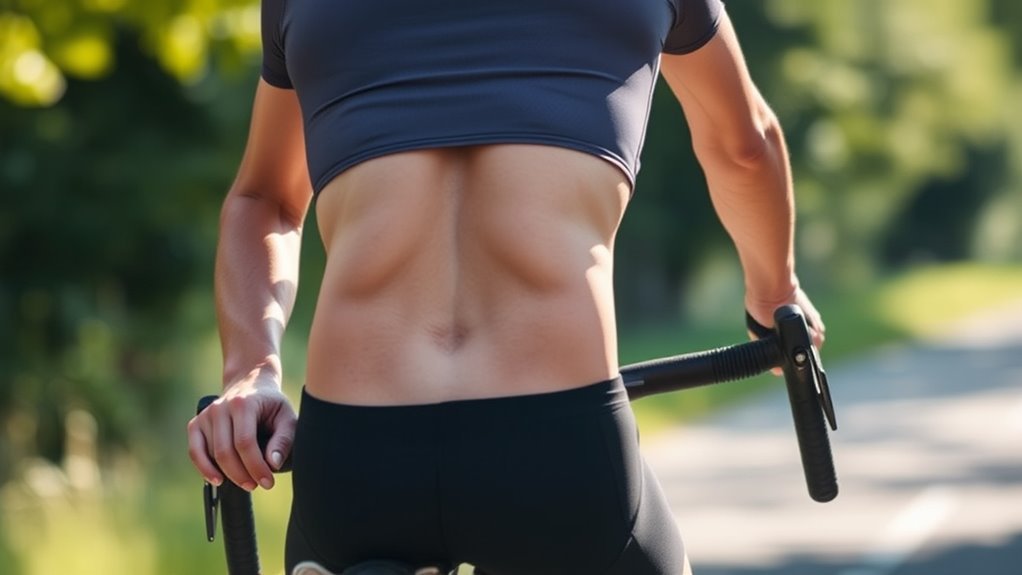
As your leg muscles power the pedal stroke, your core plays a vital role in stabilizing your pelvis and spine to keep that force efficient. The core muscles, including abdominals and erector spinae, guarantee spine stabilization and prevent lower back pain by maintaining proper posture.
Core engagement enhances cycling stability, improving balance and control, especially on challenging terrains. This muscle activation in the posterior chain supports better power transfer and boosts pedaling efficiency.
Strengthening your core through targeted exercises helps sustain muscular effort during long rides, reducing fatigue and increasing overall cycling performance.
| Core Role | Benefit | Key Muscles |
|---|---|---|
| Stabilizes pelvis | Efficient power transfer | Abdominals |
| Maintains posture | Reduces lower back pain | Erector spinae |
| Enhances balance | Improves cycling stability | Posterior chain |
| Supports endurance | Boosts pedaling efficiency | Core muscles overall |
How Upper Body Muscles Support Cycling Performance
Even though your legs do most of the work, your upper body muscles play a crucial role in cycling performance by stabilizing your posture and improving control. These muscles, including shoulder muscles and upper back, support core stability and enhance power transfer for efficient riding.
Upper body muscles stabilize posture and improve control, enhancing power transfer for more efficient cycling performance.
Here’s how upper body muscles boost your cycling:
- They provide posture support, keeping your body aligned to reduce fatigue.
- Shoulder muscles and latissimus dorsi help you pull handlebars during sprints and climbs, increasing control.
- Triceps and pectorals support upper body weight, improving handling on rough terrain.
- Muscle activation in the core and upper body absorbs shocks and vibrations, preventing injury over long rides.
How to Train These 5 Muscles for Better Cycling
To boost your cycling performance, you should focus on training the five key muscles involved in pedaling—quadriceps, hamstrings, glutes, core, and calves. Incorporate strength training exercises like squats, lunges, and deadlifts to target the quadriceps, glutes, and hamstrings effectively.
Use resistance exercises such as leg presses and step-ups to build power in your primary cycling muscles. Don’t forget core stability—planks and Russian twists enhance your ability to transfer power efficiently.
To improve muscle balance and coordination, include single-leg exercises that activate the quadriceps, hamstrings, and glutes individually. On the bike, regularly integrate hill climbs and resistance intervals to directly stimulate these muscles, enhancing muscle activation and endurance.
This combined approach guarantees your cycling muscles develop evenly, reducing injury risk and boosting overall performance. By training both off and on the bike, you’ll see stronger, more efficient pedaling and improved cycling results.
Frequently Asked Questions
Is Biking 30 Minutes a Day Enough Exercise?
Yes, biking 30 minutes a day provides good exercise, boosting endurance and burning calories.
But you’ll get better overall fitness results if you combine it with strength training and balanced nutrition for a well-rounded routine.
What Muscles Get Toned From Cycling?
Cycling is like sculpting your lower body with each pedal stroke. You tone your quads, hamstrings, glutes, and calves while your core stabilizes you.
Even your shoulders and arms get subtle strengthening from handlebar support. It’s a full-body effort, really!
Is Cycling Better Than Squats?
No, cycling isn’t better than squats if you want to build serious muscle strength. You’ll boost endurance and cardiovascular health with cycling, but squats give you more muscle growth and targeted lower body strength.
Think of it this way: cycling is great for your heart and stamina, but if your goal is to get stronger legs and build muscle, squats are the way to go. They really zero in on those muscles and help them grow.
Does Cycling Tone Your Belly?
Cycling tones your belly like a sculptor shapes clay—it engages your core muscles and burns fat.
If you want a flatter tummy, pair cycling with core exercises and a healthy diet to see real results.
Trust me, it’s all about combining the right moves and eating well to really notice the difference.
Conclusion
When you hop on your bike, you’re not just spinning wheels—you’re firing up five powerhouse muscles that fuel your ride like a well-oiled machine. Your legs drive the pedal stroke, your core keeps you steady as a rock, and your upper body supports every move.
Train these muscles right, and you’ll crush every ride with unstoppable energy. So get out there, push hard, and watch your cycling game skyrocket!
Riding a bike works your legs, core, back, glutes, and arms—all essential for powerful, efficient cycling. Focusing on these muscles not only boosts your endurance but also helps prevent injuries. By strengthening these key areas, you’ll improve your balance, speed, and overall performance. So, whether you’re a casual rider or aiming to race, targeting these five muscles is the secret to riding stronger and longer every time you hit the road or trail.