How to Clean a Bicycle Chain in 7 Easy Steps
Start by securing your bike so it won’t move while you work. Wiping the chain with a dry rag helps remove loose dirt and dust. This simple step makes a big difference before deep cleaning.
Next, apply a bike-friendly degreaser evenly on the chain and drivetrain. Use a brush to scrub all the links thoroughly, loosening grime and built-up grease. Don’t rush this part — a good scrub ensures your chain runs smoothly.
After scrubbing, rinse or wipe off the degreaser and dry the chain completely to prevent rust.
Finally, lubricate each roller carefully and wipe off any excess oil. This keeps your chain running quietly and extends its life.
Keep going to discover tips for extending your chain’s life and performance. Taking these simple steps regularly will make your rides smoother and your bike happier!
Secure Your Bike for Cleaning
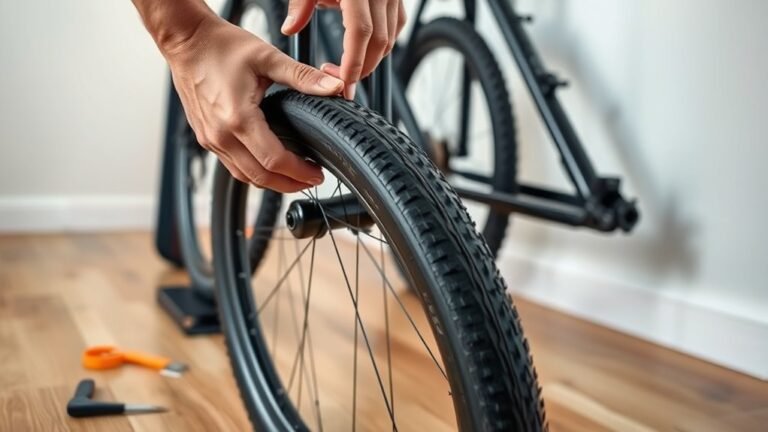
Before you start cleaning, secure your bike firmly to prevent any movement. Using a bike repair stand is the best way to guarantee stability while you work.
It holds your bike upright and steady, giving you easy access to the chain, cassette, and other drivetrain components. If you don’t have a repair stand, flip your bike upside down on a stable surface. Just make sure to use wheel chocks or blocks to stop any rolling.
Always lock your bike securely in place so it won’t tip or shift while you clean. Adjust the chain to a comfortable position for cleaning, but keep the bike stable throughout.
This setup makes the cleaning process safer and more efficient. You’ll find it much easier to get the job done right this way!
Remove Loose Dirt With a Rag
Grab a clean, dry rag and start wiping the chain to remove loose dirt and grime from the surface. Pedal backward slowly while holding the rag around the chain to catch debris from every link.
Make sure to fold or replace the rag regularly so you don’t just spread the dirt back onto the chain. It’s a simple step, but it really helps keep your chain cleaner!
Quick Surface Wipe
Although it’s a simple step, giving your bicycle chain a quick surface wipe can make a big difference in preventing dirt buildup. Use a clean cloth, like a microfiber rag or an old t-shirt, to wipe off any excess dust and grime.
Rotate the pedals backward to expose all links, ensuring a clean bike chain after this chain cleaning step. Focus on the outer plates and rollers, gently removing loose dirt without pushing it deeper.
This quick surface wipe keeps your chain ready for deeper cleaning later.
| Step | Action |
|---|---|
| 1 | Use a clean, dry rag |
| 2 | Rotate pedals backward |
| 3 | Wipe outer plates and rollers |
| 4 | Use microfiber or old t-shirt |
| 5 | Prevent dirt buildup |
Dirt Removal Tips
Wiping your chain with a clean, dry rag removes loose dirt and grime that a quick surface wipe might miss. To effectively clean your bike chain and prevent dirt build-up, follow these tips:
- Rotate the pedals backward while holding the rag against the chain to catch excess grime.
- Focus on the spaces between outer plates and rollers to lift hidden dirt.
- For stubborn dirt, use a lightly damp cloth—avoid soaking the chain to prevent spreading grime into bearings.
- Regularly inspect and wipe your chain after rides to keep dirt build-up minimal and prolong component life.
Apply Degreaser to the Chain and Drivetrain
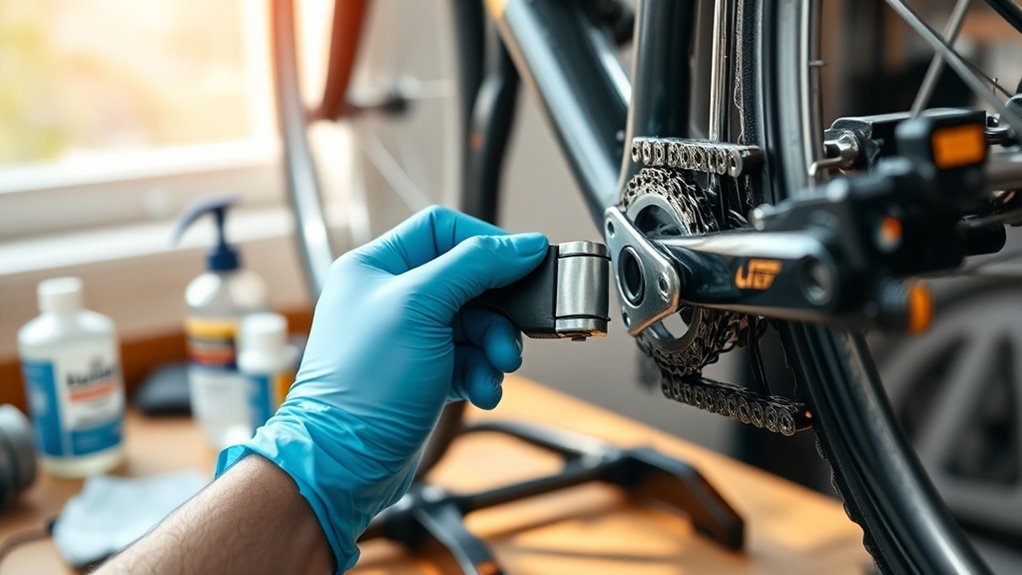
Choose a bike-specific degreaser to protect your chain and drivetrain while effectively breaking down grime. Apply the degreaser evenly by rotating the pedals backward and using a brush or chain scrubber to reach every link.
Be careful not to oversaturate the parts. Then, rinse or wipe off the degreaser before drying and lubricating. Easy, right? Just take your time to make sure everything gets clean!
Choosing the Right Degreaser
When you want to break down grease and grime without harming your bike’s seals, using a bike-specific degreaser like Bontrager Degreaser or a citrus-based cleaner works best. Choosing the right degreaser is vital for effective cleaning the chain and minimizing drivetrain wear.
Here’s what to consider:
- Select a degreaser designed specifically for bikes to protect seals and components.
- Opt for a chain cleaner that easily breaks down stubborn grease without harsh chemicals.
- Make sure the degreaser can be safely applied to the entire drivetrain, including cassette and chainrings.
- Pick a formula that rinses off cleanly to avoid residue buildup, which can accelerate drivetrain wear.
Using the right degreaser helps maintain your bike’s performance and extends the life of your chain and drivetrain. It’s definitely worth taking the time to choose carefully!
Proper Degreaser Application
After selecting the right degreaser, you’ll want to apply it thoroughly to the chain and drivetrain. Apply degreaser directly onto the entire length of the chain, ensuring full coverage of all links and rollers.
Use a chain scrubber or brush to work the degreaser into both inner and outer surfaces. Don’t forget to spray degreaser on the cassette and chainrings to loosen grime. Let it sit for a few minutes to break down grease.
Finally, rinse the chain and drivetrain with water or wipe with a clean cloth to remove all residue before lubricating.
| Step | Tool/Method | Purpose |
|---|---|---|
| Apply degreaser | Spray bottle | Full coverage on chain |
| Scrub chain | Chain scrubber | Deep clean surfaces |
| Degrease drivetrain | Brush | Remove grime buildup |
| Rinse | Water or cloth | Remove residue |
Scrub the Chain Thoroughly
Although it might seem tedious, scrubbing your bike chain thoroughly is essential to keep it running smoothly. Start by applying a degreaser to loosen dirt and old lubricant.
Then grab a stiff-bristled brush to tackle the cleaning. Focus on every part of the chain links to remove grime effectively.
- Use a stiff-bristled brush or old toothbrush to scrub all chain sides.
- Rotate the pedals backward as you scrub to clean all links evenly.
- Let the degreaser sit a few minutes if grime is stubborn.
- Pay special attention to rollers and side plates for thorough cleaning.
This method ensures your chain stays free of buildup, improving performance and longevity. It’s worth taking the time to do it right!
Rinse or Wipe Off the Degreaser
Once you’ve loosened the grime with degreaser, you need to rinse or wipe it off thoroughly to prevent residue buildup. To clean your chain effectively, either rinse it gently with clean water or wipe it down using a damp cloth.
Avoid high-pressure water, as it can push dirt into the chain’s bearings and seals. If you prefer a quicker method, wiping the chain with a damp rag works well to remove degreaser without soaking the chain.
Use a soft brush or cloth to wipe all parts, focusing on the rollers and links to ensure no degreaser remains. Properly rinsing or wiping off the degreaser is essential to keep your chain clean and ready for the next step in maintenance.
Dry the Chain Completely
How do you guarantee your bicycle chain stays rust-free and ready for lubrication? The key is to dry the chain completely after rinsing off the degreaser.
Moisture trapped inside the links can cause rust formation, so you want to eliminate every drop of water. Here’s how to do it effectively:
To prevent rust, make sure to remove every drop of water trapped inside your bike chain links.
- Use a clean, dry rag to wipe off excess water and degreaser from the chain’s surface.
- Pay special attention to thoroughly dry inside each link and roller where moisture tends to linger.
- Let the chain air dry fully in a well-ventilated area to avoid rust formation.
- For faster drying, you can gently use a hairdryer on a low setting, but avoid high heat.
Following these steps ensures your chain is completely dry and ready for the next cleaning stage. Easy, right? Just a bit of care goes a long way!
Lubricate the Chain Evenly
After making sure your chain is completely dry, the next step is to lubricate it evenly to keep it running smoothly. Lube your chain by applying a small drop of lubricant to each roller, aiming directly into the pins for ideal coverage.
Focus on the inside of the chain links where rollers contact pins and plates, as this is where the chain needs lubrication most. Once you’ve applied lube along the entire chain, use a clean cloth or brush to spread it evenly.
Be careful not to use excess lube—too much can attract dirt and debris, which speeds up wear. Finally, wipe off any excess lube thoroughly to maintain a clean, efficient chain and extend its lifespan.
Conclusion
Keeping your bike chain clean is key to a smooth ride and longer chain life. Did you know that a well-maintained chain can increase your bike’s efficiency by up to 30%?
By following these seven easy steps, you’re not just improving performance—you’re saving money on repairs too. So, take a little time to clean and lube your chain regularly.
This simple maintenance helps your bike run smoother, faster, and more reliably every time you hit the road. A clean bicycle chain reduces wear and tear, making your cycling experience more enjoyable and extending the life of your drivetrain. Remember, regular chain cleaning and lubrication are essential for keeping your bike in top shape and ensuring that every ride is as efficient as possible.