How to Fix Bicycle Disc Brakes Squeaking When Stopping
If your bicycle disc brakes are squeaking when you stop, don’t worry—it’s a common issue that can be fixed with a few simple steps. Squeaky disc brakes often happen because of dirt, oil, or misalignment, which affects how well your brakes perform.
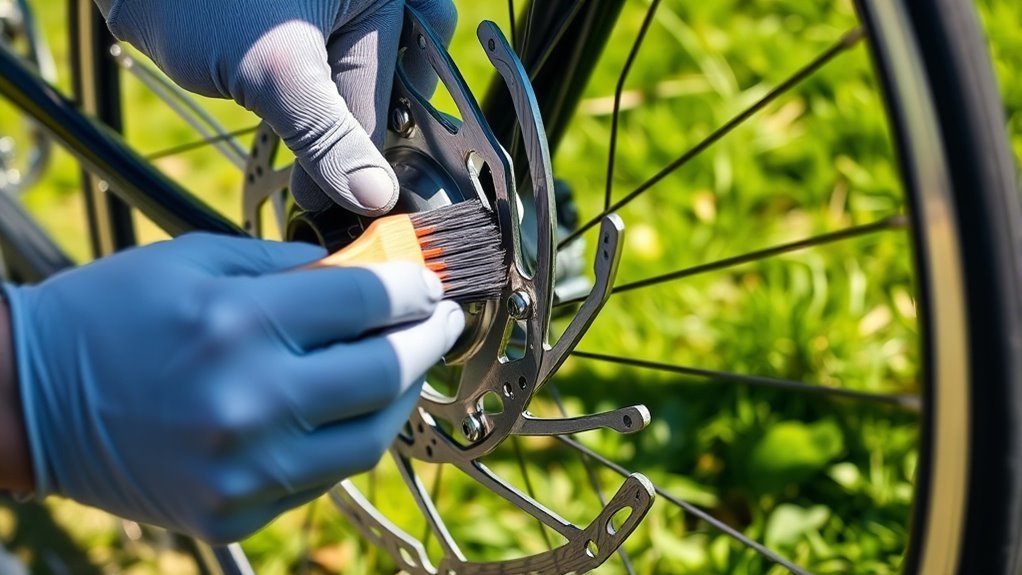
Start by cleaning the pads and rotors with isopropyl alcohol to get rid of any grime or debris that might be causing the noise.
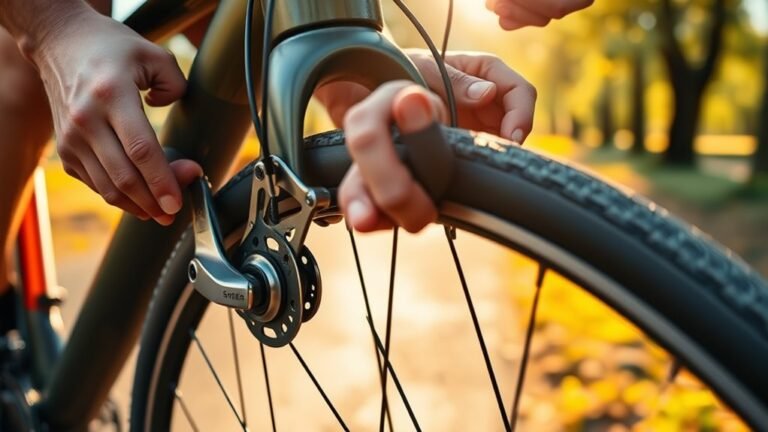
Next, bed in the pads by braking steadily at a moderate speed about 10 times. This helps transfer the right amount of material evenly onto the rotors, which is key for smooth, quiet braking.
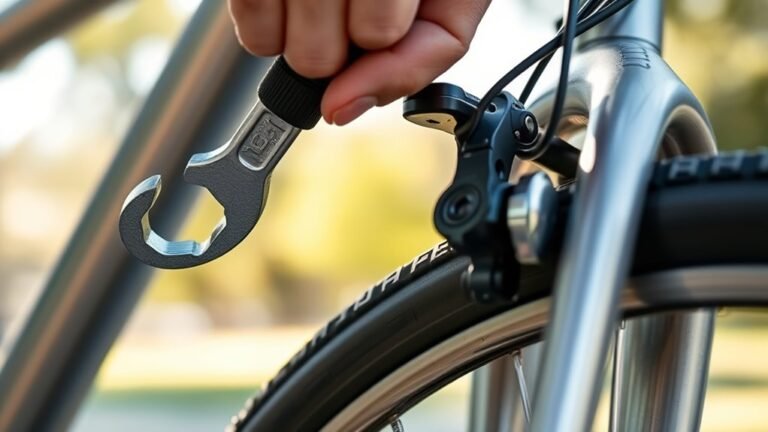
Also, make sure your calipers are properly aligned and that all bolts are tight; this ensures the pads make even contact with the rotors.
Don’t forget to check for warped rotors and adjust them if needed. Warped rotors can cause uneven braking pressure and that annoying squeak.
Keep reading to uncover detailed steps that will get your bike’s disc brakes working quietly and smoothly again.
Key Takeaways
– Clean brake pads and rotors with isopropyl alcohol to remove oil, grease, and dirt contamination.
This helps get rid of stuff that might be making your brakes squeak.
– Inspect and realign caliper mounting bolts to ensure even pad contact and proper rotor centering.
Making sure everything is lined up right can really smooth out your braking.
– Bed in new or glazed brake pads by riding at moderate speed with steady brake pressure about 10 times.
This helps the pads and rotors work better together and cuts down on noise.
– Check rotors for warping or damage and straighten or replace if necessary to prevent uneven braking noise.
A bent rotor can cause all sorts of squeaks and shakes when you brake.
– Regularly inspect and tighten brake hardware to maintain proper alignment and eliminate loose components causing squeaks.
Loose parts are a common culprit, so keeping everything tight is key to quiet brakes.
What’s Causing Your Bicycle Disc Brakes to Squeak?
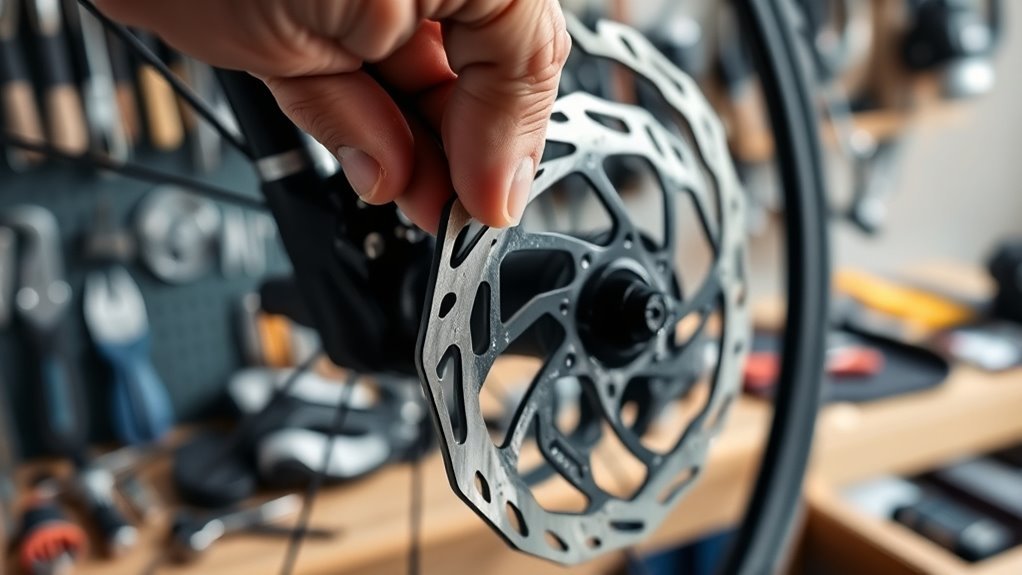
If your bicycle disc brakes are squeaking when you stop, chances are contamination or mechanical issues are to blame. Brake squeal often results from contamination on the brake pads or rotors—oil, grease, dirt, or water can reduce friction and cause that annoying noise.
Squeaky bicycle disc brakes usually stem from contamination or mechanical problems affecting pad and rotor friction.
Glazed brake pads, which develop a shiny surface from an overheated brake or improper break-in, frequently produce brake noise and reduce your braking power. Misalignment of brake calipers or bent rotors leads to uneven pad contact, further increasing noise and decreasing effectiveness.
Low-quality brake pads made from inferior materials tend to squeal more and don’t deliver consistent braking power. Additionally, residual debris, loose hardware, or uneven pad contact can cause persistent brake squeal, signaling the need for inspection.
Keeping your brake pads, rotors, and calipers clean, properly aligned, and free from damage plays a vital role in preventing brake noise and ensuring reliable stopping performance.
How to Clean, Bed In, and Adjust Your Disc Brakes for Quiet Performance
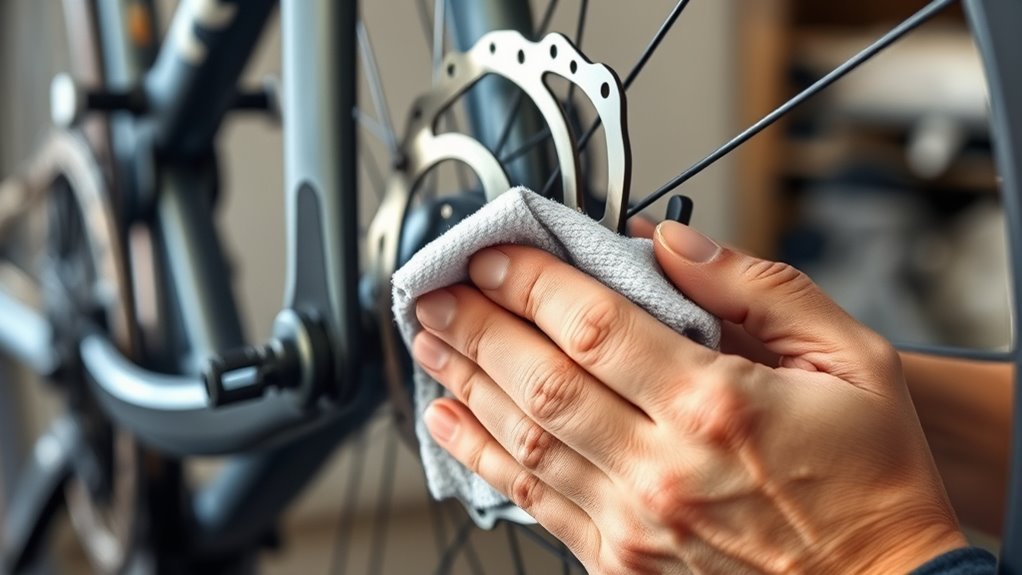
Although brake squeaking can be frustrating, you can eliminate it by properly cleaning, bedding in, and adjusting your disc brakes. Start by thoroughly cleaning your disc brakes with isopropyl alcohol and a clean rag to remove any oil, grease, or dirt that cause squeaking.
Next, bed in your brake pads by riding at a moderate speed and applying firm, steady pressure about 10 times to transfer material evenly onto the rotor.
Then, adjust the caliper alignment by loosening the mounting bolts, centering the caliper over the rotor, and tightening the bolts evenly. This guarantees even pad contact and reduces noise.
Don’t forget to check the rotor for warping, as a bent rotor can cause squeal. Use a rotor truing fork to straighten it if needed.
After cleaning and adjustment, ride gently while applying the brakes repeatedly to achieve smooth, quiet stopping performance. Proper care keeps your disc brakes silent and efficient.
Frequently Asked Questions
How to Make Disc Brakes on a Bike Stop Squeaking?
You’ll want to clean your rotors and pads with isopropyl alcohol, realign your calipers, bed in new pads gently, and sand off any glazing.
This guarantees smooth, quiet braking every time you stop.
Trust me, a little effort here makes a big difference when you’re out riding!
Can I Spray WD-40 on My Brakes to Stop Squeaking?
Don’t treat your brakes like a dusty piano needing WD-40’s tune-up; spraying it’ll gum up your rotors and pads, making squeaks worse.
Instead, use isopropyl alcohol or brake cleaner to keep them quiet and safe.
Does Isopropyl Alcohol Fix Squeaky Brakes?
Yes, you can use isopropyl alcohol to clean your brake pads and rotors. This often helps reduce squeaking caused by contaminants.
Just apply it with a clean cloth. But keep in mind, it won’t fix issues like glazing or misalignment.
How Do I Stop My Brake Discs From Squeaking?
Did you know 85% of brake squeaks come from contamination? To stop it, clean discs and pads with isopropyl alcohol, and make sure your calipers are aligned properly.
If your pads are glazed, lightly sand them down. Also, when you get new pads, bed them in gently for smooth, quiet braking. This helps everything settle just right.
Conclusion
Just like a well-tuned instrument, your bike’s disc brakes need care and harmony to sing quietly. When you clean, bed in, and adjust them properly, you’re not just fixing a squeak—you’re restoring balance between you and the road.
Take the time to nurture this connection, and every stop will feel smooth and confident. Noisy disruptions turn into whispers of control that keep your ride safe and enjoyable.
By regularly maintaining your bicycle disc brakes—cleaning the rotors, replacing worn pads, and ensuring proper alignment—you can prevent annoying squeaking when stopping. This simple care not only extends the life of your brakes but also boosts your confidence on every ride.
Remember, a quiet, well-functioning brake system is key to safe cycling. So invest a little time in your bike’s disc brakes, and enjoy smoother, squeak-free stops every time you hit the brakes.