How to Measure Bicycle Frame Size in 5 Easy Steps
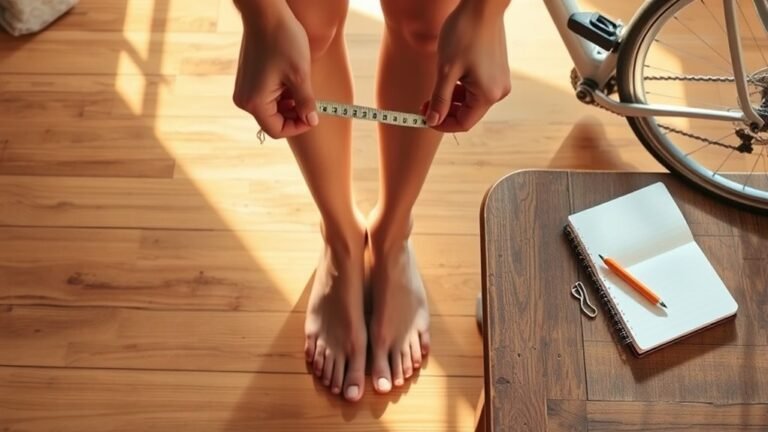
To measure your bicycle frame size, start by measuring your inseam. Stand barefoot against a wall, place a book between your legs, and mark the height from the floor to the top of the book. This helps you figure out the right frame height for comfort and efficiency.
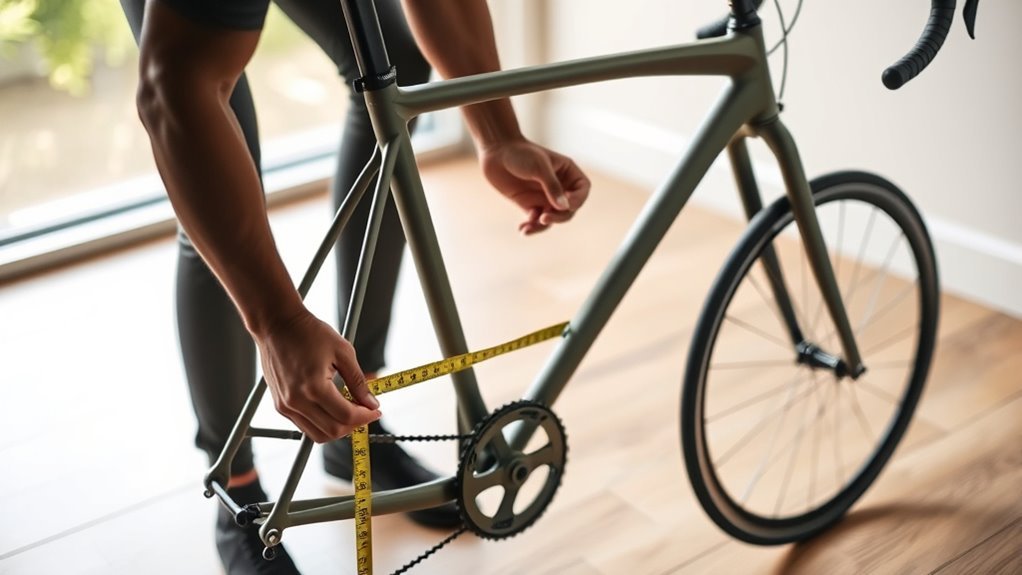
Next, measure the seat tube from the bottom bracket to the seat post. This gives you an idea of the frame’s vertical size.
Then, measure the top tube horizontally from the head tube to the seat post. These measurements together will guide you toward the best fit.
Use these numbers with size charts to find your ideal frame.
Finally, test your fit by riding and making adjustments as needed. Keep going until you fine-tune your perfect fit for a smooth, enjoyable ride.
Key Takeaways
- Stand barefoot with your feet about 6 inches apart. Place a book between your legs and measure your inseam from the floor up to the top of the book.
- Next, multiply your inseam length by 0.67 to get an estimate of the road bike frame size in centimeters.
- To measure the seat tube length, find the distance from the center of the bottom bracket to the top of the seat tube while the bike is upright.
- For bike fit geometry, measure the effective top tube length horizontally. That’s from the center of the head tube to the center of the seat tube.
- Finally, use these measurements alongside manufacturer size charts. Don’t forget to test ride the bike and adjust the saddle and handlebar for your comfort.
Why Measuring Your Bike Frame Size Matters
Because your bike frame size directly affects comfort and performance, measuring it accurately is essential. When you get the right bike frame size, you guarantee a proper fit that boosts rider comfort and riding efficiency.
Different bike sizing standards use measurements like seat tube length or top tube length, so understanding these helps you make precise frame measurements. Without accurate measurement, you risk choosing a frame that’s too big or too small, which can lead to discomfort, strain, and even injury.
Proper bike sizing prevents these issues and makes your rides more enjoyable and effective. Plus, knowing your correct frame size simplifies the selection process when you shop for a new bike or replace parts.
How to Measure Your Inseam for Bike Frame Size
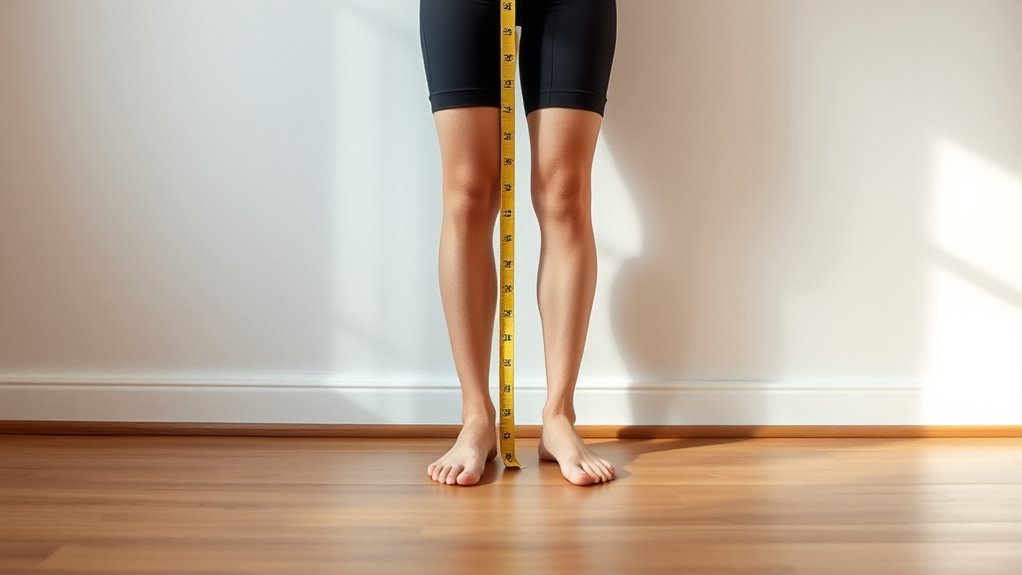
Knowing your inseam measurement helps you figure out the right bike frame size for a comfortable and efficient ride. The inseam is the vertical distance from the floor to your crotch. It directly influences your bike’s standover height and seat height.
To measure your inseam accurately, here’s what you do:
- Stand upright against a wall with your feet about 6 inches apart, barefoot.
- Place a hardcover book snugly between your legs, with the spine pressed firmly against your crotch.
- Mark the point where the top of the book meets the wall or have someone measure from the floor to that point.
- Repeat twice and average your measurements for accuracy.
Once you have your inseam measurement, multiply it by a specific factor to find your ideal frame size or seat tube length. This step helps ensure proper leg extension, so you avoid discomfort and pedal more efficiently.
Getting your inseam right is key to picking a bike frame size that fits you perfectly. It really makes a difference in how you ride!
How to Measure the Seat Tube and Top Tube
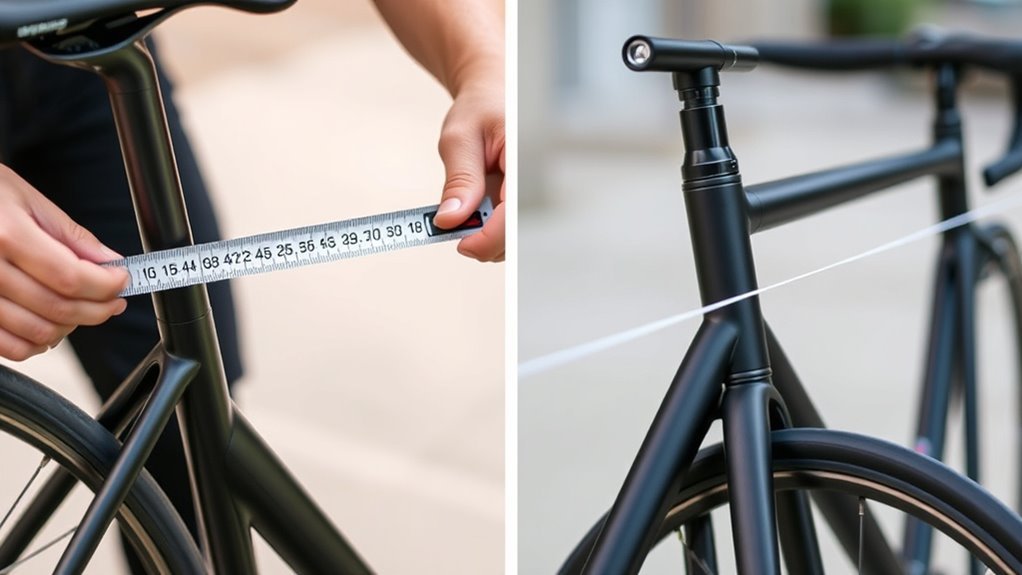
When you measure the seat tube and top tube, you’ll get key dimensions that define your bike’s fit and geometry. To measure the seat tube length, place your tape measure at the center of the bottom bracket and extend it straight to the top of the seat tube.
Keep the bike upright and the tape straight for accuracy. Note that measurement standards vary; some measure to the center of the seat tube top, others to the very top. So, check the manufacturer’s guidelines to be sure.
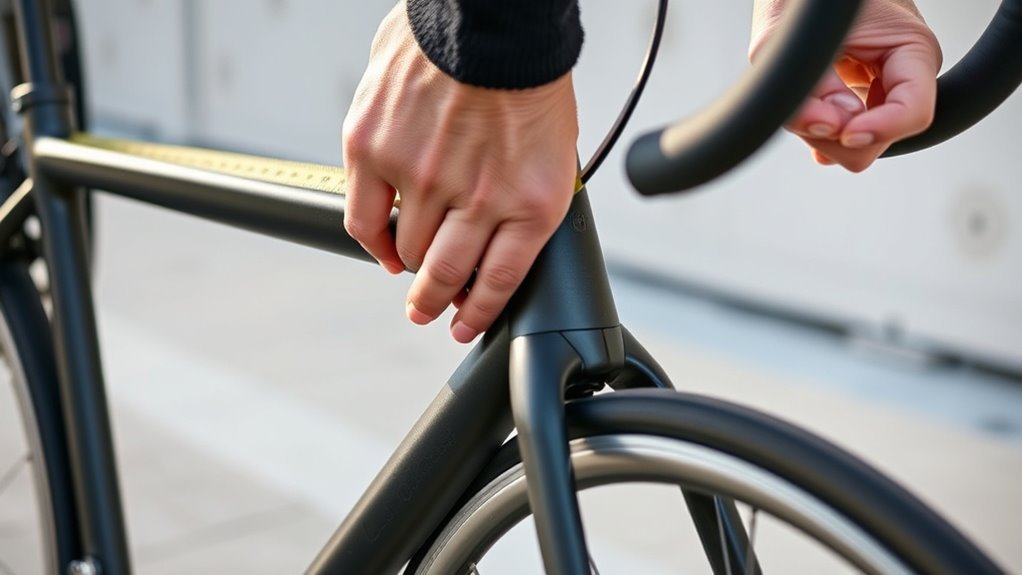
For the top tube, focus on the horizontal distance between the center of the head tube and the center of the seat tube. This horizontal length, often called the effective top tube, helps define how far you’ll reach while riding.
Understanding these two measurements—seat tube length and effective top tube length—is crucial for accurate bike sizing. They work together to ensure your frame size fits your body and riding style perfectly.
Use Your Measurements to Choose the Right Frame Size Chart
Although measuring your bike’s seat tube and top tube gives you valuable data, you’ll need to use those numbers alongside your inseam and height to pick the right frame size from a size chart.
Different bike types and manufacturers can have varying frame geometry, so relying on a universal size chart helps guarantee a proper fit.
Here’s how to use your measurements effectively:
- Use your inseam measurement in centimeters or inches with a bike size calculator or size chart designed for your bike type.
- Match your rider height and inseam to the recommended bike frame size ranges in the chart to narrow down options.
- For road bikes, multiply your inseam by 0.67 to estimate the ideal frame size in centimeters.
- If your measurements fall between two sizes, consider sizing down for better maneuverability and comfort.
Following these measurement methods guarantees you choose the right bike frame size using the appropriate measurement system and size chart.
It’s really about making sure your bike fits just right, so you enjoy every ride!
Test Your Bike Fit and Make Adjustments for Comfort
Once you’ve selected a frame size, take your bike for a test ride to see how it feels in action. Pay close attention to your bike fit, starting with saddle height. Your heel should rest comfortably on the pedal at the bottom of the pedal stroke, ensuring proper leg extension.
Your knees should have a slight bend of 15-20° when pedaling. Next, assess your reach and handlebar position; your shoulders should stay relaxed without overstretching or hunching. Adjust the stem length and handlebar height as needed to achieve a balanced riding position that reduces upper body strain.
These comfort adjustments improve your overall ride and prevent discomfort. If you experience persistent pain or discomfort, consider professional bike fitting services for precise tweaks beyond basic bike measurement. Testing your bike fit and making small adjustments ensures you enjoy every ride with maximum comfort and efficiency.
Frequently Asked Questions
How Can I Tell the Size of My Bike Frame?
You can tell your bike frame size by measuring from the center of the bottom bracket to the top of the seat tube. Make sure the bike’s upright, so you get an accurate measurement.
Also, check if your manufacturer uses a different measurement method. Sometimes they do it another way, so it’s good to double-check.
Is My Bike 24 or 26 Inch?
You can tell if your bike is 24 or 26 inches by checking the tire sidewall for size markings or measuring the wheel diameter directly.
Typically, 24-inch wheels suit kids, while 26-inch wheels fit most adults or mountain bikes.
It’s pretty simple once you know what to look for! Just take a quick peek at the tire or grab a tape measure.
What Size Is a 20 Inch Bike Frame?
Think of a 20-inch bike frame as your perfect mountain throne—it fits riders around 5’7″ to 5’11”.
It balances control and comfort, especially if you crave off-road adventures or need a medium-to-large frame.
This size gives you the confidence to tackle trails without feeling cramped or stretched out.
What Size Bike Is a 17 Inch Frame?
A 17-inch bike frame usually fits riders around 5’7″ to 5’10”. It suits medium builds and inseams near 30 to 32 inches.
You should always check the specific bike’s fit before buying. Every brand can feel a bit different, so it’s worth taking a test ride if you can.
Conclusion
Measuring your bike frame size is as vital as finding the perfect pair of shoes—it guarantees comfort and control every time you ride. By accurately measuring your inseam, seat tube, and top tube, you’ll pick a frame that fits you like a glove.
Use those numbers with a size chart, then test your bike fit to make any tweaks. It’s all about finding that sweet spot where everything feels just right.
With the right frame size, every ride will feel smooth and effortless. Remember, a properly sized bike frame not only boosts comfort but also improves your riding performance and helps prevent injuries. So take the time to measure carefully, use a reliable size chart, and enjoy the difference a perfectly fitting bike makes on your adventures.