How Long Does an Electric Bike Battery Last and How to Maximize It
Your electric bike battery typically lasts 3 to 5 years or 500 to 1,000 full charge cycles, but how you treat it makes a big difference. Battery life is one of the most important factors when considering an eBike, so knowing how to maximize it can save you time and money.
Taking care of your battery not only extends its lifespan but also ensures your rides stay smooth and reliable.
To maximize its life, keep your charge between 20% and 80%, and try to avoid full discharges. Using original chargers is also key because they’re designed to work perfectly with your battery.
When you’re not using your eBike, store the battery in a cool, dry place at around 50-60% charge.
These simple habits help reduce wear and keep your battery healthier longer.
There’s more to discover about protecting your eBike’s power, so stay tuned for tips and tricks that keep you riding strong!
Key Takeaways
– Electric bike batteries typically last 3 to 5 years or 500 to 1,000 full charge cycles.
That gives you a pretty good amount of riding time before you might need a replacement.
– Maintain battery charge between 20% and 80% to minimize stress and extend lifespan.
Keeping it in that range really helps keep your battery happy.
– Store batteries in cool, dry places with 50-60% charge during long periods of inactivity.
This way, you avoid any unnecessary wear when you’re not using your bike for a while.
– Avoid extreme temperatures and complete discharges to preserve battery capacity and performance.
Extreme heat or cold can really mess with how well your battery holds up over time.
– Use manufacturer-approved chargers and unplug when fully charged to prevent overcharging damage.
It’s a simple step that can save your battery from long-term harm.
How Long Does an Electric Bike Battery Typically Last?
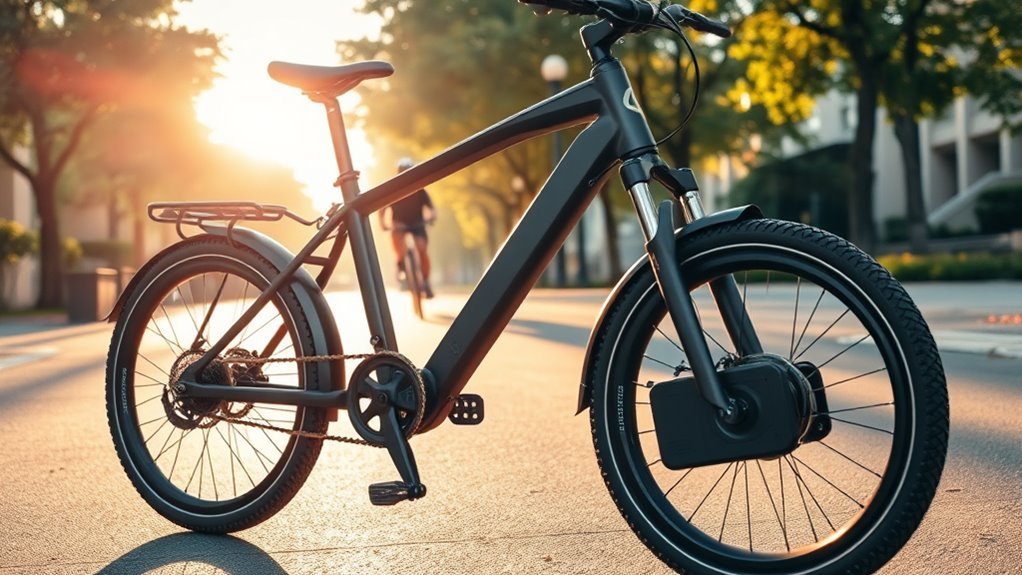
Although electric bike batteries vary, you can generally expect them to last between 3 to 5 years or about 500 to 1,000 full charge cycles with proper care. Each full charge cycle—from 0% to 100%—adds to the battery’s aging process, while partial charges count fractionally, impacting overall battery lifespan.
Electric bike batteries typically last 3 to 5 years or 500 to 1,000 full charge cycles with proper care.
Over time, you’ll notice capacity loss, which leads to reduced range and performance decline. Battery health depends heavily on your charging habits and storage conditions; avoiding complete discharges and maintaining ideal charge levels helps slow deterioration.
Environmental factors like temperature also play an essential role—extreme heat or cold can accelerate capacity loss. By understanding these influences on your battery’s health, you can better anticipate when performance might decline.
Keeping an eye on these elements is vital for extending battery life and ensuring your eBike remains reliable throughout its typical lifespan.
Easy Ways to Make Your eBike Battery Last Longer
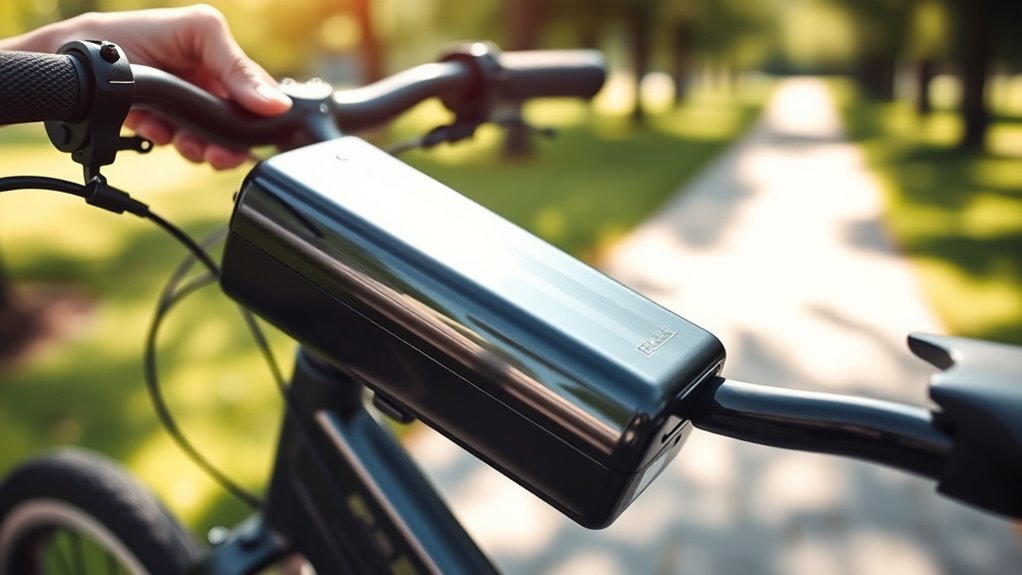
To make your eBike battery last longer, you should keep its charge between 20% and 80%. This range reduces stress and slows aging.
Avoid letting your battery fully discharge, and unplug the charger once it’s fully charged. This helps prevent overcharging damage.
Proper storage is key—store your battery in a cool, dry place at about 50-60% charge during long periods of inactivity. Doing this helps maintain battery health.
Use only the original or manufacturer-approved charger and charge at room temperature. This avoids heat-related wear on your battery.
Regularly inspect and clean the battery connectors with a damp cloth to ensure good contact. It also helps prevent corrosion.
Adjust your cycling habits by avoiding extreme discharges and charging habits that strain the battery. By following these tips, you can extend battery life and capacity considerably.
That way, you reduce the need for costly battery replacements. These simple strategies help maintain your battery’s performance and keep your eBike running efficiently for the long haul.
Frequently Asked Questions
How Do I Make My Ebike Battery Last Longer?
You can make your eBike battery last longer by keeping its charge between 20-80%, avoiding full discharges, and using the original charger.
It’s also important to store it in a cool, dry place. Regularly cleaning the contacts helps maintain performance too.
Taking these simple steps can really extend the life of your battery and keep your ride going strong!
Do Ebike Batteries Drain When Not in Use?
Yes, your ebike battery does drain slowly when not in use, usually about 1-2% per month.
To keep it healthy, store it at 40-60% charge and recharge it regularly during long breaks.
This way, you’ll help maintain the battery’s lifespan and performance over time.
How Much Does It Cost to Replace a Battery on an Electric Bike?
Replacing an electric bike battery usually costs you between $300 and $800. OEM batteries cost more but fit perfectly, while cheaper third-party options vary in quality.
Maintaining your battery well can help you avoid frequent replacements. So, taking good care of it definitely pays off!
Should I Charge My E-Bike Every Time I Use It?
Yes, you should charge your e-bike after every ride. This helps keep the battery healthy by avoiding deep discharges.
It also maintains its capacity, which ultimately extends the battery’s lifespan. Plus, you’ll enjoy better performance on your rides.
Conclusion
Your electric bike battery is the heart of your ride, and treating it well keeps you cruising longer. By charging smart, storing properly, and riding thoughtfully, you’ll stretch each charge further than you might expect.
Remember, like any relationship, your battery responds best to care and attention. So, don’t just ride—nurture your battery, and it’ll reward you with countless miles of smooth, electrified journeys.
Taking good care of your eBike battery not only boosts its daily performance but also extends its overall lifespan. With proper maintenance and mindful usage, you can maximize battery life and enjoy more miles on every trip. Your eBike’s longevity truly is in your hands when you prioritize smart charging, storage, and riding habits.