

What Does the Bicycle Sign Mean and How to Use It
A bicycle sign shows where cycling is allowed or restricted, like bike lanes, routes, or crossings. These signs are important for every cyclist to understand because they guide you on where you can safely ride.
Knowing what these signs mean helps you follow the rules and stay out of trouble on the road.
You use these signs to stay safe by following designated paths and obeying signals made just for cyclists. They help you share the road smoothly with drivers, avoid hazards, and position yourself correctly at intersections.
Understanding these signs lets you ride confidently and avoid accidents. Keep exploring to discover how these signs guide your every move on the road.
Key Takeaways
- Bicycle signs indicate designated cycling routes, lanes, or crossings to guide and protect cyclists. They help you know where you can ride safely without mixing too much with other traffic.
- Red circle bike signs mean pedal cycles are prohibited in that area. So, if you see one, it’s best to find another route to avoid trouble.
- Blue signs provide mandatory instructions for cyclists to follow specific lanes or routes. These signs are there to keep you on the safest path.
- Cyclists should follow directional and hazard signs to maintain safety and proper road use. Paying attention to these signs can really help prevent accidents.
- Using bike signs correctly helps prevent accidents and ensures smooth sharing of the road with vehicles. It’s all about keeping everyone safe and moving along nicely.
Understanding Bicycle Signs: Meanings for Riders and Drivers

Although bicycle signs might seem straightforward, understanding their meanings is essential for both riders and drivers to share the road safely. These bicycle signs indicate designated routes, bike lanes, or bike crossings, helping you know where cycling is expected or allowed.
Understanding bicycle signs is crucial for riders and drivers to share the road safely and know where cycling is allowed.
You’ll often see road signs with symbols: a red circle with a bike symbol means pedal cycles aren’t permitted, while blue circles or rectangles give mandatory instructions, such as exclusive bike lanes or routes. Pavement markings and bike symbols on the road reinforce these signs, guiding you exactly where to ride.
Traffic signals may also include bike-specific lights to control movement safely. By recognizing these road markings and bicycle signs, you can follow cycling rules effectively, avoiding confusion or accidents.
Whether you’re cycling or driving, knowing these designated routes and interpreting bike symbols correctly ensures smooth, safe interactions for everyone sharing the road. It’s all about keeping things clear and safe for everyone out there.
How to Use Bicycle Signs to Stay Safe on the Road
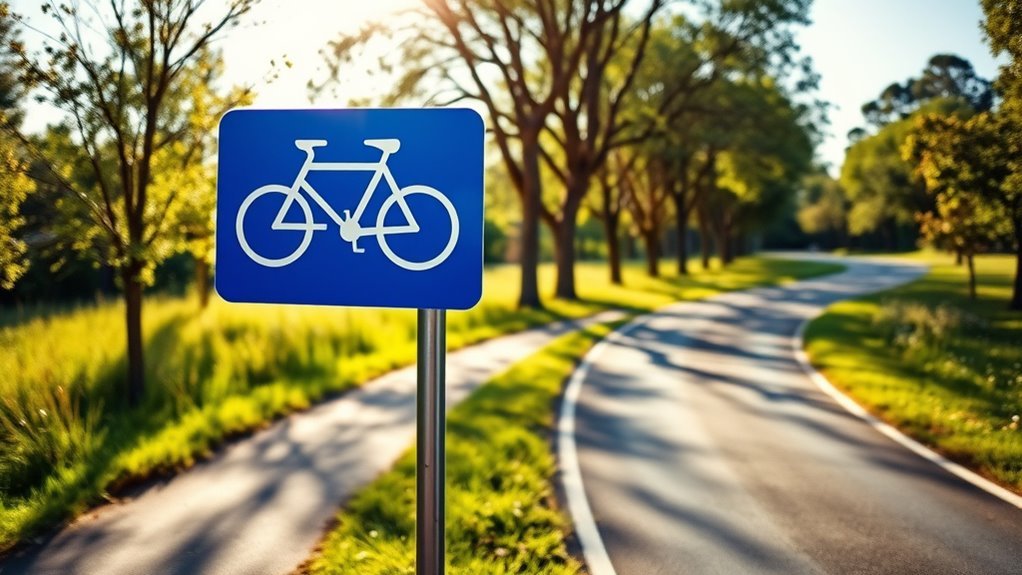
When you pay close attention to bicycle signs, you’ll navigate roads more safely and confidently. Recognize bike signs like “Bike Lane” and “Bike Route” to stay within designated bike lanes and cycling routes, minimizing your risk of accidents.
Follow directional signs to keep on track and use shared lane markings and bike boxes to position yourself safely at intersections and crossings. These signs guide you on where to ride and help you claim your space on the road.
Also, watch for crossing signs to know when you’re approaching intersections and be alert to hazards like narrow shoulders or rumble strips that require extra caution. Observing these signs helps you anticipate road conditions and adjust your riding accordingly.
Frequently Asked Questions
What Does the Sign With the Bicycle Mean?
The sign with the bicycle means you’re on a bike-friendly path or lane. You’ll use it to know where you can ride safely, follow designated routes, and avoid areas where bicycles aren’t allowed.
It’s pretty handy because it helps keep you out of trouble and makes your ride smoother. So, whenever you see that sign, you know you’re good to go!
What Should I Do When I See a Cycle Sign?
When you see a cycle sign, think of it as your green light to respect cyclists’ space. Stay alert, follow directions, and share the road like a courteous traveler on a shared adventure.
It’s all about being mindful and patient. Remember, everyone’s heading somewhere, so let’s make the journey safe and smooth for all.
Which Arm Do You Signal With on a Bicycle?
You signal left turns with your left arm extended straight out. For right turns, you can either extend your right arm out or bend your left arm upward.
When you want to slow down or stop, just lower your left arm with your palm open. It’s pretty simple once you get the hang of it!
What Does a White Bicycle on the Side of the Road Mean?
Seeing a white bicycle signals shared space. You should steer safely, staying within the marked lane.
Drivers, don’t drive dangerously in it. Cyclists, stay steady and secure inside the designated zone for smooth, safe travel.
Conclusion
You might see a bicycle sign and think it’s just a simple marker, but it’s much more—it’s a shared reminder for both riders and drivers. While cyclists follow the sign to stay safe and confident, drivers must respect it to protect lives.
Ignoring it turns a symbol of safety into a risk. So, whether you’re on two wheels or four, use the bicycle sign as your guide to harmony on the road. Remember, the bicycle sign isn’t just for cyclists; it’s a crucial part of road safety that keeps everyone aware and cautious.
By paying attention to bicycle signs, riders can navigate confidently, and drivers can avoid accidents. Respecting these signs promotes safer streets and a smoother flow of traffic. In the end, understanding and using the bicycle sign correctly helps create a safer environment for all road users.