
When Was the First Bicycle Made?
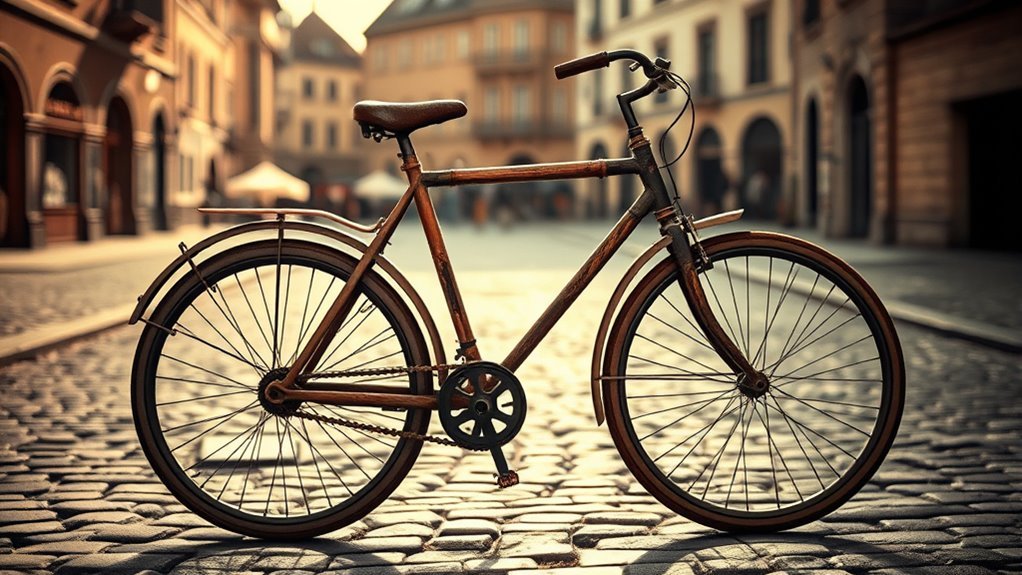
You’ll find that the first bicycle was made in 1817 by Karl von Drais. His invention, called the Laufmaschine or Dandy Horse, had no pedals or brakes and was powered by pushing your feet along the ground.
It was the first steerable two-wheeled vehicle and set the stage for faster, more efficient travel without horses.
This early bike might seem simple now, but it was a huge step forward back then. Imagine traveling without relying on horses—this was a game changer!
If you want to explore how this early innovation transformed into the modern bicycles we use today, there’s more to uncover.
Key Takeaways
- The first bicycle, called the Laufmaschine or Dandy Horse, was created by Karl von Drais in 1817. It was a two-wheeled, steerable vehicle without pedals or brakes.
- Instead of pedals, you’d push your feet against the ground to move it along. It was quite simple but clever for its time.
- The Laufmaschine was shown off publicly in Mannheim in 1817 and then in Paris in 1818. People were pretty amazed by this new way of getting around.
- This early invention set the stage for future bicycles, which later included pedals and other improvements. It really was the starting point for what we know as the modern bike today.
The Invention of the First Bicycle by Karl Von Drais (1817)
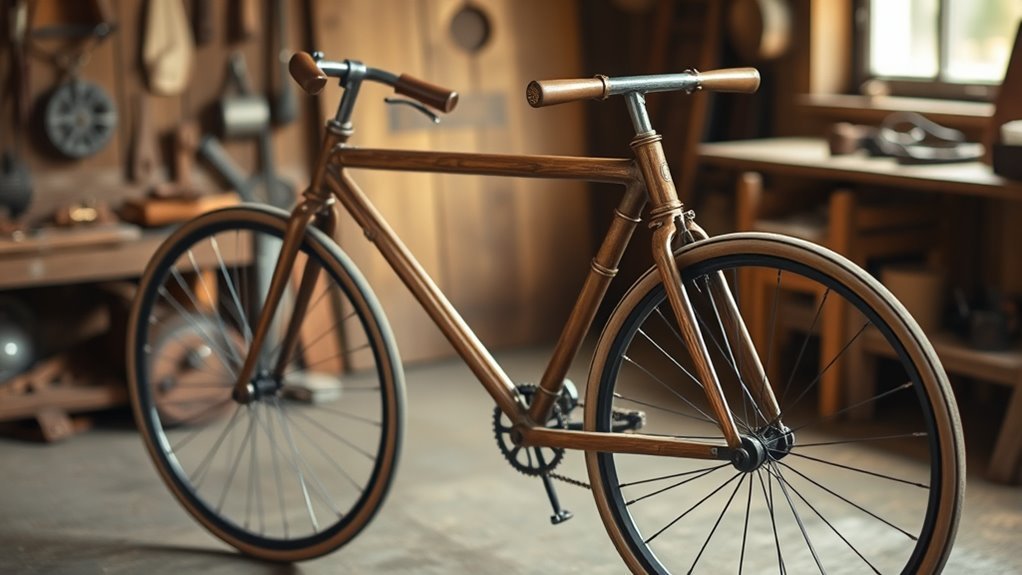
Although it lacked pedals and brakes, Karl von Drais’s 1817 invention, the Laufmaschine, marked a breakthrough as the first steerable, two-wheeled vehicle you could propel by pushing your feet against the ground. Known also as the Dandy Horse, this human-propelled invention featured a wooden frame and handlebars for steering.
When you sat on its wooden saddle, you controlled direction while pushing off the ground with your feet. It was a practical alternative transportation method during a time when traditional travel was disrupted by crop failures following the 1815 eruption of Mount Tambora.
Karl von Drais introduced the Laufmaschine in Mannheim in 1817 and later in Paris in 1818, demonstrating its effectiveness as a new way to move. This two-wheeled design laid the foundation for future innovations.
It showed that you could travel faster and more efficiently without relying on horses or carriages. The Laufmaschine was truly a pioneering invention in personal mobility.
How Early Innovations Shaped the Modern Bicycle
Because early inventors laid essential groundwork, you can appreciate how the modern bicycle evolved from simple ideas into a sophisticated machine. Karl von Drais’s 1817 invention introduced steerable two-wheel transportation, setting the stage for future innovations.
The pedal invention led to the velocipede in the 1860s, improving efficiency. Later, the safety bicycle’s diamond frame and equal wheels enhanced stability, making rides safer and more comfortable.
Pneumatic tires boosted comfort further, while chain drives and lightweight materials refined performance. These early innovations collectively shaped the modern bicycle you know today.
| Innovation | Impact |
|---|---|
| Drais’s Dandy Horse | Steerable two-wheel transportation |
| Pedal Invention | Efficient propulsion in velocipede |
| Safety Bicycle | Stability and safety improvements |
Understanding these milestones helps you see how the modern bicycle became a versatile, reliable vehicle for millions worldwide.
Frequently Asked Questions
Who Invented the Bicycle in 1790?
You can’t credit anyone with inventing the bicycle in 1790 because no credible evidence exists from that time. The first true bicycle appeared later, with Karl von Drais creating it in 1817.
How Old Is the Oldest Bicycle?
The oldest bicycle is over 200 years old. You can see the Dandy Horse, made in 1817 by Karl Drais.
It’s wooden, pedal-less, and still preserved in Munich’s Deutsches Museum for you to explore. Pretty cool, right?
When Did Bicycles Start Being Used?
Bicycles started being used in the early 19th century, around 1817, when Karl Drais invented the Laufmaschine. It was quite a breakthrough at the time.
You’ll see they evolved quickly, becoming popular for transportation and recreation by the late 1800s. People really took to them as a fun and practical way to get around.
What Is the Oldest Bicycle Brand?
Imagine riding history itself—Penny-farthing holds the crown as the oldest bicycle brand. You’ll find its roots in the late 19th century, with companies like Coventry Machinists paving the way for cycling’s golden age.
It’s pretty cool to think about how these early bikes shaped the way we ride today. Cycling has come a long way, but those old designs still have a special charm.
Conclusion
So, next time you hop on a bike, remember Karl Von Drais’s 1817 invention that started it all. Can you imagine gliding smoothly on those early wooden wheels, feeling the thrill of newfound freedom?
Early innovators didn’t just build a machine; they sparked a movement that changed how we travel and explore. Your ride today connects you to that incredible journey—one pedal stroke at a time.
Isn’t that amazing? The first bicycle made by Von Drais paved the way for countless advancements in cycling technology. From those humble beginnings, the bicycle has become a symbol of freedom, exercise, and eco-friendly transportation. Every time you ride, you’re part of a legacy that began over two centuries ago with that simple, groundbreaking invention. So enjoy your bike, and remember—it all started with the first bicycle made in 1817!