What Muscles Does the Bicycle Machine Target?
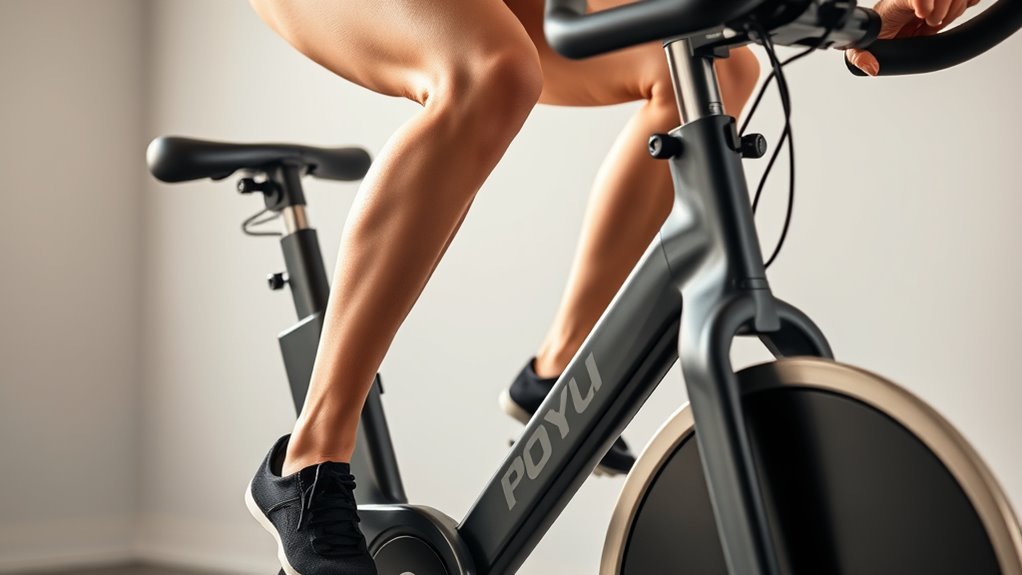
The bicycle machine targets key lower body muscles like your quadriceps, hamstrings, glutes, calves, and tibialis anterior. These muscles work together to power your pedaling and improve your overall cycling performance. Understanding how each muscle contributes can help you maximize your workout and build strength more effectively.
Your quads power the downward pedal push, while your hamstrings help control the upward pull. Glutes drive hip extension for added force, and calves stabilize your ankle for smooth pedaling.
Engaging your core also helps maintain balance throughout. Keep exploring to understand how these muscles work together to boost your cycling performance and strength.
Key Takeaways
- The bicycle machine primarily targets the quadriceps for knee extension during pedaling. These muscles work hard to push the pedals forward.
- The hamstrings assist in knee flexion and help keep the leg movement smooth throughout the pedal cycle. They play a supportive role in the motion.
- Your glute muscles generate power by driving hip extension during the forward pedal stroke. This gives you that extra push.
- Calf muscles stabilize the ankle and help transfer force effectively while pedaling. They keep things steady.
- Core muscles are key for supporting your posture, balance, and overall stability while cycling. They keep you upright and controlled.
What Lower Body Muscles Does the Bicycle Machine Work?
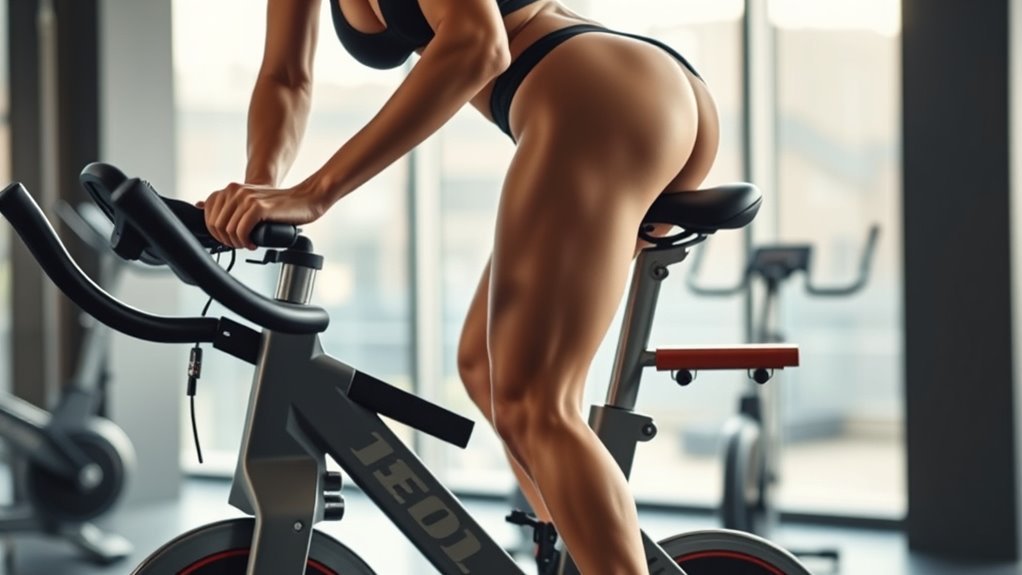
When you use the bicycle machine, your lower body muscles work together to power each pedal stroke efficiently. The quadriceps play a key role by extending your knee during the pedal push-off, providing much of the driving force.
Meanwhile, the hamstrings support knee flexion as you bring the pedal back up, controlling leg movement smoothly. Your glutes engage to perform hip extension, especially during the forward drive phase, adding power and stability.
The calves, including the gastrocnemius and soleus, stabilize your ankle and help transfer force through your foot with every revolution. Don’t forget the tibialis anterior, which dorsiflexes the ankle to keep your foot positioned correctly during the pedal’s return phase.
This coordinated muscle activation of your quadriceps, hamstrings, glutes, calves, and tibialis anterior guarantees a fluid and effective pedal stroke. It makes the bicycle machine an excellent workout for your lower body muscles.
Muscle Activation Patterns During the Bicycle Machine Pedal Cycle
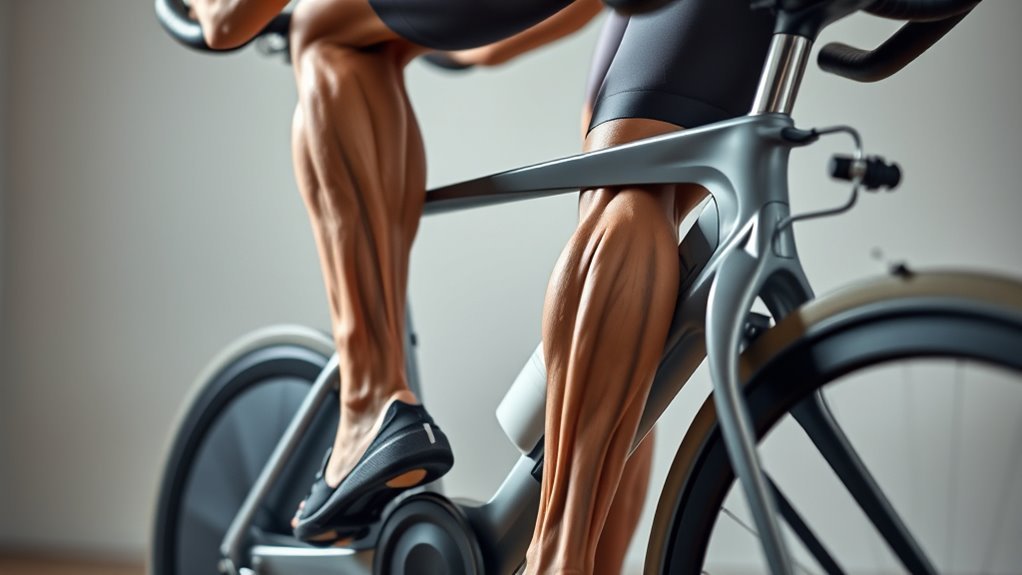
As you pedal on the bicycle machine, your muscles activate in a precise sequence to optimize movement and power output. During the pedal cycle, the quadriceps engage primarily to extend the knee during the downward push, while the hamstrings flex the knee as you pull upward.
Your glutes contribute notably by driving hip extension, especially during the power phase. The calf muscles stabilize the ankle and assist with plantarflexion, pushing the pedal downward effectively.
Meanwhile, your core stabilizers work hard to maintain posture and balance throughout the cycle, particularly as resistance increases. It’s pretty impressive how your body coordinates all these muscles smoothly.
Here’s how muscle activation breaks down:
- Quadriceps power knee extension on the downward stroke
- Hamstrings flex the knee during the upward pull
- Glutes drive hip extension for strong pedal pushes
- Calf muscles aid plantarflexion and ankle stability
- Core stabilizers maintain posture and balance during cycling
This coordinated muscle activation ensures efficient and smooth pedaling. It’s what helps you keep that steady rhythm and power flow every time you ride.
Frequently Asked Questions
Is 30 Minutes on a Stationary Bike Enough Exercise?
Yes, 30 minutes on a stationary bike is enough exercise to boost your cardiovascular health, burn calories, and improve endurance.
Consistency matters, so keep cycling regularly to meet your fitness goals and stay healthy.
Just make sure to enjoy the ride and listen to your body as you go!
Does the Bicycle Machine Build Muscle?
You won’t turn into the Hulk just by using the bicycle machine, but it does help build muscle endurance and tone your legs.
To bulk up, you’ll need heavier resistance and extra strength training alongside it.
What Does 20 Minutes on a Stationary Bike Do?
In 20 minutes, you boost your heart health, burn calories, and increase lung capacity. You’ll also improve endurance in your lower body, shed some fat, and lift your mood by releasing feel-good endorphins.
It’s pretty amazing what just a short ride can do, right? Plus, it’s a great way to fit exercise into a busy day without feeling overwhelmed.
What Are the Downsides of Stationary Bikes?
Stationary bikes can be a double-edged sword—you’ll build leg strength, but risk muscle imbalances, knee strain, and numbness.
If you don’t mix exercises, you might end up with poor posture and neglect upper body strength. So, it’s good to switch things up now and then!
Conclusion
When you hop on the bicycle machine, you’re putting your lower body muscles to work in a well-rounded way. Your quads, hamstrings, calves, and glutes all get their fair share of the action throughout the pedal cycle.
It’s like hitting two birds with one stone—building strength and boosting endurance simultaneously. So, keep pedaling with purpose, and you’ll see those muscles firing on all cylinders in no time!
Using the bicycle machine targets key lower body muscles effectively. Your quads drive the pedals, while hamstrings and calves assist with the motion. The glutes also engage to stabilize and power each stroke. This combination not only strengthens muscles but also improves cardiovascular endurance. Whether you’re cycling for fitness or rehab, the bicycle machine offers a balanced workout that hits multiple muscle groups. Keep consistent, and you’ll notice increased muscle tone and stamina, making this machine a great choice for anyone looking to enhance lower body strength and endurance.