How Do Bicycle Gears Work?
You control how hard or easy pedaling feels by shifting your bike’s gears to match the terrain. Bicycle gears work by changing the resistance you feel when you pedal, making it easier or harder depending on where you’re riding.
Lower gears have smaller front chainrings and larger rear cogs, which make pedaling easier, especially when you’re climbing hills.
Higher gears, on the other hand, combine larger chainrings with smaller sprockets. This setup increases resistance, helping you go faster on flat roads or downhill.
Your shifters move the chain across these gears through derailleurs. This lets you adjust your effort and speed smoothly without losing momentum.
Understanding how this gear system works can really improve your riding experience. It helps you pedal more efficiently and comfortably, so you can enjoy every ride, whether it’s a tough climb or a speedy descent.
More insights on this are coming up!
Key Takeaways
- Bicycle gears adjust pedaling resistance by changing the size of front chainrings and rear sprockets to match terrain conditions. This helps you pedal easier or harder depending on where you’re riding.
- Lower gears use small front chainrings and large rear cogs to reduce pedaling effort for climbing hills. So, when you’re going uphill, it feels less tiring.
- Higher gears combine large front chainrings with small rear sprockets to increase resistance for faster speeds on flat or downhill sections. That way, you can go faster without spinning your legs too quickly.
- Derailleurs move the chain across chainrings and sprockets, controlled by handlebar shifters for smooth gear changes. It’s like having a helper that shifts gears for you when you ask.
- Proper gear coordination optimizes pedaling efficiency, balancing effort and speed for varied cycling terrains. Using the right gear makes your ride smoother and more enjoyable.
How Bicycle Gears Make Pedaling Easier or Harder
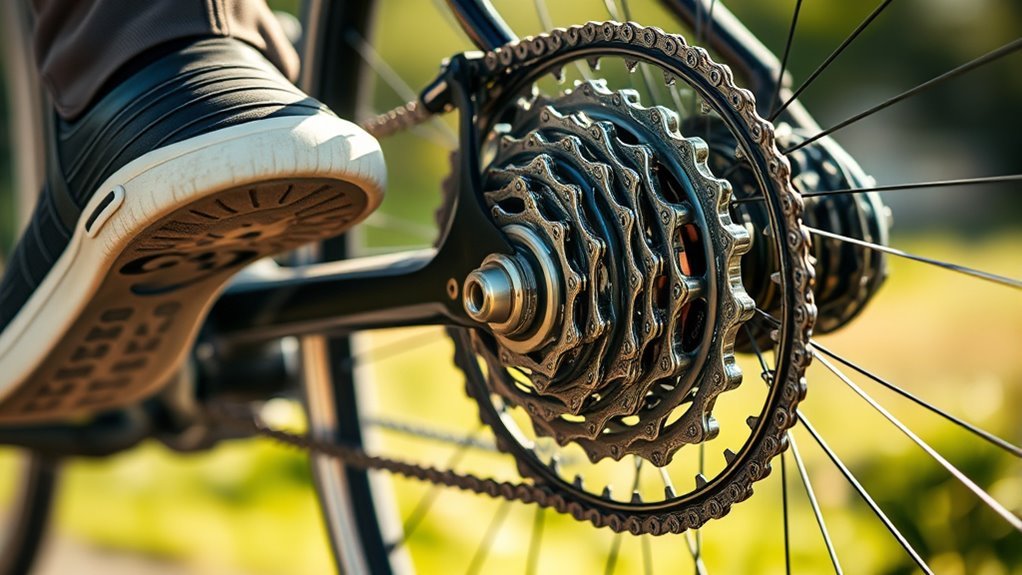
When you shift bicycle gears, you change the size of the front chainrings and rear cogs, which adjusts the pedaling resistance to suit the terrain. By selecting different gear ratios, you control how hard or easy pedaling feels.
Lower gears use smaller front chainrings combined with larger rear cogs, reducing the pedaling effort needed, especially when climbing hills. This gear shifting lowers the torque required to turn the pedals, helping you maintain a steady cadence without exhausting yourself.
Lower gears combine small front chainrings with large rear cogs to ease pedaling and maintain steady cadence uphill.
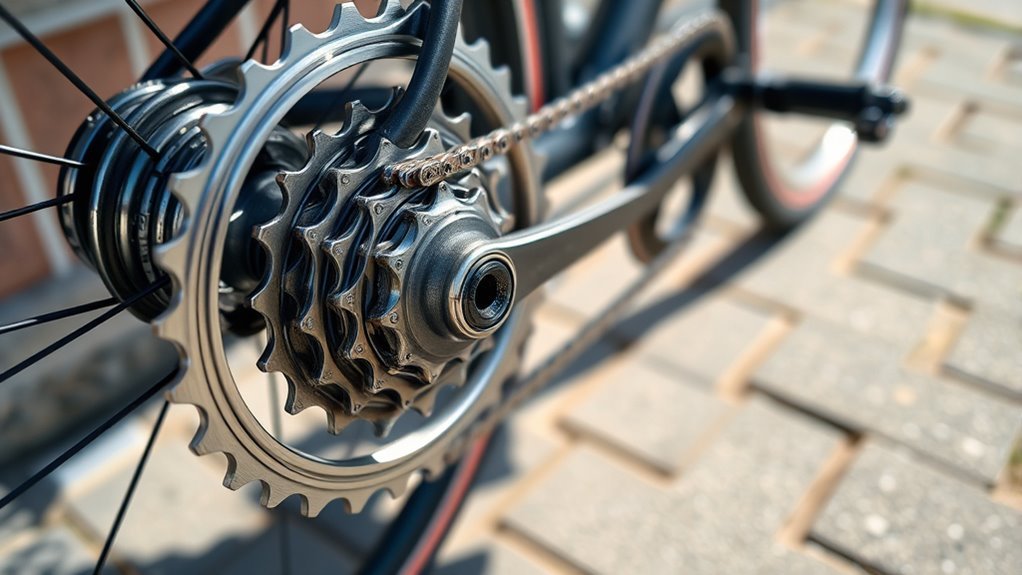
On the other hand, higher gears pair a large front chainring with the smallest rear sprocket, increasing resistance for faster speeds on flat or downhill sections. Your bike’s gear range allows you to balance pedaling effort and speed effectively, making cycling more efficient.
Understanding how front chainrings and rear cogs work together in gear shifting helps you choose the right gear at the right time. This way, you can optimize your ride across varied terrain and enjoy cycling more.
Main Components of Bicycle Gears and How They Work
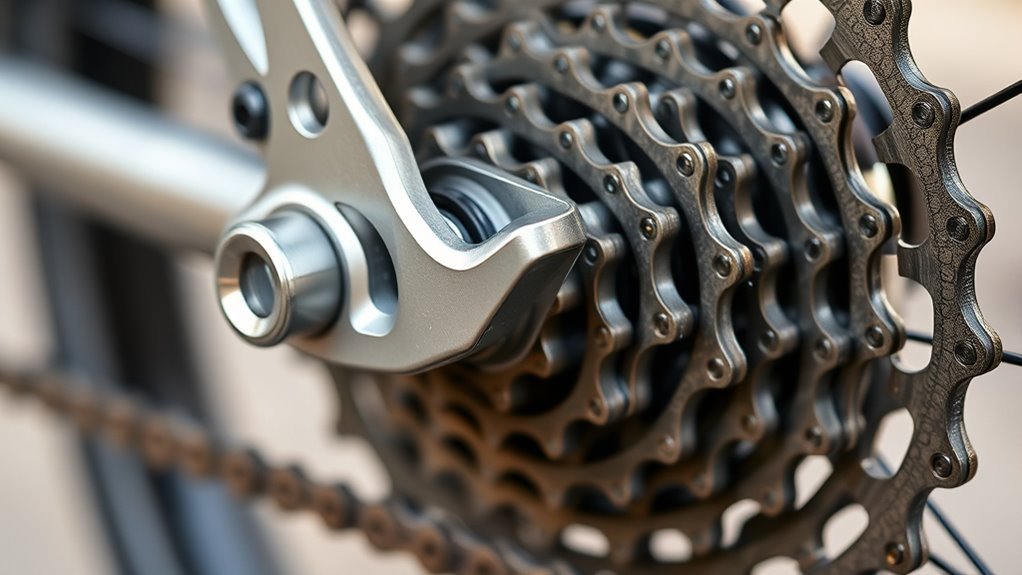
Changing gears to match the terrain relies on several key parts working together smoothly. You have chainrings at the front, attached to the crankset, which come with varying teeth counts.
These chainrings connect to the cassette at the rear, a stack of sprockets with different teeth numbers that determine your gear ratios. The chain runs between them, transferring your pedaling power.
Derailleurs are essential in this gear system. The front derailleur moves the chain between different chainrings, while the rear derailleur shifts the chain across the rear sprockets on the cassette.
You control both derailleurs using shifters on your handlebars. When you activate a shifter, it guides the chain to a specific chainring or sprocket, changing your gear ratio.
This coordination lets you pedal efficiently, whether climbing hills or cruising flat roads. Understanding these components helps you maintain smooth, responsive gear changes every ride.
Frequently Asked Questions
Is There a Proper Way to Shift Gears on a Bicycle?
Yes, you should shift gears gradually, anticipating terrain changes, and pedal steadily between 60-90 RPM.
Shift one gear at a time, avoid cross chaining, and plan ahead to keep your ride smooth and efficient. This way, you make sure everything runs nicely without any sudden jerks.
What Is the 1/2/3 Gear on a Bike?
Did you know most casual riders prefer 3-speed bikes for versatility? The 1/2/3 gear refers to how many gear options you have, letting you adjust pedaling effort from easy climbs to faster rides effortlessly.
It’s pretty handy because you can switch gears depending on the terrain or how hard you want to push yourself. So whether you’re cruising around town or tackling a hill, there’s a gear that fits your pace.
Do You Shift Bike Gears While Pedaling?
Yes, you shift bike gears while pedaling, but you should pedal lightly and steadily. Don’t put heavy pressure on the pedals during shifts to avoid chain slip or damage.
Ease off slightly for smooth gear changes. This way, your ride stays smooth and your bike stays in good shape.
How Many Gears Should I Get on a Bike?
You should get 18-24 gears if you ride mountains or hills, 7-9 for flat areas, and 16-22 for road cycling.
Choose based on your terrain to balance performance, weight, and ease of maintenance. It really depends on where you like to ride the most!
Conclusion
Now that you understand how bicycle gears weave their magic, picture yourself shifting smoothly through a garden of ever-changing paths. Each click of the gear is like turning a page in your adventure, making hills feel like gentle slopes and flats like breezy rides.
With this knowledge, you’re not just pedaling—you’re orchestrating a symphony of motion, where every gear change tunes your journey to perfection.
So, go ahead and ride the rhythm of the road! Mastering bicycle gears means you can conquer any terrain with ease, making your cycling experience smoother and more enjoyable.
Whether climbing steep hills or cruising on flat streets, knowing how to shift gears properly helps you pedal efficiently and maintain control. Embrace the power of your bike’s gears and transform every ride into a seamless, thrilling adventure.