How Does Riding a Bicycle Burn Fat?
When you ride a bicycle, you boost your metabolism and help your body break down stored fat into energy. Cycling is a fantastic way to burn fat because it engages multiple muscles and keeps your heart rate up.
When you cycle at moderate to high intensity, your body triggers lipolysis, which releases fats your muscles use for fuel.
Longer rides and varied efforts like sprints or hills increase calorie burn and fat oxidation even after you stop. This means your body keeps torching fat efficiently long after your ride ends.
Keeping your rides diverse and challenging is key to making sure your body doesn’t get too comfortable. There’s much more to discover about how to make your cycling sessions count, so keep exploring new ways to pedal your way to better fat burn!
The Science Behind Fat Burning During Cycling
Although cycling intensity and duration vary, your body primarily burns fat by ramping up energy use during the activity.
As you cycle, your energy expenditure increases, prompting fat oxidation to fuel your muscles.
The exercise intensity determines how much fat you burn; moderate to high intensity shifts your body to break down triglycerides stored in fat cells.
This process, called lipolysis, releases glycerol and free fatty acids, which mitochondria in your muscles then oxidize for energy.
Sustained cycling keeps your metabolic rate elevated, encouraging consistent fat burning.
Even after you stop, post-exercise calorie burn continues as your body consumes more oxygen to recover, further enhancing fat oxidation.
Understanding this science helps you appreciate how cycling effectively taps into your fat stores.
Effective Cycling Techniques to Maximize Fat Loss
When you incorporate effective cycling techniques, you can considerably boost fat loss and improve your overall fitness. Start by adding high-intensity interval training (HIIT) with sprints and short bursts of maximum effort to increase calorie burn and promote fat oxidation during and after your rides.
Maintaining a steady pace for 60-90 minutes raises metabolic demand, encouraging your body to use stored fat as fuel. Increasing your cycling intensity—riding faster than 15 mph or tackling hillier routes with added resistance—enhances muscle engagement and further stimulates fat loss.
Mixing endurance rides with interval sessions prevents adaptation and maximizes your results. By varying your workouts and consistently challenging yourself, you guarantee sustained improvements in fat oxidation and calorie expenditure, making your cycling routine more effective for burning fat.
Conclusion
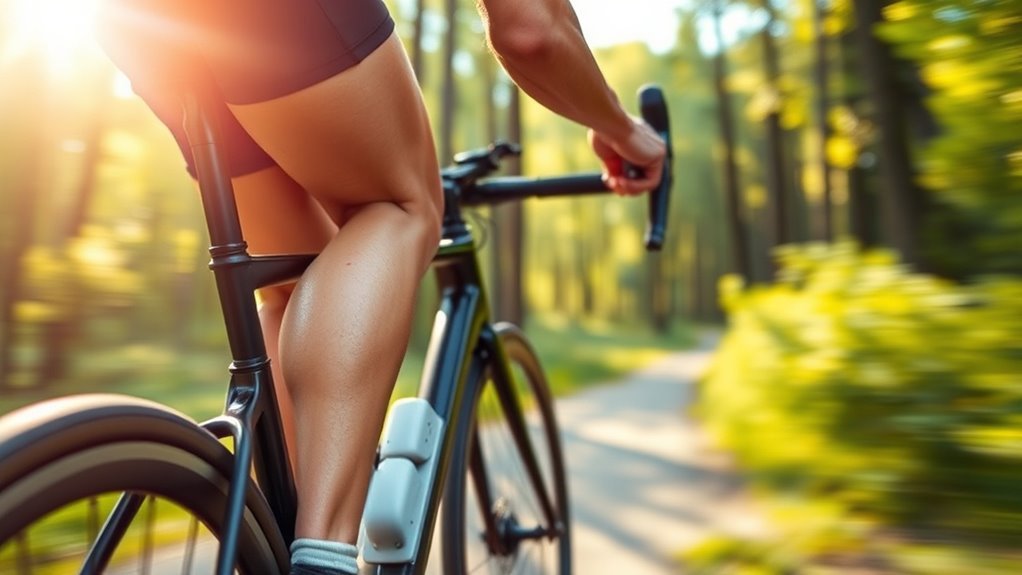
As you pedal through scenic trails or city streets, imagine your body tapping into fat stores like a hidden fuel tank powering every turn. With each steady breath and rhythmic push, you’re not just moving forward—you’re melting away fat.
You’re sculpting strength and lighting up your metabolism. Keep your pace steady and your focus sharp, and you’ll watch your energy transform.
Riding a bicycle effectively burns fat by increasing your heart rate and engaging large muscle groups. This boosts your metabolism, helping your body convert fat into energy. So, every mile you conquer brings you closer to a leaner, healthier you. Keep cycling and enjoy the journey to better fitness and fat loss!