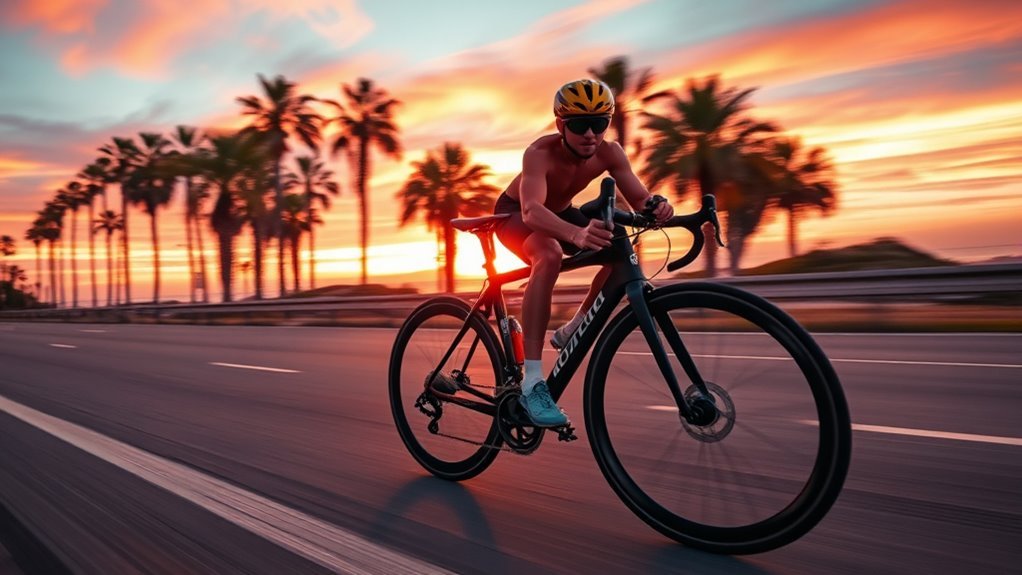
How Fast Can a Bicycle Go?
You can expect to ride a bicycle anywhere from a casual 8 to 14 mph on flat terrain.
But with better fitness, gear, and aerodynamics, your speeds can reach 25 to 28 mph during races.
Sprinting pushes that higher, sometimes up to 50 mph.
On the extreme end, specially designed bikes and perfect conditions have hit over 140 mph.
Factors like terrain, weather, and bike type all shape your speed.
Knowing these can really help you improve your ride.
Keep exploring, and you’ll discover just how fast your bike can really go.
Factors Influencing Bicycle Speed
Although many factors affect how fast you can ride a bicycle, terrain plays the biggest role. Flat surfaces let you reach higher speed, while hills slow your cycling speed down.
Weather conditions also matter—headwinds and rain reduce your pace, but tailwinds can boost it. The bicycle type influences your maximum speed; road bikes are built for speed, while mountain bikes handle rough terrain but sacrifice velocity.
Your rider fitness, including power output and endurance, directly impacts how fast you can sustain your effort. Don’t overlook external factors like tire pressure, aerodynamics, and bike maintenance, which optimize performance.
Properly inflated tires reduce rolling resistance, aerodynamic gear cuts drag, and regular maintenance keeps your bike running smoothly, all contributing to better cycling speed.
Records and Typical Speeds of Bicycles
Understanding what affects your cycling speed helps put into perspective just how fast bicycles can go. Record speeds, like Todd Reichert’s 144.18 km/h on level ground, show what’s possible with optimized power transfer and minimized aerodynamic drag.
Cycling speed depends on power and aerodynamics, with records like 144.18 km/h proving the extremes possible.
Your average speed varies greatly depending on cycling conditions and bike type. Recreational riders usually cruise at 12-14 mph, while professional cyclists reach 25-28 mph on racing bikes.
They can sprint up to 50 mph using high gear. Urban cycling slows you to 8-14 mph due to obstacles. Mountain bike speeds are lower, affected by terrain and suspension.
Speed factors like gear choice, rider fitness, and aerodynamics all play a role. Whether you’re pushing a mountain bike or a streamlined racer, understanding these speeds helps you set realistic goals and improve your ride.
Conclusion
When you hop on a bike, the wind becomes your partner, pushing you faster than you might think. Your speed isn’t just about how hard you pedal—it’s the road beneath, the gears you choose, and even the air around you dancing with resistance.
Like a bird slicing through the sky, your bicycle’s true speed depends on how well you harness these forces. So, gear up and let the ride carry you beyond limits.
Understanding how fast a bicycle can go means paying attention to more than just pedaling power. The road surface, gear settings, and air resistance all play key roles in your speed. By mastering these elements, you can ride faster and smoother, making every journey more exhilarating. So next time you ask, “How fast can a bicycle go?” remember—it’s a mix of your effort and the environment working together to push you forward.