How Do You Start a Dirt Bike in 10 Easy Steps?
To start your dirt bike, first check the fuel, oil, and controls to make sure everything is in good shape. Make sure the ignition is ON and the choke is set properly, especially if the engine is cold.
Stand on the left side of the bike with your right foot ready on the kickstarter. Gently press the kickstarter to feel for compression. Once you do, apply a strong, smooth kick to get the engine going.
Keep the bike stable as it starts, then let the engine warm up for a few minutes before you hit the trail.
If your dirt bike won’t start right away, don’t worry! There are some handy tips and troubleshooting steps you can try to improve your technique and get it running smoothly.
Key Takeaways
- Ensure the fuel valve is on, oil level is adequate, and the ignition switch is set to ON before starting.
- Position yourself on the left side, place your right foot on the kick starter, and grip the handlebars firmly.
- Use gentle kicks to find the compression stroke, then apply a strong, smooth kick to start the engine.
- Fully engage the choke for cold starts, and gradually open it as the engine warms up.
- After starting, let the engine idle for 3–5 minutes to warm up before riding.
Get to Know Your Dirt Bike’s Starting System
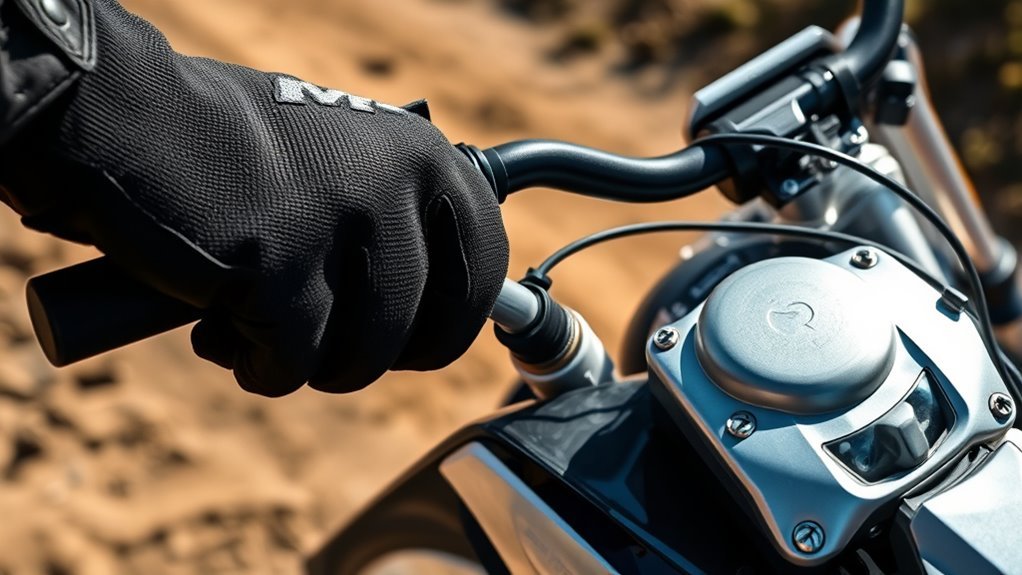
Before you fire up your dirt bike, it’s essential to understand its starting system—whether it uses an electric start, a kick start, or both. First, locate and familiarize yourself with the ignition switch, which powers the bike’s electrical system.
Knowing how to operate it correctly prevents unnecessary battery drain or starting issues. If your bike has a kick start, practice using it smoothly, as this mechanical method requires a firm, controlled motion to engage the engine properly.
Check your owner’s manual for any model-specific starting procedures and quirks. Understanding how the compression stroke and throttle position affect starting will help you avoid stalling or flooding the engine.
Check Fuel, Oil, and Controls Before Starting
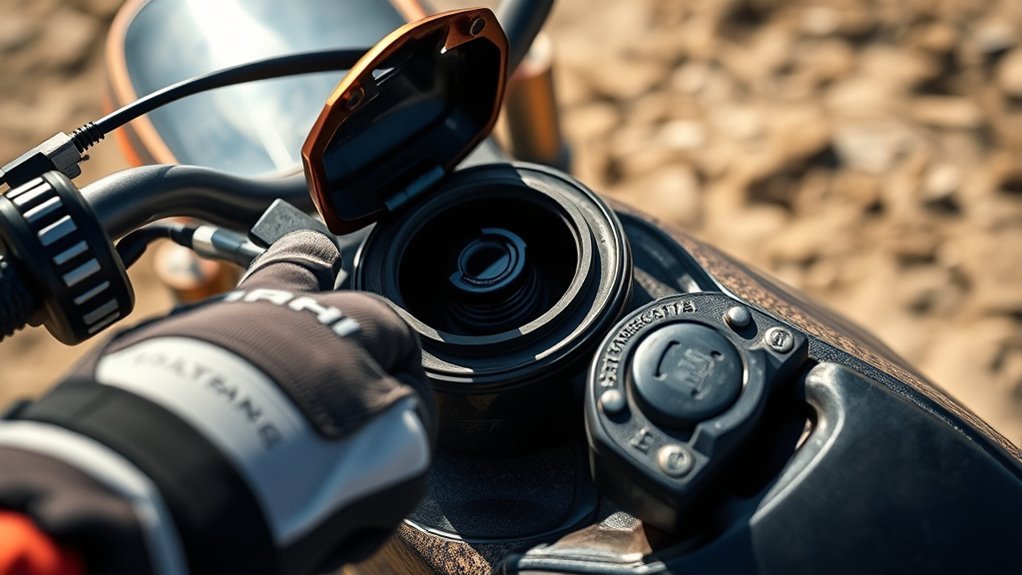
Once you understand how your dirt bike’s starting system works, the next step is to make certain the bike is ready to fire up by checking fuel, oil, and controls.
First, check fuel by ensuring the tank has fresh gasoline and the fuel valve is turned on. Next, check the oil level using the dipstick or sight glass, topping it up if needed to keep the engine properly lubricated.
Ensure fresh gasoline in the tank and check oil levels, topping up as needed for smooth engine performance.
Then, confirm the ignition switch is in the ON position so the electrical systems and spark are active. Also, set the choke correctly for cold starts if your bike has one.
Finally, verify the controls are in their default states: the kill switch should be on, and the throttle should be in neutral.
Making sure these basics are in place prevents common startup issues and helps your dirt bike run smoothly right from the start. This careful prep sets you up for a successful ignition every time.
Position Yourself Correctly for Kick Starting
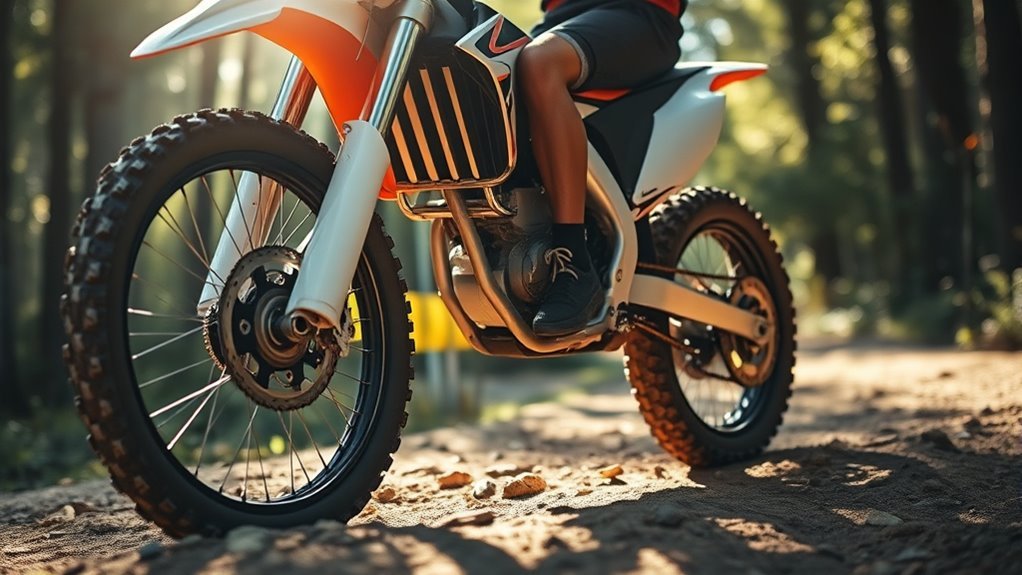
Although it might seem straightforward, positioning yourself correctly on the left side of the bike is essential for a smooth kick start. To get the best leverage and control, you need to focus on your body position and how you engage with the kick starter.
Here’s how to position yourself properly:
- Stand on the left side with your left foot firmly on the ground for balance.
- Place your right foot securely on the kick starter, ready to push down in a natural motion.
- Keep your body upright and centered over the bike to maximize force during the kick.
- Grip the handlebars firmly and lean slightly forward to maintain stability.
Just remember, getting this right makes all the difference when you’re starting up.
Find the Compression Stroke on the Kick Starter
Getting your body in the right position sets you up to feel the kick starter’s resistance, which signals the compression stroke. As you gently press the kickstarter, you’ll notice increasing resistance—this is the piston reaching its highest point inside the cylinder, creating maximum pressure in the combustion chamber.
This resistance indicates the compression stroke, a vital moment just before the engine fires.
On four-stroke dirt bikes, the compression stroke happens every second revolution of the crankshaft, so timing your kick here makes starting much easier. Recognizing this stroke ensures you apply force when the engine is primed.
| Step | What You Feel |
|---|---|
| Start pressing | Little to no resistance |
| Approaching top | Resistance builds |
| Compression stroke | Maximum resistance felt |
| After compression | Resistance drops |
Finding this compression stroke helps you kick efficiently and avoid wasted effort.
Use Soft Kicks to Prime the Engine
Before applying full force to the kickstarter, you should use soft, controlled kicks to prime the engine. Doing so prepares your dirt bike’s engine for a smoother start and reduces the risk of damage.
When starting a dirt bike, these soft kicks help lubricate the internal components and build momentum before you give it a strong push.
Keep these tips in mind when using soft kicks to prime the engine:
- Gently press the kickstarter until you feel slight resistance, marking the compression stroke.
- Use consistent, soft kicks to warm up the engine gradually.
- Avoid forceful kicks initially to protect the kickstarter and engine parts.
- Repeat soft kicks as needed to increase the chance of a successful start.
Give a Strong Kick to Start the Engine
Once you’ve prepped the engine with soft kicks, it’s time to apply a strong, decisive kick to start the dirt bike. Position your foot firmly on the kick starter, keeping your heel slightly raised to gain better leverage.
After soft kicks, deliver a strong, confident kick with your heel raised for optimal leverage.
With the ball of your foot—not your toes—apply force in a quick, controlled motion. Kick through the full range of the kick starter to engage the compression stroke effectively.
Make sure the bike is in neutral or 2nd gear to prevent it from lurching forward. Follow through with a strong, deliberate kick without hesitation to generate enough power to ignite the engine.
This firm kick activates the engine’s compression and ignition system, helping the dirt bike roar to life. Remember, consistency and confidence in your kick will get your dirt bike started smoothly every time.
Use the Choke to Start in Cold Weather
When starting your dirt bike in cold weather, you’ll want to use the choke to enrich the fuel mixture and make ignition easier. Make sure to adjust the choke fully or as your manual recommends.
Then, keep it on while the engine warms up to prevent stalling. This helps the bike run smoothly until it’s ready to go without the choke.
Always follow safety tips and your bike’s specific instructions to avoid flooding or engine damage. It’s better to be cautious and keep your bike in good shape!
When To Use Choke
Although starting a cold dirt bike can be challenging, using the choke helps enrich the fuel mixture and makes ignition easier. You should check to make sure you use the choke properly, following the guidelines in your owner’s manual.
Here’s when to use the choke:
- Use the choke fully or partially when the engine is cold, especially in cold weather. Engage it before you try to start a motorcycle to prevent stalling from a lean fuel mixture.
- Gradually disengage the choke as the engine warms and runs smoothly. Never leave the choke on too long to avoid flooding or poor dirt bike performance.
Following these steps will help your dirt bike start reliably and run well in chilly conditions. It’s really worth getting this right!
Choke Adjustment Tips
Because cold weather makes starting a dirt bike more difficult, you’ll want to use the choke properly to enrich the fuel mixture and get the engine going. Begin with the choke fully closed to improve starting success.
As the engine warms up, gradually open the choke to prevent flooding and stalling. Consult your owner’s manual since choke types vary between manual and automatic.
Here’s a quick guide on choke adjustment during starting a dirt bike in cold weather:
| Step | Choke Position | Engine Warm-up Stage |
|---|---|---|
| 1 | Fully Closed | Cold start |
| 2 | 3/4 Closed | Initial engine run |
| 3 | Half Open | Engine begins warming |
| 4 | 1/4 Open | Engine almost warm |
| 5 | Fully Open | Engine warm, normal running |
Choke Safety Precautions
Proper choke adjustment helps your dirt bike start smoothly in cold weather, but using the choke safely is just as important. Misusing the choke can lead to engine flooding or stalling, so follow these precautions carefully.
Always check your owner’s manual for the exact choke operation and starting procedures for your bike. When starting cold, fully engage the choke to enrich the fuel mixture, but don’t leave it on too long once the engine runs.
Keep these choke safety tips in mind: gradually turn off the choke as the engine warms up to avoid running too rich. Also, avoid prolonged choke use to prevent engine flooding.
Use the choke only during cold starts, and monitor engine response closely to adjust choke operation properly. Sticking to these will protect your engine and ensure reliable starts every time.
What to Do If Your Dirt Bike Won’t Start
If your dirt bike won’t start, first check the basics like the fuel valve, kill switch, and neutral gear. These simple things can easily be overlooked but are often the cause.
Next, inspect the spark plug, choke, and carburetor for common issues that might be blocking ignition. Sometimes a quick look here can save you a lot of hassle.
If those don’t work, try alternative methods like manually kicking the engine to troubleshoot further. It’s worth giving this a shot before you dig deeper into more complex problems.
Troubleshooting Common Issues
When your dirt bike won’t start, start by checking the basics: fuel supply, choke position, and the kill switch to make certain it’s turned ON.
Next, troubleshoot these common issues:
- Inspect the spark plug for dirt or damage and ensure it’s securely connected to spark ignition.
- Verify that the fuel supply is adequate and the carburetor isn’t clogged.
Check that the bike is in neutral and the clutch lever is fully engaged.
Examine electrical connections for loose wiring or corrosion, especially around the battery if your model has one.
Addressing these points often resolves starting problems.
If the engine still won’t turn over, avoid forcing the start. Instead, revisit each step to confirm everything’s in proper order before trying again.
Alternative Starting Methods
Although you’ve checked the basics, your dirt bike still won’t start, there are alternative methods you can try to get it running.
First, inspect electrical connections and jump-start the battery if needed. Next, test or bypass the kill switch to ensure it’s not blocking ignition.
Using starting fluid sparingly in the air filter can help cold starts. Also, check the spark plug and fuel system for faults.
| Method | Action | Tip |
|---|---|---|
| Electrical Check | Inspect/jump-start battery | Focus on loose connections |
| Kill Switch | Bypass or test | Prevents accidental shutdown |
| Starting Fluid | Spray sparingly in air filter | Avoid overuse |
| Spark Plug | Clean or replace | Ensures proper ignition |
| Fuel System | Check lines & carburetor for clogs | Maintain fuel flow |
Warm Up the Engine Before Riding
Before you hit the trail, let your dirt bike engine idle for 3 to 5 minutes. This helps guarantee proper lubrication and lets the engine reach the right temperature.
This warm-up period is really important for smooth performance and keeping your engine in good shape. While it’s idling, gently rev the throttle a bit to circulate the oil and help the engine get to that ideal temperature. Just don’t rev too hard or too fast, because that can cause wear or overheating.
Here are some tips to keep in mind during warm-up:
Use the choke if the engine is cold, then slowly ease it off as the engine warms up. Let the engine idle steadily and don’t rush the process.
Listen closely for smooth operation before you start speeding up or riding aggressively. Also, keep an eye on the engine temperature to make sure it’s good to go.
Following this warm-up routine will get your dirt bike ready for a safe and enjoyable ride.
Common Kick Starting Mistakes and Safety Tips
Since kick starting a dirt bike requires both technique and patience, rushing the process or neglecting proper steps can easily lead to starting issues or even injuries. One common mistake is rushing the kickstarter, which often causes incomplete combustion and makes the engine hard to start.
Kickstarting a dirt bike demands patience and proper technique to avoid starting problems and potential injuries.
Always use the proper technique—position your foot securely on the kickstarter to avoid slips or injuries. Skipping the choke, especially in cold weather, can prevent the bike from firing up properly, so don’t overlook this vital step.
Applying excessive force on the kickstarter can damage internal components, so use smooth, controlled pressure. For safety, confirm the bike is stable and on a flat surface before starting.
Also, avoid ignoring the starting sequence; let the engine warm up before riding to prevent mechanical strain. By focusing on proper technique and safety, you’ll keep your bike running smoothly and yourself injury-free.
Frequently Asked Questions
How to Start a Dirt Bike Step by Step?
Sit on the bike, turn on the ignition, and make sure it’s in neutral. Use the choke if the engine is cold.
Kick the starter firmly until the engine fires. Let it idle for a bit.
Then, reset the choke before you start riding. Easy, right? Just take it step by step!
How to Start Riding a Dirt Bike?
Did you know over 50% of new riders quit due to fear? Don’t be one of them—start slow, keep your balance, and practice shifting gears smoothly.
You’ll gain confidence and enjoy riding your dirt bike in no time! Just take it step by step, and before you know it, you’ll be having a blast out there.
How to Start a Bike for Beginners?
You’ll want to check the bike’s in neutral, turn the ignition on, and set the kill switch properly. Use the choke, then gently kick or push start it.
Make sure to warm the engine before riding. It helps everything run smoothly. And don’t forget to always wear safety gear—it’s super important for your protection!
How to Bump Start a Dirt Bike Without Clutch?
You don’t need the clutch to bump start your dirt bike. Simply put it in second gear, push to gain speed, then release the throttle and sit firmly.
Twist the throttle slightly as it rolls to ignite the engine. It’s pretty straightforward once you get the hang of it. Just make sure you have enough momentum before you try to start it.
Conclusion
Starting your dirt bike is like waking a sleeping dragon—gentle at first, then powerful. Remember, just as a dragon needs fuel and a warm fire, your bike needs proper checks and a warm engine to roar to life.
Stick to these 10 easy steps, and you’ll be riding confidently in no time. Keep practicing, and soon, starting your bike will feel as natural as breathing—effortless and thrilling every single time.
With these simple steps, starting your dirt bike becomes second nature. Whether you’re a beginner or just need a refresher, following this guide ensures your dirt bike starts smoothly every time. So get out there, follow these tips, and enjoy the freedom and excitement that comes with riding your dirt bike with confidence!