How Long Does It Take to Bike 100 Miles – A Complete Guide
Biking 100 miles usually takes you between five to eight hours, depending on your fitness, terrain, and weather conditions.
How long it takes to bike 100 miles can vary a lot based on these factors, so it’s good to plan accordingly.
Beginners often average 12-14 mph, while experienced cyclists cruise at 20+ mph.
You’ll want to pace yourself around 16-18 mph and take breaks every 20-25 miles to stay strong.
Proper hydration and nutrition play a big role in maintaining energy.
If you want to optimize your ride and endurance, there’s plenty more to explore.
So, ready to hit the road and tackle those 100 miles?
Key Takeaways
- Average beginners take 7-8 hours to bike 100 miles at 12-14 mph, while experienced cyclists finish under 5 hours at 20+ mph.
- Terrain, weather, and rider fitness significantly affect total riding time. Hills and headwinds, for example, can really slow you down.
- Maintaining a steady pace of 16-18 mph and taking breaks every 20-25 miles helps optimize your endurance and efficiency.
- Regular hydration and consuming 150-250 calories every 15-30 minutes are key for keeping your energy up and performing well.
- Training with planned pacing, breaks, and nutrition strategies improves stamina. Plus, it helps you predict how long your ride will actually take.
Why Does Riding 100 Miles Take Different Amounts of Time?
Although biking 100 miles might seem straightforward, the time it takes can vary widely depending on several factors. Your riding time depends heavily on rider fitness—beginners often average 12-14 mph, taking 7-8 hours, while experienced cyclists can push 20+ mph and finish in under 5 hours.
Terrain plays a big role, too; flat routes let you ride faster, but elevation gain on hilly courses can add an hour or more. Weather conditions like headwinds or rain slow you down by 2-4 mph, increasing your overall time.
How you manage your effort level and fatigue influences your pace, and your bike setup can make a difference in comfort and efficiency. Pacing strategies and rest stops affect total duration, as frequent breaks extend your ride.
Understanding these elements helps explain why riding 100 miles takes different amounts of time for every cyclist. It’s all about how these factors come together on any given day.
Planning Your Pace and Breaks to Bike 100 Miles Efficiently
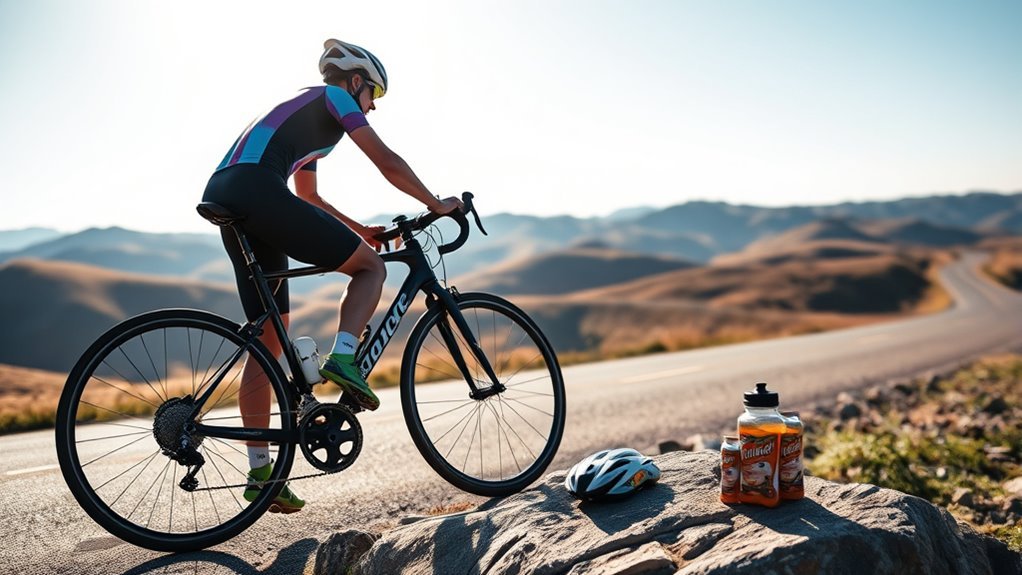
When you plan your pace carefully, you can ride 100 miles efficiently without burning out. Aim for a steady effort between 16-18 mph, which helps balance endurance and stamina to finish in about 5.5 to 6 hours.
Incorporate breaks every 20-25 miles, lasting 10-15 minutes, to recover and maintain consistent energy levels. Managing hydration and nutrition is essential—consume 150-250 calories and fluids every 15-30 minutes to support your energy management and avoid fatigue.
Adjust your pacing based on factors like terrain, weather, and how you feel to keep your effort sustainable. It’s a good idea to practice this ride strategy during training rides to fine-tune pacing and breaks.
Doing so will help you build the stamina needed for race day. With deliberate pacing, strategic breaks, and solid nutrition and hydration, you’ll maintain steady effort and maximize your endurance throughout the 100-mile ride.
Frequently Asked Questions
How Long Should a 100 Mile Bike Ride Take?
You should expect to bike 100 miles in about 6 to 8 hours if you’re a recreational rider.
Faster cyclists can do it under 5 hours, but factors like terrain and rest stops will affect your time.
What Is the 75% Rule in Cycling?
Think of the 75% rule as your cycling compass—it means you keep your effort at 75% of your max sustainable pace.
You’ll build endurance steadily without burning out or crashing too hard during training rides.
It’s all about pacing yourself smartly, so you get stronger without overdoing it.
Pretty handy, right?
Is Biking 100 Miles Impressive?
Yes, biking 100 miles is impressive because you’re pushing your endurance and dedication to a high level.
It shows serious commitment and fitness, especially since it often takes months of training and perseverance to achieve.
Honestly, not everyone can just hop on a bike and go that far. It takes real effort and grit to get there.
How Difficult Is It to Cycle 100 Miles?
Cycling 100 miles is tough but doable if you pace yourself and stay motivated. You’ll face physical fatigue, mental challenges, and varying terrain.
Conclusion
Biking 100 miles takes different amounts of time depending on your pace, breaks, and terrain. Remember, “slow and steady wins the race.”
By planning your speed and rest stops wisely, you can tackle the distance without burning out. Listen to your body, stay hydrated, and enjoy the journey.
With the right mindset and preparation, you’ll cross that 100-mile mark feeling accomplished and ready for your next adventure. Keep pedaling!
Completing a 100-mile bike ride is all about pacing yourself and knowing when to take breaks. Whether you’re cycling on flat roads or challenging hills, your time will vary. The key is to stay consistent and not push too hard too fast. Staying hydrated and fueled helps keep your energy up throughout the ride. So, embrace the challenge, enjoy the scenery, and remember that every mile brings you closer to your goal. With proper planning and a positive attitude, biking 100 miles becomes an achievable and rewarding experience. Happy cycling!