
How to Become a Bicycle Mechanic in 3 Simple Steps
To become a bicycle mechanic, start by mastering basic skills like adjusting brakes, shifting gears, and truing wheels through hands-on practice. Getting comfortable with these fundamental repairs is key to building your confidence. These skills form the backbone of any bike mechanic’s expertise.
Next, enroll in a mechanic training program that offers certification and covers essential repairs to build your credibility. This step helps you learn more advanced techniques and shows potential employers that you’re serious about your craft. It’s a great way to expand your knowledge and open doors in the cycling industry.
Finally, gain real experience by working or volunteering at bike shops while setting up a home workshop with quality tools. Nothing beats hands-on work when it comes to sharpening your skills. Following these steps sets a strong foundation for your career, and there’s more to explore on expanding your expertise and opportunities.
Key Takeaways
- Learn basic bicycle repair skills such as brake adjustment, gear shifting, and tire maintenance through hands-on practice. Getting comfortable with these basics is key to building your confidence.
- Enroll in a bicycle mechanic training program or certification course to gain essential technical knowledge. It’s a great way to deepen what you already know and learn some pro tips.
- Gain practical experience by working or volunteering in bike shops to build real-world skills. Nothing beats learning on the job where you can see different bikes and problems.
- Set up a home workshop with essential tools to practice and refine your repair techniques regularly. Having your own space makes it easy to keep improving at your own pace.
- Continuously update your skills and knowledge to stay current with industry advancements and improve career opportunities. The bike world keeps evolving, so staying in the loop helps you stay ahead.
Master Basic Bicycle Mechanic Skills and Repairs
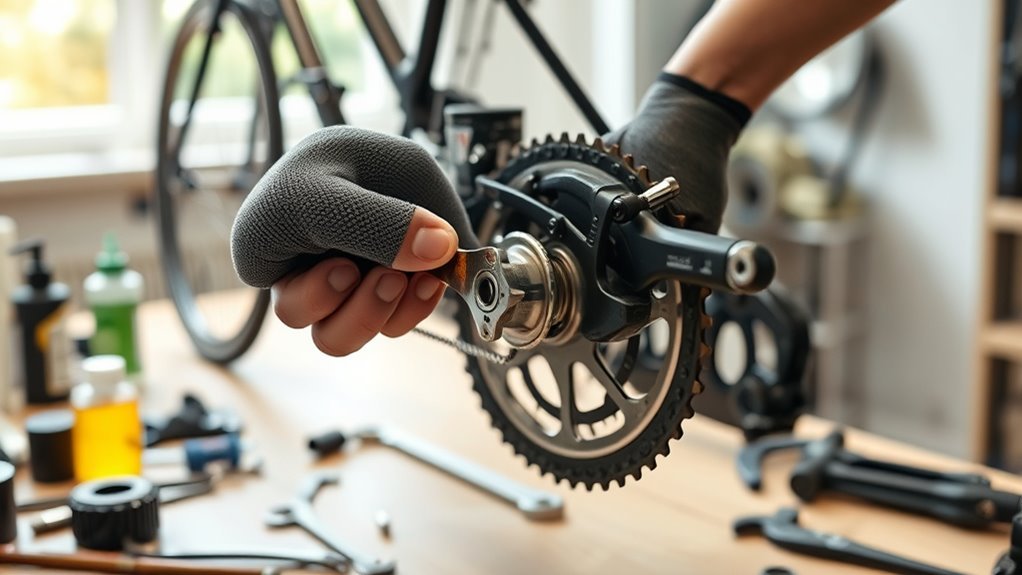
Before you can confidently fix any bike, you need to master basic skills like adjusting brakes, shifting gears, and trueing wheels. As a bicycle mechanic, developing these core abilities is essential for smooth and safe bike repairs.
You’ll gain hands-on training in a bike shop, where your skill level will grow through routine maintenance tasks such as tire repairs and chain cleaning. Wheel truing, for example, requires tool proficiency with spoke wrenches to ensure wheels spin straight and true.
Alongside this, you’ll learn to identify common issues with derailleurs, hubs, and suspension systems, sharpening your troubleshooting skills. Safety checks and proper assembly techniques are critical, preventing accidents and keeping riders safe.
The more you practice these fundamentals, the more confident you’ll become in handling all types of bike repairs. Building this solid foundation sets you up for success in your bicycle mechanic journey.
Choose Bicycle Mechanic Training and Certification
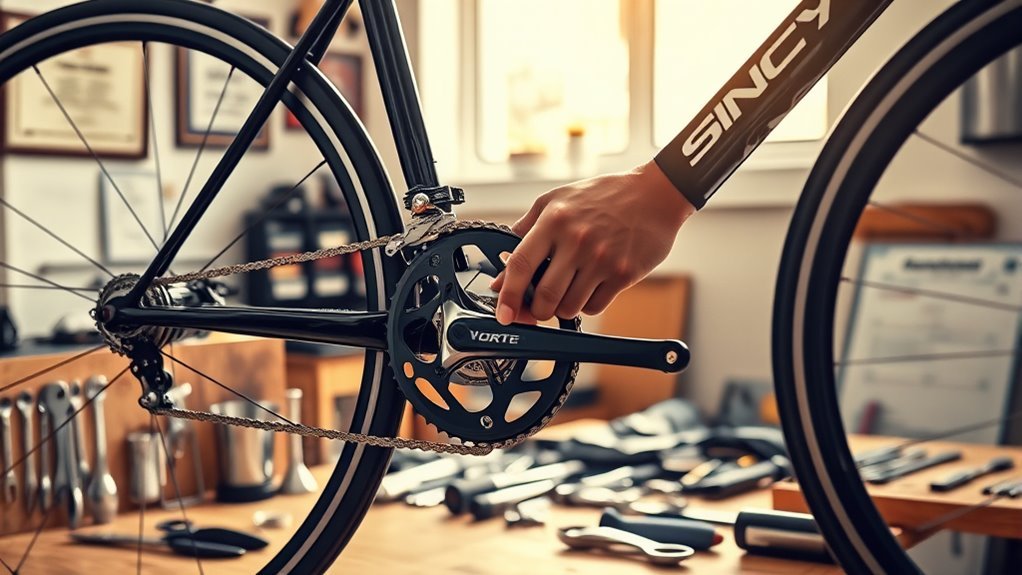
Once you’ve built a solid foundation in basic bike repairs, it’s time to find the right training program that fits your goals. Look for bicycle mechanic training that offers hands-on experience, like courses from the United Bicycle Institute or local certification programs.
After mastering basic repairs, seek hands-on bicycle mechanic training that matches your career goals.
These courses often cover essential skills development areas such as wheel building, brake adjustments, and suspension service. This way, you get a well-rounded foundation.
Pursuing certification, such as the Professional Bicycle Mechanic Certification, can boost your credibility, enhance employability, and increase your earning potential. Certification shows you have the technical skills and safety knowledge that bike shops and employers really value.
Choose a program that aligns with your career focus, whether that’s mastering basic repairs or advanced suspension and wheel technology. And don’t forget to consider continuing education options to keep your skills sharp.
Staying current in the fast-evolving cycling industry is key. This approach will set you on the path to becoming a respected professional bicycle mechanic.
Gain Bicycle Mechanic Experience and Set Up Your Workshop
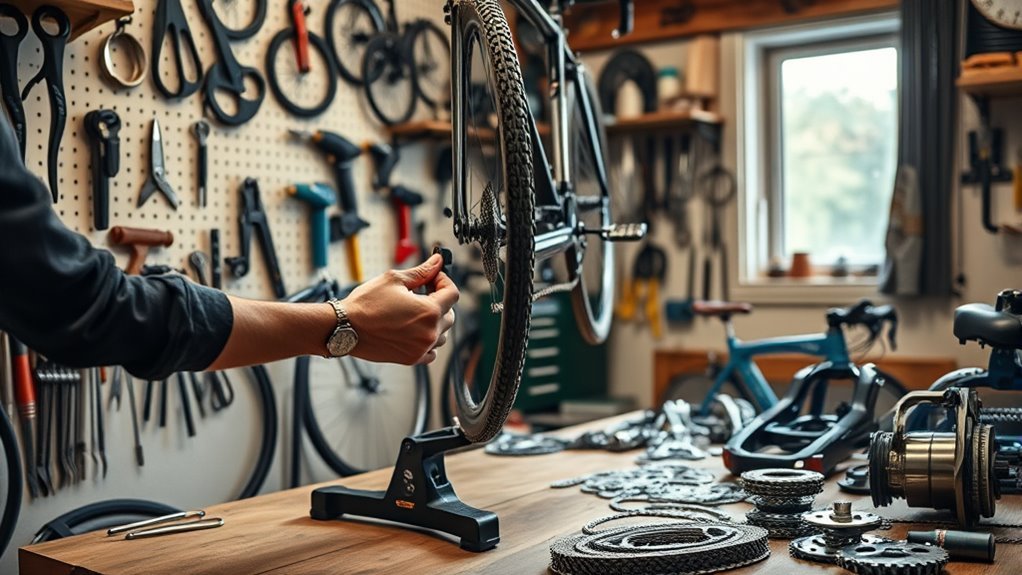
How do you turn your training into real-world skill? Gain hands-on experience by working or volunteering in a local bike shop. There, you’ll develop essential technical skills in bicycle repair.
At the same time, start setting up your workshop at home. Gather some basic tools like wrenches, tire levers, chain tools, and a sturdy work stand.
To advance your expertise, follow these steps:
- Practice repairing diverse bike types regularly. This will help you build confidence and expand your skill set.
- Invest in quality equipment such as a wheel truing stand and a hydraulic brake bleeding kit. These tools will let you handle more advanced repairs.
- Keep detailed repair documentation. It’s a great way to track your progress and showcase your abilities for future jobs or business ventures.
- Continuously improve your hands-on experience by tackling new challenges. Whether it’s in your bike shop or your own workshop, keep pushing yourself.
Frequently Asked Questions
How Long Does It Take to Become a Bike Mechanic?
It usually takes you a few months of hands-on practice and basic courses to become a competent bike mechanic. You’ll get quicker with experience, but mastering advanced skills might take years in the industry.
Getting comfortable with the basics doesn’t happen overnight. But once you’re in the groove, things start clicking faster. And that’s when the real learning begins!
Is It Hard to Become a Bicycle Mechanic?
Becoming a bicycle mechanic isn’t a walk in the park, but if you’ve got the grit and passion, you’ll pick up skills through hands-on work and learning.
Keep at it, and those tricky parts will become second nature.
How Much Do Bike Mechanics Get Paid?
You can expect to earn between AUD 40,000 and AUD 60,000 annually as a bike mechanic. Starting hourly rates are around AUD 20 to AUD 25.
As you gain experience and improve your skills, this can rise to over AUD 35. So, the more you know and do, the better you get paid!
How to Become a Certified Bicycle Mechanic?
You’ll become a certified bicycle mechanic by enrolling in recognized training programs like UBI or Park Tool School. These programs offer hands-on coursework that’s essential for learning the trade.
After completing the coursework, you’ll need to pass practical exams to prove your skills. It’s not just about getting certified once, though.
You’ll also want to stay updated with ongoing education to maintain your certification and keep your skills sharp. That way, you’ll always be ready to handle the latest bike technologies.
Conclusion
Becoming a bicycle mechanic means mastering skills, choosing the right training, and gaining hands-on experience. You’ll learn to fix gears, adjust brakes, and tune wheels with confidence.
You’ll earn certifications that prove your expertise and open doors. You’ll build your own workshop, creating a space where passion meets precision.
Embrace each step, trust your journey, and watch yourself transform from a beginner into a skilled, trusted bicycle mechanic ready to roll. With the right training, hands-on practice, and dedication, becoming a bicycle mechanic is totally achievable. Keep learning, stay curious, and soon you’ll be fixing bikes like a pro, turning your passion into a rewarding career.