How to Balance on a Bike in 5 Simple Steps
To balance on a bike, start by fitting your helmet snugly just above your eyebrows. Make sure to adjust the straps so they’re comfy but secure—safety first!
Next, set your seat low enough so your feet can touch the ground while keeping your hips level. This helps you feel steady and in control.
Then, remove the pedals and practice walking the bike. This might feel a bit strange at first, but it’s a great way to build your balance and get comfortable.
After that, try coasting down gentle slopes with your feet up. This helps improve your control and confidence while you’re moving.
Finally, pedal smoothly and brake gently using the rear brake. Keep practicing, and you’ll soon feel confident and ready to master every step of balancing on a bike!
Key Takeaways
- Adjust the bike seat so your feet comfortably touch the ground. This helps you maintain balance and control.
- Remove the pedals and practice walking the bike. It’s a great way to develop balance and coordination.
- Keep your body relaxed. Use your arms, hips, and head to stabilize yourself while moving.
- Practice coasting down gentle slopes with your feet off the pedals. This will help you improve how long you can balance.
- Gradually learn to pedal smoothly and brake gently. Doing this will help you stay stable and build confidence.
Fit Your Helmet for Safe Riding
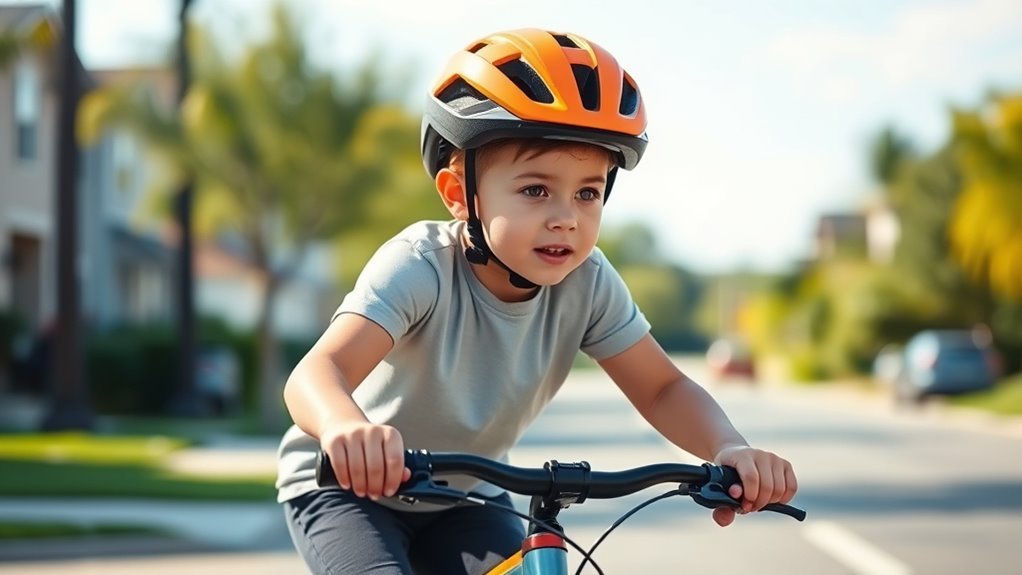
Before you start riding, make sure your helmet fits properly to keep you safe. Place the helmet level across your forehead, with the front edge sitting about an inch above your eyebrows. This guarantees the right fit and maximum protection.
Next, adjust the helmet straps so they form a snug “V” shape around your ears. Make sure the straps lie flat and are comfortable under your chin without pinching.
After adjusting, give your helmet a gentle shake side to side and front to back—if it moves, it’s not snug enough. Use a RideSizer® tool or measuring tape to confirm your helmet size matches your head circumference for maximum safety.
Adjust Your Bike Seat for Balance and Comfort
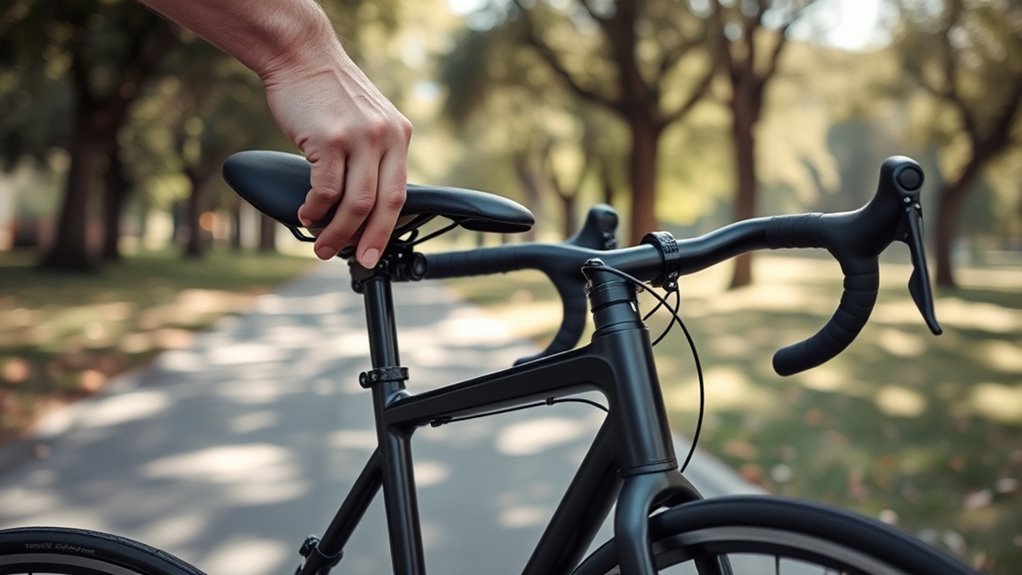
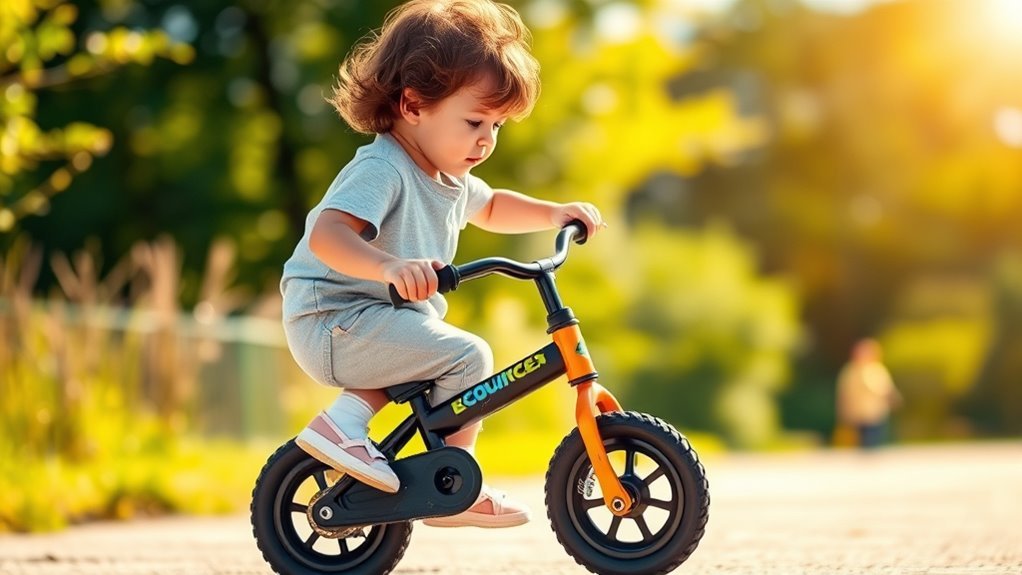
When you adjust the bike seat properly, your child can place their feet flat on the ground with their heels just grazing the pavement, which boosts both balance and confidence. Start by positioning the bike seat low enough to allow quick, stable foot placement on the ground, especially during the early learning stages.
Adjust the bike seat so your child’s feet touch the ground, enhancing balance and confidence during early rides.
Raise or lower the seat gradually in small steps—about one inch at a time—until your child feels comfortable and balanced. Make sure their hips stay level while seated, as this helps improve overall balance and control.
Once you find the right height, tightly secure the bike seat by twisting it while holding the rear wheel between your legs to prevent slipping. Adjusting the bike seat this way sets a solid foundation, making it easier for your child to focus on balancing without worrying about unstable footing or discomfort.
This simple step plays an essential role in building their confidence and balance on the bike. It really makes a difference!
Master Balance by Walking the Bike Without Pedals
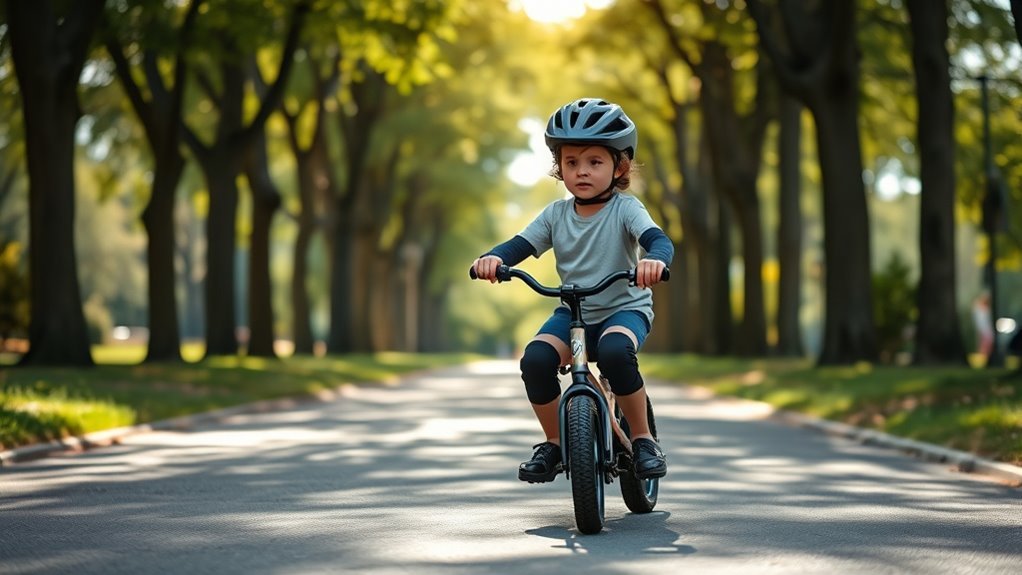
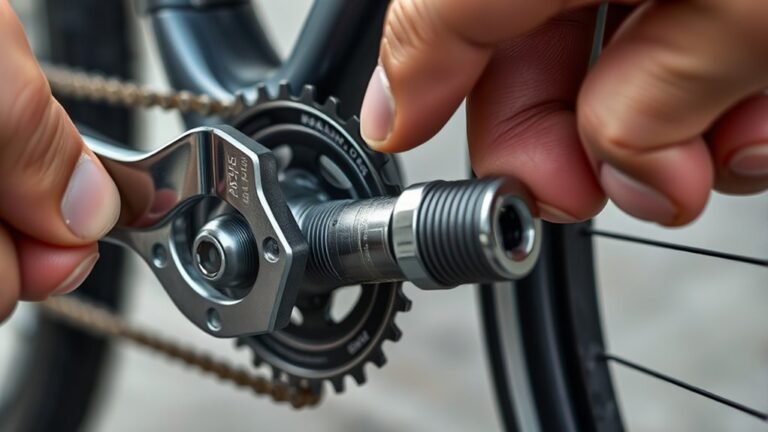
Since pedals can make balancing tricky for beginners, remove them so your child can walk the bike and focus on steering and stability. This method helps them keep their balance without worrying about pedaling.
Here’s how to master balance by walking the bike without pedals:
- Remove the pedals completely to allow free movement and control.
- Lower the seat so your child can comfortably place their foot on the ground, with heels up to one inch for better stability.
- Have your child sit on the bike seat and walk forward, using their feet to push off and keep their balance.
- Practice on a flat, smooth surface to build confidence without distractions from bumps or slopes.
Encourage your child to use their arms, hips, and head to maintain balance while walking. This step is super important before introducing pedaling, so they get a strong foundation in balance first.
Practice Coasting Down Small Slopes With Feet up
Although balancing while walking the bike builds a strong foundation, practicing coasting down small slopes with feet up helps your child learn to stay steady without pedaling. Have them coast gently down a slight slope, keeping their feet off the pedals to focus entirely on balance.
Stand at the bottom to offer support and act as a visual target, boosting their confidence. Start with small, smooth slopes to prevent speed buildup and increase difficulty gradually.
Make it fun by counting aloud as they coast, encouraging them to maintain balance for at least 15 seconds. This practice develops control and steadiness on the bike, reinforcing balance skills in a natural way.
| Step | Tip |
|---|---|
| Choose slope | Gentle and smooth for controlled coast |
| Position yourself | At bottom to support and encourage |
| Feet position | Off pedals to focus on balance |
| Duration | Aim for 15 seconds of steady coasting |
| Progression | Increase slope difficulty gradually |
Learn to Pedal Smoothly and Brake Safely
Mastering smooth pedaling and safe braking builds directly on your ability to coast steadily. To pedal and brake effectively while keeping your balance, just follow these simple steps:
First, place your feet firmly on the pedals. Start with the back pedal engaged to help control your movement.
Next, push off the ground with one foot while keeping the other on the pedal. Then, lift both feet onto the pedals to start pedaling smoothly.
Keep the pedals horizontal—one forward and one back. This helps you maintain balance and pedal more efficiently.
When it’s time to brake, shift your body weight back onto the seat. Gently pull the right handle to apply the rear brake.
Be careful not to use too much front brake since that might cause you to tip over.
Frequently Asked Questions
How to Help a Kid Learn to Balance on a Bike?
You’ll want to lower the seat so their feet touch the ground, remove pedals, and have them walk while seated.
Encourage pushing off and gliding, focusing on steering and head movements to build balance smoothly.
It’s all about helping them get comfortable and steady before adding pedals back on. Keep it fun and celebrate their progress!
How Do You Teach Balance on a Bike?
Imagine learning to balance like walking a tightrope—you start steady and cautious. You’ll teach balance by removing pedals, letting them push off with feet, and encouraging gentle coasting to build confidence and control.
It’s kind of like giving them training wheels, but without the wheels. They get to feel the bike beneath them and learn to find their balance naturally. Before you know it, they’ll be gliding along with ease!
What Is the 80/20 Rule in Biking?
The 80/20 rule in biking means you’ll gain 80% of your skill from just 20% of focused practice. So, you should concentrate on key techniques like balance and steering to improve faster and ride safer.
It’s all about working smarter, not harder. By zeroing in on the essentials, you get better results without wasting time on less important stuff.
What Is the 75% Rule in Cycling?
Imagine riding a penny-farthing—you’d need balance! The 75% rule means your bike should weigh about 75% of your body weight.
This helps you control and balance better, making riding safer and more confident for you.
Conclusion
Balancing on a bike might feel tricky at first, but with practice, it becomes as natural as riding the wind. By fitting your helmet and adjusting your seat, you’re setting yourself up for success.
Next, try walking the bike and coasting down gentle slopes. This helps you get a feel for balance without the pressure of pedaling right away.
Learning to pedal smoothly is the final piece of the puzzle. It takes some rhythm and patience, kind of like learning to dance.
Remember, balancing on a bike is all about building confidence and control step by step. Keep practicing, and soon you’ll be gliding effortlessly, enjoying every ride with safety and ease. With these simple steps, balancing on a bike will feel natural in no time!