What Is a Recumbent Bike and How to Use It
A recumbent bike offers a comfortable, ergonomic way to improve your cardiovascular health with less joint strain. It’s a great option if you want a low-impact workout that’s easy on your knees and hips.
You sit in a reclined position that supports your back and distributes your weight evenly, making exercise more enjoyable.
Adjust the seat so your knees bend slightly at the lowest pedal point. This helps prevent strain and keeps your workout safe.
Maintain good posture, then start pedaling with moderate resistance.
As you get comfortable, you can increase the intensity and add intervals to boost your fitness.
Keep exploring to discover tips for maximizing your workouts and making the most of your recumbent bike sessions.
Key Takeaways
- A recumbent bike features a reclined seat and backrest for ergonomic comfort and reduced joint stress during workouts. It’s designed to help you feel more relaxed while you exercise.
- It supports back pain relief and minimizes strain on knees and hips with a horizontal pedal stroke. So, if your joints are sensitive, this bike can be a great option.
- Proper setup involves adjusting the seat so knees are slightly bent at the pedal’s lowest point for correct posture. This way, you’ll pedal efficiently and avoid injury.
- Use smooth, consistent pedaling with moderate resistance, gradually increasing intensity to build strength safely. Don’t rush—take your time to get stronger.
- Incorporate interval training and adjust resistance to maximize cardiovascular benefits and workout effectiveness. Mixing things up keeps your workouts interesting and effective.
What Is a Recumbent Bike? Design, Benefits, and How It Works
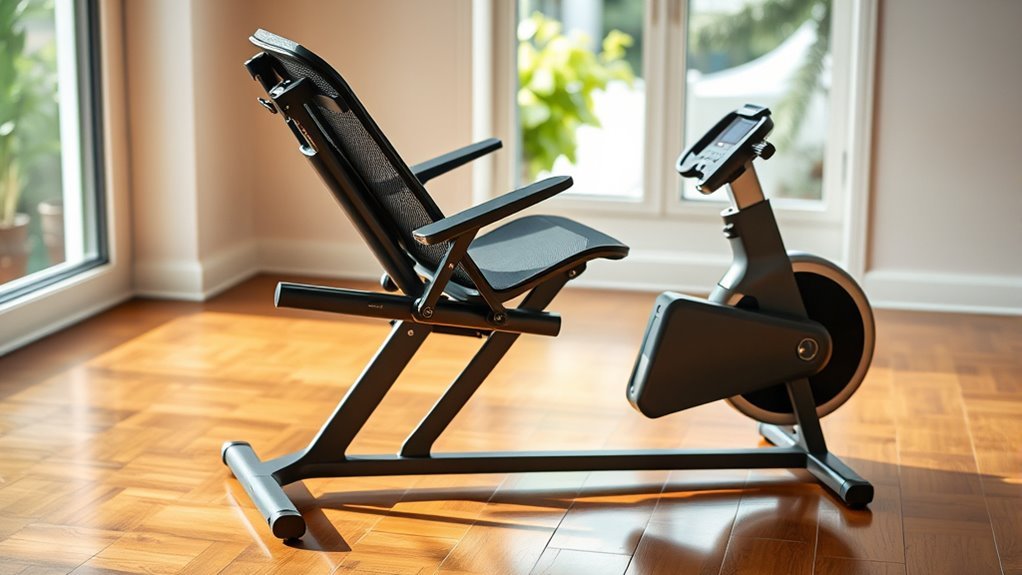
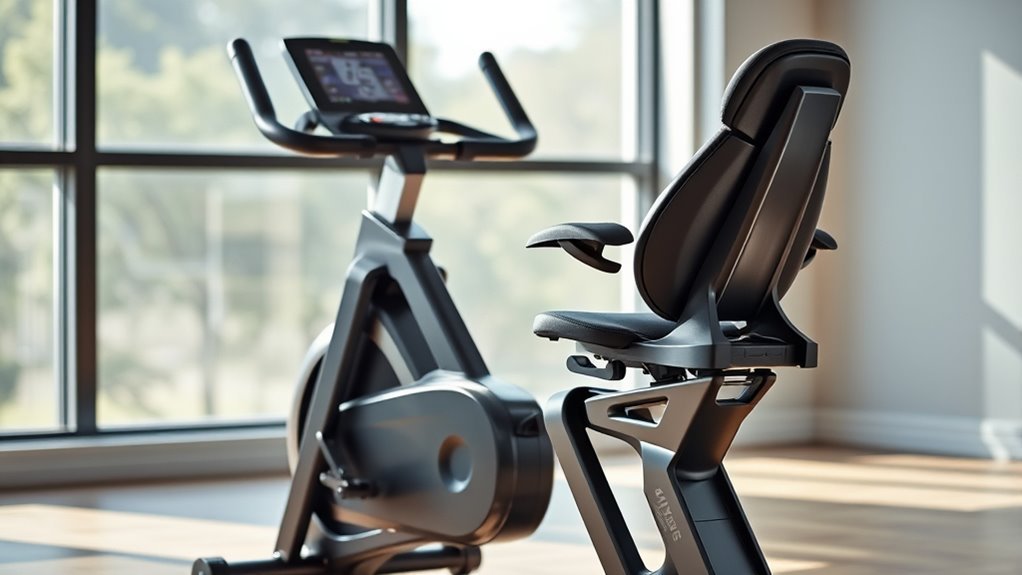
Although it looks different from a traditional bike, a recumbent bike offers a comfortable, reclined seating position that supports your back and distributes your weight evenly. This ergonomic design features a larger seat and backrest, providing excellent back support and reducing pressure points.
You’ll notice the comfort and ease right away, especially if you’re seeking back pain relief during exercise. The bike’s horizontal pedal stroke minimizes joint stress, making it ideal for low-impact exercise.
As you pedal, you engage in an effective cardiovascular fitness workout without putting strain on your knees or hips. The recumbent bike also excels in safety and stability, thanks to its lower center of gravity and sturdy frame.
Whether stationary or outdoor, variations like different wheelbases and drive types adapt to your preferences. Overall, a recumbent bike lets you enjoy an efficient, joint-friendly workout while prioritizing your comfort and well-being.
How to Get the Most Out of Your Recumbent Bike: Setup, Technique, and Workouts
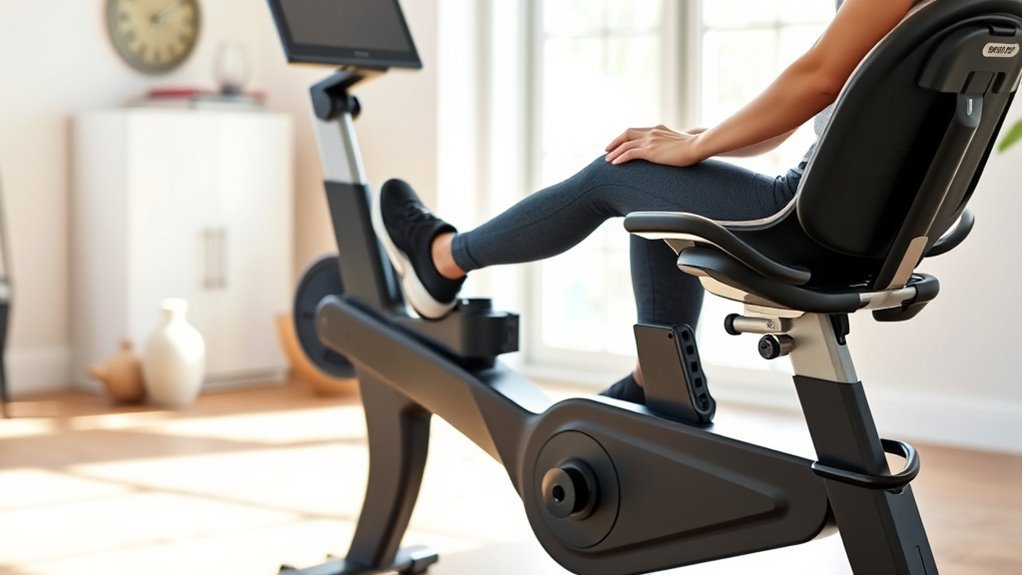
To make the most of your recumbent bike, start by adjusting the seat height so your knees stay slightly bent at the lowest point of each pedal stroke. Proper recumbent bike setup is essential for comfort and injury prevention.
Make sure you maintain proper posture by sitting upright with good back support, avoiding leaning forward. Begin your workout with a 3-minute warm-up of light pedaling to prepare your muscles.
Focus on pedaling form, keeping smooth, consistent strokes. Start with moderate resistance and gradually increase it through resistance adjustment to build strength while maintaining form.
Incorporate interval training by alternating between high and low resistance or speed. This boosts cardiovascular benefits and keeps workouts engaging.
Tailor your workout plan to include varied intensity and duration to meet your fitness goals effectively. By combining proper seat height, posture, pedaling technique, and strategic intervals, you’ll maximize your recumbent bike workouts and enjoy lasting results.
Frequently Asked Questions
What Are the Disadvantages of Riding a Recumbent Bike?
You might find recumbent bikes less intense, limiting calorie burn and muscle engagement. They’re bulky, hard to store, and the seated position feels unnatural to some, reducing motivation and not mimicking real cycling movements well.
Sometimes, the way you sit on a recumbent bike just doesn’t feel right, which can make it harder to stay motivated. Plus, it doesn’t really copy the way you’d pedal on a regular bike, so it might not be great if you want that real cycling experience.
How Long Should You Ride a Recumbent Bike Daily?
You should ride your recumbent bike for 30 to 60 minutes daily to meet health goals. Starting with shorter sessions and gradually increasing helps you build endurance without overexerting yourself or risking injury.
It’s a good idea to listen to your body as you go. Don’t rush—take it step by step, and you’ll see progress in no time!
Can You Lose Belly Fat on a Recumbent Exercise Bike?
Yes, you can lose belly fat on a recumbent bike by consistently working out at moderate to high intensity. It’s all about staying committed and pushing yourself during those sessions.
Combine it with a healthy diet and strength training to boost overall fat loss, including your belly area. When you mix these elements, you’ll see better results and feel stronger overall.
Is a Recumbent Bike as Effective as Walking?
Yes, a recumbent bike can be as effective as walking for cardiovascular health and calorie burning.
If you maintain moderate to high intensity consistently, you’ll get similar benefits with less joint impact and focused lower body exercise.
Conclusion
Now that you know what a recumbent bike is and how to use it, you can set it up with ease and pedal with proper form. Challenging yourself with varied workouts will keep things interesting and effective.
You’ll improve your fitness, protect your joints, and enjoy a comfortable ride every time. Plus, recumbent bikes are great for low-impact exercise, making them perfect for all fitness levels.
So, get on your recumbent bike, stay consistent, and watch your strength, endurance, and confidence grow. Remember, using a recumbent bike regularly not only boosts your cardiovascular health but also helps build muscle while reducing stress on your knees and back. It’s a fun, efficient way to stay active and healthy—enjoy the ride and keep moving forward!