
How Do Bicycle Kicks Work Step by Step
To do bicycle kicks, start by lying on your back with your hands behind your head and legs extended. This position helps you get ready for the motion and keeps your body balanced.
Lift your shoulders slightly off the ground to engage your core—that’s key for stability and power.
Next, alternate bringing each knee toward the opposite elbow while twisting your torso. This movement helps you make solid contact and work your abs at the same time.
Make sure to fully extend your legs after each touch and keep your movements controlled to avoid rushing through the exercise.
Remember, don’t pull on your neck or limit your range of motion. Keeping good form is important to prevent injury.
Keep practicing, and you’ll discover tips to perfect your form and avoid common mistakes as you go along!
Key Takeaways
- Begin lying on your back with hands behind the head and legs extended straight on the ground.
- Engage your core and lift shoulders off the ground to prepare for alternating knee-to-elbow movements.
- Alternate bringing each knee toward the chest while twisting the torso to touch the opposite elbow.
- Fully extend legs back after each touch, maintaining controlled, deliberate motions for effective muscle engagement.
- Avoid rushing, pulling on the neck, and incomplete twists to ensure proper form and maximize abdominal activation.
Step-by-Step Bicycle Kick Technique for Full Range of Motion

When you begin the bicycle kick technique, lie on your back with your hands behind your head and legs extended, then lift your shoulders off the ground. Make sure to engage your core as you alternately bring your knees toward your chest.
Start the bicycle kick by lying back, hands behind head, lifting shoulders, and engaging your core as knees move in.
Twist your torso so each knee touches the opposite elbow, emphasizing a full range of motion. You need to make certain there’s solid knee-to-elbow contact during each movement to activate your abdominal muscles effectively.
After each touch, fully extend your leg back to the starting position with a locked knee before switching sides. Keep your hands firmly behind your head throughout to support your neck and maintain proper form.
This controlled and deliberate motion guarantees maximum effectiveness, helping you build strength and endurance. Focus on smooth progressions between sides without rushing, as control is key for a full and safe range of motion in the bicycle kick technique.
Common Bicycle Kick Mistakes and How to Fix Knee-to-Elbow Contact
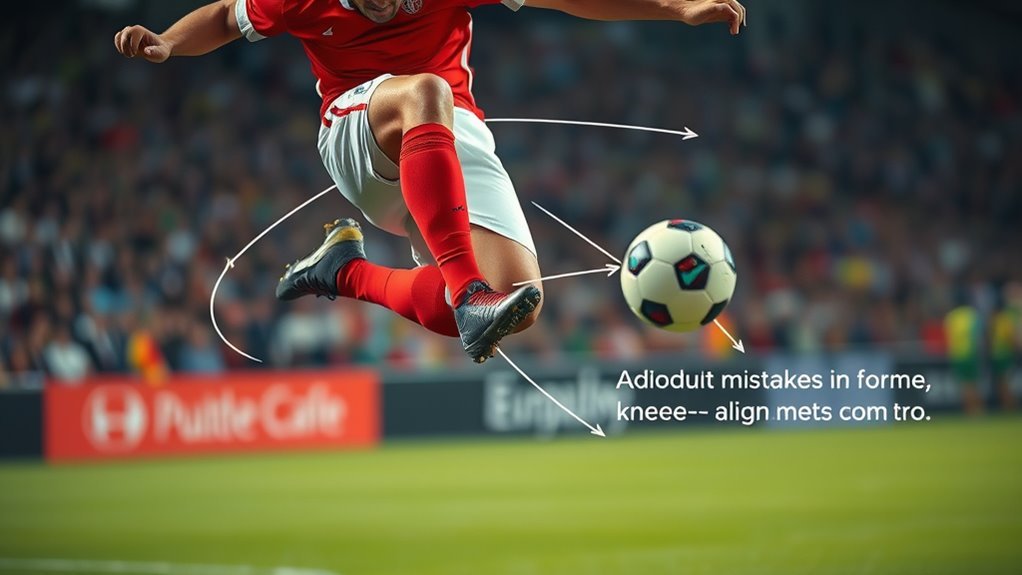
Mastering the bicycle kick technique relies heavily on achieving proper knee-to-elbow contact, but many people struggle with common mistakes that limit their effectiveness. One frequent error is not reaching your knee close enough to the opposite elbow, which reduces the move’s power and fluidity.
To fix this, actively twist your torso and fully extend your legs during each repetition. Avoid limited range of motion by consciously controlling your movements and steering clear of flutter kicks that prevent full engagement.
Keep your hands supporting your head without pulling on your neck, maintaining proper posture throughout. Focus on making definite physical contact between your knee and elbow to confirm correct form and maximize effectiveness.
Frequently Asked Questions
How Do You Do Bicycle Kicks Correctly?
You lie on your back, lift your legs, and pedal while touching opposite knees to elbows. Keep your legs extended after each touch.
Focus on controlled movements, and maintain consistent contact to do bicycle kicks correctly. It’s all about keeping a steady rhythm.
How to Bicycle Kick Step by Step?
Imagine lying flat, then twisting your torso as you bring one knee sharply toward the opposite elbow. You’ll feel your core engage as you alternate legs.
Keep your hands steady behind your head for balance and control. It helps you stay stable while you move.
Is a Bicycle Kick Difficult to Master?
Yes, mastering a bicycle kick can be tough at first. You’ll need coordination, flexibility, and core strength.
But with consistent practice and proper technique, you’ll improve your timing and make it feel natural over time. It just takes a bit of patience and dedication.
What Are Common Bicycle Kick Mistakes?
Over 70% of people mess up bicycle kicks by limiting their range of motion. You’ll want to avoid shallow reps, skipping knee-to-elbow contact, or rushing through.
If you do, you’ll lose core engagement and reduce workout effectiveness. So, take your time and focus on doing each rep fully.
Conclusion
Now, imagine yourself soaring through the air, your body twisting in perfect harmony as your foot strikes the ball with power and precision. By mastering each step and avoiding common mistakes like knee-to-elbow contact, you’ll unleash the full range of motion needed for a flawless bicycle kick.
Keep practicing, feel the rush, and soon you’ll make those breathtaking, crowd-pleasing shots that leave everyone in awe. The bicycle kick is all about timing, coordination, and confidence.
With each attempt, your technique will improve, making your kicks more powerful and accurate. So, embrace the challenge, stay focused, and remember that mastering how bicycle kicks work step by step will turn your game around and impress both teammates and fans alike.