
How to Use Bike Riding for Good Weight Loss
To use bike riding for good weight loss, focus on combining high-intensity intervals with steady endurance rides to maximize calorie burn. These workouts help you burn fat more efficiently while improving your overall fitness.
Aim for at least 150 minutes of cycling weekly, mixing in sprints and zone 2-3 efforts to boost fat burning and aerobic fitness.
Fuel up with carbs before tough rides to keep your energy levels high, and don’t forget to stay hydrated throughout your workout.
After cycling, eat meals that combine carbs and protein to support recovery and promote fat loss.
Keep this approach consistent, and you’ll find effective ways to enhance your results and performance over time.
Key Takeaways
- Combine interval sprints with steady endurance rides to maximize calorie burn and boost fat loss. This mix really helps keep things interesting and effective.
- Aim for at least 150 minutes of moderate cycling weekly, focusing on zone 2 and zone 3 aerobic rides. It’s a solid goal that fits well into most schedules.
- Include resistance training and gradually increase ride intensity to strengthen muscles and enhance metabolism. Building muscle makes a big difference in how your body burns fat.
- Fuel properly before and during rides with carbohydrates to sustain energy and improve workout performance. Think of it as giving your body the right kind of fuel it needs.
- Prioritize post-ride meals rich in carbs and protein to support recovery and maintain fat-burning efficiency. Eating well after riding helps your body bounce back and keeps the fat loss going.
Structuring Your Cycling Workouts for Weight Loss
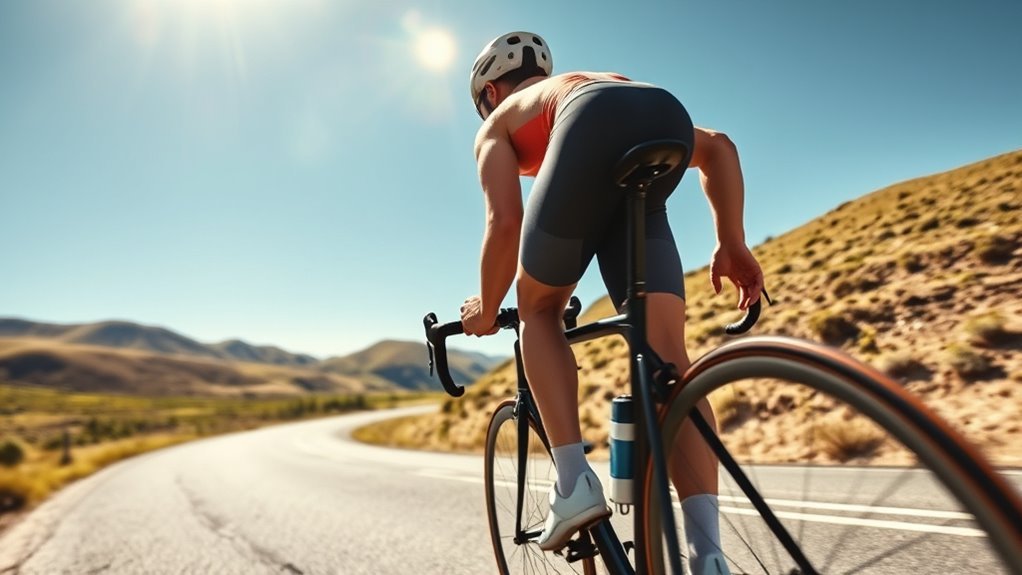
When you structure your cycling workouts with a mix of high-intensity intervals and steady endurance rides, you’ll maximize calorie burn and boost your metabolism. Incorporate interval training by adding 30-60 second sprints followed by rest periods to elevate ride intensity and activate fat burning.
Use structured training plans that gradually increase duration and intensity, aiming for at least 150 minutes of moderate activity weekly. Focus on zone 2 and zone 3 endurance rides to build aerobic capacity and optimize fat burning.
Adding resistance workouts, whether on indoor trainers or outdoor circuits, strengthens muscles and increases overall calorie expenditure. Balancing ride volume and intensity with proper recovery helps maintain consistent progress while preventing burnout or injury.
Fueling Your Cycling Rides for Fat Loss

Balancing your cycling workouts with the right nutrition fuels both performance and fat loss. Proper fueling starts with adequate carbohydrate intake before hard rides to top off glycogen stores. This gives you the energy needed to push through.
Effective cycling nutrition begins with carbs before tough rides to fuel performance and support fat loss.
During long or intense sessions, consuming energy gels, bananas, or homemade rice cakes helps maintain energy levels and prevents under-fueling. On easier days, water alone often suffices. So, adjust your intake based on workout intensity.
Post-ride nutrition is essential. Combining carbohydrate-rich meals with protein supports recovery, replenishes glycogen, and enhances fat-burning efficiency.
Monitoring your calorie management ensures you don’t over- or under-fuel, which can hinder fat loss or performance. By syncing your fueling strategy with your training load and recovery needs, you maximize fat loss while maintaining strong cycling performance.
Stay mindful of what and when you eat to keep your body energized and recovering at its best.
Frequently Asked Questions
Can I Lose Belly Fat by Riding My Bike?
Yes, you can lose belly fat by riding your bike regularly. It helps burn calories, reduces overall body fat, and boosts metabolism.
Just make sure to combine cycling with a healthy diet for even better results. That way, you’ll notice belly fat reduction more easily.
How Long Should You Ride Your Bike to Lose Weight?
You should ride your bike for at least 150 minutes weekly, aiming for 30-60 minutes per session. Gradually increase duration and intensity, including intervals, to boost calorie burn and support effective weight loss.
Start slow and build up as you go. Mixing in some intervals can really help keep things interesting and burn more calories.
How to Drop 30 Pounds for Cycling?
You’ll need to ride consistently, ride intensely, and ride progressively. Combine steady cycling with HIIT, increase weekly minutes, and fuel your body right.
Make sure to track progress and tweak your training as you go. That way, you can steadily drop those 30 pounds without losing motivation.
If I Bike 10 Miles a Day, How Much Weight Will I Lose?
If you bike 10 miles daily, you could lose about a pound every 1-2 weeks, depending on your weight, diet, and metabolism.
Staying consistent helps create a calorie deficit needed for steady weight loss.
It’s all about balancing what you eat and how much you move.
Conclusion
You might’ve heard that cycling alone won’t help you lose weight—but that’s not entirely true. When you structure your rides with intensity and fuel your body right, bike riding becomes a powerful fat-loss tool.
It’s not just about pedaling; it’s about how you ride and what you eat before and after. So, gear up, plan smart, and watch your efforts turn into real results on the scale.
Remember, for good weight loss, consistency is key. Combine regular bike riding with balanced nutrition, and you’ll boost your metabolism while burning fat effectively. With the right approach, bike riding can be your go-to exercise for shedding pounds and improving overall fitness. So hop on your bike, stay motivated, and enjoy the journey toward a healthier you!