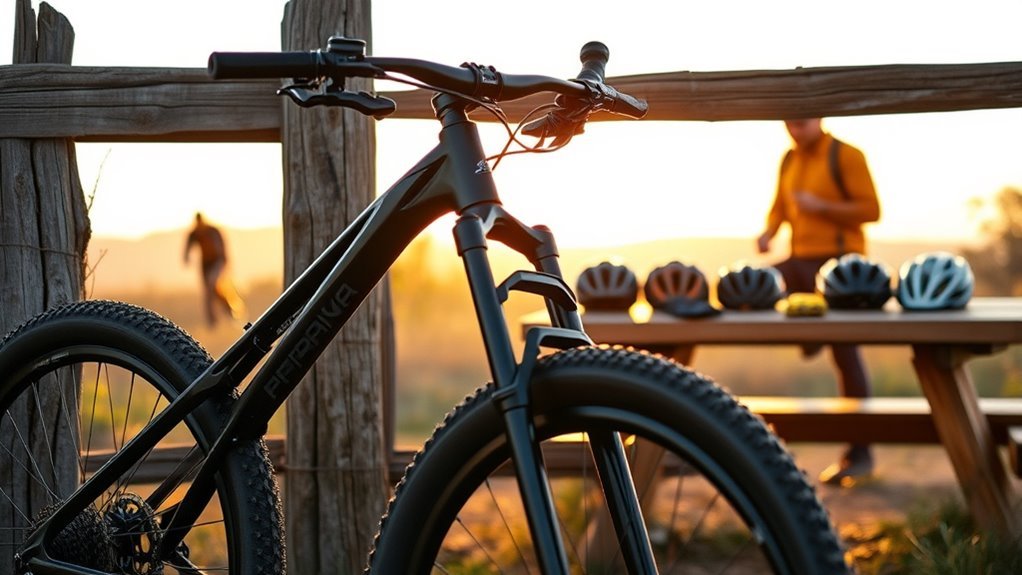
7 Tips to Choose a Bike
To choose the right bike, start by matching its type to your usual terrain. Whether you’re riding on roads, trails, or a mix of both, knowing the difference between road, mountain, and hybrid bikes helps a lot. Each type works differently on various surfaces, so picking the right one makes your rides smoother and more enjoyable.
Next, set a budget but focus on features that matter most to you, like brakes and tires. These parts really affect performance and safety.
Also, don’t forget to pick the correct frame size—it’s key for comfort and control while riding.
Think about whether you want electric assistance or prefer a traditional bike. Gearing is another thing to consider, depending on your terrain and fitness level.
Finally, choose suitable suspension and frame materials to match your riding style. Keep these tips in mind, and you’ll soon find a bike that fits your exact needs perfectly!
Key Takeaways
- Match the bike type to your riding terrain and style for maximum comfort and performance. It really makes a difference in how much you enjoy your ride.
- Choose the correct frame size by measuring your inseam and consulting sizing charts for a proper fit. Getting this right helps prevent discomfort and injury.
- Set a budget that prioritizes essential features like frame material, brakes, and tires suited to your needs. You don’t have to spend a fortune to get what works for you.
- Decide between electric and traditional bikes based on terrain challenges, fitness goals, and maintenance preferences. Think about what suits your lifestyle best.
- Select gearing appropriate for your terrain and fitness to optimize pedaling efficiency and ride enjoyment. This way, you can ride longer and feel better doing it.
Find the Right Bike Type for Your Riding Surface
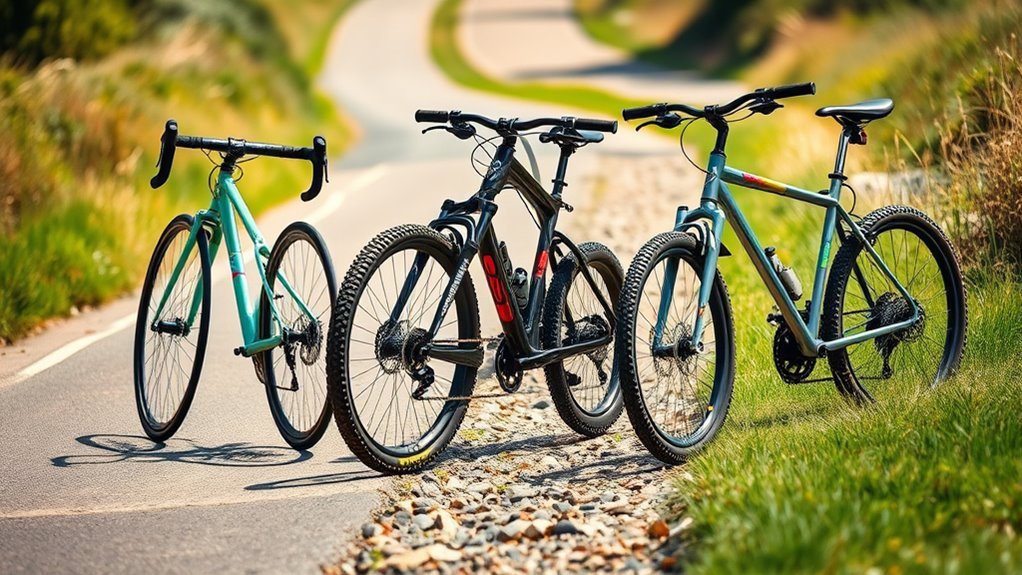
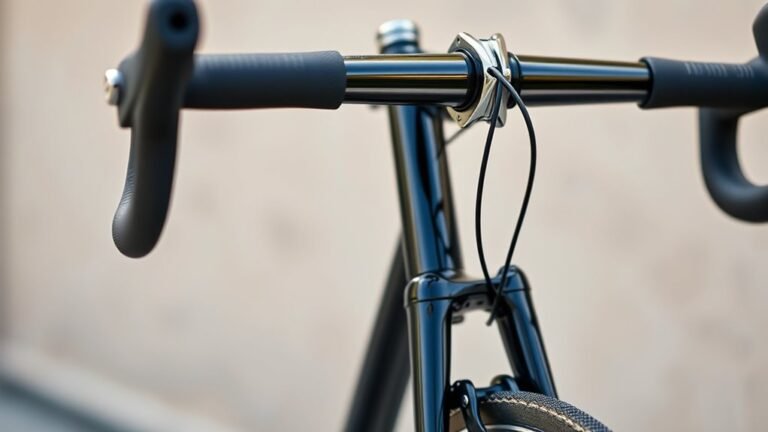
When you choose a bike, matching it to your primary riding surface makes all the difference. Road bikes are perfect if you mainly ride on smooth pavement. They have a lightweight frame and aerodynamic features that boost your performance on long distances.
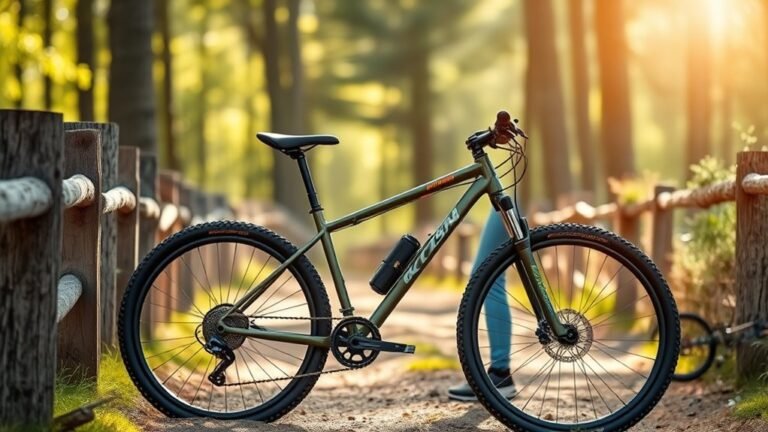
If you tackle rugged terrain like dirt trails, rocks, or roots, mountain bikes are the way to go. Their wide tires and suspension absorb shocks and provide stability so you can handle rough paths easily.
Gravel bikes offer a versatile option for mixed surfaces. With medium-width tires and adaptable geometry, you can switch between asphalt, gravel, and light off-road routes without missing a beat.
For urban environments or light unpaved paths, hybrid bikes combine comfort and practicality. They feature an upright riding position and tires that handle diverse surfaces well.
Choosing the right bike based on your riding surface guarantees better control, safety, and enjoyment. It lets you make the most out of your rides every time!
Choose Your Bike Budget Based on Features
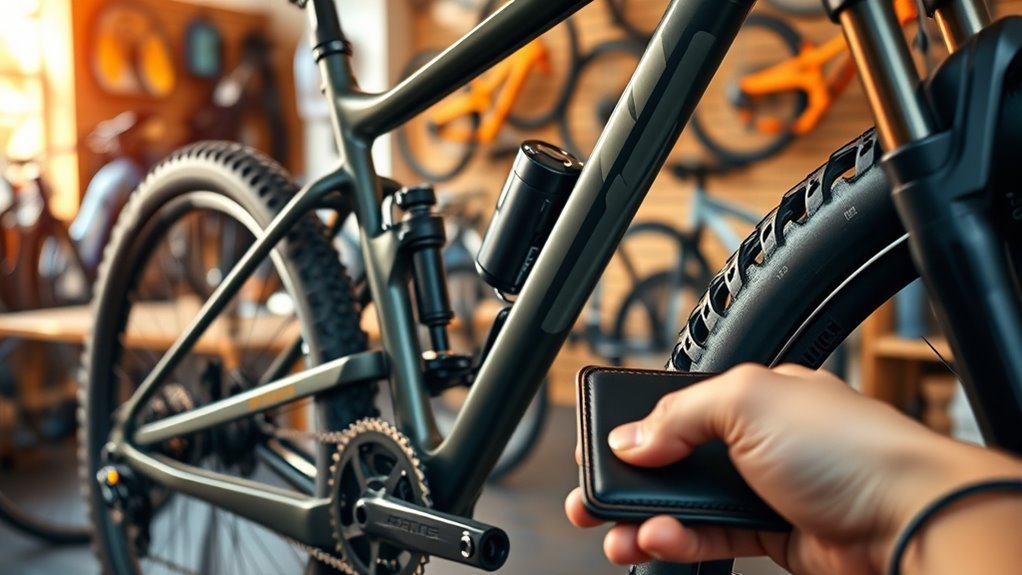
You’ll want to set a budget that focuses on the features you truly need, balancing cost and quality carefully. Remember to factor in additional expenses like maintenance and accessories.
This way, you get a bike that fits your riding style without overspending. It’s all about finding that sweet spot between what you want and what you can afford.
Determine Essential Features
Because essential features directly impact your riding experience, setting a realistic budget based on them helps you avoid overspending while getting a bike that fits your needs.
Focus on features that matter most to your riding style and environment. Consider these essential elements:
- Frame materials and design affect both durability and weight, influencing performance and your budget.
- Brakes and gear system quality determine control and efficiency; prioritize reliable components for safety and smooth rides.
- Tires should suit your terrain, balancing grip and speed without compromising durability.
Knowing which features are non-negotiable allows you to allocate your budget wisely. Higher-end components typically cost more but provide better performance and longevity.
Balance Cost And Quality
Setting your budget around the features that matter most helps you find a bike that balances cost and quality effectively. Prioritize high-quality components like Shimano Ultegra for component durability and smoother rides.
A lightweight frame improves ride comfort, especially during longer trips. Avoid budget bikes under $300, as they often lack reliable and safety features. Instead, choose cost-effective options that offer a good bike investment.
| Feature | Benefit |
|---|---|
| High-quality components | Smoother shifting, durability |
| Lightweight frame | Enhanced ride comfort |
| Reliable features | Less maintenance, safer |
| Safety features | Better control and security |
Balancing these factors ensures your bike budget meets your riding needs without compromising quality. It’s all about getting the best value for what you spend.
Account For Additional Expenses
When choosing your bike budget, consider at least four key additional expenses beyond the bike itself: helmets, lights, locks, and maintenance tools. These accessories and ongoing costs can really add up and impact your overall bike budget.
Don’t forget that upgrades like better gears or brakes might come up later and add to your expenses. Also, plan for regular tune-ups to keep your bike running smoothly.
To manage these additional expenses effectively, focus on investing in quality helmets, lights, and locks for safety and security. It’s worth spending a bit more here to protect yourself and your bike.
Make sure to purchase essential maintenance tools for basic repairs. Having the right tools on hand can save you time and money down the road.
And finally, set aside some funds for tune-ups and future upgrades. Keeping your bike in top shape is key to enjoying every ride without unexpected costs.
Find the Right Frame Size for Comfort and Control

Choosing the right frame size is vital to guarantee both comfort and control while riding your bike. Start by measuring your inseam accurately and use manufacturer sizing charts to find the frame size that fits your height and leg length.
Pay close attention to the standover height; you should stand over the bike with a slight bend in your knees for safety and comfort. If you’re between two sizes, choose the smaller frame because it offers better maneuverability and you can adjust the saddle height for a perfect fit.
Proper reach from the saddle to the handlebars is essential—your elbows should have a slight bend to maintain comfort and control. Don’t hesitate to visit a bike shop for a professional fitting; this can fine-tune your bike sizing and guarantee an ideal fit.
Choose Between Electric and Traditional Bikes
When choosing between electric and traditional bikes, think about the terrain you’ll ride and how much effort you want to put in. Electric bikes give you a boost on hills and longer rides, while traditional bikes offer simplicity and lower costs.
Consider your goals and budget to find the best fit for your needs. It’s all about what works best for you and how you want to enjoy your rides.
Benefits of Electric Bikes
Electric bikes offer several advantages that can transform your riding experience, especially if you want to cover longer distances or conquer steep hills with less effort. With pedal assistance and motor assistance, you’ll reduce physical strain, making cycling accessibility easier for all fitness levels.
You can enjoy increased activity and outdoor engagement by riding more frequently and farther.
Here are key benefits of electric bikes:
- Extended trips become manageable thanks to increased riding range, often up to 50% more than traditional bikes.
- Throttle modes allow movement without pedaling, giving you extra flexibility and control.
- Pedal assistance supports uphill climbs and reduces fatigue, encouraging consistent cycling.
Choosing an electric bike means boosting your cycling enjoyment and expanding where and how far you can ride. It’s a great way to get around, stay active, and have more fun on two wheels!
Traditional Bike Advantages
While electric bikes offer great benefits like pedal assistance and longer trips, traditional bikes hold their own appeal, especially if you’re looking for simplicity and a more hands-on cycling experience.
Traditional bikes come with lower initial costs, making them ideal if you’re budget-conscious. They’re also lightweight, which improves handling and makes transportation easier, especially without the added weight of batteries or motors.
You won’t have to worry about charging since traditional bikes have no batteries, so they’re always ready to ride. Maintenance is simpler and less expensive, as you avoid the specialized care electric components require.
Plus, riding a traditional bike means no pedal-assist, so you get more physical exercise and greater fitness benefits. It’s a great way to stay active and healthy while enjoying your rides.
Choosing Based on Terrain
How do you decide which bike suits your terrain best? Your riding style and the surface you tackle play key roles. For off-road or rugged trails, mountain bikes—whether electric or traditional—offer the traction and durability you need.
Consider these points: Electric mountain bikes provide motorized assistance, making hills and long distances easier without sacrificing suspension or rugged build. Traditional trail bikes deliver a pure cycling experience with lower maintenance, perfect if you want a workout and simplicity.
Assess the terrain: smooth paths might suit traditional bikes, while rough, uneven surfaces benefit from electric bikes’ extra power and suspension.
Ultimately, choose based on how much help you want, your fitness, and the terrain’s demands to enjoy every ride fully.
Choose the Best Gearing for Your Terrain and Fitness
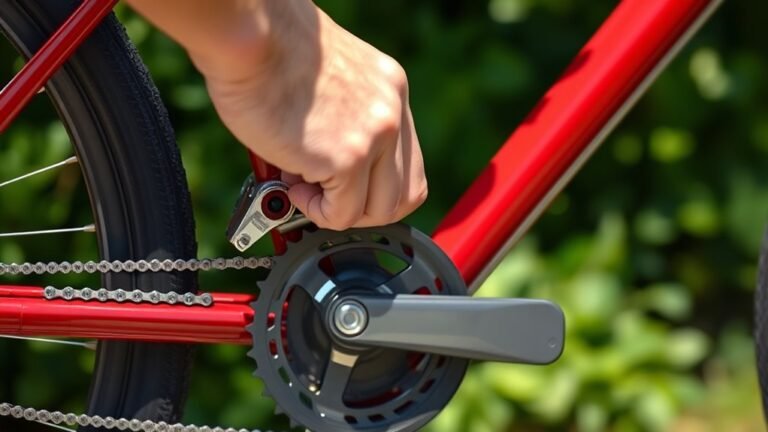
Selecting the right gearing for your bike depends largely on the terrain you’ll be riding and your fitness level. If you face hilly terrain, opt for a bike with multiple gears and a wide gear range. This setup helps you maintain an efficient pedaling cadence while climbing hills or descending, reducing strain and improving cycling efficiency.
For mostly flat surfaces, fewer gears or a single-speed bike might work better, simplifying maintenance and keeping weight down. Your gear setup should match your fitness level to prevent fatigue and make rides more enjoyable.
Higher gear ratios suit fast speeds on flat roads, while lower gears are essential for climbing steep inclines or battling headwinds. By choosing the right combination of gear ratios and gears, you’ll optimize your pedaling cadence and overall performance. This tailored approach guarantees you can tackle any terrain comfortably and get the most out of every ride.
Choose Bike Suspension and Brakes for Your Ride
Matching your bike’s gearing to your terrain and fitness sets the stage for a smoother ride, but choosing the right suspension and brakes will directly affect your control and comfort.
When picking suspension, consider this: full suspension bikes offer better traction and comfort on technical trails. They do come at a higher cost and complexity, though.
Hardtail bikes, with just front suspension, are lighter and more affordable. They also require less brake maintenance—making them ideal for beginners and cross-country rides.
Now, for brake systems: hydraulic disc brakes outperform rim brakes, especially in wet and off-road conditions. They deliver stronger, more consistent braking with less finger effort.
Plus, they really shine when you’re controlling descents on steep terrain.
Rim brakes are easier to maintain and budget-friendly, but they struggle in adverse weather and on demanding trails.
Choosing the right combination depends on your riding style and environment. Prioritizing suspension and braking performance ensures safer, more enjoyable rides.
Choose Frame Material and Components
Because your bike’s frame and components form its foundation, choosing them wisely shapes your ride’s performance, comfort, and durability. When selecting frame material, consider aluminum for a lightweight, rust-resistant option with stiff bike frames ideal for versatility.
Your bike’s frame and components are key to performance, comfort, and durability—choose them thoughtfully for the best ride.
Carbon fibre offers ultra-light weight and excellent vibration dampening with high customization but comes at a higher cost and fragility. Steel frames provide unmatched durability and comfort, making repairs easy—great for touring.
Titanium blends strength, lightness, and corrosion resistance but is pricier.
Your components, including groupsets and brakes, directly affect your bike’s weight, performance, and maintenance. Higher-end groupsets deliver smoother shifting and longer durability, while quality brakes ensure consistent stopping power and low upkeep.
Balancing frame material with components suited to your riding style guarantees a bike that’s comfortable, reliable, and tailored to your needs. Prioritize what matters most—whether it’s weight, durability, or customization—to get the best ride possible.
Frequently Asked Questions
What Is the 75% Rule in Cycling?
The 75% rule in cycling means you should keep your heart rate at about 75% of its max during long rides. This helps you build endurance efficiently without overdoing it or risking injury.
It’s kind of like finding that sweet spot—not too hard, not too easy. Sticking to this rule can make your training more effective and keep you feeling good.
How Can I Choose the Right Bike for Me?
You choose the right bike by matching it to your riding style and terrain, sizing it properly, testing how it feels, and checking components like gears and brakes.
This guarantees comfort, performance, and safety on every ride.
It’s all about finding what works best for you, so take your time and enjoy the process!
What Is the 80% Rule in Cycling?
The 80% rule in cycling means you should train at about 80% of your max heart rate, like pacing yourself on a long hike.
It helps you build endurance without burning out or risking injury.
Think of it as finding the sweet spot where you’re working hard but not pushing too far.
This way, you can keep going longer and get stronger over time.
What Size Bike Should I Get Based on My Height?
If you’re around 5’7″ to 5’9″, pick a 52-54cm road bike or 15-17 inches for a mountain bike.
When between sizes, choose the smaller frame for better control and comfort. It’s usually a safer bet and feels more natural when riding.
Conclusion
When choosing a bike, remember that comfort and fit are key—75% of riders say the right frame size makes all the difference in their experience. Whether you pick an electric or traditional bike, or prioritize suspension and gearing, your perfect ride depends on matching features to your needs and terrain.
Keep your budget in mind, but don’t skimp on quality. A well-chosen bike not only feels better but lasts longer, making every ride more enjoyable.
With the right choices in frame size, type, and components, you’ll feel confident on any path. So take your time to find the best bike that fits your lifestyle and terrain, and get ready to enjoy every ride to its fullest!