5 Factors That Determine How Far an Electric Bike Can Go on One Charge
Your electric bike’s range depends mainly on five factors that determine how far it can go on one charge. Battery capacity is key—bigger batteries let you ride farther but add weight.
How you pedal and use assist levels also affect power use; steady pedaling with moderate assist saves energy and helps stretch your battery life.
Terrain and your weight play a role too. Hills and heavier loads demand more power, which can shorten your ride.
Plus, battery age and proper care influence how well it holds charge over time.
Keeping these factors in mind will help you access your e-bike’s full potential. Stick around for some useful tips ahead!
Key Takeaways
- Battery capacity (Wh) directly influences the e-bike’s maximum riding distance per charge. Simply put, the bigger the battery, the farther you can go.
- Riding style, including pedal assist level and cadence, affects battery consumption and range. If you pedal more or use a lower assist level, you’ll save battery power.
- Terrain type and rider weight significantly impact energy use and reduce overall range. Going uphill or carrying extra weight will drain the battery faster.
- Battery age and proper care determine the available capacity and effective riding distance. Older batteries or ones that aren’t well maintained won’t last as long on a single charge.
- External factors like tire pressure, maintenance, and temperature also influence e-bike range. Keeping your tires properly inflated and your bike in good shape can help you get the most out of each charge.
Battery Capacity and E-Bike Range
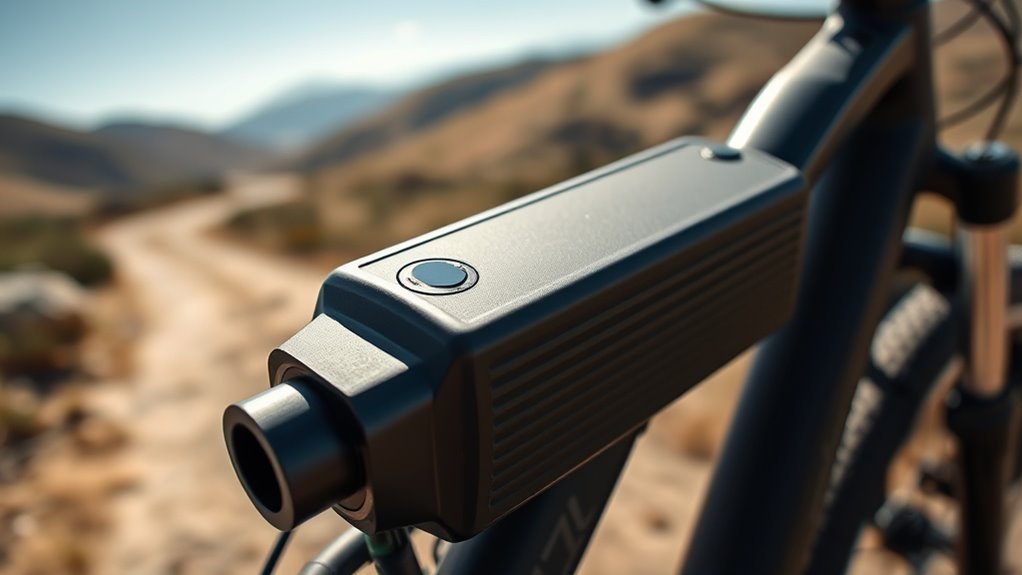
Although many factors affect an e-bike’s range, battery capacity plays the biggest role. Battery capacity, measured in watt-hours (Wh), directly influences how far you can ride on a single charge.
For example, a 250Wh battery usually offers an e-bike range of 15–30 miles, while a larger 750Wh battery can extend your riding distance to 50–80 miles or more. The battery size impacts energy consumption; bigger batteries store more energy, allowing longer rides but often add weight and cost.
Your riding conditions also affect how efficiently the battery’s energy is used, though this ties into riding style and assist level, which you’ll explore later. Understanding battery capacity helps you choose the right e-bike to meet your needs and plan for range extension strategies.
Ultimately, prioritizing battery capacity ensures you get the maximum riding distance possible between charges, making your e-bike trips more enjoyable and worry-free.
Riding Style and Pedal Assist Effects

When you adjust your riding style and pedal assist level, you directly influence how far your e-bike can travel on a single charge. Using lower pedal assist levels reduces power consumption and can often double your ride distance compared to high assist settings.
Lowering pedal assist levels and adjusting your riding style can significantly extend your e-bike’s range per charge.
Engaging the pedal assist mode means you contribute effort, which conserves battery energy better than relying solely on the throttle. Maintaining a steady riding cadence of 80-90 RPM optimizes motor efficiency and lowers energy drain, boosting battery efficiency.
Higher assist levels increase motor load markedly, causing a sharp rise in power consumption and cutting down your ride distance. By combining active pedaling with moderate assist levels, especially on flat terrain, you maximize battery efficiency and get the most out of each charge.
Adjusting your riding style thoughtfully helps manage energy drain, letting you enjoy longer trips without worrying about running out of power. It’s all about finding that sweet spot between effort and assist!
Terrain, Rider Weight, and E-Bike Range

Adjusting your riding style and pedal assist can stretch your e-bike’s range, but external factors like terrain and rider weight also play a big role.
When you tackle hilly or mountainous terrain, expect a significant boost in energy consumption, especially on steep inclines. This can cut your e-bike range by up to 50% compared to flat rides.
Your rider weight also impacts battery life—if you weigh over 100 kg, the motor effort increases noticeably, using about 6.4 Wh more per mile. Plus, rough or uneven riding surfaces demand more motor effort, which further drains the battery.
How Battery Age and Care Affect Your E-Bike’s Distance
How much does your e-bike’s battery age affect the distance you can travel? As your battery ages, its capacity naturally diminishes—typically by 20-30% after 3-5 years of use. This directly reduces your bike’s range.
This capacity loss happens because aging batteries gradually lose voltage and power output. So, you’ll notice shorter rides even if you charge fully.
Battery care plays a vital role in slowing this decline. Avoiding full discharges, storing your battery in cool, dry conditions, and using recommended chargers help preserve capacity and extend battery lifespan.
Overcharging or leaving the battery at 100% too long actually speeds up capacity loss. It’s something to watch out for.
Regularly calibrating your battery ensures it performs at peak capacity. This gives you a more accurate estimate of remaining range.
With good battery care, you can really help mitigate the effects of battery age. That way, you maintain a longer riding distance on each charge.
Tips to Maximize E-Bike Range
Battery health plays a big role in your e-bike’s range, but you can also make smart choices during your rides to stretch every charge. To maximize range extension, use lower pedal assist levels, which reduce power consumption and increase battery efficiency.
Actively pedaling alongside motor assistance further boosts your distance, balancing motor efficiency with your riding style. Keep tire pressure at the recommended PSI to minimize rolling resistance. Proper tire pressure directly impacts battery capacity and performance.
Consider your riding conditions and terrain; avoiding steep hills and rough surfaces conserves energy and extends range. Regular maintenance, including checking tire pressure and avoiding overcharging, ensures suitable motor efficiency and battery longevity.
Temperature effects also influence performance—extreme heat or cold can reduce battery capacity, so plan accordingly. By combining these strategies, you’ll get the most out of every charge and enjoy longer, more reliable rides.
Frequently Asked Questions
How Far Can an Ebike Go on a Single Charge?
You can expect an e-bike to go anywhere from 20 to 80 miles on a single charge.
Your actual distance depends on how you ride, the terrain, and the battery size you choose.
How Long Does It Take to Travel 20 Miles on an Ebike?
If you’ve got 20 miles ahead, it usually takes you about 1 to 2 hours on an e-bike.
Your speed and conditions will decide if you’re closer to an hour or nearly two.
It really depends on how fast you’re going and what the terrain looks like.
So, if you’re cruising on flat roads, you might be done quicker.
But if there are hills or rough patches, expect to take a bit longer.
How Far Can a 500W Electric Bike Go?
A 500W electric bike can typically go 20 to 40 miles on one charge.
You can push it up to 50 miles if you ride efficiently on flat terrain with low assist settings.
Just keep in mind, factors like your weight, the bike’s battery capacity, and how much you pedal also play a big role in how far you’ll actually get.
How Far Can a 750W Electric Bike Go?
You can expect a 750W electric bike to go between 30 and 60 miles on one charge. Riding efficiently and on flat terrain will help you maximize that range.
Sometimes, you might even reach up to 80 miles if conditions are just right. It really depends on how and where you ride!
Conclusion
If you ignore these factors, your e-bike might feel like it’s running on a hamster wheel—going nowhere fast! But when you master your battery’s power, ride smart, and tackle terrain wisely, you’ll see a huge difference.
Taking care of your battery like it’s a treasure is key. Proper maintenance can seriously boost how far your e-bike goes on one charge.
Follow these tips, and your e-bike will never leave you stranded—ever! Understanding these 5 factors that determine how far an electric bike can go on one charge will help you get the most out of every ride. Ride smarter, preserve your battery life, and conquer any terrain with confidence. With the right approach, your e-bike’s range will feel endless, making every journey smoother and more fun.