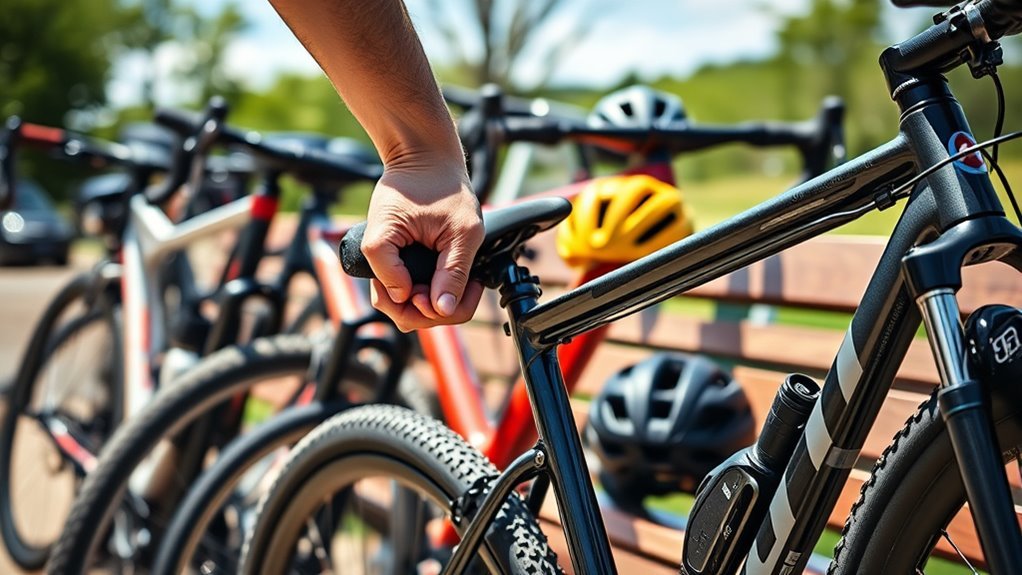
10 Tips for Choosing a Bicycle
When choosing a bike, first think about where you’ll ride. Pick a bike that fits your terrain, like road, mountain, or hybrid. This way, you’ll get the best performance and comfort.
Next, match the bike’s gears to your usual terrain and riding speed. It makes your ride smoother and more efficient.
Don’t forget to get the right size by measuring your height and inseam.
Adjust the saddle and handlebars for a good fit—it really makes a difference.
Set a budget that covers the bike, plus safety gear and maintenance costs.
Finally, decide if buying new or used works better for you.
Keep exploring and trying out different bikes to find smart tips for a perfect ride. You’ll be glad you did!
Key Takeaways
- Choose a bike type that matches your terrain and riding style for optimal comfort and performance. This will make your rides more enjoyable and efficient.
- Select the proper frame size and adjust saddle and handlebars for a comfortable fit. A good fit prevents discomfort and injuries.
- Match gearing options to your typical terrain, using wider ranges for hills and narrower for flats. It helps you ride smoothly without wasting energy.
- Consider frame materials and brake types based on your budget, durability, and safety needs. Different materials and brakes offer various benefits.
- Budget for essential accessories and decide between new or used bikes based on condition and features. This way, you get the best value for your money.
Where Will You Ride? Choosing Terrain-Specific Bikes
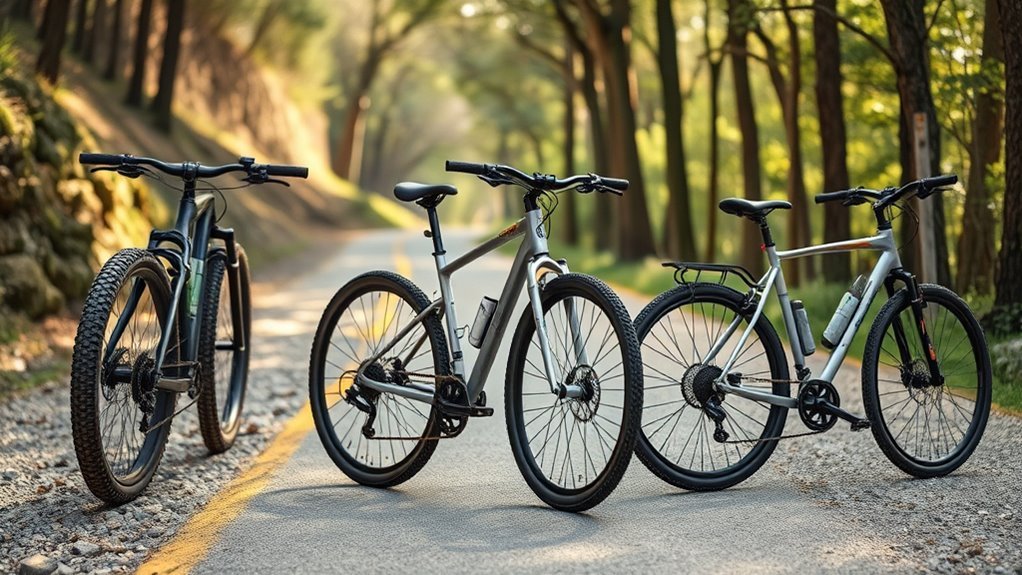
When you decide where you’ll ride, choosing the right bike becomes much easier. Different bike types suit specific riding surfaces, so picking a terrain-specific bike category helps optimize your experience.
If you plan to tackle rugged trails, mountain bikes with knobby tires and full suspension are your best bet. For mixed surfaces like gravel roads and dirt paths, gravel bikes offer relaxed geometry and wider tires that handle varied terrain smoothly.
Road bikes, designed with narrow, slick tires, excel on paved surfaces, making them ideal for long-distance rides on smooth pavement. Beyond these, fat-tire bikes handle extreme conditions like sand and snow, while hybrid bikes provide versatility for both paved and light off-road surfaces.
Understanding these bike categories ensures you select a bike that matches your riding surface perfectly, enhancing comfort, control, and performance. Prioritizing terrain-specific features in your choice makes every ride more enjoyable and safer.
Which Bike Type Matches Your Riding Style?
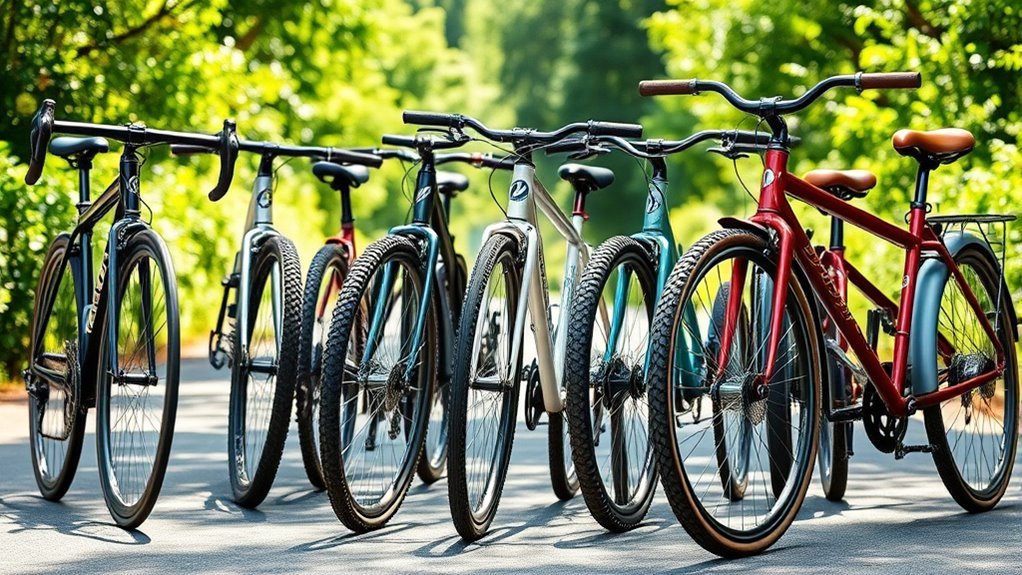
Choosing a bike that suits the terrain is important, but matching your bike to your riding style will make your rides even more enjoyable. Different types of bikes cater to various riding preferences.
Selecting a bike that fits your riding style enhances comfort and enjoyment beyond just matching the terrain.
If you love speed and long rides on pavement, road bikes with their narrow tires and drop handlebars offer an efficient bike fit and lightweight bike frame. For off-road adventures, mountain bikes provide wide, knobby tires and suspension to tackle rugged trails comfortably.
Hybrid bikes blend features of road and mountain bikes, giving you versatility for commuting or casual rides on mixed surfaces. Consider your primary riding style before choosing—whether it’s fast-paced cycling, trail exploration, or relaxed cruising.
A proper bike fit guarantees comfort and control, so test different bike frames to find what suits your body and style best. Matching your bike type to your riding style ensures more fun and less fatigue on every ride.
How Far and Fast Do You Plan to Ride?
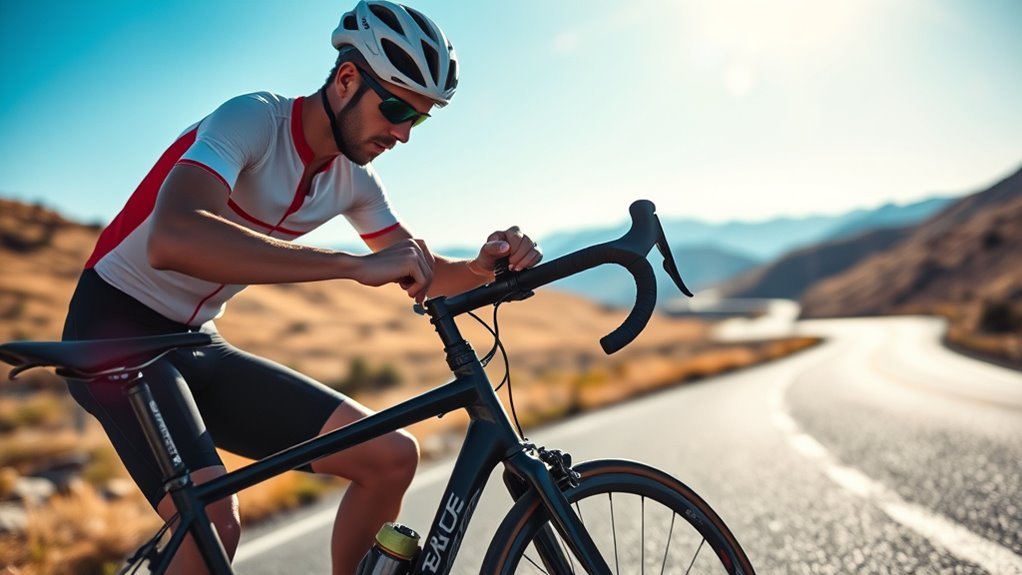
Since the distance and speed you plan to ride directly affect your comfort and performance, it’s important to pick a bike that matches those goals. For short distances around 2-3 miles, city cruisers, comfort bikes, and hybrids provide the best comfort and ease.
If your ride length is moderate—up to 10 miles—hybrid or fitness bikes balance riding speed and comfort well. When you plan longer rides over 30 miles, especially on varied terrain, road and touring bikes with lighter frames and efficient gear ratios improve your efficiency and reduce fatigue.
For sustained high speeds, consider time trial or racing bikes. These are designed with aerodynamic features and advanced components to maximize performance. Matching your bike type to your typical distance and riding speed ensures you stay comfortable and efficient, no matter the terrain.
Selecting the right bike with appropriate gear ratios and features tailored to your ride length will make every trip enjoyable. So, think about how far and fast you want to go before making your choice!
How to Find the Right Bike Size and Fit
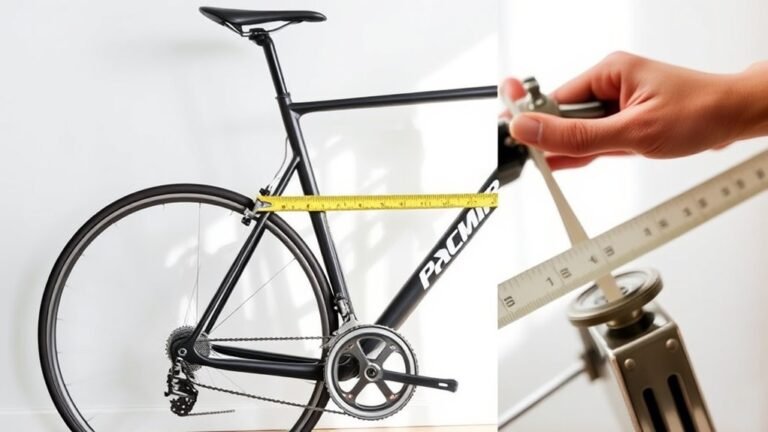
To find the right bike size, start by measuring your height and inseam. This helps you pick a frame that fits comfortably.
Next, adjust the saddle height so your leg is nearly extended but with a slight knee bend. Then, set the handlebars for easy reach.
You should take a test ride to fine-tune these settings. It’s the best way to get the right control and comfort.
Measuring Height And Leg
When you measure your inseam by standing against a wall with a book between your legs, you get a key number that helps pinpoint the right bike frame size. Record the distance from the floor to the top of the book—that’s your inseam length.
Then, use this measurement along with your height and the manufacturer’s size chart to select a frame size that fits you.
When you straddle the bicycle, verify there’s at least 1 inch of clearance for road bikes or 2-3 inches for mountain and hybrid bikes.
During a test ride, check that you can reach the handlebars comfortably without stretching and maintain a slight bend in your elbows.
Proper fit starts with accurate measuring and choosing the right frame size to ensure comfort and control.
Adjusting Saddle And Handlebar
How do you guarantee your bike feels just right every time you ride? Start with the right bike fit by measuring your inseam and selecting the correct frame size from the manufacturer’s chart.
Next, focus on adjusting saddle height so your leg is nearly fully extended with a slight knee bend when the pedal’s at the bottom. Make sure the saddle level is even to avoid discomfort.
Then, set the handlebar position to allow a relaxed, slightly bent elbow without overstretching or feeling cramped. Use test rides to fine-tune these adjustments, aiming for a comfortable riding posture that reduces fatigue and improves control.
With the right saddle height and handlebar position, you’ll enjoy better comfort and a more efficient ride every time.
Set Your Bike Budget and Accessories
Set a clear budget that includes both your bike and essential accessories like helmets and locks. Don’t forget to prioritize safety gear, and keep an eye out for sales or bundle deals to save money.
You can start with the basics and add more accessories as you go without overspending upfront. It’s a smart way to get what you need without breaking the bank right away.
Budgeting for Accessories
Why should you carefully plan your bike budget to include accessories? Because essential bike accessories like helmets, lights, and locks can add $50 to $200 to your total cost. Skipping them compromises safety and security.
You’ll also want to budget for additional safety gear such as gloves, eye protection, and reflective clothing to boost visibility. It’s all about staying safe out there.
Don’t forget practical items like repair kits, bike pumps, and water bottle cages. These guarantee you’re prepared for rides and minor fixes.
High-quality upgrades, like ergonomic grips or saddles, can enhance comfort but vary widely in price. So, you can choose what fits your needs and budget.
Finally, include maintenance supplies—lubricants, cleaning brushes, and replacement tires—which can add $20 to $100 annually. Planning your budget with these essentials in mind keeps you safe and ready without surprises.
Finding Affordable Deals
Where can you find the best deals without sacrificing quality? Start by setting a clear budget based on your needs and researching the average price point for the bike type you want.
Look out for seasonal sales, especially after September, when retailers offer generous discounts on bikes and accessories. Don’t overlook second-hand bikes from reputable sources—they can provide affordable deals if inspected properly.
Also, check if you qualify for bike schemes like Cycle To Work for tax-efficient savings on new bikes. Shopping at your local bike shop is smart; they often provide expert advice and bundle deals on accessories you won’t find online.
Choose the Right Bike Frame Material
How do you pick the right bike frame material for your needs? It depends on your ride quality preferences, terrain, and durability requirements.
Aluminum frames are lightweight and corrosion-resistant. They’re great for versatile or commuter bikes.
Carbon fiber offers the best strength-to-weight ratio. It’s perfect if you want a lightweight, high-performance ride.
Steel frames, while heavier, provide excellent durability and comfort. They’re ideal for touring or casual rides.
Your personal preferences will guide you toward the best balance between weight, cost, and comfort.
| Frame Material | Key Features | Best For |
|---|---|---|
| Aluminum frames | Lightweight, stiff, corrosion-resistant | Commuting, versatile use |
| Carbon fiber | Lightest, strongest, expensive | Racing, high-end bikes |
| Steel frames | Durable, comfortable, repairable | Touring, cruisers |
Choosing the right frame material guarantees you enjoy every ride.
Compare Bike Brake Types for Safety
Once you’ve chosen the right bike frame material, the next step is to contemplate your bike’s braking system for safety. Disc brakes offer superior braking power, especially in wet conditions, making them a popular choice.
Hydraulic disc brakes provide smooth, progressive stopping with less effort than mechanical disc brakes, which rely on cables and need more hand strength. While rim brakes are more affordable and easier to maintain, they lose effectiveness in rain and can wear down your rims over time.
For safety, disc brakes—particularly hydraulic ones—are the most dependable in varied conditions. Regardless of the type, regular maintenance is vital.
You’ll want to replace brake pads promptly and bleed hydraulic systems when needed to keep your brakes responsive. Choosing the right brake type based on your riding style and conditions ensures better control and confidence on every ride.
How to Choose Bike Gears That Match Your Ride
Choosing the right bike gears can make a huge difference in your riding experience. To match your ride, start by selecting a gear range that fits your terrain.
Selecting the right bike gears tailored to your terrain transforms your riding experience significantly.
For hilly areas, opt for a wide gear range like an 11-34 teeth cassette, which gives you easier climbing gears. If you mostly ride on flat surfaces, a narrower range such as 11-28 teeth works well.
Your gear system’s chainrings and rear sprockets work together to create gear ratios that control pedaling efficiency and speed. Lower gears—larger rear sprockets or smaller chainrings—make pedaling easier uphill or against wind.
Higher gears—smaller rear sprockets or larger chainrings—help you maintain speed on flats or descents. Modern bikes often use a 1x gear system with a wide-range cassette, simplifying shifting and reducing mechanical issues.
Understanding how these components interact guarantees your bike’s gears match your riding style perfectly. It really makes a difference once you get it right!
Which Wheel Size Suits Your Riding?
Choosing the right wheel size depends on your riding style and the terrain you tackle most. Larger wheels roll over obstacles smoothly and keep momentum on rough trails, while smaller wheels offer quicker handling and acceleration.
It’s all about what feels best for you. Understanding these performance differences will help you pick the best fit for your bike and ride.
Wheel Sizes Overview
How do you know which wheel size fits your riding style best? The wheel size directly affects ride comfort, terrain handling, and bike handling.
For example, 29-inch wheels are popular on mountain bikes because their larger wheel diameter helps you roll over obstacles easily and maintain speed on rough trails. Road bikes commonly use 700c wheels, offering smooth rides and efficient performance on pavement.
Smaller wheels, such as 26-inch or even a 5-inch difference smaller than 29-inch, provide more agile handling, especially useful in tight or technical sections. Choosing the right wheel size balances your need for stability and momentum against maneuverability.
Terrain And Riding Style
When you match your wheel size to the terrain and riding style, your bike feels more responsive and comfortable. For mountain bikes, 29-inch wheels handle technical terrain well, offering better rollover capability.
Meanwhile, 27.5-inch wheels provide a balance of agility and control. If you like quick maneuvering, smaller 26-inch wheels work great, especially with lighter suspension setups.
Gravel bikes often use 700c wheels paired with wider tires to tackle mixed surfaces smoothly. Fat-tire bikes rely on oversized 26-inch or 27.5-inch wheels to maximize stability and traction on sand or snow.
Performance Differences Explained
Why does wheel size matter so much for your bike’s performance? It directly affects ride comfort, handling, and speed.
Larger wheels like 29-inch ones excel on technical terrain by rolling over obstacles smoothly and providing better stability and momentum. If you want a balance between obstacle clearance and maneuverability, 27.5-inch wheels suit versatile trail riding well.
For road biking, 700c wheels deliver higher speed and efficiency on pavement thanks to their larger diameter. Smaller wheels, such as 26-inch or 650b, offer superior maneuverability for tight turns and technical riding but may sacrifice some stability.
Ultimately, choosing the right wheel size depends on how you prioritize obstacle clearance, ride comfort, and handling to match your riding style and terrain. It’s all about what feels right for you out there on the trail or road.
Should You Buy a New or Used Bike?
Although buying a used bike can save you money, you’ll want to carefully inspect its brakes, gears, and frame to guarantee everything functions properly. You should also test the bike’s responsiveness in cornering, braking, and maneuvering obstacles to make certain it fits properly and handles well.
A used bike from reputable bike shops or trusted sellers with maintenance history offers better quality and reliability, reducing worries about hidden defects. On the other hand, new bikes come with warranties and the latest technology, which lowers the risk of mechanical issues.
Choosing new bikes means you get the assurance of proper functioning straight from the start, but they often cost more. Ultimately, deciding between a new or used bike depends on your budget, how much time you can invest in inspection, and whether you prioritize the latest features or saving money.
Either way, make sure the bike fits properly and meets your riding needs before committing. It’s all about finding what works best for you!
Frequently Asked Questions
How Often Should I Perform Maintenance on My New Bike?
You should perform basic maintenance like cleaning and lubricating your bike every 1-2 weeks if you ride often.
It’s a simple step but really helps keep things running smoothly.
More thorough checks, including brakes and gears, should happen monthly to keep everything running smoothly and safely.
Doing this little bit regularly makes a big difference in how your bike performs and lasts.
What Safety Gear Is Essential for Beginner Cyclists?
You’ll need a properly fitting helmet, bright or reflective clothing, and gloves for better grip.
Don’t forget front and rear lights, plus a bell or horn to alert others. These keep you safe and visible.
It’s really about making sure you’re seen and protected out there. Plus, the right gear can make your ride way more comfortable!
How Can I Transport My Bike Safely on a Car Rack?
You’ll want to secure your bike firmly using straps or clamps. Make sure the rack fits your car properly.
Protect delicate parts with padding to avoid scratches. And always double-check everything before you start driving.
Oh, and don’t forget to remove any loose accessories. That way, you can prevent any damage along the way.
What Are the Best Practices for Storing a Bike Indoors?
Of course, you want your bike to double as modern art on your wall—so hang it with sturdy hooks, keep it dry, and avoid leaning it on the couch.
Trust me, your tires will thank you later!
How Do Weather Conditions Affect Bike Performance and Care?
You’ll notice wet weather can cause rust and slippery surfaces. It’s something to watch out for when you’re riding in the rain or through puddles.
On the other hand, extreme heat may degrade tires and lubricants. So, your bike’s parts might wear out faster if it’s constantly exposed to high temperatures.
That’s why you should clean, dry, and lubricate your bike regularly. Doing this helps keep it performing well no matter what the weather throws at you.
Conclusion
Choosing the right bike is like finding the perfect pair of shoes for your journey—each detail, from terrain to fit, shapes your ride. Think of your bike as a trusted companion, ready to carry you smoothly over hills, through city streets, or along winding trails.
When you match your style, budget, and needs, you’re not just buying a bike; you’re opening a world of freedom and adventure waiting just for you. Picking the perfect bicycle means considering comfort, durability, and how you plan to ride.
So take your time exploring different types, test rides, and features. After all, the right bike isn’t just about getting from point A to B—it’s about enjoying every moment of the journey ahead. Choosing wisely ensures your bike becomes a reliable partner for all your cycling adventures.