5 Factors That Affect How Fast a Bicycle Goes
Your cycling speed depends on five key factors that really make a difference in how fast you go. These include your fitness level, the condition of your bike, your riding position, the terrain and weather, and how you train. Understanding these can help you ride faster and enjoy cycling more.
First, having stronger legs and good fitness boosts your power output. This means you can pedal harder and for longer periods without getting tired. It’s all about building strength and endurance through smart training.
Second, using a well-maintained, aerodynamic bike makes sure your effort turns into speed efficiently. A smooth, low, and streamlined riding position also helps cut down wind resistance, making it easier to maintain your pace.
Third, terrain and weather play a big role too. Hills, rough roads, headwinds, or rain can slow you down, while flat roads and good weather make riding faster and more enjoyable.
Keep exploring these areas, and you’ll see your cycling performance get better and better!
Key Takeaways
- Rider fitness and power output directly influence how fast you can sustain speed and accelerate on a bike.
- The type of bike you have, how well it fits you, and keeping it in good shape all help to make sure your energy goes into moving forward, not fighting the bike.
- Riding in an aerodynamic position and wearing tight clothing cuts down on drag. That means you can go faster without working as hard.
- Things like hills, wind, and the temperature outside play a big role too. They change how much resistance you face and can slow you down or speed you up.
- Training smart with interval workouts and drafting behind others helps boost your power, endurance, and how efficiently you use your energy while riding.
How Your Fitness and Power Affect Cycling Speed
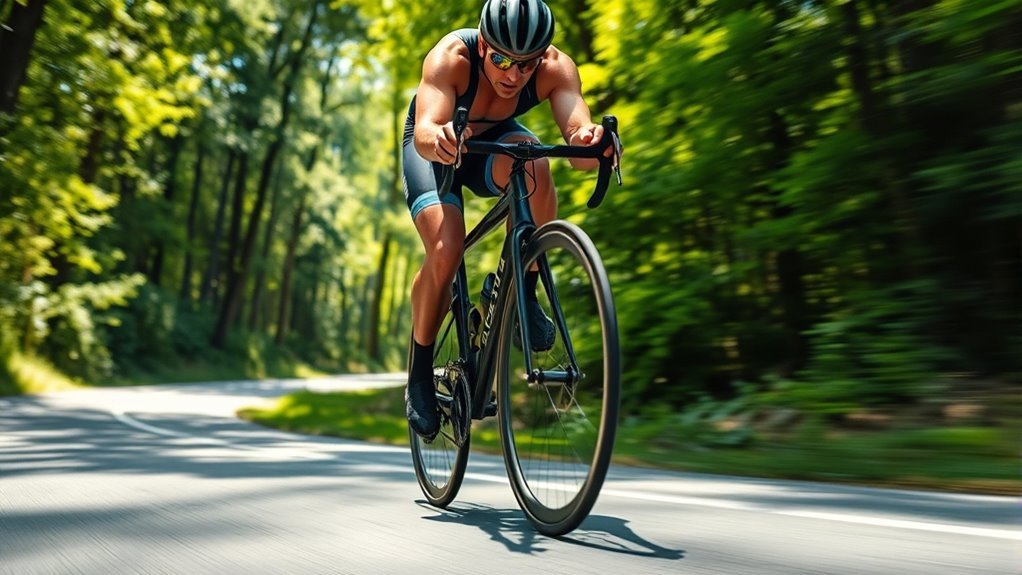
Although many factors influence your cycling speed, your fitness and power play a crucial role. When your legs are stronger and well-conditioned, you generate higher wattage, directly boosting your speed.
Beginners usually sustain 100–150 watts, but as your training improves your strength and cardiovascular fitness, you can exceed 250 watts, pushing your performance to new levels. Regular training, especially interval workouts and hill repeats, enhances both muscle strength and endurance, allowing you to maintain faster speeds for longer without fatigue.
Your cardiovascular system also adapts, improving your ability to sustain high efforts during rides. Keep in mind that age and gender influence power output, with younger and male riders often producing more watts.
But don’t worry—consistent training can help you maximize your potential regardless. By focusing on improving your fitness and power through targeted training, you’ll see noticeable gains in cycling speed and overall endurance, making your rides faster and more efficient.
How Bike Type and Maintenance Influence Speed
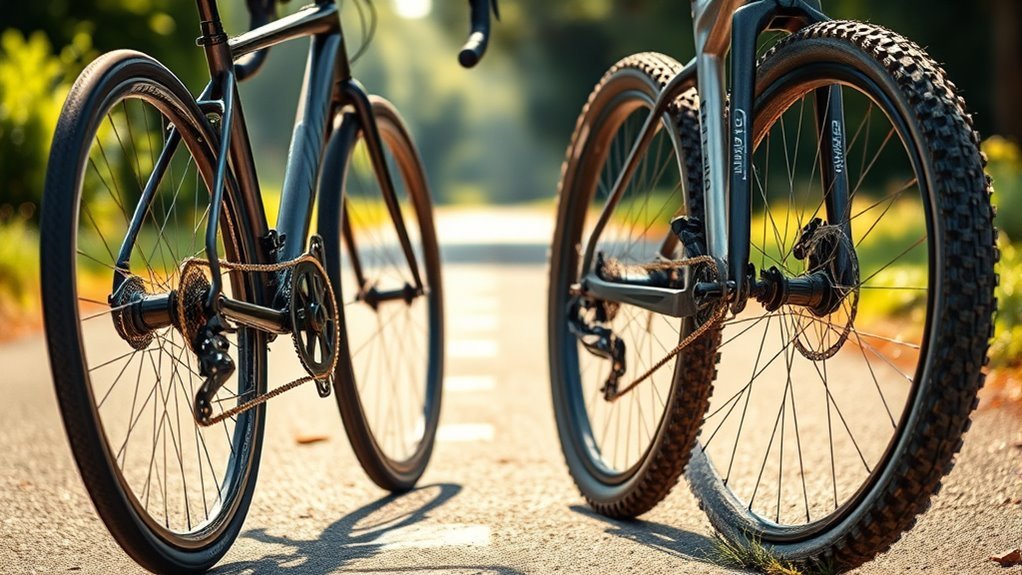
Your fitness and power lay the foundation for faster cycling, but the bike you ride and how well you maintain it also play a big role in your speed. Choosing the right bike type matters—road bikes, with their lightweight frames, aerodynamic design, and narrow tires, let you ride faster than mountain bikes.
Proper bike fit ensures you transfer power efficiently and stay comfortable, directly boosting your speed. Maintenance is essential: regularly cleaning and lubricating the chain, checking tire pressure, and addressing mechanical resistance keep your equipment running smoothly.
Neglecting maintenance increases friction and slows you down. Investing in component upgrades like aero wheels and aerodynamic frames can further enhance speed by improving equipment efficiency, though they may cost more.
Aerodynamics and Riding Position to Boost Cycling Speed
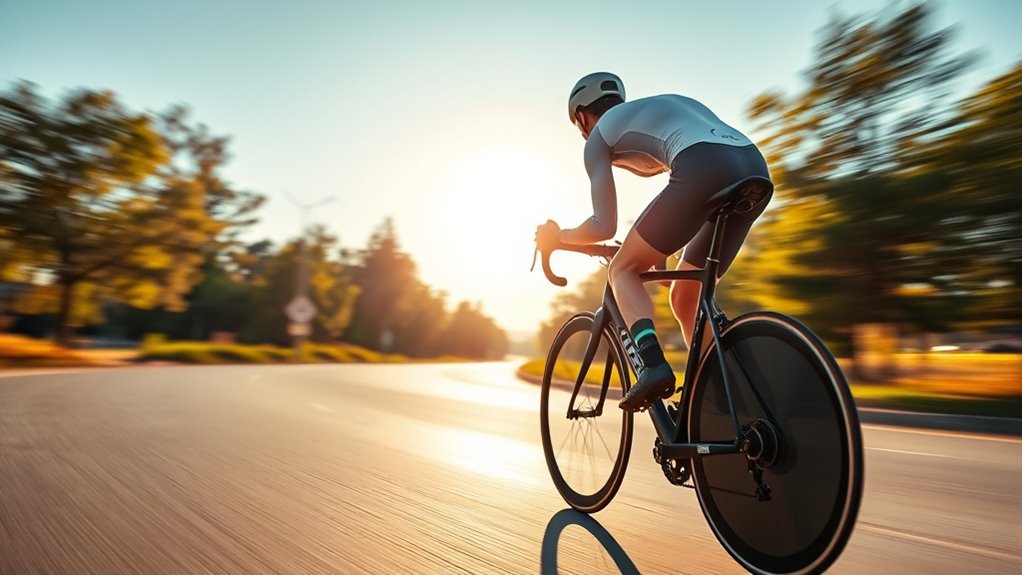
When you lower your torso and bend your elbows, you cut aerodynamic drag by up to 35 watts. That can really boost your cycling speed. This streamlined riding position reduces air resistance and wind resistance, which is super important once you’re riding faster than 20 km/h because that’s when drag really starts to dominate your effort.
Using aero bars or riding in the drops takes your aerodynamics to the next level. It can save you valuable minutes over long distances. Your riding posture plays a big role here—keeping your back low and elbows tucked close helps minimize your frontal area. This allows you to slice through the air much more efficiently.
Beyond just your body position, wearing tight, aerodynamic clothing also helps cut down drag. That lets you maintain higher speeds with less effort. By focusing on a smooth, aerodynamic body position and using gear designed to streamline your ride, you’ll reduce wind resistance significantly and boost your overall cycling performance.
Aerodynamics and riding position really make a difference when you want to go faster. It’s all about working smarter, not harder.
How Terrain and Weather Affect Cycling Speed
Mastering aerodynamics gives you a solid edge, but the environment you ride through plays an equally big role in how fast you can go. Flat terrain lets you maintain higher speeds with less effort, while hills demand more power and slow you down considerably.
Aerodynamics matter, but terrain shapes your speed—flat roads boost pace, hills require extra power.
Weather also impacts your cycling speed—headwinds create resistance that can cut your pace by several kilometers per hour. Rain and wet surfaces reduce traction and compromise safety, forcing you to slow down to avoid slipping.
Temperature matters too; cold air and rolling resistance increase the effort needed to pedal, lowering your speed. Hot weather leads to fatigue and dehydration, which decrease endurance and slow you over long distances.
Understanding how terrain and weather affect your ride helps you anticipate challenges and adjust your speed accordingly, keeping you both fast and safe on the road.
Training Techniques to Ride Faster
Although natural ability and equipment matter, targeted training techniques play an essential role in helping you ride faster. Incorporate interval training into your routine to boost your anaerobic capacity and power output by alternating high-intensity efforts with recovery periods.
Hill repeats effectively build leg strength, enabling you to maintain higher riding speed on both climbs and flats. Speed workouts like fartlek sessions improve cycling efficiency by mixing bursts of acceleration with steady riding, helping you sustain faster paces.
Learning to draft behind other riders can reduce wind resistance considerably, letting you conserve energy while increasing speed. Finally, focus on optimizing your riding position to minimize aerodynamic drag.
Adopting a more aerodynamic position can save you up to 35 watts, shaving minutes off your ride. Combining these techniques enhances your overall cycling efficiency and power output, making you faster and more competitive on any terrain.
Frequently Asked Questions
What Is the 75 Rule in Cycling?
The 75 Rule in cycling says you can sustain about 75% of your top sprint speed over long distances.
So, if you sprint at 20 mph, you should pace yourself around 15 mph to avoid burning out.
It’s all about finding that sweet spot where you’re going fast but not so fast that you run out of steam too soon.
What Are Factors That Affect Speed?
You’ll find your speed changes with terrain, wind, bike type, and your fitness. Flat roads and tailwinds boost you, while hills and headwinds slow you down.
Your equipment and weather also play big roles. So, it’s not just about how hard you pedal—it’s everything around you that counts.
Is 20 Mph on a Bicycle Fast?
Is 20 mph on a bike fast? Only if you’re secretly auditioning for the Tour de France.
For most riders, you’re zooming past casual cyclists and feeling pretty impressive while doing it. Keep pedaling!
Is 12 Mph a Good Cycling Speed?
Yes, 12 mph is a good cycling speed for you if you’re a beginner or recreational rider. It’s steady, sustainable, and allows you to enjoy your ride without getting overly tired too quickly.
You’ll find it’s a nice pace to keep up without feeling rushed. Plus, it gives you time to take in the scenery and just have fun on your bike.
Conclusion
Now that you know the key factors affecting your cycling speed, it’s time to put the pedal to the metal. Your fitness, bike type, aerodynamics, terrain, and training all play a vital role in how fast you go.
Keep fine-tuning each element, and you’ll be flying down the road in no time. Remember, slow and steady wins the race—consistency and effort will get you where you want to be.
Improving your cycling speed isn’t just about going faster; it’s about understanding how these factors work together. By focusing on your fitness, choosing the right bike, optimizing aerodynamics, tackling different terrains, and sticking to your training plan, you’ll see real progress. So, keep riding, stay motivated, and watch your speed improve with every pedal stroke.