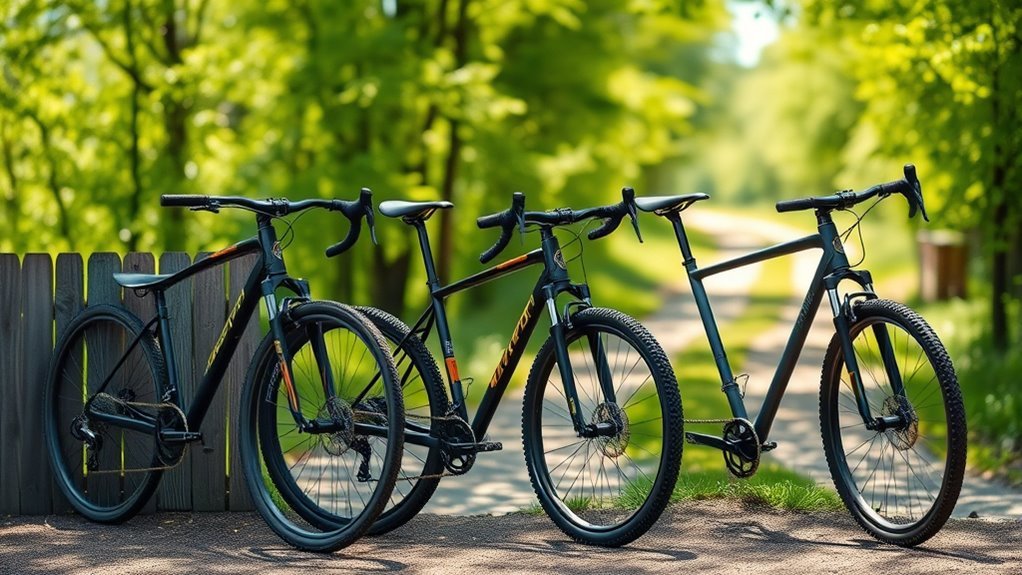
What Kind of Bike Should You Get?
You should get a bike that matches where you’ll ride most often. For smooth pavement, a road bike works best, while mountain bikes suit trails and rough terrain. If you want something versatile, consider hybrids or gravel bikes. Electric options add motor assistance across surfaces.
Make sure the bike fits your height and inseam for comfort and control. Picking the right brakes and wheels also matters.
Explore these points to find the perfect ride for your needs. It’s all about matching your bike to your style and terrain, so you enjoy every ride.
Types of Bikes and Their Ideal Riding Surfaces
When choosing a bike, consider the surfaces you’ll ride on most often, since different types excel on specific terrains. Road bikes thrive on paved roads with their narrow tire width, offering speed and efficiency.
Mountain bikes suit dirt trails and rugged paths, featuring knobby tires and suspension forks to absorb shocks. Hybrid bikes blend features of road and mountain bikes, making them versatile for both pavement and light off-road riding surfaces.
Gravel bikes, including electric versions, handle mixed terrain well, combining wider tires with durability for all-road adventures. Electric bikes come in various types, adding motor assistance for easier rides across different surfaces.
Understanding these bike types helps you pick one that matches your primary terrain, ensuring comfort and performance on every ride. So, think about where you’ll be riding most and choose the bike that fits best!
Key Factors to Consider When Choosing a Bike
Although selecting the perfect bike can feel overwhelming, focusing on key factors like your riding environment, budget, and fit will facilitate the process.
First, identify your riding style and terrain—whether it’s paved roads, trails, or mixed surfaces—to choose the right bike type. Match your budget with desired features, knowing that higher-end models with advanced gear ratios and carbon frames start around $1,200, while entry-level bikes are under $600.
Identify your terrain and riding style, then align your budget with features from entry-level to high-end models.
Consider brake type carefully; disc brakes perform better in wet conditions. Wheel size matters too, especially for mountain bikes, with 27.5 or 29 inches common.
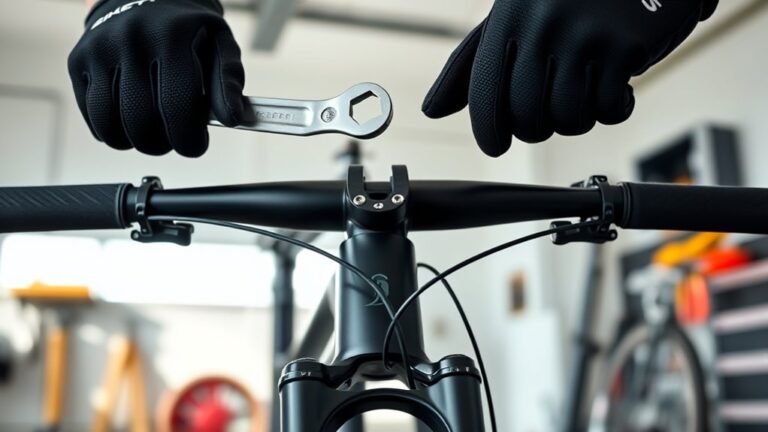
Ensure a proper fit by measuring your inseam and height, and try test rides. Finally, think about accessories like lights or racks to enhance safety and convenience based on your cycling goals.
Conclusion
Choosing the right bike is like finding the perfect dance partner—it should move with your rhythm and suit the terrain you’ll conquer. Whether you’re cruising city streets or tackling rugged trails, let your needs guide you.
Don’t just pick a bike; choose a companion that sparks joy and adventure every time you ride. With the right match, every journey becomes a story waiting to be written on wheels.
Finding the perfect bike means considering what kind of riding you’ll do most. Are you into smooth urban rides, challenging mountain trails, or maybe long-distance road cycling? Each bike type offers unique benefits, so think about comfort, durability, and style.
In the end, the right bike is more than just a purchase—it’s your ticket to new experiences and endless fun. So take your time, test a few, and find a bike that feels like it was made just for you. Your ideal bike will bring excitement and freedom to every ride, making each trip an adventure worth remembering.