10 Dirt Bikes and How Much They Weigh
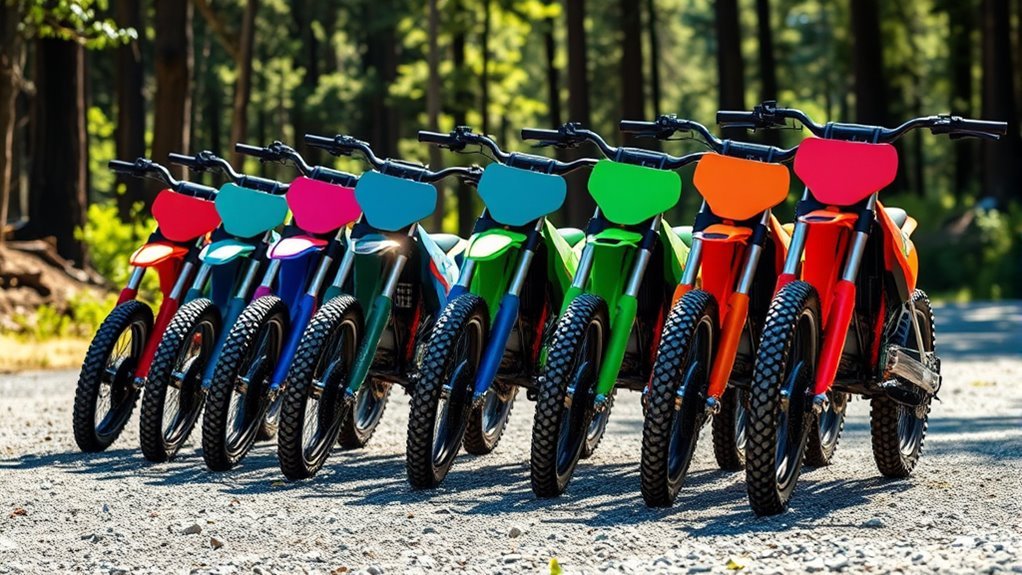
You’ll find dirt bikes typically weigh between 200 and 250 pounds, but weights vary quite a bit depending on the type.
Mini bikes can be as light as 65 pounds, making them super easy to handle for younger riders or beginners.
Full-sized motocross bikes often weigh between 225 and 300 pounds.
Electric models usually fall somewhere in the 110 to 260-pound range, often lighter than their gas-powered counterparts.
Trail and dual-sport bikes tend to be heavier, around 280 to 320 pounds.
That’s because they come with added features designed for comfort and versatility.
Understanding these differences can really help you pick the right dirt bike.
Plus, there’s a lot more to learn about how weight affects everything from performance to upgrades.
So, whether you’re buying your first bike or looking to upgrade, knowing the weight details is a great place to start!
Key Takeaways
- Dirt bike weights vary widely, from lightweight mini bikes at 65 pounds to heavy models like the Honda XR650L over 340 pounds. It’s quite a range!
- Motocross bikes typically weigh between 195 and 240 pounds, depending on engine size and frame materials. So, they’re not too heavy but still sturdy.
- Trail and dual-sport bikes usually weigh 280–320 pounds due to added features like lighting and larger fuel tanks. These extras add quite a bit of weight.
- Electric dirt bikes weigh between 110 and 260 pounds, with battery weight significantly impacting overall mass. Batteries can really tip the scales.
- Weight-reducing upgrades like titanium exhausts and carbon fiber parts can lower bike weight by 5–10 pounds or more. Every pound counts when you’re riding!
Average Dirt Bike Weight Ranges
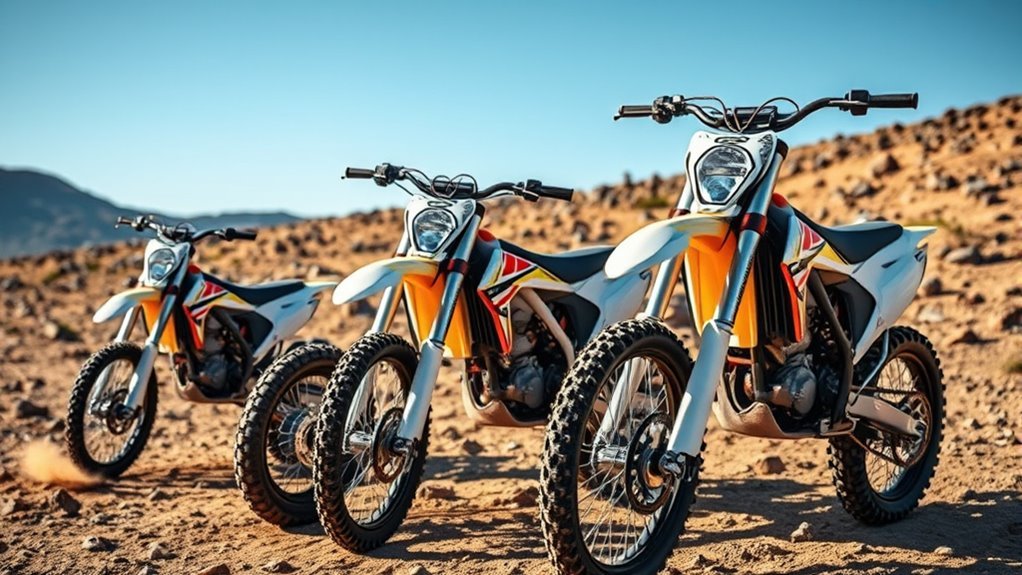
Dirt bikes come in a range of weights to suit different riders and uses. The average weight of a dirt bike typically falls between 200 and 250 pounds, but this varies widely depending on the type and purpose.
Mini dirt bikes, designed for young riders, can weigh as little as 65 pounds. This makes them easier to handle and perfect for developing rider skill.
Mini dirt bikes weigh as little as 65 pounds, making them perfect for young riders to build skills.
Full-sized motocross and trail bikes generally fall within a weight range of 225 to 300 pounds. They balance power and control pretty well.
Electric dirt bikes usually weigh less than gas-powered ones, often between 150 and 250 pounds. That’s thanks to their different engine size and components.
Some heavier models, like the Honda XR650L, tip the scales at over 340 pounds. This is due to larger engines and added features.
Understanding these weight differences helps you choose the right dirt bike that matches your skill level and riding style. It’s all about finding what works best for you!
Motocross Dirt Bike Weights: What to Expect
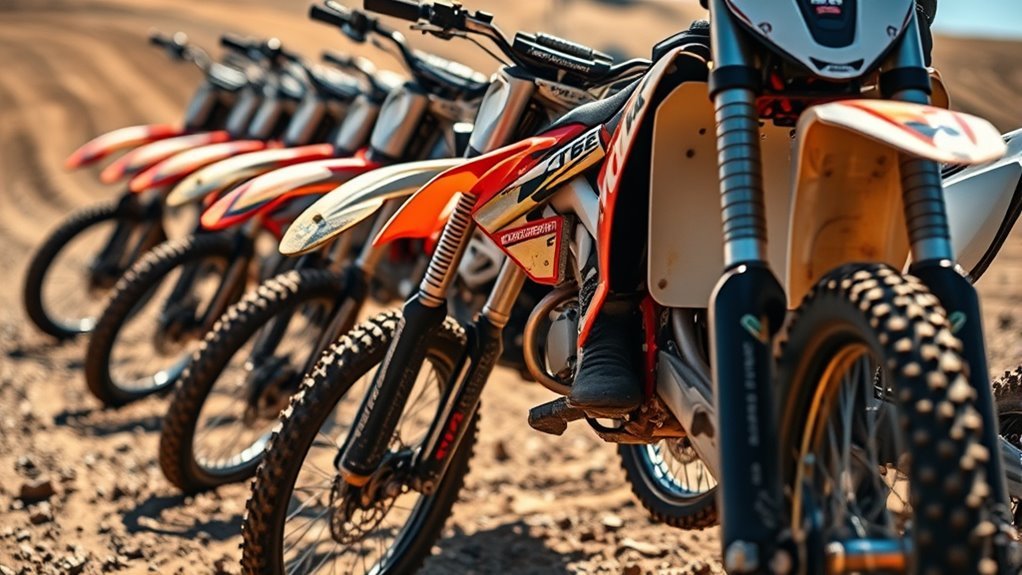
Although motocross bikes vary in engine size and design, you can expect most 250cc four-stroke models to weigh between 225 and 240 pounds. The dirt bike weight shifts with engine size; for example, 450cc models typically add 10-20 pounds.
Two-stroke bikes from 125cc to 250cc weigh less, often between 195 and 220 pounds. Manufacturers focus on weight reduction to boost performance and handling, using lightweight components like aluminum frames.
This careful balance enhances your riding experience by making the bike more agile without sacrificing stability.
Key points to contemplate about motocross bike weight include:
- 250cc four-stroke models fall within a consistent weight range of 225-240 pounds
- Larger engine sizes increase dirt bike weight but improve power output
- Lightweight components contribute substantially to better handling and quicker response
- Optimized weight supports both durability and rider control during intense motocross conditions
Understanding these factors helps you choose the right bike for your performance needs.
Enduro and Cross-Country Bike Weights and Features
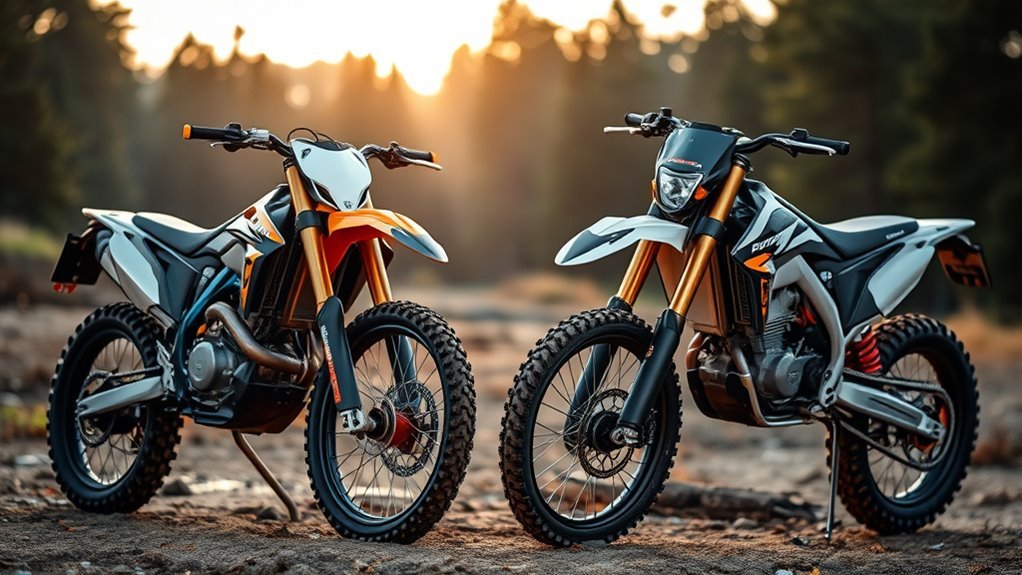
When you tackle long-distance off-road racing, enduro and cross-country bikes usually weigh between 235 and 260 pounds. This weight range helps balance durability with manageable weight.
Enduro bike weights tend to be higher than motocross models because they include larger fuel tanks, skid plates, and lighting systems. All these features are essential for extended rides and variable conditions.
These bikes use construction materials like aluminum frames or chromoly steel to reduce weight without sacrificing strength on rugged terrain. You’ll also notice added components such as kickstands and heavier exhaust systems.
Sure, these parts add to the overall weight, but they improve functionality during long events. If you’re looking for a lighter, eco-friendly alternative, electric models like the Surron weigh around 110 pounds.
That’s a drastic cut in weight, and they still deliver impressive off-road performance. Whether you prefer traditional or electric, understanding these features helps you choose the right enduro or cross-country bike that fits your off-road racing needs.
Trail and Dual-Sport Dirt Bike Weights and Versatility
Enduro and cross-country bikes strike a balance between weight and functionality for long-distance off-road racing, but trail and dual-sport bikes take versatility a step further. Trail bikes and dual-sport dirt bikes usually weigh between 280 and 320 pounds, heavier than motocross bikes but still manageable.
Their added weight comes from features like full lighting, larger fuel tanks, and skid plates, which boost stability and durability across diverse riding conditions. This balance between maneuverability and stability helps you confidently tackle mixed terrains.
Consider these key points about trail and dual-sport dirt bikes:
- Weight adds stability for long off-road and mixed-surface rides.
- Larger fuel tanks extend your range without frequent refueling.
- Electric bikes, like the KTM Freeride E-XC, offer lighter weight and versatility.
- Full lighting and protective gear make them road-legal and rugged.
You’ll find these bikes adapt well to various off-road challenges while maintaining control and comfort. They’re built to handle whatever your adventure throws at you, no sweat.
Mini and Pit Bike Weights: Lightweight Options for Beginners
When you’re starting out, mini bikes weighing between 110 and 140 pounds offer easy handling that builds your confidence. They’re light enough to maneuver without feeling like a burden.
Pit bikes are a bit heavier, usually between 150 and 180 pounds. But they still strike a great balance between lightweight design and solid performance.
Both options focus on simplicity and control. That way, you can develop your skills without getting overwhelmed or frustrated.
Mini Bike Weight Range
Although mini bikes come in various sizes, they typically weigh between 65 and 180 pounds. This makes them lightweight options perfect for beginners.
This mini bike weight range makes it easier for beginner riders to handle and control the bike, especially when you think about the engine size and fuel tank capacity.
The smaller size of dirt bike models, particularly those with 50cc engines, offers excellent manageability for young riders. On the other hand, larger pit bikes with 110cc to 125cc engines strike a balance between power and lightweight design.
So, you get both performance and ease of use without the bike feeling too heavy or bulky.
- Mini bikes weigh from 65 to 180 pounds, catering to different skill levels.
- Lightweight design simplifies transportation and maneuvering.
- Smaller fuel tanks reduce overall mini bike weight.
- Manageability improves with the bike’s size and engine capacity.
Pit Bike Design Benefits
Because mini and pit bikes weigh between 110 and 180 pounds, you’ll find them easy to handle and control, especially if you’re just starting out. Their lightweight design improves manageability, letting you navigate technical terrain with confidence.
Smaller engine sizes, typically between 50cc and 125cc, paired with lightweight frames enhance flickability and overall control. You’ll appreciate how this design simplifies handling, transportation, and storage, making pit bikes a practical choice for beginners.
Using advanced materials like aluminum or titanium further reduces weight, boosting performance without sacrificing safety. The reduced fatigue from riding lighter bikes helps you stay focused and ride longer, improving your skills efficiently.
How Engine Size and Type Affect Dirt Bike Weight
If you want to understand why dirt bikes vary so much in weight, you need to take into account the engine size and type first. Engine size, measured by displacement like 125cc or 450cc, directly affects the bike weight—larger engines add about 10-20 pounds.
The engine type plays a vital role as well: two-stroke engines are roughly 20-30 pounds lighter than four-stroke engines of similar displacement because they have fewer and simpler internal combustion components. Four-stroke engines are heavier due to their complex design.
Electric dirt bikes, on the other hand, often weigh less than gas-powered models since they lack traditional internal combustion parts. Some models even tip the scales at just 110 pounds.
- Larger displacement increases overall bike weight considerably
- Two-stroke engines offer a lighter alternative to four-strokes
- Four-stroke engines add weight due to complex internal components
- Electric dirt bikes provide weight savings by eliminating combustion parts
Frame Materials and Components That Influence Weight
When you consider dirt bike weight, the frame material plays a crucial role in balancing strength and lightness. Aluminum frames are popular because they offer a high strength-to-weight ratio, cutting down the overall weight of dirt bikes without compromising durability.
High-end models often use forged aluminum alloy frames, benefiting from advanced manufacturing techniques that enhance both durability and weight savings. Besides the main frame, components like subframes, hubs, and calipers also impact the bike’s total weight.
You’ll find lightweight alloys favored in competitive racing for these parts to keep the weight low. Carbon fiber components further reduce weight while maintaining strength, especially in high-performance bikes.
Different frame materials affect how the bike handles rugged terrain and jumps, with options like chromoly steel offering more flexibility but at a heavier weight. Understanding how frame materials and components influence the weight of dirt bikes helps you choose the right balance for your riding needs.
Gas vs. Electric Dirt Bikes: Weight Differences and Impact
Although electric dirt bikes typically carry the extra weight of batteries, they often weigh less than gas-powered models of similar size. When you compare the two, electric bikes generally fall between 110 to 260 pounds, while gas-powered bikes can tip the scales from 150 to over 300 pounds.
The weight difference stems from components like the engine and fuel tank in gas bikes versus the batteries and electric motor in electric ones. Despite their battery capacity adding 30-50 pounds, electric dirt bikes usually have a lower overall weight and center of gravity, enhancing stability.
Consider these weight factors: Gas-powered bikes rely on heavy engines and fuel tanks that add considerable weight. Electric bikes’ batteries substantially influence weight but eliminate the need for fuel.
Frame materials impact both types, but electric bikes often use lighter frames. Stability improves with electric bikes due to a lower center of gravity despite their battery weight.
Understanding these differences helps you choose the right dirt bike for your needs. It’s all about what feels best for you and your riding style.
How Dirt Bike Weight Affects Performance and Handling
When you choose a dirt bike, weight plays a big role in how it handles and performs. Lighter bikes boost your agility and improve the power-to-weight ratio, making quick maneuvers easier.
On the other hand, heavier bikes offer more stability but can slow your response in tight turns. So, it really depends on what kind of riding you’re into and what feels right for you.
Weight Impact On Agility
Since agility plays a crucial role in steering technical terrain, the weight of your dirt bike directly impacts how easily you can make sharp turns and quick adjustments. A lightweight bike enhances your maneuverability, letting you respond faster to obstacles.
Handling improves with a lighter dirt bike, giving you better control during rapid direction changes. Conversely, heavier bikes may feel stable but can limit your flickability and responsiveness, reducing overall agility.
Consider these points to understand weight impact on agility:
- A lighter dirt bike boosts quick turns and sharp maneuvers
- Improved handling means more precise control on technical trails
- Reduced weight decreases rider fatigue, enhancing performance
- Upgrading parts to lower weight enhances responsiveness and agility
Choosing agility over weight helps you master technical riding with confidence. It’s all about feeling in control and ready for whatever the trail throws at you.
Power-To-Weight Ratio
Understanding the power-to-weight ratio is key to revealing your dirt bike’s true potential. This ratio directly affects acceleration and overall performance.
Lighter bikes with the same engine size deliver better handling and responsiveness because their improved maneuverability lets you react faster on the trail. When the weight of dirt bikes increases, more power is needed to maintain similar acceleration, which can really hold you back.
Optimizing weight through materials like aluminum or carbon fiber enhances this ratio without sacrificing durability. By focusing on the power-to-weight ratio, you guarantee your bike accelerates quicker and handles more sharply.
Ultimately, balancing engine size and weight isn’t just about raw power—it’s about how effectively that power translates into smooth, responsive riding.
Stability Versus Maneuverability
Although lighter dirt bikes excel in tight turns and technical terrain thanks to their nimbleness, heavier models deliver greater stability at high speeds, giving you confidence on fast, straight sections.
Your bike’s weight directly affects its balance between stability and maneuverability, influencing handling and control. When choosing your bike, consider the terrain and your riding style to find the ideal weight that offers the right combination of agility and responsiveness.
- Lighter bikes (under 200 lbs) enhance maneuverability and quick responses on technical trails.
- Heavier bikes (over 250 lbs) improve stability but reduce sharp turn control.
- Power-to-weight ratio boosts handling by increasing responsiveness without sacrificing control.
- Excessive weight causes fatigue, while too little weight risks instability on uneven terrain.
Weight-Reducing Modifications for Dirt Bikes
When you want to shave pounds off your dirt bike, upgrading to aftermarket titanium or aluminum exhaust systems is a great place to start. This can cut 5 to 10 pounds right away.
You can also swap heavy steel parts for lightweight aluminum components or titanium versions to achieve further weight reduction. Installing carbon fiber parts and drilling holes in non-critical brackets offer additional savings without sacrificing strength.
Don’t overlook the battery—switching to a lithium-ion battery from a lead-acid one can save 3 to 5 pounds and improve handling.
| Modification | Weight Reduction (lbs) | Benefits |
|---|---|---|
| Aftermarket Exhaust | 5 – 10 | Lighter, improved sound |
| Aluminum/Titanium Parts | 3 – 7 | Durable, lightweight |
| Carbon Fiber/Drilling | 1 – 3 | Strength and weight savings |
| Lithium-ion Battery | 3 – 5 | Weight saving, better handling |
Using these aftermarket parts lets you improve performance through smart weight reduction. It’s a simple way to get more out of your dirt bike.
Frequently Asked Questions
How Much Heavier Is a 450 Dirt Bike Than a 250?
A 450 dirt bike is usually about 10 to 20 pounds heavier than a 250. You’ll notice this extra weight mostly from the bigger engine and stronger frame.
That makes it roughly 5-10% heavier overall. It’s not a huge difference, but definitely something you can feel when riding.
Can a 300LB Person Ride a Dirt Bike?
Yes, you can ride a dirt bike at 300 pounds. But you’ll want to pick a model with a higher weight capacity and sturdy suspension.
You might also consider a larger engine to guarantee safety, control, and comfort while riding. It’s all about finding the right bike that fits your needs.
What Size Dirt Bike for a 200 Lb Person?
You’ll want a 250cc to 450cc dirt bike with a seat height around 30-34 inches—like a trusty steed perfectly sized.
This gives you control and comfort so you can conquer trails without feeling like you’re wrestling a wild beast.
It’s all about finding that sweet spot where power meets ease.
That way, every ride feels smooth and fun, not like a battle.
Which Dirt Bike Is the Heaviest?
The Honda XR650L is the heaviest dirt bike you’ll find, weighing about 346 pounds. Pretty hefty, right?
If you want something even heavier, some custom or modified bikes can exceed 400 pounds with added accessories and larger fuel tanks. So, there’s definitely room to go bigger if that’s your thing!
Conclusion
When choosing a dirt bike, remember weight plays a huge role in your riding experience. For example, motocross bikes typically weigh between 200 to 250 pounds. This gives you the perfect balance of power and agility.
Lighter bikes like mini or pit bikes can weigh as little as 150 pounds. That makes them great for beginners who want something easy to handle.
Understanding these differences helps you pick a bike that matches your skill and riding style. When you choose the right dirt bike weight, you can ride confidently and comfortably every time. So, whether you want a nimble mini bike or a powerful motocross machine, knowing how much each dirt bike weighs is key to enjoying your ride to the fullest.