
How Long Does It Take to Bike 50 Miles: 5 Factors
How long it takes you to bike 50 miles depends on your fitness, terrain, bike choice, fueling, and pacing. These five factors play a big role in determining how fast or slow your ride will be.
If you’re highly fit, expect about 2.5 to 3 hours, but beginners might take 3.5 to 4.5 hours.
Hills, wind, and weather can slow you down or speed you up. The right bike and proper hydration keep you going strong.
Master these factors, and you’ll enjoy a smoother, faster ride ahead. It’s all about knowing what to focus on so you can make the most of your cycling adventure.
Key Takeaways
- Fitness level influences speed; highly fit cyclists average 16–20 mph, beginners 11–14 mph, affecting total ride time. So, if you’re just starting out, expect to take a bit longer.
- Terrain challenges like hills can slow speed by up to 50%, adding 30–60 minutes to the ride. Those climbs can really make a difference!
- Weather conditions, including wind and rain, significantly impact speed and duration, with headwinds adding up to 2 hours. It’s always smart to check the forecast before you head out.
- Bike type affects efficiency; road bikes offer faster times, while mountain bikes typically increase ride duration. Choosing the right bike can seriously cut down your time.
- Proper fueling, hydration, and pacing strategies help maintain steady speed and reduce overall time for a 50-mile ride. Keeping these in mind will make your ride smoother and faster.
How Your Fitness Level Changes Your 50-Mile Ride

Although your fitness level varies, it directly affects how long it takes you to bike 50 miles. If you’re highly fit, you can expect to finish in about 2.5 to 3 hours, maintaining an average speed between 16 and 20 mph.
Beginners, however, might take 3.5 to 4.5 hours, riding closer to 11-14 mph. The key to shaving time off your ride lies in getting fitter through a consistent training plan.
Incorporating endurance rides and interval workouts helps build stamina, so you can sustain higher average speeds over long rides. Your fitness level shapes how well you maintain pace, especially over 50 miles.
Younger, more conditioned cyclists usually find it easier to keep up a steady speed. By focusing on getting fitter and following a structured training plan, you’ll see your average speed improve, making those 50-mile rides feel more manageable and less time-consuming.
How Hills, Wind, and Weather Affect Your 50-Mile Ride

How much do hills, wind, and weather really impact your 50-mile ride? Hills can cut your average speed by 25-50%, adding up to an hour.
Wind plays a huge role too—headwinds slow you down 10-20%, potentially adding 1-2 hours, while tailwinds can speed you up by 15%, shaving off up to 45 minutes.
Weather conditions like rain force you to ride cautiously, increasing ride time. And extreme temperatures can sap your endurance, further slowing your pace.
| Factor | Effect on Ride Time & Speed |
|---|---|
| Hills | Cuts speed by 25-50%, adds 30-60 minutes |
| Headwind | Decreases speed 10-20%, adds 1-2 hours |
| Tailwind | Boosts speed up to 15%, saves 30-45 minutes |
| Rain/Wet Roads | Requires slower speeds, increases ride time |
| Temperature | Impairs endurance, leads to longer ride time |
Which Bike Is Best for Riding 50 Miles?
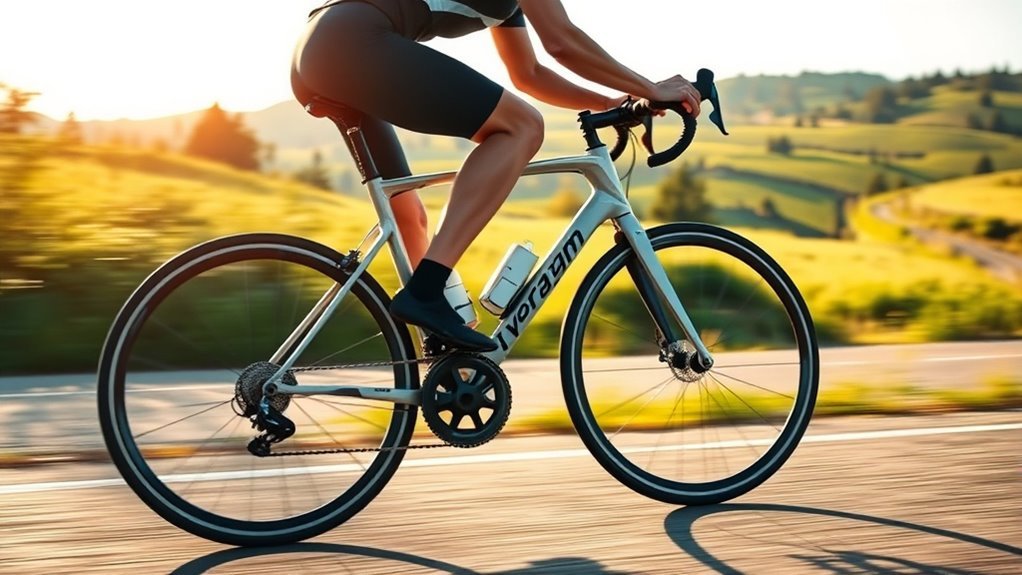
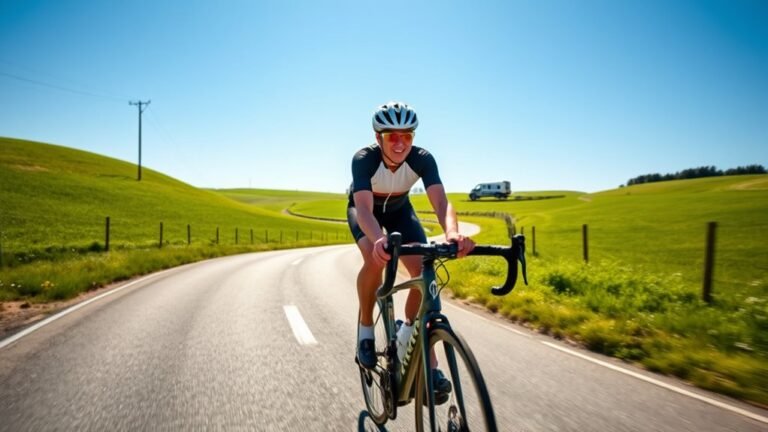
Choosing the right bike can make a big difference in how comfortable and fast you feel during a 50-mile ride. For most riders focused on fitness and performance, a road bike is the best choice. Its lightweight frame and thin tires help you maintain speed and efficiency over long distances.
Selecting the right bike boosts comfort and speed for a successful 50-mile ride.
If you prefer a more upright position or expect mixed terrain, a hybrid bike offers versatility with wider tires. Though, it may slow you down slightly on smooth roads.
Time trial or triathlon bikes excel in aerodynamics, boosting your speed but often at the cost of comfort. And comfort really matters on a long 50 mile ride.
Mountain bikes, while great off-road, tend to be heavier and slower on pavement. So, they’re less ideal for distance rides.
Ultimately, pick a bike that matches your comfort level, terrain, and fitness goals. That way, you get the best performance on your 50-mile adventure.
Fueling and Hydrating Right for 50 Miles
Because your body burns a lot of energy during a 50-mile ride, you’ll need to fuel and hydrate properly to maintain endurance and avoid fatigue. Start with a balanced meal to build glycogen stores for sustained energy.
While riding, carry at least two 730 ml bottles to keep hydrating consistently. Drink electrolyte beverages to replace salts lost through sweat and prevent cramping.
For fueling, consume small amounts of energy gels or a banana every 30 to 45 minutes to keep your blood sugar steady. Complement this with carbohydrate-rich snacks like energy bars or dried fruit every 45 to 60 minutes to support ongoing effort.
This combination guarantees you maintain energy levels without feeling sluggish or depleted. Staying on top of your fueling and hydrating strategy lets you focus on the ride, helping you complete those 50 miles efficiently and comfortably.
Pacing Tips and Break Strategies for 50 Miles
Although you might feel enthusiastic to start strong, pacing yourself evenly throughout the 50-mile ride will help you avoid early exhaustion and maintain a consistent finish time. Keeping a steady speed between 16-20 mph lets you finish in about 2.5 to 3 hours without burning out.
Start steady and keep a consistent 16-20 mph pace to finish strong without burning out.
Incorporate short breaks every 15-20 miles to recharge your energy and prevent fatigue.
Use a cycle computer or GPS to monitor your speed and stay on target. Plan breaks at scenic spots to refresh mentally and physically without losing much time.
Here are some pacing tips and break strategies for your 50-mile ride:
- Maintain a steady speed to conserve energy and avoid spikes in effort.
- Take 5-10 minute breaks every 15-20 miles to rest and hydrate.
- Use technology to keep track of your pacing and adjust as needed.
- Choose rest stops with pleasant surroundings to boost morale.
Following these strategies keeps your energy balanced and your ride enjoyable.
Frequently Asked Questions
How Long Should a 50 Mile Bike Ride Take?
You should expect to bike 50 miles in about 2.5 to 4 hours, depending on your speed.
If you ride faster, it’ll take less time, but a relaxed pace means you’ll spend more time on the road.
Is 5 Miles in 20 Minutes Good on a Bike?
You’re cruising like a casual Sunday rider, covering 5 miles in 20 minutes at 15 mph. That’s a solid pace, like a steady drumbeat—comfortable yet efficient for most recreational cyclists on flat roads.
It’s not lightning fast, but it’s definitely respectable. Perfect for enjoying the ride without feeling wiped out.
Can I Lose Tummy Fat by Cycling?
Yes, you can lose tummy fat by cycling regularly. It boosts your metabolism and burns calories, helping reduce overall body fat.
Just make sure to combine cycling with a healthy diet and consistent effort. Over time, you’ll start to see that belly fat decrease.
How Many Calories Does Cycling 50 Miles Burn?
Cycling 50 miles burns roughly 2,000 to 3,000 calories, depending on your weight, speed, and terrain.
If you ride faster or tackle hills, you’ll burn even more calories during your ride.
Conclusion
Think of biking 50 miles like climbing a mountain—you might start strong, but the real challenge is pacing yourself and adapting to the terrain. Just like Sarah, who shaved 30 minutes off her ride by choosing the right bike and fueling properly, you can conquer your 50-mile goal faster than you think.
By focusing on your fitness, gear, and strategy, you’ll turn those miles into a smooth, rewarding journey. Keep pedaling—you’ve got this!
Remember, how long it takes to bike 50 miles depends on factors like your fitness level, the bike you choose, terrain, weather, and how well you pace yourself. With the right preparation and mindset, hitting that 50-mile mark can be a great accomplishment rather than a daunting task. So get ready, stay motivated, and enjoy the ride!