
How You Can Avoid Getting a Speeding Ticket on a Bicycle
To avoid getting a speeding ticket on your bicycle, it’s important to keep an eye on your speed regularly. Use a bike computer or GPS app to track how fast you’re going, and make sure to calibrate these devices often for accuracy. Knowing your speed helps you stay within legal limits and avoid fines.
Pay close attention to local speed limits, especially in high-risk areas like school zones and residential streets. These spots often have lower speed limits, so slowing down is key.
Adjust your pace based on traffic signs and your surroundings to stay safe and legal.
Staying aware and controlling your speed not only helps prevent fines but also keeps you safe from accidents. Keep exploring to find out how to handle stops or tickets effectively. It’s all about being smart and prepared on the road!
Key Takeaways
- Regularly calibrate your bike speedometer or GPS app to ensure accurate speed readings. This way, you’ll know exactly how fast you’re going without guessing.
- Always observe and adhere to local speed limits, especially in high-risk zones like school crossings. It’s better to be safe and avoid any trouble.
- Use visual cues such as road signs and traffic signals to adjust your riding speed accordingly. Paying attention helps you stay within the rules and stay safe.
- Maintain a controlled and consistent pace to enhance safety and avoid accidental speeding. Keeping it steady makes your ride smoother and less risky.
- Stay calm and polite if stopped by law enforcement, and review local laws if issued a ticket. Being respectful can go a long way in these situations.
How to Monitor and Control Your Bike Speed to Avoid Speeding Tickets
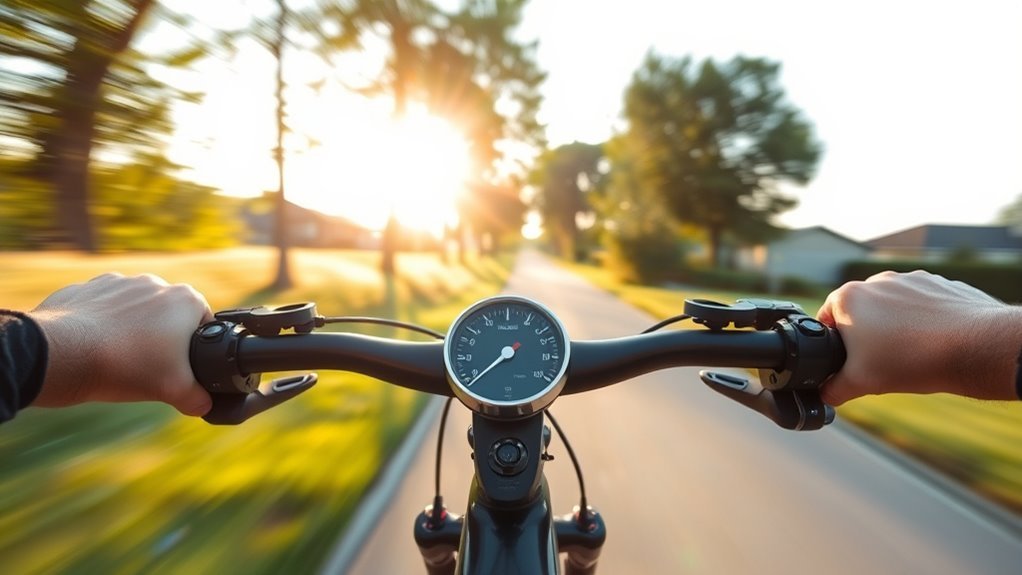
Although many cyclists focus on enjoying the ride, monitoring your speed is essential to avoid speeding tickets. Using a bike computer or a GPS app lets you track your speed accurately, helping you stay within legal speeds.
Be sure to regularly check your speedometer calibration to prevent misleading readings. Knowing local speed limits, especially in high-risk zones like school crossings and residential streets, is vital.
Regularly calibrate your speedometer and stay aware of local speed limits, especially in high-risk areas.
You should keep your riding pace controlled and adjust it according to road signs and traffic signals. These visual cues help you gauge when to slow down or maintain a steady speed.
Controlling speed isn’t just about staying legal; it also enhances safety for you and others. By combining technology with awareness of your surroundings, you can confidently navigate various areas without risking a ticket.
Staying mindful of speed limits and practicing consistent speed control helps you enjoy your ride while avoiding unnecessary fines. It’s all about riding smart and staying safe out there.
How to Respond When You Get Stopped or Ticketed While Biking
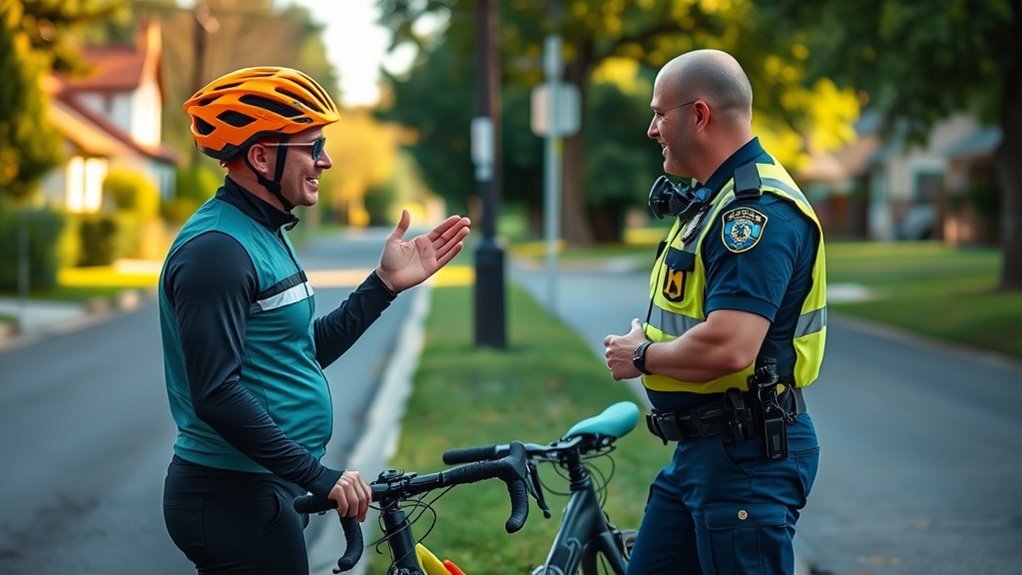
If you get stopped by law enforcement while biking, stay calm and polite to keep the situation from escalating. It really helps to keep things smooth.
Try to respond with neutral answers and avoid admitting to speeding unless you have solid evidence. Being compliant and respectful can prevent unnecessary legal consequences.
If you get a ticket or citation, make sure to review local laws quickly. This will help you understand your options for contesting it.
Also, collect your own evidence at the scene—take photos, jot down notes on conditions, and remember any officer statements. This can really support your defense if you need it.
| Action | Purpose |
|---|---|
| Stay calm and polite | Prevent escalation |
| Respond neutrally | Avoid self-incrimination |
| Collect evidence | Strengthen your defense |
| Review local laws | Know how to contest the ticket |
| Respond promptly | Avoid further legal consequences |
Frequently Asked Questions
Could You Get a Speeding Ticket on a Bicycle?
Yes, you could get a speeding ticket on a bicycle, but it’s pretty rare.
Law enforcement usually focuses more on dangerous riding rather than just speed alone. So, it’s not like they’re constantly watching for cyclists going a bit too fast.
That said, staying safe and obeying traffic rules is the best way to avoid any potential issues. Just ride smart and be aware of your surroundings!
What Is the Best Excuse to Get Out of a Speeding Ticket?
The best excuse is showing your speedometer malfunctioned or presenting GPS data proving a lower speed.
You can also explain that riding downhill or focusing on traffic signals caused unintentional speeding. This might create reasonable doubt with the officer.
Can You Get Points on a Bicycle?
You generally won’t get points on your license for speeding on a bicycle since bikes aren’t classified as motor vehicles. Instead, you might face fines or warnings, but points usually apply only to motor vehicle drivers.
Can You Go 30 Mph on a Bicycle?
Sure, you can sprint swiftly to 30 mph, especially speeding downhill or during intense intervals. But sustaining such speed on a standard bike is tough.
Use gadgets to gauge your pace and pedal prudently to stay safe. It’s all about knowing your limits and riding smart.
Conclusion
Keep your bike’s speed like a gentle river—steady and controlled—flowing within the limits set by the road. When you pedal with awareness, you steer clear of trouble’s storm.
If you’re ever stopped, think of it as a brief pause in your journey, a chance to reset and respect the rules.
By riding thoughtfully, you become the calm breeze that navigates smoothly through the city’s busy streets. This way, you avoid the harsh gusts of a speeding ticket.
Remember, staying mindful of your speed and following the rules are the best ways to avoid getting a speeding ticket on a bicycle. Riding responsibly keeps you safe and helps you enjoy every ride without interruptions. So, keep your speed steady, stay alert, and respect traffic laws to breeze through your rides worry-free.