
How You Can Legally Drive a Dirt Bike on the Road
To legally drive your dirt bike on the road, you need to make sure it meets specific requirements. First, your bike must have DOT-approved lights, mirrors, tires, and a horn. These are essential for safety and legality when riding on public roads.
Next, you’ll have to pass a safety inspection and register your bike at the DMV.
Carrying liability insurance is also a must, as it protects you and others in case of an accident.
Don’t forget to hold a valid driver’s license with a motorcycle endorsement, because riding without one is illegal.
Following these steps keeps you safe and compliant with the law. Keep going, and you’ll understand how to navigate each requirement smoothly. It’s easier than it sounds once you get the hang of it!
Key Takeaways
- Equip the dirt bike with DOT-approved headlights, taillights, turn signals, mirrors, horn, and street-legal tires. These are essential for making your bike road-ready and safe for you and others.
- Pass a safety inspection to verify the bike meets road safety standards before registration. This step ensures your bike is up to code and won’t cause any issues later.
- Obtain a valid driver’s license with a motorcycle endorsement to legally operate on public roads. Without this, you’re not allowed to ride on the street.
- Register the dirt bike at the DMV with proof of ownership and provide mandatory liability insurance. This makes everything official and keeps you protected.
- Ensure all equipment, licensing, registration, and insurance comply with legal requirements to avoid fines or impoundment. Staying legal helps you focus on enjoying your ride without any hassles.
How to Make Your Dirt Bike Street Legal

Before you hit the road, you’ll need to equip your dirt bike with essential components like DOT-approved headlights, taillights, turn signals, mirrors, and a horn. These pieces of equipment must meet DOT standards to make your dirt bike street legal.
Equip your dirt bike with DOT-approved lights, mirrors, and a horn to ensure it’s street legal.
You’ll also need DOT-approved tires and a visible license plate. Once your bike is properly outfitted, it must pass a safety inspection to guarantee it’s safe for public roads.
After passing inspection, you’ll have to obtain the title and complete the registration process through your state’s DMV. Keep in mind, registration fees usually range from $70 to $120, depending on your county.
Although you’re not dealing with licensing and insurance here, remember that to operate a street-legal dirt bike, you’ll eventually need a valid driver’s license with a motorcycle endorsement. Taking these steps assures your dirt bike meets legal requirements and is ready for safe, lawful riding on public streets.
Licensing, Registration, and Insurance for Street-Legal Dirt Bikes
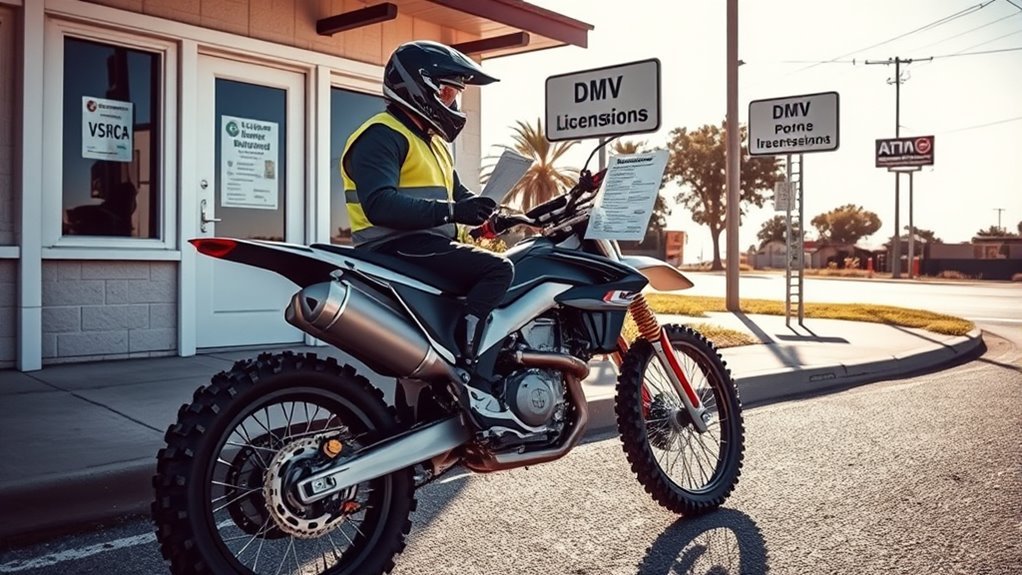
Although you’ve made your dirt bike street legal with the right equipment, you can’t just ride it on public roads without proper licensing, registration, and insurance. First, you need a valid motorcycle license or endorsement. You can get this through a motorcycle safety course or by adding it to your existing driver’s license.
Remember, children under 15 can’t obtain a motorcycle license. Next, register your street-legal dirt bike at the DMV by providing proof of ownership, liability insurance, and paying registration fees that vary by county.
Your bike must have DOT-approved headlights, taillights, brake lights, turn signals, mirrors, and tires to meet on-road safety standards. Liability insurance is mandatory, and you’ll need to show proof during registration and if law enforcement stops you.
Without these steps, riding your dirt bike on public roads is illegal and risks fines, impoundment, or license suspension. Following these requirements keeps you compliant and safe on the road.
Frequently Asked Questions
Can Street-Legal Dirt Bikes Go on the Highway?
You can’t usually ride street-legal dirt bikes on highways or interstates, even if they meet requirements. Always check local laws, guarantee proper equipment, and avoid limited-access roads to stay safe and legal while riding.
Generally, these bikes are meant for streets but not the faster, busier highways. So, it’s a good idea to double-check what’s allowed where you live before hitting the road. Staying safe and following the rules goes a long way!
What Do You Need to Legally Drive a Dirt Bike on the Road?
Imagine Jake got pulled over because his dirt bike lacked a license plate. To legally drive, you need proper lights, mirrors, registration, a title, insurance, DOT tires, a valid license, and a displayed plate on your bike.
It might sound like a lot, but these things are super important. Without them, you could get into trouble just like Jake did. So, if you want to ride legally, make sure you’ve got everything checked off your list.
How Illegal Is It to Ride a Dirtbike on the Road?
Riding a dirt bike on the road illegally can get you fined, cited, or even have your bike impounded. You’ll face serious consequences, so it’s best to avoid it unless your bike’s fully street legal and registered.
Honestly, it’s just not worth the hassle. Stick to the trails or off-road areas unless you’ve made sure your bike meets all the legal requirements. That way, you stay safe and out of trouble.
Can You Ride a Dirt Bike on the Road in a Neighborhood?
You can ride a dirt bike on neighborhood roads only if it’s fully street-legal, with proper lights, signals, mirrors, registration, and insurance. Otherwise, you risk fines, citations, or having your bike impounded.
Conclusion
So, you want to ride your dirt bike on the road? Just slap on those magical street-legal stickers, get your fancy license, and pray the insurance company doesn’t laugh you off the phone.
Remember, nothing screams “responsible adult” like turning your off-road beast into a bureaucratic masterpiece. But hey, once you’re done with all that, you’ll be the coolest, most law-abiding rebel on the asphalt.
Just don’t forget your helmet or your patience! Getting your dirt bike road-legal involves meeting specific requirements like proper lighting, mirrors, and registration. Plus, having the right insurance and a valid license is key.
Once everything’s in place, you can legally drive your dirt bike on the road and enjoy the ride safely and responsibly.