How to Adjust a Bike Seat in 5 Easy Steps
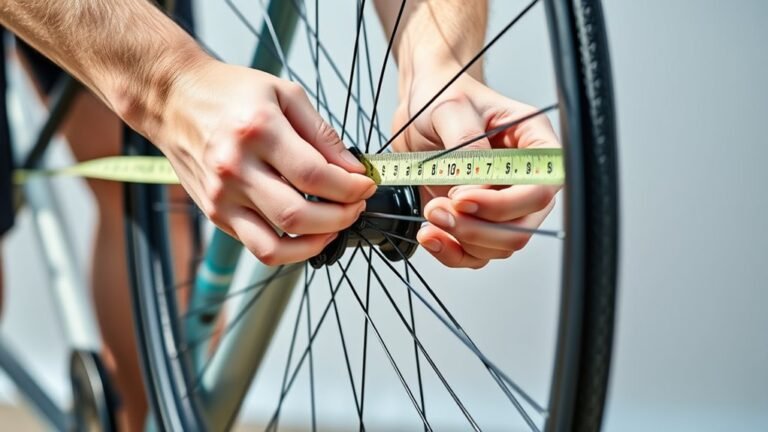
To adjust your bike seat in five easy steps, start by measuring your inseam and multiplying it by 0.885 to get the initial saddle height. This simple calculation helps set your seat at the perfect height for comfortable riding and better performance.
Next, set the seat height so your heel rests on the pedal at the bottom position.
Then, check for a slight knee bend when pedaling—that’s key to avoiding strain and improving efficiency.
After that, align your kneecap over the pedal axle by adjusting the seat forward or backward. This ensures proper leg extension and smooth pedal strokes.
Level the saddle with a slight downward tilt for added comfort.
Finally, tighten the clamp securely before test riding and fine-tuning your seat position.
Keep going to uncover more tips for a perfect fit and maximize your cycling experience!
Key Takeaways
- Measure your inseam and calculate saddle height by multiplying inseam by 0.885 for an initial setting. This gives you a good starting point to work from.
- Adjust saddle height so your heel rests on the pedal at the lowest position with a 25-35° knee bend. It might take a couple of tries to get it just right.
- Set fore-aft seat position by aligning your kneecap over the pedal axle at the 3 o’clock position. This helps with efficient pedaling and comfort.
- Level the saddle using a carpenter’s level and tilt it slightly downward up to 3° for comfort. A small tilt can make a big difference in how it feels.
- Securely tighten the seat clamp bolts to 15-20 Nm and test ride for comfort and stability, adjusting as needed. Don’t hesitate to tweak it a bit until it feels perfect.
Measure Your Inseam to Find Bike Seat Height
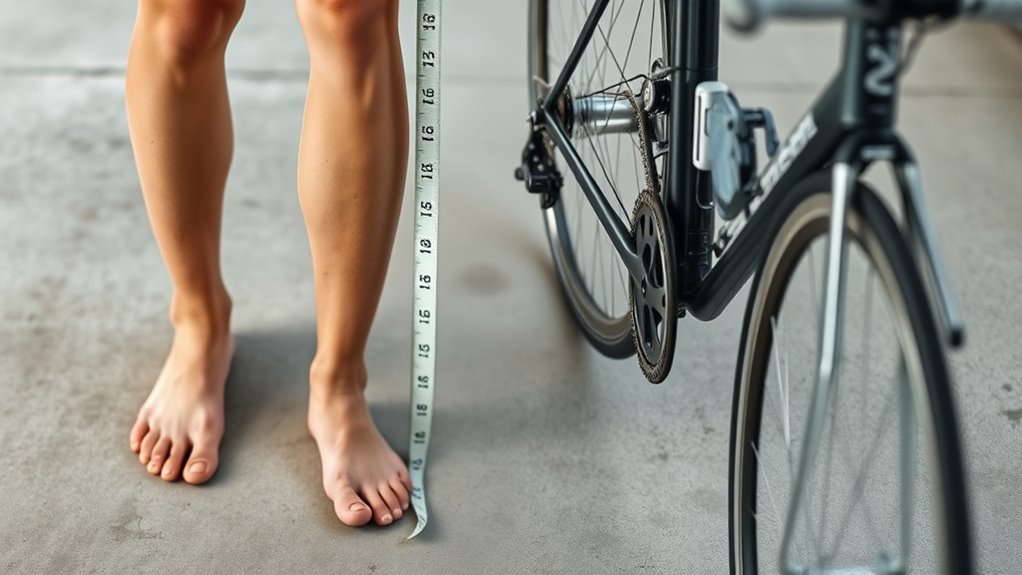
Before adjusting your bike seat, measure your inseam accurately by standing against a wall with a book or ruler between your legs. Mark the distance from the top of the book to the floor. This inseam measurement is key to finding the ideal saddle height.
To calculate it, multiply your inseam by 0.885; this gives you a precise starting point for saddle height, measured from the center of the bottom bracket to the top of the saddle. Remember to measure while wearing the shoes you’ll cycle in to guarantee accuracy.
Once you set this saddle height, ride your bike to test comfort and pedal stroke efficiency. Your knee should be slightly bent at the bottom of the pedal stroke. This helps prevent injury and improves power.
Use this measurement as a foundation for fine-tuning your bike fitting. Make small adjustments based on your riding style and comfort preferences. This step assures your bike seat height supports both comfort and performance.
Adjust Bike Seat Height for Proper Leg Extension
When you adjust your bike seat height, make sure your heel touches the pedal at the 6 o’clock position with your leg fully extended. This heel on pedal method sets the foundation for proper saddle height.
Once set, pedal normally to check for a slight knee bend—about 25-35°—at the bottom of the pedal stroke. This ensures optimal leg extension and bike ergonomics, preventing strain.
Use your inseam to calculate saddle height measurement by multiplying it by 0.885 for a proper fit. After seat adjustment, take a test ride to confirm comfort and efficiency.
| Step | Action |
|---|---|
| 1. Heel on Pedal | Place heel on pedal at 6 o’clock |
| 2. Check Knee Bend | Ensure 25-35° bend during pedaling |
| 3. Calculate Height | Inseam × 0.885 = saddle height |
| 4. Test Ride | Confirm comfort and proper leg extension |
Following these steps guarantees the right pedal position and saddle height for smooth riding.
Set Bike Seat Fore-Aft Position to Align Your Knee

Although adjusting your bike seat height guarantees proper leg extension, setting the fore-aft position is equally important to align your kneecap over the pedal axle. To do this, position the saddle so that when your foot is at the 3 o’clock pedal position, your kneecap lines up directly above the pedal axle.
Start by loosening the saddle clamp bolts, then slide the saddle forward or backward until the kneecap and pedal axle are vertically aligned. If your kneecap sits behind the pedal axle, move the saddle forward; if it’s ahead, slide the saddle backward.
Use a plumb line or ruler to check this alignment precisely. Once you find the right fore-aft position, tighten the clamp bolts securely.
Finally, take a short ride to make sure your knees stay comfortably aligned over the pedals throughout your pedaling motion. Proper fore-aft adjustment reduces knee strain and improves pedaling efficiency for a smoother ride.
Level the Bike Seat and Adjust Angle for Comfort
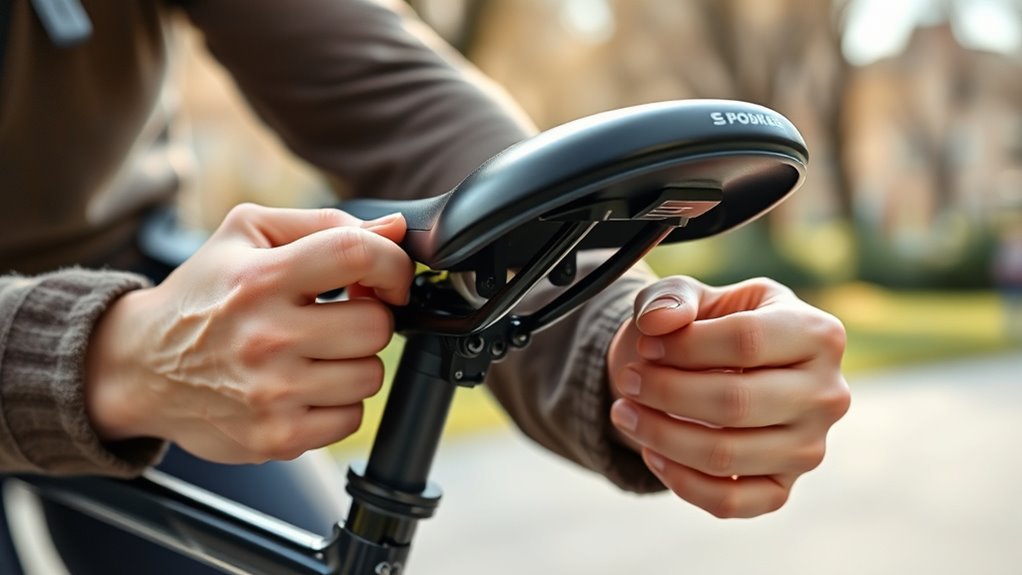
Since your bike seat’s angle directly affects your comfort and riding efficiency, you’ll want to level it carefully before making any fine adjustments. Start by loosening the seat clamp bolts to free the saddle for movement.
Your bike seat angle impacts comfort and efficiency, so loosen clamp bolts to adjust the saddle freely.
Use a carpenter’s level placed along the saddle rails to verify the saddle level is perfectly horizontal with the ground. Adjust the saddle by tilting it slightly downward—no more than 3 degrees—for a more comfortable ride, especially if you prefer that angle.
You can also tilt it upward if that suits you better. Once you find the ideal seat angle, mark the saddle rails to keep your position consistent after future adjustments.
Finally, tighten bolts securely to prevent any movement. After tightening, double-check that the saddle remains level with the ground to maintain comfort.
This careful leveling and angle adjustment ensure your seat supports you comfortably on every ride.
Tighten the Seat Clamp, Test Ride, and Fine-Tune
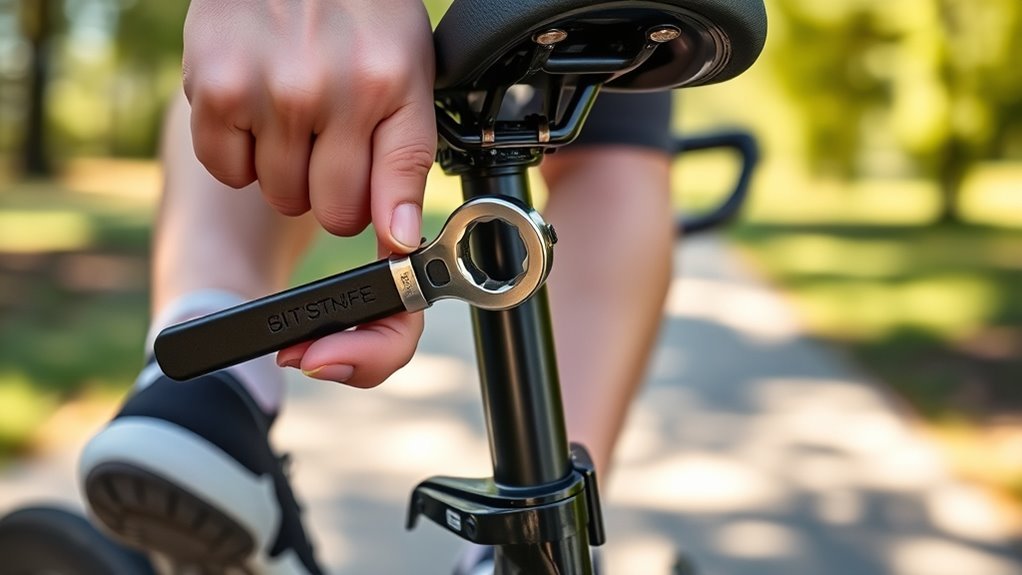
After leveling your bike seat and adjusting its angle for comfort, the next step is to tighten the seat clamp securely. Use the recommended torque, usually between 15-20 Nm, to make sure the clamp and bolts hold the seat firmly in place without slipping.
Once tightened, test the seat’s stability by applying firm pressure in all directions. If it feels loose, just re-tighten the bolts to keep a secure fit.
Next, take a short test ride to check out comfort and stability. Pay close attention to any discomfort or shifting, and use that feedback to fine-tune the seat’s position.
You might need to make small adjustments to the level or angle for the best comfort. After each tweak, retighten the seat clamp and bolts to keep everything secure. Regularly checking and tightening helps your bike seat stay stable and comfortable every ride.
Frequently Asked Questions
What Is the Best Way to Adjust a Bike Seat?
The best way to adjust your bike seat is to use the heel-pedal method for height. Then, align your knee over the pedal axle at 3 o’clock.
After that, fine-tune the fore-aft position and angle for comfort. It’s all about making sure you feel good while riding.
How to Tell if a Saddle Is Too Far Forward or Back?
You can tell if your saddle’s too far forward if your knee extends past the pedal axle at 3 o’clock.
If your kneecap sits behind the axle, the saddle’s likely too far back. Adjust accordingly.
Should My Bike Seat Be Higher Than My Handlebars?
Yes, your bike seat should generally be higher than your handlebars. This helps you pedal efficiently, reduces back strain, and improves aerodynamics.
Just make sure the height feels comfortable and allows proper leg extension while riding. That way, you’ll get the most out of your ride without any discomfort.
How Do I Adjust the Seat Height on My Bicycle?
You loosen the seat post clamp, then raise or lower the saddle until your leg is nearly straight with a slight knee bend when your heel’s on the pedal.
Tighten the clamp securely, then test by pedaling. Give it a try and see how it feels!
Conclusion
Now that you know how to adjust your bike seat in five easy steps, you’re set for a more comfortable ride. Did you know that improper seat height can reduce pedaling efficiency by up to 30%?
By measuring your inseam and fine-tuning your seat, you’ll not only feel better but also ride stronger and longer. It’s amazing how a simple adjustment can make such a big difference.
So, tighten that clamp, take a test ride, and enjoy every mile with confidence! Adjusting your bike seat properly is key to improving comfort, boosting pedaling efficiency, and preventing injury. With these easy steps, your bike seat adjustment will help you get the most out of every ride. Happy cycling!