How to Do a Bicycle Kick in 3 Simple Steps
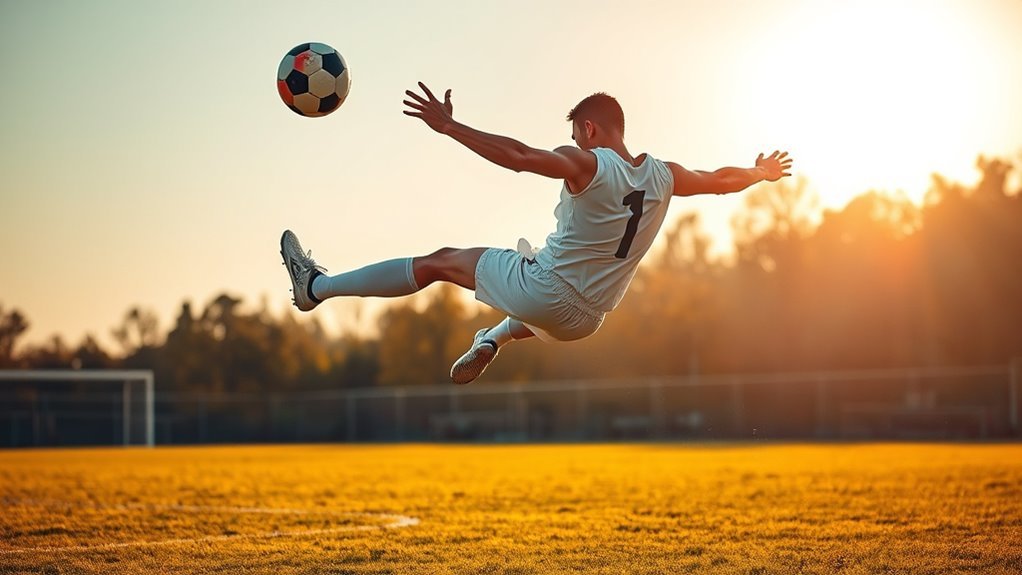
To do a bicycle kick in three simple steps, start by facing away from the goal. Lift your non-dominant knee high while pushing off with your dominant leg for a strong jump. This jump sets the foundation for the entire move, so make it powerful and controlled.
Next, kick the ball with the top of your foot. As you do this, twist your hips and follow through to generate both power and control. It’s important to time your kick perfectly to connect with the ball at just the right moment.
Finally, focus on landing safely. Twist your torso and roll onto your side to protect your back from impact. This helps you avoid injury and keeps you ready for the next play.
Keep going to uncover tips that make this move safer and more effective. With practice, your bicycle kick will look smooth and feel natural on the field!
Preparing Your Body and Position
Before you attempt the bicycle kick, face away from the goal and keep your eyes locked on the ball to set your focus.
To prepare your body and position, lift your non-dominant knee high—this helps generate the upward momentum needed to prepare for the jump.
Next, push off the ground with your dominant leg to launch yourself into the air confidently.
As you rise, throw your head and shoulders backward to guarantee the correct body position and to protect yourself during the fall.
Extend your arms outward to maintain balance throughout the motion. These actions not only help you stay stable but also set you up for a controlled landing.
Mastering this preparation phase is vital before moving on to executing the kick itself.
Executing the Kick With Proper Technique
When you jump off your standing leg, propel your non-kicking leg upward to gain the height needed for the kick. As you reach the peak, raise your kicking foot to hit the ball, aiming to make contact with the top of your foot. Keep your eyes on the ball to time your kick precisely.
Slightly dip and twist your hips to generate power and direct the ball over your shoulder. After you make contact, follow through with your kicking leg to ensure a smooth strike.
| Step | Action | Tip |
|---|---|---|
| Jump & Raise | Propel non-dominant leg | Gain maximum height |
| Strike | Kick with top of foot | Focus on precise contact |
| Follow Through | Extend kicking leg | Control power and direction |
Consistent practice of bicycle kicks improves timing and impact with the ground. Keep at it, and you’ll get that technique down in no time!
Landing Safely to Prevent Injury
After executing the kick, your focus should shift to landing safely to protect your body. Aim to land on your side rather than flat on your back to reduce spinal injury risk.
Focus on landing safely by aiming for your side to protect your spine after the kick.
As you fall, twist your torso to avoid a direct impact on your back or head. Use your arms and hands to cushion the fall, aiding impact absorption and helping maintain balance.
After touching down, practice rolling through your body to distribute force and further prevent injury. Whenever possible, perform the bicycle kick on a soft surface like grass or mats to minimize impact and enhance safety.
Prioritizing these landing techniques guarantees you can perform the move confidently while minimizing the risk of injury during the fall. Keep these tips in mind, and you’ll land safer every time!
Conclusion
Now that you’ve got the hang of preparing your body, executing the kick, and landing safely, you’re basically ready to dazzle the entire neighborhood with a bicycle kick so impressive it could stop traffic!
Remember, practice makes perfect, so keep honing your technique and stay safe.
With dedication, you’ll soon be flipping like a pro, turning heads and scoring goals that feel like they belong in the highlight reel of the century!
Mastering the bicycle kick takes time, but every attempt gets you closer to perfection.
Keep practicing these simple steps, and soon enough, your bicycle kick will be a showstopper on any field.