How to Paint a Bike in 3 Easy Steps
To paint your bike, start by thoroughly cleaning and sanding the frame. This step is key to making sure the paint sticks well.
Then, mask any parts you don’t want painted—like the chain, brakes, and tires.
Next, apply a light coat of primer and wait for it to dry completely. This helps the paint go on smoothly and last longer.
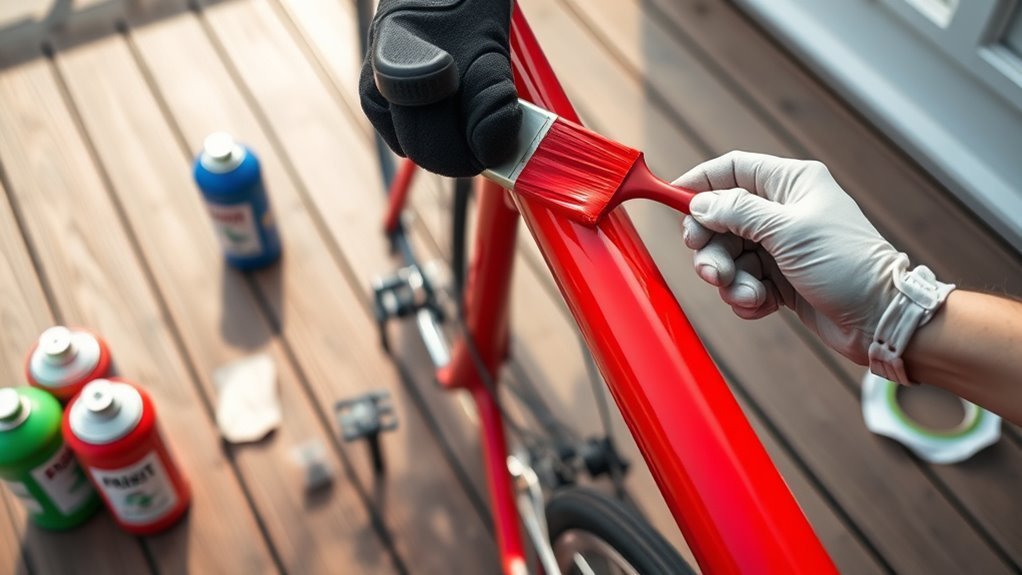
After that, follow with several thin, even coats of paint to avoid runs and drips.
Finally, protect your work by spraying multiple clear coats. Be sure to allow proper drying time between each layer.
This simple process gives your bike a fresh, durable finish that looks great and holds up over time. Keep going to uncover tips for a flawless result!
Key Takeaways
- Clean and sand the bike frame thoroughly to remove dirt and create a rough surface for paint adhesion.
- Remove or mask all components and areas that should not be painted to prevent overspray.
- Apply a light coat of primer and let it dry before starting the paint application.
- Spray multiple thin, even coats of paint, allowing each coat to dry between applications.
- Finish with several thin clear coats, letting the bike cure in a dust-free, ventilated area for durability.
Clean, Sand, and Mask Your Bike Frame
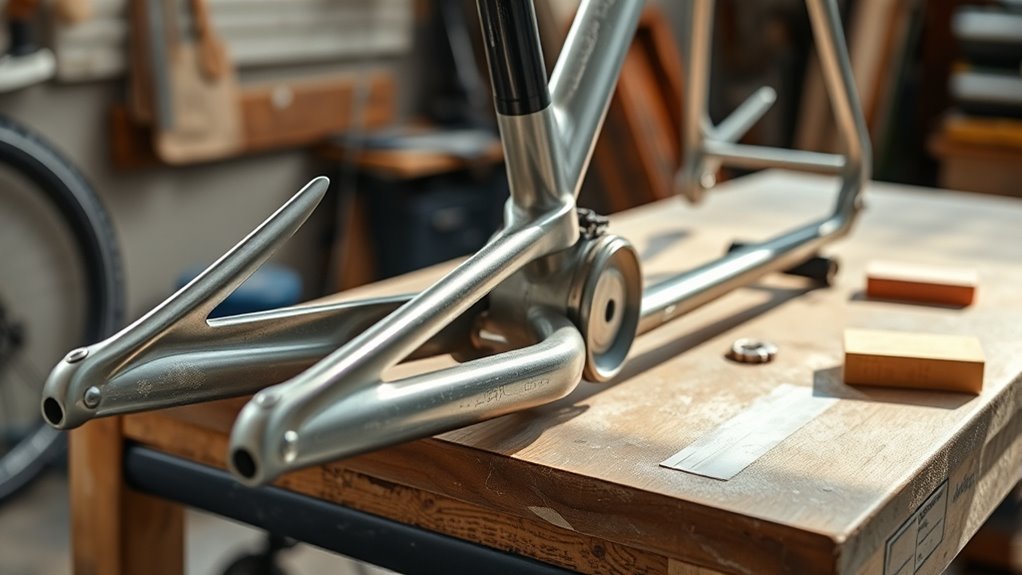
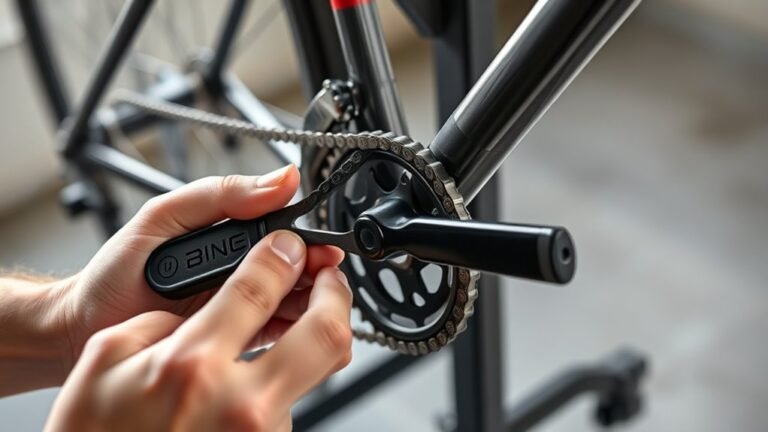
Before you begin sanding or painting, make sure you thoroughly clean your bike frame with a degreaser or mild detergent to remove dirt, grease, and dust. This essential step guarantees the paint will adhere properly.
Thoroughly clean your bike frame to remove dirt and grease, ensuring paint adheres perfectly.
Once the frame is dry, sand the entire surface using fine-grit sandpaper (180-220 grit). Sanding creates a rough texture that helps the paint stick better. For larger areas, consider using an electric sander to achieve an even and consistent finish.
Next, focus on masking. Use painter’s tape to cover parts you don’t want painted, like bearing holes or other delicate areas. Proper masking prevents overspray and keeps your bike looking sharp.
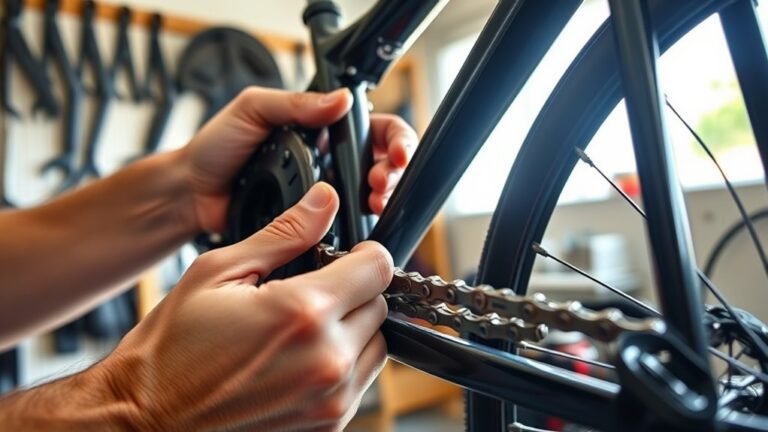
Also, remove or cover components such as brakes, handlebars, and gears to protect them during surface preparation. Taking the time to clean, sand, and mask carefully sets you up for a smooth painting process with a professional-looking outcome.
Prime and Paint Your Bike With Light, Even Coats
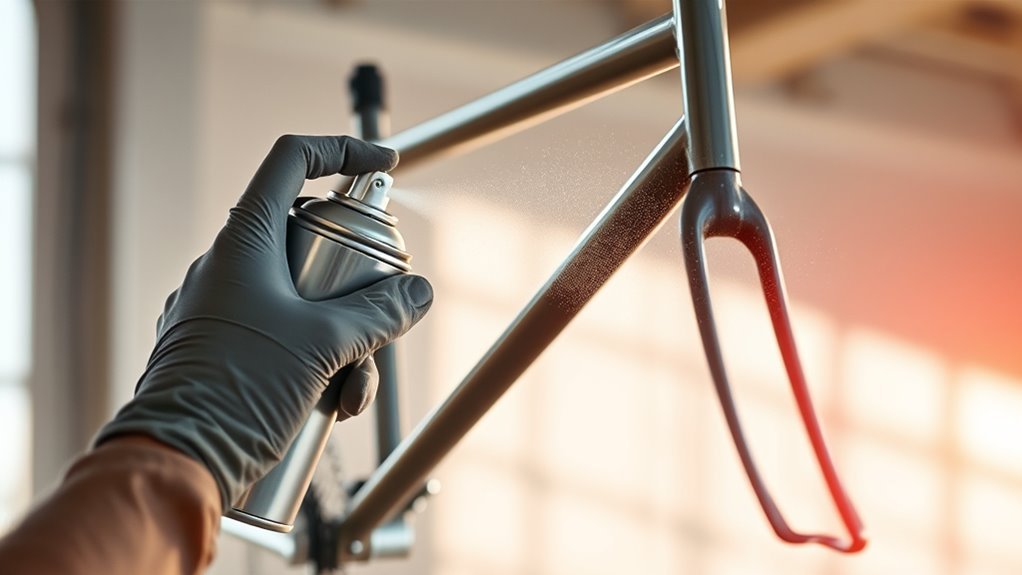
Although it might be tempting to apply one thick coat, you’ll get a much smoother finish by spraying several thin, even layers of primer and paint. Start with a primer spray, applying a light coat that covers the frame evenly without drips.
Use light coats of spray paint afterward, using sweeping motions to avoid runs. After each coat, wait at least 10-15 minutes for it to dry before applying the next. This gradual build-up creates a durable, professional-looking finish.
| Step | Action | Drying Time |
|---|---|---|
| 1 | Apply primer spray evenly | Wait at least 10-15 mins |
| 2 | Spray paint with light coats | Wait at least 10-15 mins |
| 3 | Repeat for smooth coverage | Wait at least 10-15 mins |
Sticking to light coats ensures your paint adheres well and looks flawless before you move on to applying the clear coat. It’s worth the extra patience!
Apply Clear Coat and Let Your Paint Cure Properly
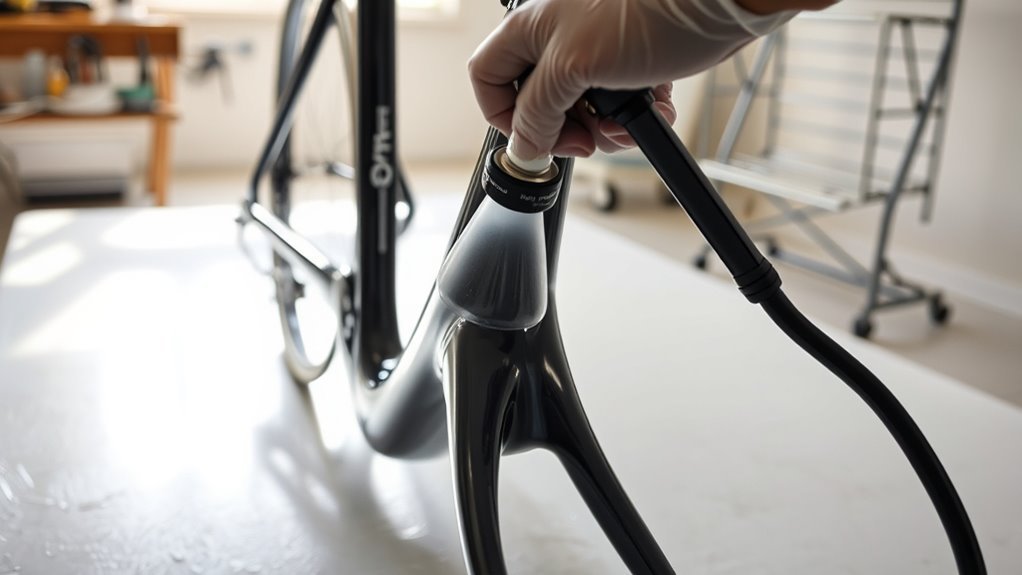
When you finish painting your bike, you’ll want to protect your work by applying multiple thin coats of clear lacquer or polyurethane. Make sure to let each layer dry thoroughly according to the manufacturer’s instructions. Usually, this means waiting about 15-30 minutes between coats.
Before you apply the final clear coat, double-check that the surface is dust-free to avoid any imperfections. After you’ve completed all the coats, let the paint cure in a well-ventilated, dust-free area for at least 72 hours.
Keep in mind these key points:
- Apply several thin, even coats of clear coat for the best protection.
- Confirm the environment is clean and dust-free during application.
- Use UV-resistant polyurethane if your bike will see a lot of sun exposure.
- Avoid moisture, extreme temperatures, and heavy use until the paint fully cures.
Following these steps will help your bike’s finish stay smooth, durable, and vibrant for years to come.
Frequently Asked Questions
What Are the Steps Involved in Painting a Bike?
You’ll strip the bike down, sand the frame, and apply primer. Then spray light paint coats, letting each dry.
Take your time with this part—it really helps the paint look smooth and even. Finally, add a clear protective layer and let it cure before putting everything back together.
How to Draw a Bike in an Easy Way?
You can capture a bike’s charm by sketching its basic shapes first—circles for wheels, triangles for the frame. Then, add details like handlebars and pedals.
Keep it simple, and soon you’ll have a charming bike drawing. It’s easier than you might think once you break it down into these simple steps!
What Kind of Paint Do You Use on a Bike?
You should use spray paints made for metal or plastic, like acrylic or enamel-based.
For a durable, glossy finish, epoxy urethane single-stage paints or powder coating work best. Especially if you want weatherproof and UV-resistant protection.
Can I Just Spray Paint My Bike?
Yes, you can spray paint your bike, but you’ll need to prep the surface first. Make sure to clean and sand it down for the paint to stick well.
Use spray paint that’s made for metal—it works best. Apply light coats instead of one heavy layer to avoid drips and runs.
Don’t forget to mask off sensitive parts like the gears and brakes. And be patient—let it dry thoroughly between coats for a durable, smooth finish.
Conclusion
Now that you’ve learned how to paint your bike in three simple steps, you’re ready to give it a fresh, personalized look.
Did you know that a good paint job can extend your bike’s life by up to 50% by protecting it from rust and wear? Taking the time to clean, sand, paint, and seal your frame not only boosts its appearance but also its durability.
So, get started and enjoy riding a bike that looks as great as it performs! Painting your bike is a fantastic way to add personality while keeping it protected. With just a little effort, you can transform your bike’s look and make sure it lasts longer. Happy painting and happy riding!