10 Easy Steps to Change Gears on a Bike
To change gears smoothly on your bike, start by locating your shifters. The left shifter controls the front gears, while the right one manages the rear.
Lightening your pedal pressure before shifting is key to avoiding damage.
Use the left shifter for bigger jumps between chainrings and the right for fine adjustments on the cassette.
Try to shift early, especially before hills or descents, so you can keep your pedaling steady and comfortable.
Keep your cadence steady as you ride and avoid cross-chaining, which can wear out your gears faster.
With these basics down, you’ll be ready for more comfortable rides.
Plus, you can explore additional tips to really master your bike’s gear system.
Key Takeaways
– Lighten pedal pressure before shifting to make gear changes smooth and avoid damaging the drivetrain.
It really helps keep everything running nicely.
– Use the left shifter to change the front chainrings when you need big shifts.
For finer adjustments on the rear cassette gears, use the right shifter.
– Try to shift early, especially before hills or changes in terrain.
This keeps your cadence steady and prevents unnecessary strain.
– Apply gentle, controlled pressure on the shifters.
At the same time, pedal consistently at around 70-90 RPM for the best shifting performance.
– Don’t forget to regularly maintain your bike.
Check cable tension, derailleur alignment, and clean the components to keep your gear changes reliable.
Finding Your Bike’s Gear Shifters for Smooth Shifting
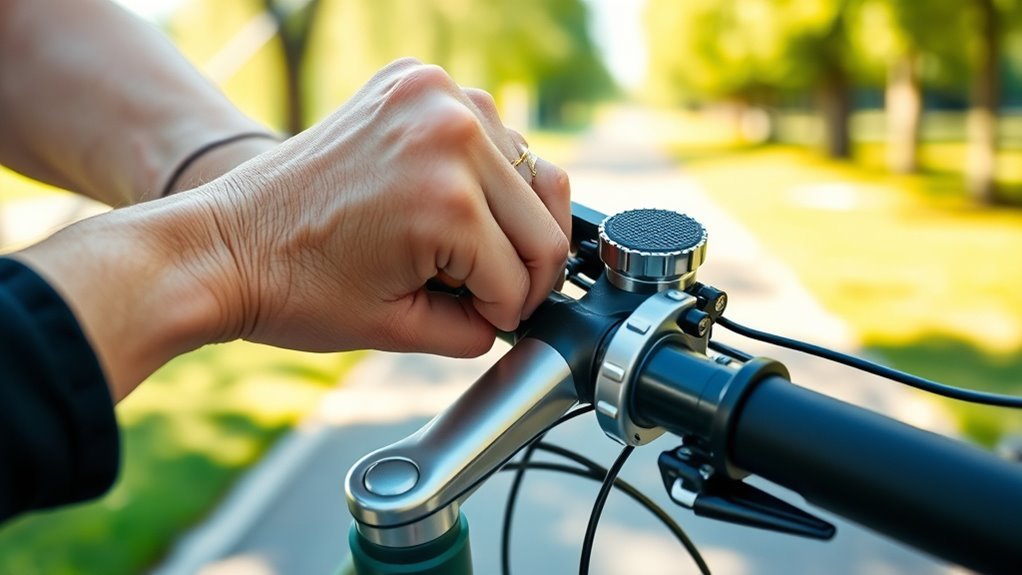
Before you start shifting gears, you need to locate your bike’s gear shifters, which are usually found on the handlebars. Typically, the left shifter controls the front derailleur, while the right shifter manages the rear derailleur. Understanding these shifter controls is vital for smooth shifting.
Depending on your bike, you might find integrated brake/shifter levers if you have drop bars or thumb paddles and grip shifters on flat bars. Take some time to familiarize yourself with how these shifters operate—whether they move sideways or rotate—and listen for the clicking sound that signals a gear change.
Familiarize yourself with your shifters—whether levers, paddles, or grips—and listen for the click of each gear change.
Remember, each shifter control adjusts a specific derailleur, so always use the correct one. Practicing smooth, single-gear shifts will help you avoid damaging your drivetrain and guarantee your riding stays efficient and comfortable.
Mastering these basics sets a solid foundation before you move on to when and how to shift gears for smooth pedaling.
When and How to Shift Gears for Smooth Pedaling
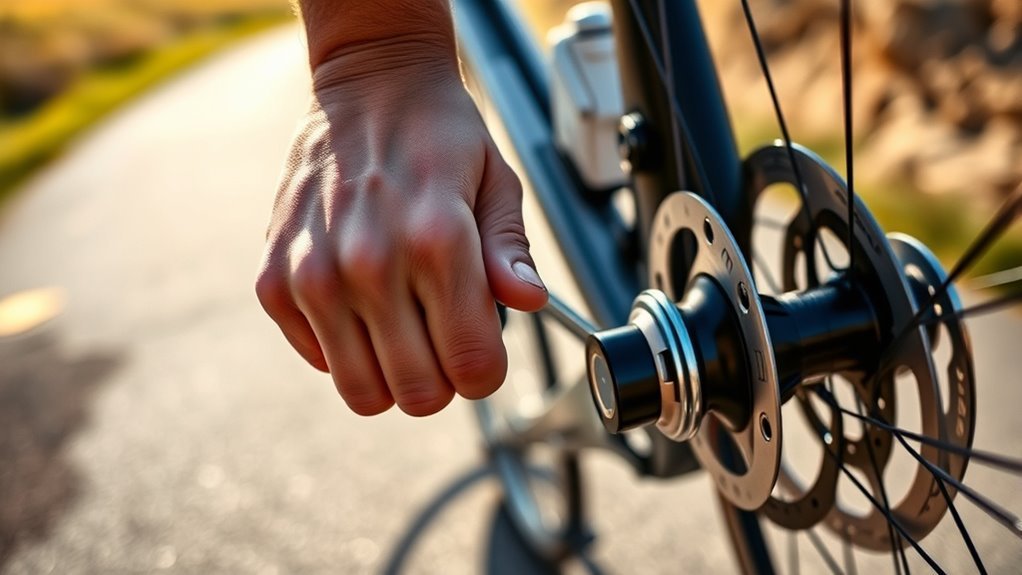
You’ll want to shift gears early, especially before steep climbs, to keep your pedaling smooth and avoid straining your legs. Lighten your pedal pressure slightly and maintain a steady cadence as you shift to prevent chain slipping.
Using the front derailleur for big changes and the rear for fine-tuning will help you adjust smoothly to the terrain. It’s all about making those transitions feel natural and easy.
Timing Your Gear Shifts
When should you shift gears to keep pedaling smooth and efficient? Always try to anticipate terrain changes and shift gears early—before you hit a hill or start descending. This helps you maintain a smooth cadence.
Make gear changes gradually by lightening your pedal pressure just a bit. This way, you avoid chain slipping or grinding. Small, incremental adjustments work best because they prevent sudden strain and help your bike’s drivetrain last longer.
Here’s a quick guide to timing your gear shifts:
| Terrain Condition | When to Shift | How to Shift |
|---|---|---|
| Approaching Hill | Shift early to easier gears | Lighten pedal pressure, shift gradually |
| On Steep Incline | Avoid shifting under heavy load | Reduce pedal torque first, then shift |
| Approaching Descent | Shift to harder gears early | Smooth, incremental gear changes |
| Flat Terrain | Maintain smooth cadence | Shift only if cadence feels off |
Master timing your gear changes, and you’ll enjoy a seamless ride every time.
Techniques For Smooth Pedaling
Although shifting gears might seem straightforward, mastering smooth pedaling takes a bit more effort. You need to time your shifts carefully and control your pedal pressure.
To change gears smoothly, lighten your pedal pressure just before shifting to easier gears. This helps prevent chain slipping or grinding.
Always keep a steady cadence and avoid sudden changes in pedaling speed during gear shifts. It really makes a difference.
Try to shift gears early, especially before you hit steep inclines or descents. That way, you can keep a consistent rhythm going.
Use gentle, controlled movements on the shifters instead of forceful or sudden actions. It keeps everything running smoothly.
Practicing these techniques while keeping your pedaling steady helps build muscle memory. Before you know it, your gear changes will be seamless.
Using the Left Shifter for Big Gear Changes
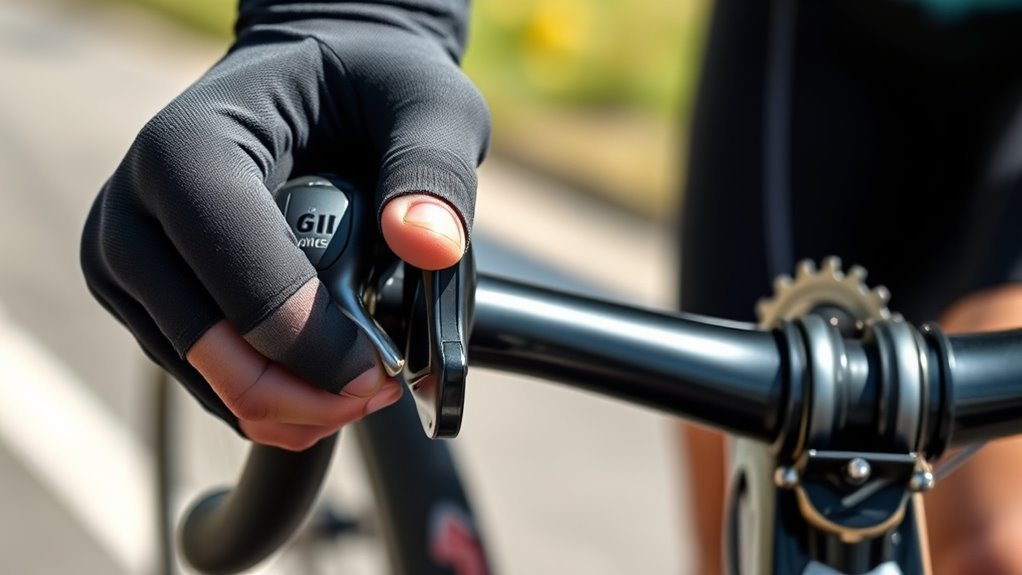
How do you tackle big gear changes on your bike? You use the left shifter, which controls the front derailleur responsible for moving the chain between the larger and smaller chainrings. This lets you change gears considerably, making your ride easier or harder.
When you want to shift to a harder gear, push the left shifter paddle to guide the chain onto the larger front chainring. To make pedaling easier, operate the left shifter to move the chain onto the smaller chainring.
Before making these gear shifts, lighten your pedal pressure slightly. This helps the front derailleur move smoothly without straining the drivetrain.
Also, try to shift early—especially before steep climbs or descents—to maintain momentum. Using the left shifter effectively ensures you handle big gear changes confidently and keep your ride smooth and efficient.
Using the Right Shifter for Fine Gear Adjustments
You’ll use the right shifter to make small, precise gear changes by controlling the rear derailleur. This lets you move the chain smoothly across the cassette’s cogs for fine-tuning your pedaling effort.
Practice shifting gently with your right hand to keep your ride efficient and quiet. It’s all about making those tiny adjustments that make a big difference. Give it a try, and you’ll notice the smoother ride!
Right Hand Controls
Since the right shifter controls the rear derailleur, it lets you make fine adjustments by moving the chain across the cassette’s cogs. When you push the right shifter toward the smaller cog, you shift to a higher gear, making pedaling harder.
Pushing it toward the larger cog shifts to an easier gear. Use the right shifter for small changes to maintain a smooth cadence and avoid chain slack or tension issues.
Don’t apply excessive force when shifting, as this can damage the rear derailleur or cause gear skipping. Practice gradual gear shifting with the right hand during your rides to build muscle memory.
This helps you master gear shifting and guarantees smooth progressions across various terrains. Give it some time, and you’ll get the hang of it in no time!
Small Gear Changes
Mastering small gear changes with the right shifter lets you fine-tune your ride and maintain a steady cadence. Use the shifter, often controlled by your thumb or a grip dial, to make precise adjustments on the rear cassette.
Shift into easier gears by moving to slightly larger cogs incrementally. This helps ensure smooth shifting without stressing the drivetrain.
Lighten your pedal pressure just before and during these small gear changes to help the chain move smoothly. Avoid shifting under heavy load, especially when climbing, to prevent slipping or damage.
Practicing gentle, controlled shifts builds muscle memory. This way, you’ll get better at making fine gear changes quickly and efficiently.
With these techniques, you’ll enjoy a smoother ride and have better control over your bike’s performance. It really makes a difference out on the road or trail!
Rear Derailleur Operation
How exactly does the right shifter help you make fine gear adjustments? It controls the rear derailleur, which shifts the chain across the cogs in your cassette for smooth, precise changes.
When you push the right shifter paddle or twist the dial, it moves the rear derailleur to shift the chain onto a larger or smaller cog, subtly altering your gear ratio. Shifting to a larger cog makes pedaling easier, while a smaller cog increases resistance.
To keep everything running smoothly, shift gradually and pedal lightly. The rear derailleur also maintains proper chain tension and alignment, preventing slack or derailment during shifts.
Mastering this lets you fine-tune your ride effortlessly, making climbs and flats more comfortable. It’s a simple trick that really makes a difference once you get the hang of it.
Why Easing Pedal Pressure Helps When Shifting Gears
When you ease pedal pressure while shifting gears, you allow the drivetrain to operate smoothly and precisely. Easing pedal pressure reduces stress on the gears, letting the derailleur move the chain easily between cogs without resistance.
This helps achieve a smooth gear change by minimizing chain slack and preventing the chain from slipping or jumping off. By applying light force during shifting gears, you avoid grinding noises and potential damage to your bike’s components.
Maintaining gentle pedal cadence also ensures power transfers efficiently, which prolongs the life of your gear system. If you pedal too hard, the derailleur struggles against the tension, causing rough shifts and unnecessary wear.
Avoiding Cross-Chaining to Protect Your Drivetrain
Although shifting to certain gear combinations might seem convenient, using cross-chained positions puts extra strain on your drivetrain by forcing the chain at sharp angles.
Cross-chaining happens when you use “big/big” or “small/small” gear setups, causing excessive wear on the chain, cassette, and chainrings. This not only speeds up drivetrain damage but can also lead to chain slipping, noise, and rough shifting.
To protect your bike, avoid cross-chaining by choosing gear combinations where the chain runs straight, like “big/little” or “small/large.” Regularly check your gear setup and shift early to prevent getting stuck in damaging positions.
Being mindful of how you shift and maintaining a proper gear setup keeps your drivetrain running smoothly and extends its life. Avoiding cross-chaining is a simple step that makes a big difference for your bike’s performance and longevity.
Shifting Gears Efficiently When Climbing Hills
When you approach a hill, shift to an easier gear early to keep your momentum. Use a steady cadence of about 70-90 RPM to conserve energy and climb smoothly.
Anticipating the incline helps you avoid sudden shifts that can strain your drivetrain. It’s all about staying in control and making your ride feel easier.
Early Gear Shifts
How can you tackle a hill without losing momentum or exhausting yourself? The key is to shift to an easier gear before you hit the incline.
Anticipate the incline and start shifting early, so you don’t struggle mid-climb. Use the front derailleur to move to the smallest chainring for maximum ease, then gradually shift to larger rear cogs as you ascend.
Remember to lighten your pedaling pressure slightly before each shift to avoid strain.
| Action | Gear Used | Tip |
|---|---|---|
| Before hill | Shift to easier gear | Anticipate the incline |
| Approaching hill | Front derailleur | Switch to smallest chainring |
| During climb | Larger rear cogs | Shift gradually |
| While shifting | Light pedaling | Avoid heavy load |
Maintain Steady Cadence
Anticipating the hill and shifting early sets you up for a smoother climb, but keeping your pedaling cadence steady around 80-100 RPM helps you maintain momentum and avoid fatigue as you ride uphill.
To maintain a steady cadence, shift to an easier gear before the steepest section, so you don’t lose your rhythm. Lighten your pedal stroke just before gear changes to ensure the chain moves smoothly without slipping.
Avoid shifting under heavy load by slightly reducing pedal pressure, which prevents gear grinding and protects your drivetrain. Planning gear changes in advance based on the terrain helps you keep a consistent pedal stroke throughout the climb.
Shifting Gears for Easy Descents and Flat Terrain
As you ride on flat terrain or gentle descents, shifting to higher gears—using smaller rear cogs and a larger front chainring—helps you maintain speed with less pedaling effort.
Try to anticipate changes by shifting early to easy gears, so you can keep your cadence steady. Shift gently with your right hand and pedal lightly to avoid chain slipping or noise.
Keep the chain aligned to prevent cross chaining. That way, you reduce strain on the drivetrain and keep everything running smoothly.
| Terrain Type | Gear Choice | Benefit |
|---|---|---|
| Flat Terrain | Higher gears (smaller rear cogs, larger front chainring) | Maintain speed with less effort |
| Gentle Descents | Similar to flat terrain | Smooth, effortless pedaling |
| Approaching Flats | Shift early to easy gears | Steady cadence |
| Avoid Cross Chaining | Align chain with adjacent gears | Reduce drivetrain strain |
Shifting gears properly on flat terrain guarantees you stay efficient and comfortable while maintaining speed. It really makes your ride easier and more enjoyable.
Using the Front Derailleur Trim Feature Effectively
Although shifting between front chainrings can sometimes cause chain rub or noise, you can easily fix this by using the front derailleur’s trim feature. This handy adjustment fine-tunes the derailleur position to prevent chain noise and improve shifting smoothness.
Use the front derailleur’s trim feature to eliminate chain noise and enhance shifting smoothness.
Here’s how to use the trim effectively:
- When you shift to the largest or smallest front chainring, engage the trim to eliminate any chain rub.
- Look for a dedicated trim screw or button on your front derailleur—use it to make small lateral adjustments.
- Use trim adjustments whenever the chain rubs or shifts aren’t crisp to reduce strain on your drivetrain and keep your ride quiet.
Fixing Gear Shifting Problems: Troubleshooting Tips
When your bike’s gears don’t shift smoothly, you’ll need to troubleshoot a few common issues to get things running right again. Gear shifting problems often stem from cable tension, derailleur misalignment, or dirty components.
Start by checking the cable tension; adjust it if the gears feel unresponsive. Next, inspect the derailleur hanger to ensure it’s properly aligned, as misalignment causes poor shifting.
Clean and lubricate the derailleur and chain regularly to prevent dirt buildup. Also, examine the shifter cables for damage and replace if necessary.
Finally, use the derailleur’s limit screws to keep the chain within the correct gear range.
| Issue | Solution |
|---|---|
| Cable tension off | Adjust cable tension |
| Derailleur misaligned | Realign derailleur hanger |
| Dirty drivetrain | Clean and lubricate regularly |
| Cable damage | Replace frayed or damaged cables |
Follow these tips to fix gear shifting problems effectively.
Frequently Asked Questions
How to Shift Gears on a Bike for Beginners?
You shift gears by pedaling lightly, using your left hand for big changes and right for small.
Anticipate hills, change before climbing, and avoid shifting under heavy load to keep the ride smooth and your chain safe.
It’s all about staying ahead and making sure your bike feels just right as you go.
What Is 1 N 2 3 4 5 Gear Pattern Bike?
A 1-2-3-4-5 gear pattern bike means you’ll shift through five sequential gears, from easiest to hardest. It’s designed so you can smoothly adjust resistance.
This way, you can match your effort with terrain changes effortlessly. It just makes riding feel a lot more natural and controlled.
How to Make Bike Gears Easier to Shift?
You can make bike gears easier to shift by lightly easing pedal pressure and shifting early before hills. Using small gear changes also helps keep things smooth.
Try to keep a steady cadence while you ride. And don’t forget to regularly maintain and lubricate your derailleur and shifter cables. That way, everything works better and lasts longer.
How to Change Gears for Beginners?
You’ll shift with your left hand for big changes and your right hand for small tweaks. Lighten pedaling before shifting, shift early on hills, and practice smoothly to avoid chain slips and keep your ride steady.
It might sound tricky at first, but you’ll get the hang of it soon. Just take it slow, and don’t rush those shifts!
Conclusion
Now that you know how to shift gears smoothly and efficiently, you’ll enjoy a more comfortable and controlled ride. Remember, practice makes perfect—don’t get discouraged if it feels tricky at first.
By easing pedal pressure and using both shifters wisely, you’ll master every hill and flat stretch. It might take a little time, but soon you’ll find gear changes becoming second nature.
Shifting gears on a bike is all about timing and feel. The more you practice, the better you’ll get at knowing when to change gears for the best ride.
So keep pedaling, stay patient, and before long, you’ll be confidently handling every slope and flat with ease. After all, learning to shift gears smoothly is key to enjoying your cycling adventures to the fullest.