10 Facts About How Much a 450 Dirt Bike Does Weigh
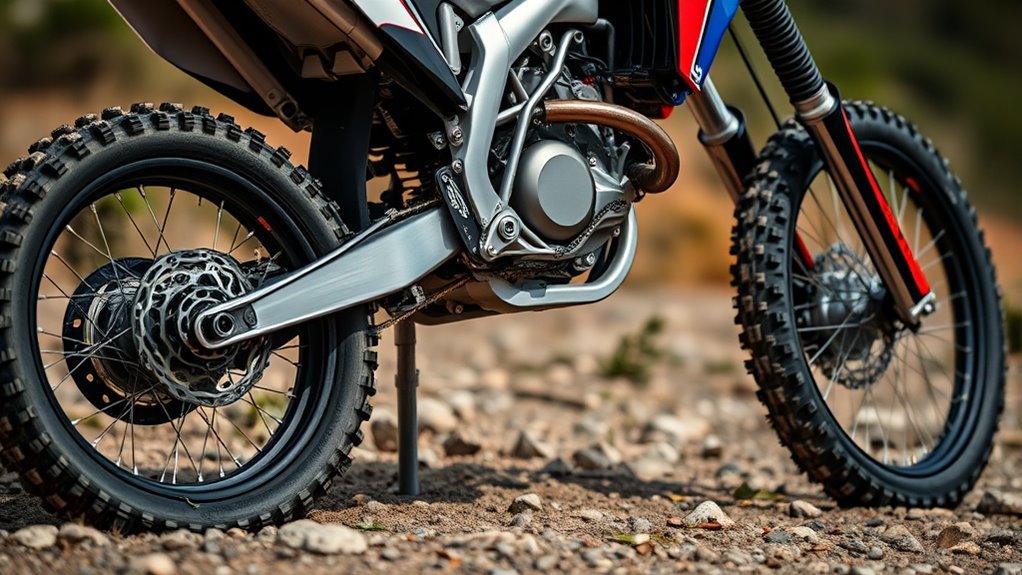
A 450 dirt bike typically weighs between 230 and 250 pounds, striking a perfect balance between power and agility. This weight range is important because it affects how the bike handles and performs on different terrains.
When you’re riding, you want a bike that’s strong enough to handle tough trails but light enough to maneuver easily.
Most of the bike’s weight comes from key parts like the engine, frame, and suspension. Don’t forget the fuel, which adds about 11-12 pounds when the tank is full.
Electric start systems add only a few extra pounds since they use lightweight batteries.
If you’re looking to shed some weight, swapping out parts like exhausts and batteries can help.
Curious about how weight influences durability, handling, and your overall bike choice? Keep reading to dive deeper into these details.
Key Takeaways
- Most 450 dirt bikes weigh between 230 and 250 pounds. This can vary depending on the brand and specific model.
- The engine and transmission alone add over 60 pounds to the bike’s total weight. That’s a good chunk of the overall heft.
- Fuel adds about 11 to 12 pounds. This affects how the bike handles and shifts its center of gravity while you’re riding.
- Using lightweight materials like titanium and carbon fiber helps cut down the weight. And the best part? It doesn’t sacrifice durability.
- Electric start systems typically add 2 to 4 pounds. Lithium-ion batteries are a lighter option compared to traditional lead-acid ones.
Typical Weight Range of a 450 Dirt Bike
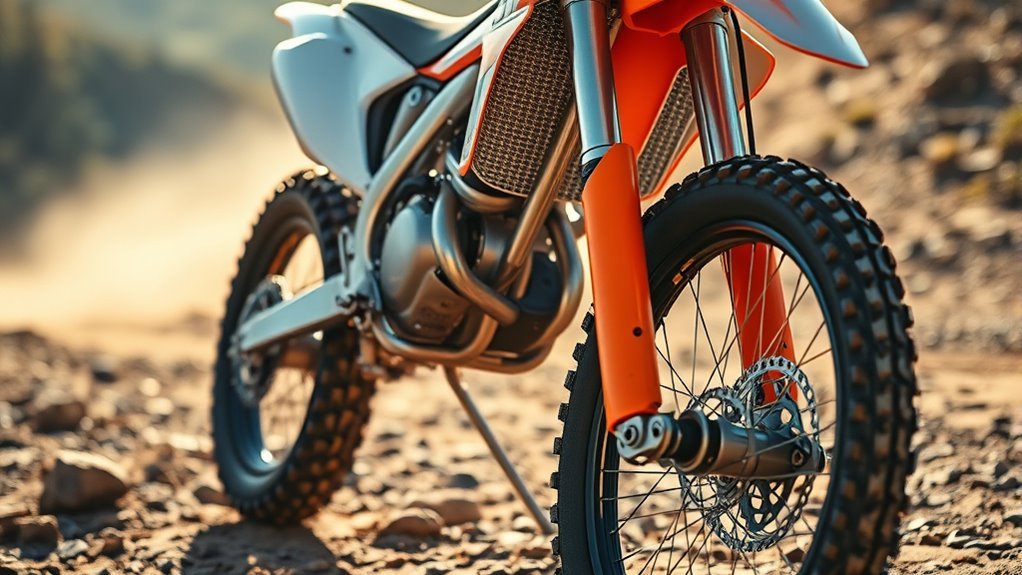
A 450 dirt bike typically weighs between 230 and 250 pounds, striking a balance between power and maneuverability. When you’re looking at dirt bikes weight, this weight range is vital because it guarantees the bike is nimble enough for quick handling but still robust enough to deliver strong performance.
Lightweight models from brands like KTM and Husqvarna often sit at the lower end, around 230 pounds, making them easier to control during tight turns or jumps. On the other hand, some 450 dirt bikes hit the upper end of the weight range at about 250 pounds, offering more stability and durability, especially for aggressive riding styles.
While there are heavier variants, especially in enduro or dual-sport categories, the majority of 450cc dirt bikes you’ll encounter fall within this typical weight range. Knowing this helps you choose a bike that matches your riding needs without compromising on agility or power.
Major Weight Components of a 450 Dirt Bike
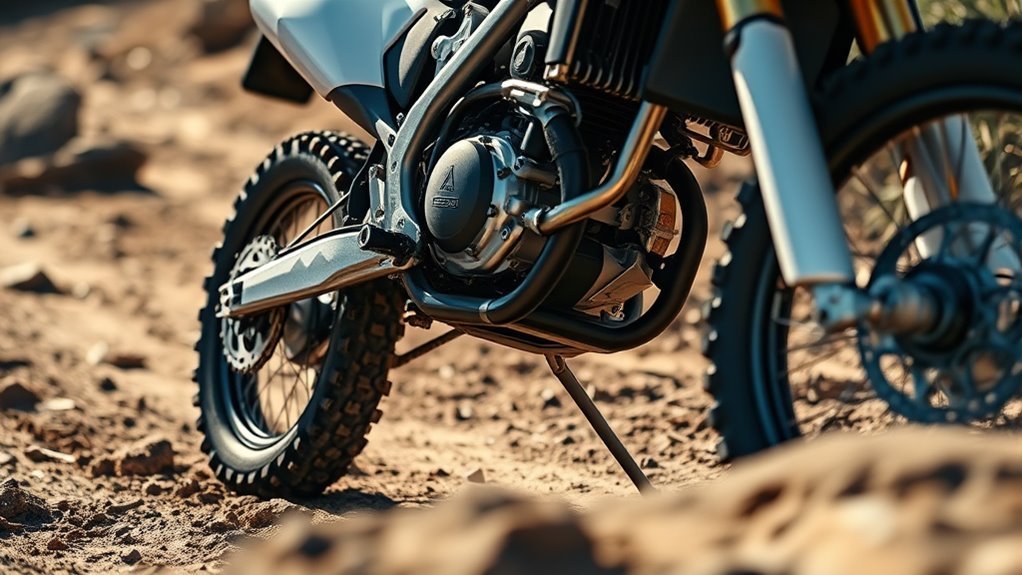
When you consider the typical weight of a 450 dirt bike, understanding what adds up to that total can help you make smarter choices. The major weight components each play a key role in how heavy the bike feels and performs.
Here’s a breakdown of the primary contributors to a 450 dirt bike’s weight:
A clear look at what adds up to a 450 dirt bike’s weight.
- Engine and Transmission – These are the heaviest components, often tipping the scales at over 60 pounds combined.
- Frame – Usually made from chromoly steel or aluminum, the frame considerably affects the bike’s overall weight.
- Suspension System – Forks and shock absorbers add substantial mass but are essential for handling performance.
- Wheels, Tires, and Fuel Tank – Together, these parts also make up a large portion of the bike’s curb weight.
Knowing these components helps you understand where weight savings can be made without compromising durability or performance. So, if you’re looking to shave some pounds, start here!
How Fuel Affects 450 Dirt Bike Weight
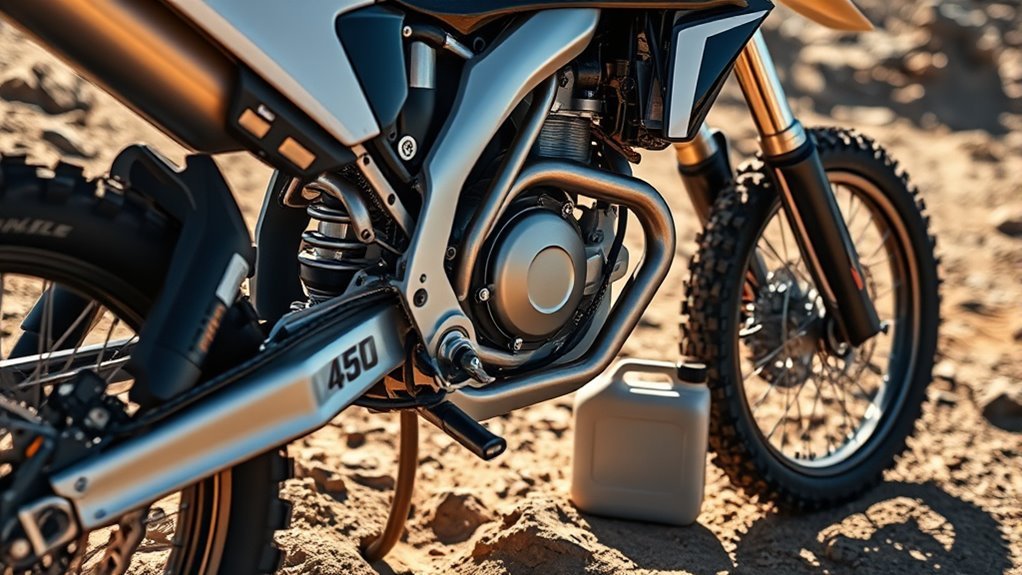
Although the engine and frame contribute heavily to a 450 dirt bike’s weight, fuel plays a surprisingly significant role too. When you fill the fuel tanks, you add roughly 11-12 lbs to the bike’s curb weight since gasoline weighs about 6 lbs per gallon, and typical tanks hold around 1.8 gallons.
This additional weight affects how your bike handles, especially influencing its center of gravity. As you ride and consume fuel, the bike gets lighter, which improves maneuverability and cornering performance.
Understanding how fuel tanks impact weight affects your riding strategy, especially in races or long rides where every pound counts. Even though modern engines and electric start systems aim to reduce overall bike mass, the fuel load remains a primary factor you can’t overlook.
Does an Electric Start Add Weight to a 450 Dirt Bike?
Electric start systems add a small but noticeable amount of weight to your 450 dirt bike, typically between 2 to 4 pounds. This added weight comes from components like the battery and starter motor but is minimal compared to the overall bike weight.
Here’s what you should know about how electric start affects your bike’s weight:
- The electric start system usually adds 2 to 4 pounds due to extra parts.
- Lithium-ion batteries, common in modern electric starts, help reduce weight by 2-3 pounds compared to lead-acid batteries.
- The convenience of electric start often outweighs the slight increase in weight for many riders.
- Manufacturers design electric start systems to be lightweight and compact, minimizing impact on performance.
Comparing 450 Dirt Bike Weights Across Manufacturers
Adding an electric start does add a bit of weight to your 450 dirt bike, but overall, the bike’s total weight depends heavily on the manufacturer and model. When comparing 450 dirt bike weights across brands, you’ll find notable differences.
The KTM 450SXF stands out as the lightest bike, weighing about 223 pounds, making it a top choice if you value agility. Honda’s CRF450R and Yamaha’s YZ450F are slightly heavier, around 238 pounds, still manageable for most riders.
Kawasaki’s KX450 and Husqvarna’s FC450 offer a balance, weighing between 230 and 232 pounds. On the heavier end, the Suzuki RM-Z450 tips the scales at approximately 241 pounds.
These variations come down to factors like frame materials, engine design, and additional equipment. So, when choosing a 450 dirt bike, consider how dirt bike weight fits your riding style and needs.
How Weight Impacts 450 Dirt Bike Handling and Performance
When you ride a 450 dirt bike, its weight directly influences how it handles and performs on the track. Understanding this impact helps you make better choices and ride more effectively.
Heavier bikes, around 240 lbs, feel less agile and harder to maneuver, especially in tight corners. This affects your handling precision quite a bit.
Increased weight slows acceleration and extends stopping distances because of higher inertia. So, it really influences your overall performance.
Weight distribution matters a lot—well-balanced bikes offer better stability and control at high speeds. This can boost your confidence during aggressive riding.
Lighter bikes respond faster to your inputs, which improves responsiveness during technical sections. Plus, they help reduce rider fatigue over long rides.
Differences Between 450 Dirt Bikes and Smaller Models
You’ll notice 450 dirt bikes weigh considerably more than smaller models like 125cc or 250cc bikes, which directly affects how they handle.
The extra weight adds stability but demands more strength and control from you. Understanding these weight and handling differences can help you pick the right bike for your skill level and riding style.
Weight Variations By Engine
Although 450 dirt bikes offer more power, they also come with extra weight, typically ranging from 230 to 250 pounds. This increase is mainly due to the larger engine capacity, which considerably affects weight variations compared to smaller models.
Here’s what you should know about weight variations by engine:
- 450 dirt bikes weigh about 20-30 pounds more than 250cc bikes due to bigger engines.
- Smaller models like 125cc or 250cc usually weigh between 200 and 220 pounds.
- The extra weight in 450s comes from reinforced frames and more substantial suspension parts.
- Reduced complexity and smaller engines make lighter bikes easier to handle for many riders.
Understanding these differences helps you pick the right bike based on your needs and riding style. It’s all about finding the balance that works best for you!
Handling Differences Impact
Because 450 dirt bikes weigh considerably more than smaller models, you’ll notice they handle differently on the trail. The extra weight, typically between 230-250 lbs, means you’ll need more effort to turn and control the bike, especially at lower speeds.
This increased weight gives 450s greater stability at higher speeds but makes them less nimble in tight corners or technical sections. In contrast, smaller bikes, weighing around 150-200 lbs, offer easier handling and require less physical strength.
That makes them ideal for beginners or riders tackling twisty trails. Keep in mind that the added weight also affects your stamina, as riding a 450 demands more energy over time.
Understanding these handling differences can help you choose the right bike for your riding style and trail conditions. It’s all about matching the bike to what you need out there.
How to Reduce 450 Dirt Bike Weight Effectively
When aiming to shed pounds from your 450 dirt bike, focusing on key components can make a big difference. Effective weight reduction lets you enjoy a lighter bike, improving handling and performance.
Here are four practical ways to cut weight:
- Swap your steel exhaust for a titanium system to save 5-8 lbs without sacrificing power. It’s a solid upgrade that really lightens things up.
- Replace the heavy lead-acid battery with a lithium-ion one, trimming 2-3 lbs while keeping reliable starts. Lighter battery, same reliability.
- Upgrade guards and panels to carbon fiber parts, which reduce weight yet maintain strength. Plus, they give your bike a sleek look.
- Choose lightweight aftermarket wheels and fasteners to lower rotational mass and overall bike weight. This helps you feel the difference in handling.
Additionally, removing non-essential parts like kickstands or passenger footpegs can further lighten your ride. These targeted changes help you achieve a lighter bike, boosting agility and responsiveness on the trail.
Does More Weight Mean Better Durability?
You might think a heavier 450 dirt bike means better durability since it often uses stronger materials and thicker frames. But quality engineering and material choice actually play a bigger role in how well the bike holds up.
Let’s explore how weight, strength, and design all impact durability. It’s not just about how heavy the bike is—it’s about how it’s built and what it’s made of.
Weight Versus Strength
Although heavier dirt bikes often feature thicker frames and more robust components, their increased weight doesn’t automatically mean they’re more durable. When considering weight versus strength, keep these points in mind:
Weight adds bulk, but durability depends heavily on design and engineering. Quality materials can make lighter bikes just as tough as heavier ones.
Excess weight can stress parts, causing faster wear if not well-built. Manufacturers agree that construction quality outweighs mass in ensuring durability.
Material Quality Over Mass
Even if a dirt bike feels heavy, that doesn’t guarantee it’s more durable. You should focus on material quality instead of just weight. High-grade materials like forged aluminum and quality steel boost durability without adding unnecessary bulk.
In fact, heavier bikes sometimes gain weight from excess material rather than strength, which doesn’t help their lifespan. You can also benefit from weight savings by choosing components made from carbon fiber or titanium. These materials provide excellent strength and longevity while keeping the bike lighter.
Ultimately, the right material choice and construction techniques matter more than mass. When you prioritize material quality over just weight, you get a dirt bike that’s both durable and easier to handle on the trails.
Engineering Impact On Durability
While heavier 450 dirt bikes often feature sturdier components and thicker frames to handle stress, that doesn’t automatically make them more durable overall. Durability depends more on engineering quality and smart material selection than just weight.
You should consider these points:
- Heavier bikes may resist crashes better due to added structural mass but can strain suspension and frame parts over time.
- Lighter bikes using high-strength materials like carbon fiber can match or exceed durability without added weight.
- Engineering quality dictates how components handle stress and fatigue, often outweighing the benefits of extra mass.
- Excessive weight can accelerate component wear, reducing long-term reliability despite initial toughness.
Choosing a 450 Dirt Bike for Your Size and Weight
When choosing a 450 dirt bike, you need to take into account your size and weight to guarantee ideal handling and comfort. If you weigh between 150 and 250 pounds, most standard 450 bikes will suit you well, allowing for better control and less fatigue.
Taller riders over 6’0″ should look for bikes with adjustable ergonomics or wider seats to fit their frame comfortably. If you’re on the heavier side, closer to 250 pounds or more, selecting a bike with a curb weight near 230-250 pounds will provide added stability.
For riders exceeding 300 pounds, it’s important to contemplate heavy-duty models or custom modifications to assure safe riding. Matching your body weight with the bike’s weight directly affects maneuverability and safety, so don’t overlook this when making your choice.
Picking the right bike weight for your size helps you enjoy rides that feel balanced and responsive. It really makes a difference in how comfortable and confident you feel on the trail.
Frequently Asked Questions
How Fast Does a 450 Go in Mph?
A 450 dirt bike typically goes between 50 and 60 mph. You can push it faster with performance upgrades.
But your weight and riding conditions will also affect how fast you can really get going on one of these bikes. So, it’s not just about the bike itself—there’s a bit more to consider!
How Much Heavier Is a 450 Than a 250?
You’ll notice a 450 dirt bike is about 20-30 pounds heavier than a 250. That extra weight changes how you handle it, making each ride feel more powerful.
But it also demands more effort from you. So, it’s a bit of a trade-off between power and ease of handling.
Is a 450 Too Much for a Beginner?
Yes, a 450 is usually too much for a beginner. You’ll struggle with its power and weight, making it harder to control and increasing the risk of falls.
Starting smaller helps you build skills and confidence safely. Trust me, it’s better to take it slow at first.
How Much Should a 450 Rider Weigh?
Think of your 450 dirt bike like a finely tuned instrument—you should weigh around 175-185 lbs to handle it best.
If you’re heavier, you’ll want to adjust your setup for safety and control. It makes all the difference when you’re out on the track or trail.
Conclusion
Now that you know the ins and outs of a 450 dirt bike’s weight, you’re better equipped to choose the perfect ride for your style and needs. Remember, while lighter bikes offer agility, a bit more heft can mean durability—like a knight’s armor, balancing protection and mobility.
So, whether you’re hitting trails or the track, weigh your options wisely. A 450 dirt bike’s weight plays a big role in how it handles and performs. Ride with confidence, knowing you’ve mastered the art of the modern dirt bike and can pick the right balance between power and control.