How Much Air to Put in Bicycle Tires
You should inflate your bicycle tires based on your bike type, rider weight, terrain, and weather conditions. Finding the right tire pressure is key for a smooth ride, better control, and avoiding flats.
Road bike tires usually need 80-130 psi, while mountain bike tires require 30-50 psi.
Heavier riders should add 10-20 psi to support extra weight. If you’re riding on softer terrain, it’s smart to lower the pressure by 10-15% to improve grip and comfort.
Also, keep in mind that temperature changes can affect tire pressure by 1-2 psi.
Getting this balance right really boosts comfort, safety, and performance. So, take a moment before each ride to fine-tune your tire pressure based on these factors. That way, every ride feels just right!
Key Takeaways
- Inflate road bike tires between 80-130 psi and mountain bike tires between 30-50 psi based on bike type.
- Adjust pressure higher for heavier riders by 10-20 psi above the recommended range.
- Reduce tire pressure by 10-15% on softer or rough terrain for better traction and comfort.
- Account for temperature changes by adjusting pressure about 1-2 psi for every 10°F difference.
- Check tire firmness by squeezing; tires should feel firm but slightly give under pressure.
Understanding Tire Pressure: How to Find the Best Pressure for Your Bike Type
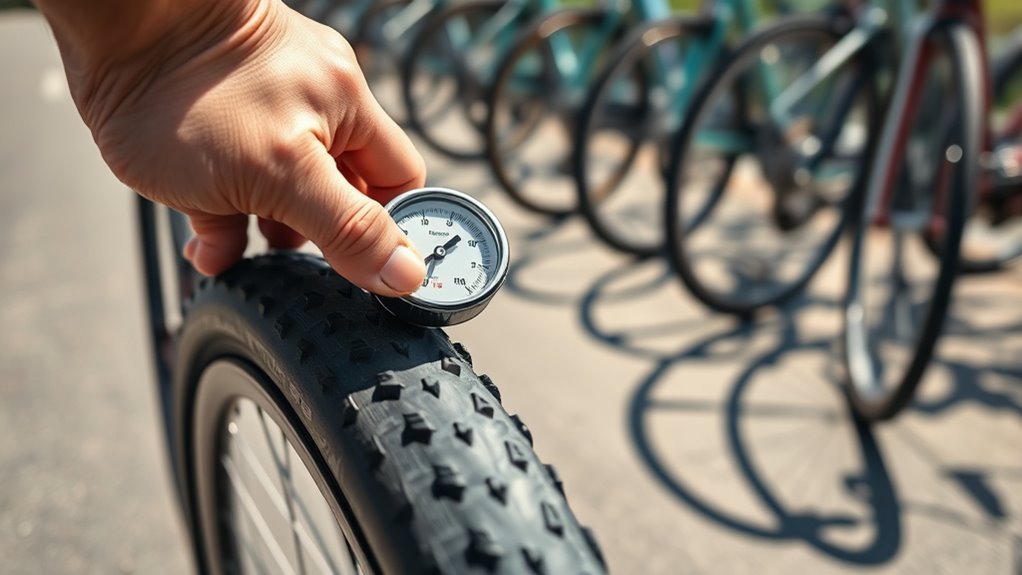
Although the maximum PSI is marked on your tire’s sidewall, the best pressure for your bike depends on its type, your weight, and the terrain you’ll ride on.
Road bike tires typically need higher tire pressure—between 80 and 130 psi—while mountain bike tires perform best around 30 to 50 psi.
Road bike tires require higher pressure, usually between 80 and 130 psi, unlike mountain bike tires at 30 to 50 psi.
This recommended pressure varies because the ideal tire pressure balances comfort, handling, and efficiency based on your riding style and rider weight.
The tire casing and terrain also influence how much air you should put in. Harder surfaces and lighter riders often require higher pressure, while softer terrain and heavier riders benefit from lower pressure to improve grip and shock absorption.
Proper pressure adjustment ensures your bike tires maintain good handling and reduce the risk of flats.
When in doubt, inflate your tires until they feel firm but still give slightly when squeezed. This simple check helps you achieve the right pressure for safer, smoother rides.
Adjusting Bike Tire Pressure for Rider Weight, Terrain, and Weather Conditions
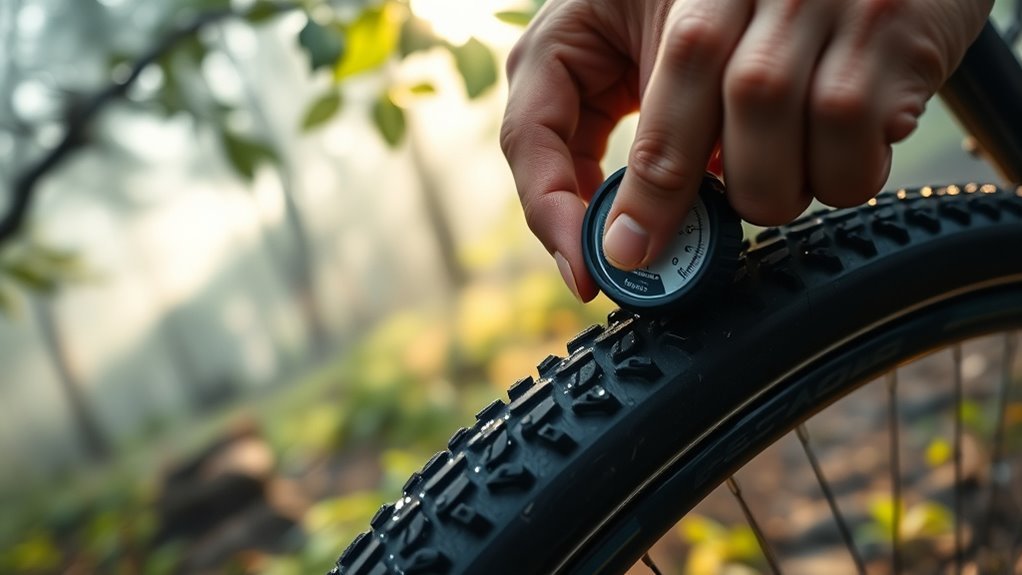
Adjusting your bike tire pressure based on rider weight, terrain, and weather conditions helps you ride more safely and comfortably. Proper tire pressure adjustment guarantees peak performance and reduces the risk of flats or poor handling during your bike ride.
Here’s how to tailor your air pressure:
- Rider Weight: Heavier riders should increase tire pressure by 10-20 psi above the recommended tire pressure. This supports the extra load and helps maintain stability.
- Terrain: Lower your tire pressure by 10-15% on soft or rough terrain. Doing this improves traction and shock absorption. On smooth pavement, higher pressure enhances rolling efficiency and stability.
- Weather Conditions: Temperature changes of about 10°F cause pressure fluctuations of 1-2 psi. So, adjust your air pressure accordingly before riding to compensate for these shifts.
Frequently Asked Questions
Is 40 Psi Too Much for a Bike Tire?
No, 40 psi isn’t too much for many hybrid or mountain bike tires. You should adjust based on your weight, tire width, and terrain.
For road bikes, though, 40 psi is usually too low for proper performance. So, it really depends on the type of bike and your riding conditions.
Is 20 Psi Too Low for Bike Tires?
Imagine your bike sinking slightly on rough trails—20 psi is often too low for most tires, risking flats and rim damage.
Unless you ride fat tires or soft terrains, you’ll want more air for a smoother, safer ride.
It’s all about finding the right balance to keep you rolling without trouble!
Is 50 Psi Normal for Bike Tires?
Yes, 50 psi can be normal for many bike tires, especially hybrids or mountain bikes. But you should check your tire’s sidewall and consider your riding style to verify that pressure suits your needs perfectly.
Tire pressure really depends on the type of bike and where you’re riding. So, don’t just stick to a number—make sure it feels right for you and your bike!
Is 60 Psi Too High for Bike Tires?
60 psi isn’t too high if your tire’s sidewall supports it. You should always check the max pressure listed and consider your bike type and riding style.
That way, you can avoid blowouts or an uncomfortable ride. It’s all about matching the pressure to what your tire can handle and what feels right for you.
Conclusion
Think of your bike tires like the shoes you wear—getting the right fit makes all the difference. By tuning your tire pressure to your bike type, weight, terrain, and weather, you’ll ride smoother, faster, and safer.
Don’t just guess—check and adjust regularly to keep your ride feeling just right. With the right air, your bike will glide like a well-oiled machine, ready to tackle any path you choose.
Keeping the proper tire pressure is key to optimal bike performance. Whether you’re cruising on pavement or hitting rugged trails, the right amount of air in your bicycle tires ensures better control, comfort, and speed. So, make it a habit to check your tire pressure before every ride to enjoy a safer and more efficient cycling experience.