7 Facts About How Fast a Dirt Bike Can Go
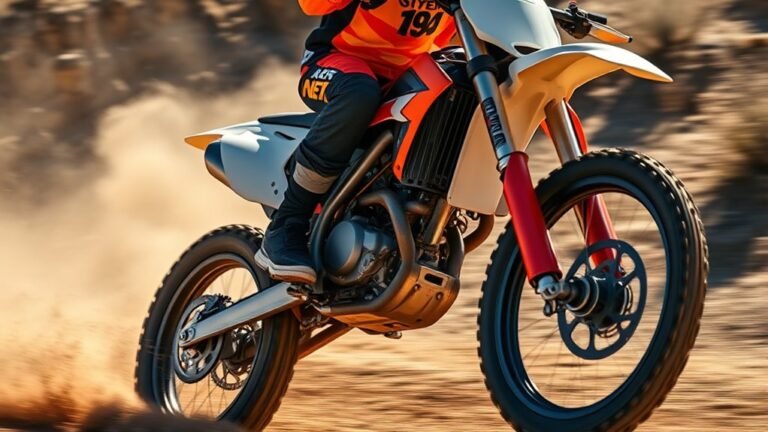
You’ll find that a dirt bike’s speed depends mostly on engine size. For example, 50cc bikes hit around 25-35 mph, while 250cc models can reach 70-85 mph. The engine type also plays a big role—two-stroke engines accelerate faster, but four-strokes offer smoother control.
Your skill matters too. Better balance and throttle control let you push speeds safely without losing control.
Terrain affects speed greatly. Rough or soft surfaces will slow you down, while smooth trails help you go faster.
Plus, upgrades like better air filters or sprockets can boost performance and give you that extra edge.
Keep exploring to uncover more dirt bike speed secrets and get the most out of your ride!
Key Takeaways
- Dirt bike speed largely depends on engine size, with 50cc bikes reaching 25-35 mph and 250cc models hitting 70-85 mph.
- Two-stroke engines provide quicker acceleration and higher power-to-weight ratios than four-stroke engines, which affects top speed and overall performance.
- Rider skill, including throttle control and terrain handling, plays a big role in how fast a dirt bike can safely go.
- Rough terrain, headwinds, and elevation all reduce dirt bike speed by increasing resistance and lowering engine efficiency.
- High-performance dirt bikes like the KTM 450 SX-F can reach speeds of up to 123 mph with the right modifications. Pretty impressive, right?
Why Engine Size Matters for Dirt Bike Speed

Although many factors affect dirt bike speed, engine size plays a key role in determining how fast your bike can go. Engine size, measured in cubic centimeters (cc), directly impacts engine power and top speeds.
Engine size, measured in cc, is crucial for determining your dirt bike’s power and top speed.
For example, a 50cc bike typically maxes out around 25-35 mph, while a 250cc model can reach 70-85 mph. Increasing engine displacement from 125cc to 250cc can boost your bike’s maximum speed by 20-30 mph, giving you noticeably higher speeds on the trail or track.
Two-stroke engines often deliver more immediate power for their size, helping you accelerate faster compared to four-stroke engines with the same displacement. Still, engine size isn’t the only factor; bike design, rider skill, and terrain also influence actual speed.
But if you want a faster dirt bike, understanding how engine size affects top speeds is essential before choosing the right engine for your riding style and performance goals.
Why Dirt Bike Two-Stroke and Four-Stroke Engines Perform Differently

When you compare two-stroke and four-stroke dirt bike engines, you’ll notice they perform quite differently due to their design and power delivery. Two-stroke engines produce more power per cycle and boast a higher power-to-weight ratio, making them lighter and enabling quicker acceleration and higher top speeds.
Their engine design is simpler but requires you to mix oil with fuel, demanding more maintenance. On the other hand, four-stroke engines feature a more complex engine design with valves and a dedicated lubrication system, resulting in smoother, more gradual power delivery.
This leads to steadier engine performance, better control, and increased durability, though their added weight can slightly reduce top speeds. While two-stroke engines reach maximum speed rapidly thanks to their high-revving nature, four-stroke engines offer predictable power curves that many riders find easier to manage.
Understanding these differences helps you choose the right dirt bike engine for your riding style and speed expectations.
How Dirt Bike Size Affects Speed and Stability
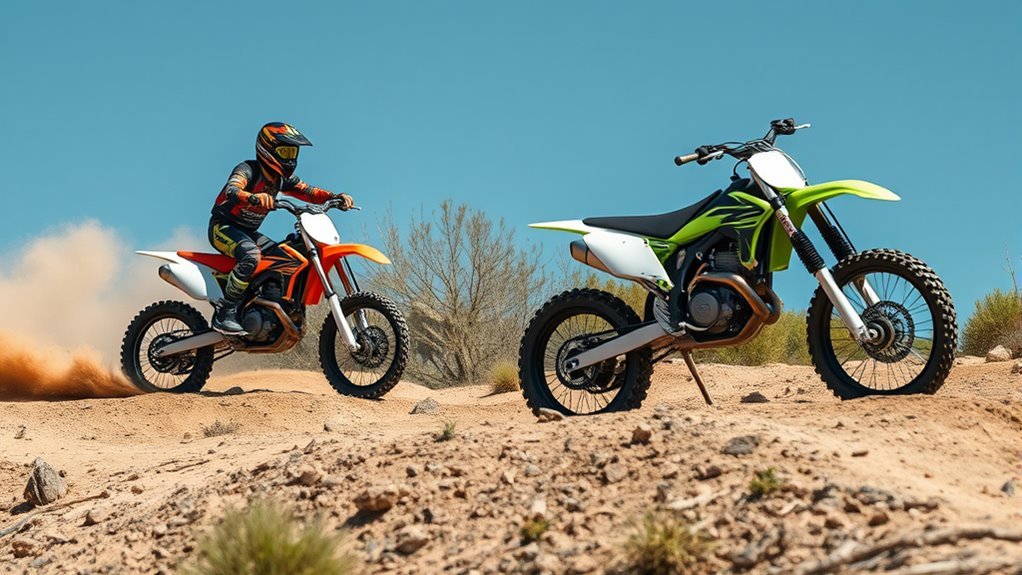
When choosing a dirt bike, size plays a big role in how stable and fast it feels. Larger bikes offer better stability at high speeds, while smaller ones give you quicker acceleration and sharper handling.
Make sure your bike fits your size and strength to keep control and ride safely. After all, feeling comfortable on your bike makes all the difference out there.
Bike Size And Stability
Because bike size directly impacts how a dirt bike handles, choosing the right one is essential for both speed and stability. Larger dirt bikes feature a longer wheelbase, which gives you greater stability at high speeds, especially on smoother terrain.
However, these bigger bikes can feel less stable on rough ground. Smaller bikes, on the other hand, are lighter and offer better maneuverability, letting you accelerate quickly and navigate tight spaces with ease.
Your rider control improves when the bike size matches your physical stature, helping you maintain balance and confidently handle the bike. Ultimately, understanding how bike size affects stability on different terrain helps you pick the best dirt bike for your riding style and conditions.
Speed Versus Maneuverability
Although larger dirt bikes offer higher top speeds and better stability on straight, smooth trails, you’ll find smaller bikes excel in quick acceleration and tight turns. This makes them ideal for technical riding.
The balance between speed and maneuverability depends on your rider skill, terrain, and bike design. Size and engine size directly influence stability and control.
| Size | Stability | Maneuverability |
|---|---|---|
| Larger bikes | High at top speed | Lower on tight trails |
| Smaller bikes | Moderate | High on technical terrain |
| Engine size | Bigger engines add speed | Smaller engines favor agility |
| Terrain type | Smooth, open trails | Narrow, rough paths |
Choose based on where you ride and what you prioritize—top speed or quick handling.
Rider Fit And Control
Matching your dirt bike’s size to your height and weight directly impacts your control and speed. A proper rider fit boosts stability and maneuverability, letting you handle various terrains with confidence.
Larger bikes with longer wheelbases offer more stability at high speeds, reducing wobble and enhancing terrain handling. Smaller bikes, on the other hand, provide greater agility, making tight corners and quick acceleration easier.
Your rider experience plays a key role, too—skilled riders can exploit a bike’s size to maximize speed potential and maintain control. Riding an ill-fitting bike can cause fatigue and instability, cutting into your speed potential and overall performance.
How Rider Skill Affects Dirt Bike Speed
Your gear shifting techniques, throttle control mastery, and terrain handling skills all play a huge role in how fast you can ride a dirt bike. When you nail these, you can push your bike closer to its limits safely and smoothly.
Without solid skills, you’ll likely hold back and miss out on your bike’s full speed potential. It’s all about getting comfortable and confident with the basics first. Once you do, you’ll notice a big difference in your riding speed and control.
Gear Shifting Techniques
When you master gear shifting techniques, you can keep your dirt bike’s engine in the ideal RPM range to maximize speed and acceleration. Proper gear shifting guarantees you maintain peak engine RPMs, preventing engine bogging that slows you down.
Smooth gear changes are essential, especially at high speeds or during rapid acceleration, so you don’t lose power or control. Advanced techniques like double clutching help you stay in the power band, improving performance on technical terrain or downhill sections.
If you delay shifts or shift incorrectly, you risk bogging the engine and losing valuable speed. Consistent, precise gear techniques let you maintain momentum and push your dirt bike closer to its top speed, giving you an edge in any riding scenario.
Throttle Control Mastery
Although mastering gear shifts is crucial, controlling the throttle skillfully plays an equally important role in how fast your dirt bike can go. Proper throttle control lets you smoothly manage acceleration and maintain speed without sacrificing stability.
Your riding technique directly impacts traction; jerky or sudden throttle movements can cause you to lose grip, reducing both speed and control. By developing throttle mastery, you guarantee consistent power delivery from the engine, allowing you to reach top speeds safely.
Advanced techniques like feathering the throttle and gradually increasing it improve riding efficiency and help you maintain momentum. Ultimately, your ability to fine-tune throttle input translates into better acceleration, enhanced stability, and faster overall riding performance.
Master throttle control, and you’ll reveal your dirt bike’s true speed potential. It’s all about feeling the bike and knowing exactly how much throttle to give, when to give it, and how to keep it smooth.
Terrain Handling Skills
Because terrain varies so much, your ability to handle different surfaces directly influences how fast your dirt bike can go. Your riding skills, especially in terrain handling, play a vital role in maintaining control and speed across technical terrains.
When you master maneuverability and obstacle navigation, you can confidently tackle rocky trails, muddy patches, and uneven surfaces without slowing down. Good balance and precise control allow you to corner smoothly and stay stable on off-road riding courses, letting you push your bike’s limits safely.
Experienced riders anticipate changes in terrain, which helps keep momentum and avoid crashes that force caution. Improving these skills not only boosts your speed but also enhances your overall confidence and safety when riding through challenging environments.
How Terrain and Environmental Factors Limit Dirt Bike Speed
Terrain and environmental factors play a crucial role in limiting how fast your dirt bike can go. When you ride on rough terrain, like rocky or muddy surfaces, your top speed drops because of increased resistance and reduced traction.
Soft surfaces such as sand or loose dirt cause your wheels to spin and slip, further cutting your speed. Environmental conditions also impact performance; strong headwinds add air resistance, slowing you down noticeably.
Elevation changes matter too—at higher elevations, thinner air means your engine doesn’t perform as well, reducing your speed compared to sea level. While downhill sections can boost your speed temporarily, obstacles and technical parts of the surface force you to slow for safety.
How Modifications Can Boost Your Dirt Bike’s Speed
When you want to push your dirt bike’s speed beyond its factory limits, making the right modifications can make a significant difference. Upgrading components like high-flow air filters and changing sprockets improves engine airflow and adjusts your bike’s power delivery. This helps you reach higher top speeds.
Enhancing engine efficiency through ECU remapping further boosts your bike’s speed potential. Plus, reducing weight improves the power-to-weight ratio, allowing quicker acceleration and faster overall performance.
| Modification | Effect on Speed | Trade-off |
|---|---|---|
| High-flow air filters | Better engine airflow | Minimal maintenance needed |
| Sprockets | Adjust top speeds | May reduce acceleration |
| Weight reduction | Improves power-to-weight ratio | Cost of lighter parts |
These modifications, combined with proper maintenance, maximize your dirt bike’s speed potential. They make sure you get the most out of every ride.
Fastest Dirt Bikes and Their Top Speeds
If you want to know how fast dirt bikes can really go, some of the fastest models push well beyond 100 mph. For instance, the KTM 450 SX-F tops the list with a maximum speed of around 123 mph, showcasing impressive speed capabilities thanks to its powerful engine size.
The Beta 450RS isn’t far behind, reaching about 110 mph and boasting quick acceleration—hitting 60 mph in just over 5 seconds. The Honda XR 650cc also offers a top speed near 110 mph, making it ideal for long-range desert racing.
On the other hand, high-performance dirt bike models like the Kawasaki KX250 hit speeds close to 78 mph, highlighting how engine size affects top speeds. Some racing bikes push even further, exceeding 130 mph with specialized modifications.
When choosing your dirt bike, consider these top speeds and engine size to match your riding style and performance needs. It’s all about finding the right balance for what you want to do out on the trails or the track.
Frequently Asked Questions
How Fast Could a Dirt Bike Go?
You can expect a dirt bike to go anywhere from 40 to over 100 mph, depending on its engine size, type, and your skill.
Racing models can even hit speeds around 120 mph with the right conditions. Pretty fast, right?
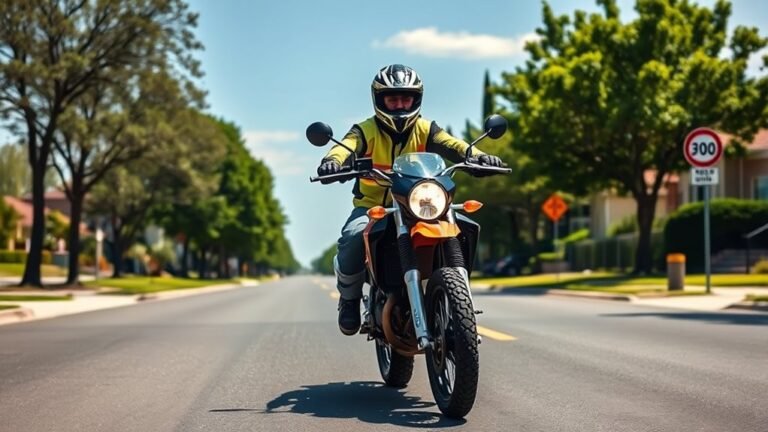
Can You Go 300 Mph on a Bike?
You won’t be breaking any sound barriers on a dirt bike—300 mph is beyond reach.
Only specialized, streamlined motorcycles dare those speeds, while your dirt bike’s built for trails, not supersonic thrills.
Can a Dirt Bike Go 70 Mph?
Yes, you can reach 70 mph on a dirt bike, especially with a 250cc or larger engine.
Your speed depends on factors like bike modifications, terrain, and your riding skills, so be cautious and ride safely.
Can a Dirt Bike Go 250 Mph?
You can’t make a dirt bike go 250 mph—most top out around 90 mph. Even the fastest 250cc models max near 85 mph, so hitting 250 mph isn’t possible without extreme, specialized modifications.
Honestly, it’s just not in the design of dirt bikes to reach those kinds of speeds. They’re built more for agility and off-road performance rather than straight-line speed. So, unless you’re planning some wild custom build, 250 mph is out of the question.
Conclusion
So, you might think your dirt bike’s speed is all about engine size, but it’s funny how rider skill, terrain, and even bike modifications play just as big a role. You could have the fastest bike on paper, yet still get outpaced by someone who knows how to handle every twist and turn.
It’s a wild ride where everything coincides, making every ride a unique challenge you’ll want to master. When you factor in how fast a dirt bike can go, it’s clear that speed isn’t just about raw power.
Rider skill and terrain conditions are just as important as engine capacity and bike tuning. So, whether you’re chasing top speed or better control, understanding these factors helps you get the most out of your dirt bike’s performance and enjoy every moment on the trail.