How the Bicycle Machine Works and What It Does
When you use a stationary bike, you pedal against a flywheel connected to a resistance system. This setup creates a smooth and continuous motion that mimics outdoor cycling.
The resistance can be magnetic, friction-based, or fan-driven.
This lets you adjust workout intensity quietly or with natural variation.
As you pedal, you engage key lower-body and core muscles. This helps boost strength and cardiovascular fitness.
Keep going to discover how these mechanics work together and the benefits you can gain.
It’s pretty cool how a simple machine can give you such a great workout!
Key Takeaways
- The bicycle machine uses a flywheel connected to pedals to create a smooth, continuous pedaling motion that mimics outdoor cycling.
- Resistance systems adjust workout difficulty by varying pedaling effort through magnetic, friction, or fan-based mechanisms.
- Magnetic resistance offers quiet, low-maintenance adjustment, while friction resistance provides adjustable but noisier levels.
- Pedaling on the machine engages lower-body muscles like quadriceps, hamstrings, glutes, calves, and core stabilizers.
- It improves cardiovascular fitness, muscle endurance, strength, and supports efficient calorie burning for overall health.
How Stationary Bikes Create Smooth Pedaling and Resistance
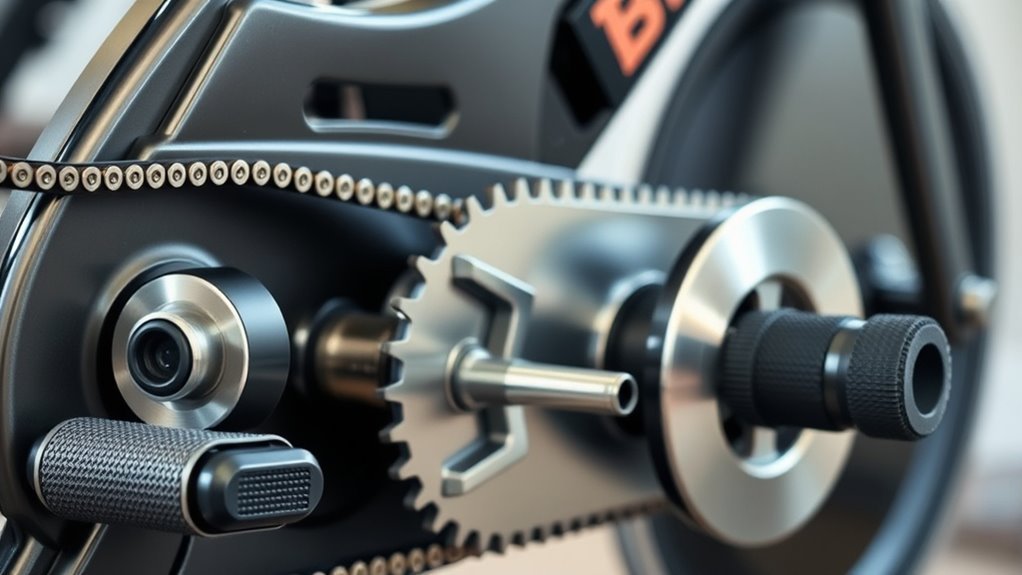
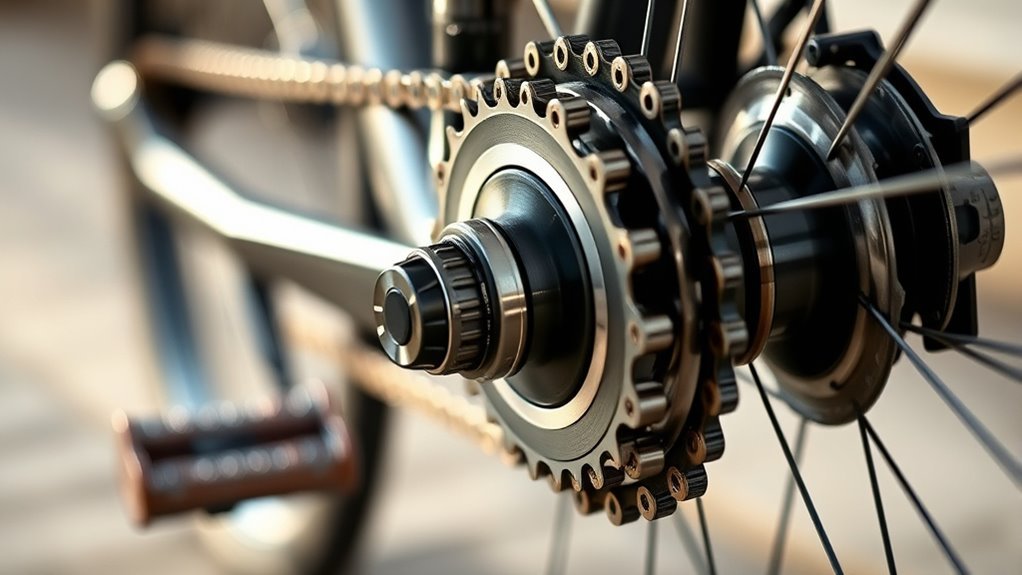
Although stationary bikes may seem simple, they rely on a flywheel connected to the pedals to create a smooth, continuous pedaling motion through momentum. This flywheel mimics the natural cycling motion you’d experience outdoors, offering smooth pedaling that feels fluid and consistent.
Stationary bikes use a flywheel to ensure fluid, smooth pedaling that closely mimics outdoor cycling momentum.
To control how hard you pedal, these bikes use different resistance systems. Magnetic resistance, for example, adjusts the pedaling difficulty quietly and without maintenance by changing the magnetic field around the flywheel.
Other bikes use a friction system, where brake pads press against the flywheel, providing adjustable levels of resistance but sometimes causing noise. Some models feature fan-based resistance, which increases load naturally as you pedal faster, offering a variable and realistic challenge.
Whether through magnetic resistance, friction, or natural resistance via fans, these mechanisms let you customize your workout’s intensity while maintaining the cycling motion’s smoothness and momentum.
Which Muscles Stationary Bikes Work and the Fitness Benefits You’ll Gain
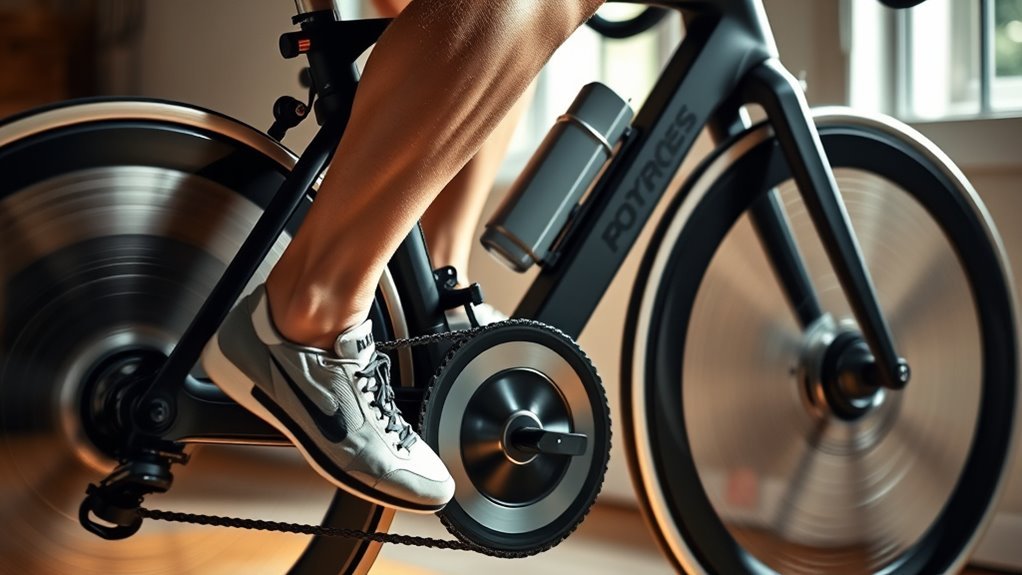
When you pedal a stationary bike, you primarily engage key lower-body muscles like your quadriceps, hamstrings, glutes, calves, and tibialis anterior. These muscles work together smoothly—your quadriceps and calves push forward, while your glutes and hamstrings power the downward stroke.
Your core muscles, including abdominals and lower back, activate to maintain stability and posture. Depending on the type of stationary bike you use, such as upright or recumbent, the emphasis on specific muscles may vary slightly.
Regular workouts on stationary bikes improve muscle endurance and tone, especially in your lower body muscles. Strengthening your glutes, quadriceps, and hamstrings not only boosts your cycling performance but also supports overall mobility.
Beyond muscle development, stationary bikes enhance cardiovascular fitness, helping you burn calories efficiently. Incorporating these sessions into your routine is a great way to build strength, increase calorie burning, and improve heart health all at once.
Frequently Asked Questions
Does the Bicycle Machine Help You Lose Belly Fat?
Yes, the bicycle machine helps you lose belly fat by burning calories and improving cardiovascular health. You won’t spot-reduce fat, but consistent cycling combined with a healthy diet and strength training aids overall fat loss, including belly fat.
How Many Minutes a Day Should You Ride a Stationary Bike?
You should ride a stationary bike for 20 to 30 minutes daily to meet aerobic exercise guidelines.
If you’re a beginner, start with 10-15 minutes and gradually increase. Consistency really helps improve your fitness and endurance.
Is 30 Minutes of Stationary Bike the Same as 30 Minutes of Walking?
No, 30 minutes on a stationary bike isn’t exactly the same as 30 minutes of walking. You’ll burn similar calories, but cycling targets muscles more and offers a lower joint impact.
Plus, it can be done at a potentially higher intensity. So, while both are great workouts, they each have their own benefits.
What Does the Cycling Machine Do for Your Body?
The cycling machine gently wakes up your muscles and heart, helping you shed extra pounds while toning your legs and glutes.
You’ll boost endurance, improve mood, and feel more energized, all without harsh impact on your joints.
It’s a great way to get moving without stressing your body too much. Plus, it’s easy to stick with because it feels good!
Conclusion
Now that you know how stationary bikes create smooth pedaling and target key muscles, it’s easy to see why they’re so effective. Did you know that just 30 minutes on a stationary bike can burn up to 300 calories?
That means you’re not only building strength and endurance but also torching fat efficiently. So hop on, pedal hard, and enjoy a workout that’s both powerful and low-impact—your body will thank you!
Stationary bikes offer a fantastic way to improve cardiovascular health while protecting your joints. Plus, with consistent use, you’ll notice increased muscle tone and stamina. Whether you’re aiming to lose weight, boost fitness, or just stay active, the bicycle machine is a smart choice.
In short, stationary bikes combine effective calorie burning, muscle strengthening, and low-impact exercise to deliver a complete workout. They’re perfect for anyone looking to improve endurance and overall health in a convenient and enjoyable way. So, get ready to pedal your way to a stronger, fitter you!