How Fast Can You Go on a Bicycle?
You can typically ride a bicycle between 15 and 30 kilometers per hour, depending on several factors like your fitness, terrain, and the type of bike you’re using. Your power output plays a big role—beginners tend to average lower speeds, while advanced riders often push above 30 km/h.
Terrain, wind, bike type, and maintenance also influence how fast you go. Flat roads and good aerodynamics boost your speed, making your ride smoother and faster.
On the flip side, hills and headwinds can slow you down quite a bit.
Keep exploring different ways to improve your setup and fitness. With the right adjustments, you can definitely make yourself even faster on the bike. It’s all about finding what works best for you and enjoying the ride!
Key Takeaways
- Average bicycle speeds vary from 15 km/h for beginners to over 30 km/h for advanced cyclists. It really depends on your experience and fitness level.
- Terrain and wind conditions significantly affect cycling speed. Riding on flat surfaces with a tailwind can make you go much faster.
- Rider power output, measured in watts, directly correlates with achievable cycling speed. The more power you put in, the faster you can go.
- Aerodynamics, bike type, and maintenance influence speed by reducing drag and rolling resistance. A well-maintained bike and a streamlined position help a lot.
- Weather and external factors can impair performance, safety, and overall cycling speed. So, always be prepared for changing conditions out there!
What Factors Influence Bicycle Speed?
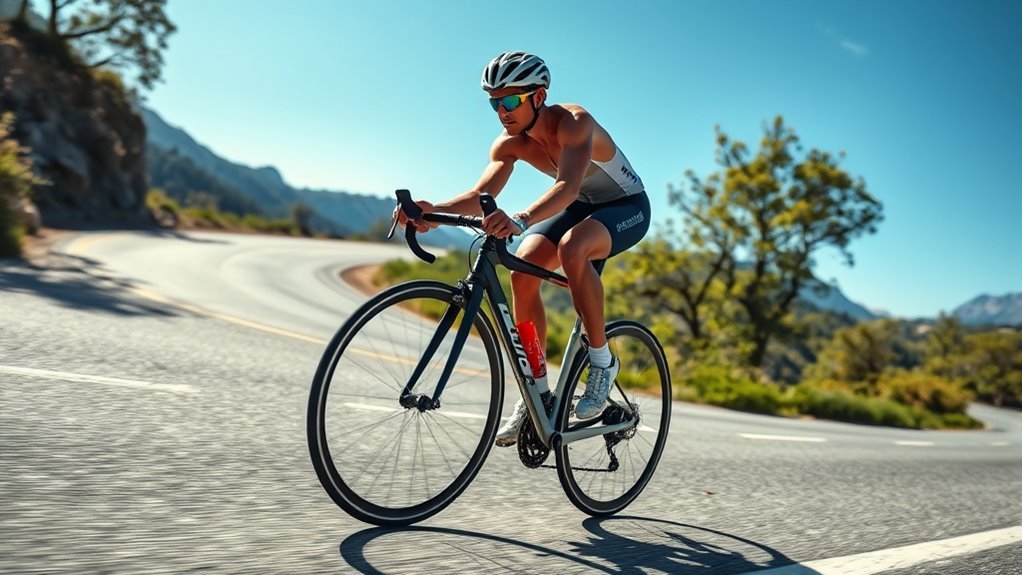
Although many people think speed depends solely on effort, several factors influence how fast you can ride a bicycle. Terrain plays a big role—flat surfaces let you go faster, while hills slow you down despite your effort.
Wind conditions matter too; a headwind can cut your speed, while a tailwind helps you glide. Your bike type affects speed based on weight and aerodynamics.
Proper bike maintenance guarantees components like gear ratios and tire pressure work efficiently, preventing unnecessary drag. Weather impacts your ride; rain or extreme temperatures can reduce performance and safety.
Your riding position also influences aerodynamics—streamlining your posture minimizes air resistance. While rider fitness is important, this topic focuses on external and equipment factors.
How Rider Power and Fitness Boost Your Bike Speed
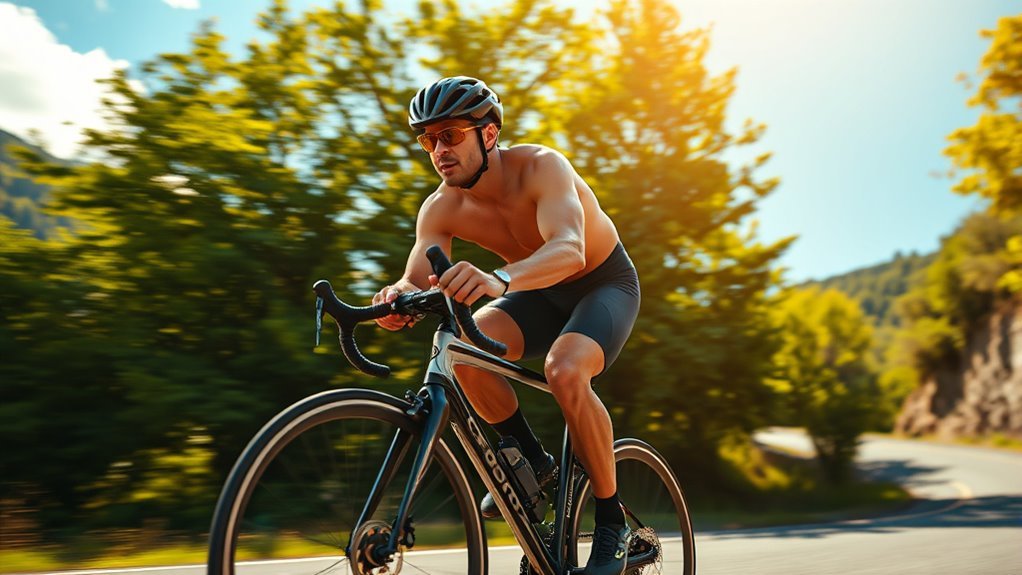
While terrain, wind, and equipment impact your speed, the power you generate as a rider plays a major role in how fast you go. Your rider power, measured in wattage, directly influences your cycling speed.
As your fitness level improves through consistent training and physical conditioning, you increase endurance and can sustain higher power outputs longer. This endurance boosts your average bicycle speed, especially on flat terrain where air resistance dominates above 20 km/h.
| Fitness Level | Average Wattage | Typical Cycling Speed |
|---|---|---|
| Beginner | 100–150 watts | 15–20 km/h |
| Intermediate | 150–250 watts | 20–30 km/h |
| Advanced | 250+ watts | 30+ km/h |
Frequently Asked Questions
Can You Go 45 Mph on a Bike?
You can hit 45 mph on a bike, but only with downhill slopes, strong effort, and an aerodynamic position.
It’s tough to maintain, but in ideal conditions, skilled riders definitely reach that speed.
How Fast Can an Average Human Go on a Bicycle?
You can typically reach speeds around 12-15 mph if you’re a recreational cyclist. With practice, you might push closer to 20 mph.
But going faster usually requires experience, better equipment, and ideal conditions. It’s not just about pedaling harder!
How Fast Can a Human Pedal on a Bicycle?
You pedal like a caffeinated squirrel, pushing about 25-28 mph if trained.
Sure, you won’t break any land-speed records, but trust me, that’s fast enough to outrun your pizza delivery guy on a casual ride.
Can You Go 300 Mph on a Bike?
You can’t go 300 mph on a bike using just your legs. Human power and bike design limit speed far below that.
Reaching 300 mph needs extreme propulsion, like jet engines, which aren’t part of regular cycling. So yeah, it’s just not possible on a normal bike.
Conclusion
You might think you need top-of-the-line gear to ride fast, but that’s not true. Your own power and fitness play the biggest role in how fast you can go on a bicycle.
By improving your strength and endurance, you’ll see real speed gains, no matter your bike. So, focus on training and technique—you’ll surprise yourself with how quickly you can accelerate and sustain higher speeds on any ride.
Keep pedaling! Remember, your cycling speed depends more on your fitness and technique than fancy equipment. With consistent training, you can boost your power and endurance, making your rides faster and more enjoyable. So, concentrate on building your strength and refining your skills—this is the key to riding faster on any bicycle.