5 Reasons You Should Be Cautious When Passing a Bicycle Because It’s Safer
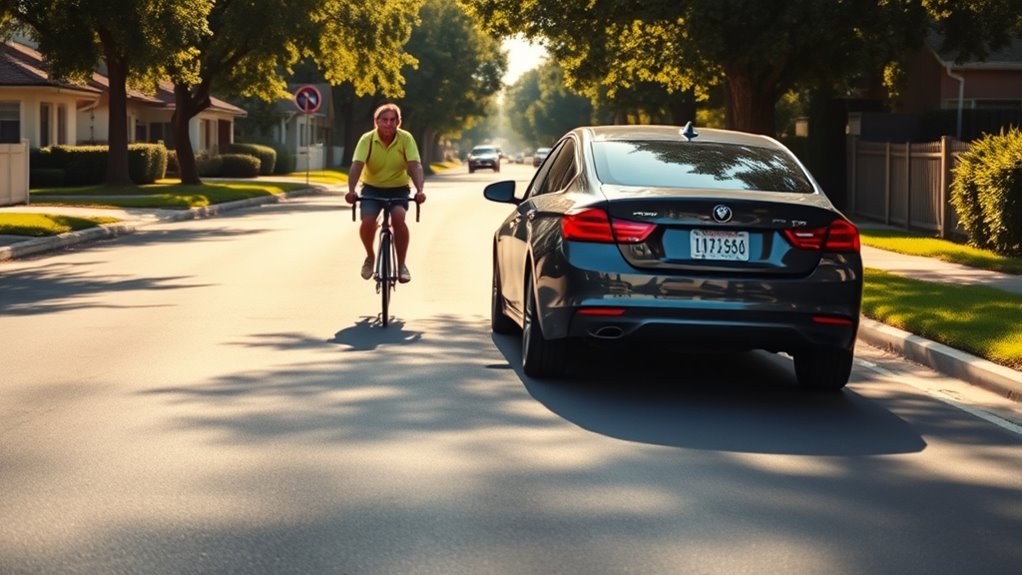
You should be cautious when passing a bicycle because keeping at least three feet of space prevents collisions and protects both you and the cyclist. Slowing down gives you more reaction time if the cyclist suddenly swerves or stops.
Changing lanes on wider roads creates extra room, making the pass safer.
Being patient and waiting for a safe gap reduces risks, and respecting the cyclist’s space fosters a safer environment. There’s more to learn about making these passes smooth and secure.
Taking these simple steps can make a big difference in keeping everyone safe on the road.
Key Takeaways
– Maintaining at least three feet passing distance prevents collisions and ensures safety for both cyclists and drivers.
It’s a simple rule but super important for everyone’s safety on the road.
– Slowing down before passing gives you more time to react if a cyclist makes a sudden move.
This helps reduce the risk of accidents and keeps things smooth.
– Using lane changes on multi-lane roads creates extra space.
That makes passing safer and more comfortable for everyone involved.
– Practicing patience and waiting for safe gaps minimizes dangerous situations.
It also shows respect for the cyclist’s pace, which is always appreciated.
– Being cautious and respectful reduces crowding on the road.
It promotes better control and helps create a safer environment for all road users.
How to Give Extra Space When Passing a Bicycle
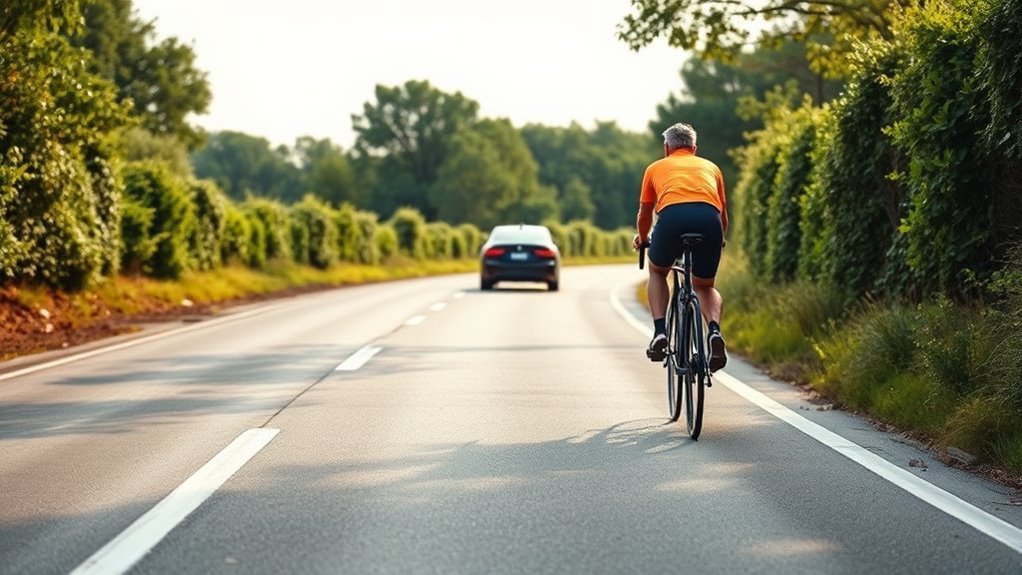
When passing a bicycle, always leave at least three feet of space to guarantee safety and prevent sideswipes. To maintain a safe distance, slow down before overtaking, giving yourself enough time to react if the cyclist swerves or encounters obstacles.
Always leave three feet when passing a bicycle and slow down to ensure safe overtaking.
If you’re on a multi-lane road, change lanes to increase the space between your vehicle and the bicycle. This extra room helps both you and the cyclist feel more secure during passing.
Remember, safe passing isn’t just about distance; it’s about timing and awareness. Watch the cyclist’s speed and behavior, and only pass when it’s safe to do so.
Avoid crowding the bicycle by hugging the lane line. Keeping a proper space reduces the risk of accidents and makes the road safer for everyone.
How to Slow Down and Be Patient When Passing a Bicycle
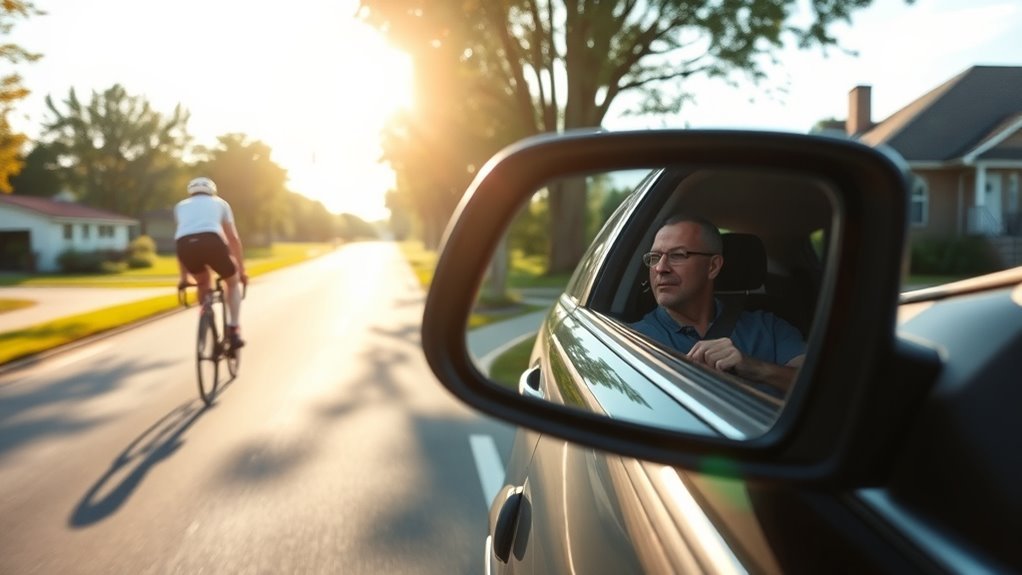
Slowing down before passing a bicycle gives you more time to react if the cyclist swerves or stops suddenly. When you slow down, you reduce the risk of accidents, especially on narrow lanes where space is limited.
Exercise patience by waiting for a safe gap before passing; rushing can lead to dangerous situations. Maintaining a safe distance of at least three feet is essential and often required by law.
Keep your speed at or below the speed limit to guarantee you have full control and can respond promptly. Being cautious means respecting the cyclist’s space and anticipating their movements, which helps prevent sideswipes.
Remember, passing a bicycle safely isn’t just about speed—it’s about thoughtful reaction and shared responsibility. When you combine patience with a slow, careful approach, everyone on the road benefits from a safer environment.
Frequently Asked Questions
Why Should I Be Cautious When Passing a Bicycle?
You should be cautious when passing a bicycle because it keeps both you and the cyclist safe. It also helps prevent accidents, which is super important.
Plus, being careful avoids startling the rider. And it guarantees you respect their space on the road. This way, you reduce crash risks considerably.
What Is the Safest Way to Pass a Bicyclist?
You should pass a bicyclist with at least three feet of space, as studies show close passes cause 70% of bike crashes.
Slow down, signal, and wait for a clear lane to keep everyone safe. It’s really about being patient and giving cyclists the room they need.
Why Is Bicycle Safety Important?
You should prioritize bicycle safety because cyclists are vulnerable and accidents can cause serious injuries or fatalities.
By being cautious, you protect lives, reduce crashes, and create safer roads for everyone sharing the space.
It’s really about looking out for each other. When everyone stays alert, we all get to enjoy the ride a little more safely.
Which Safety Precautions Should We Take When Riding a Bicycle?
You should always wear a helmet, use lights or reflectors, and ride in bike lanes when possible. Signal your turns clearly, obey traffic rules, and stay visible.
Also, never ride against traffic to stay safe on your bike. These simple steps really help keep you protected while you’re out riding.
Conclusion
When you pass a bicycle, remember that giving at least three feet of space reduces the risk of accidents by nearly 50%. Slowing down and being patient keeps both you and the cyclist safer.
You’re sharing the road, so taking a moment to give extra room isn’t just courteous—it’s smart. By staying cautious and respectful, you help create a safer environment for everyone.
So next time, pass with care and confidence. Being cautious when passing a bicycle not only protects cyclists but also makes the road safer for all users. Small actions like giving enough space and slowing down can make a big difference. Remember, safety comes first, and passing carefully shows respect and responsibility. Together, we can create safer roads by being mindful and patient every time we share the road with bicycles.