Why Was the Bicycle Invented?
You got the bicycle because horse shortages made travel tough after the 1816 Tambora eruption caused crop failures and transport disruptions. With horses scarce and unreliable, you needed a new way to get around.
This challenge sparked the invention of the bicycle, a clever alternative to horse-drawn travel.
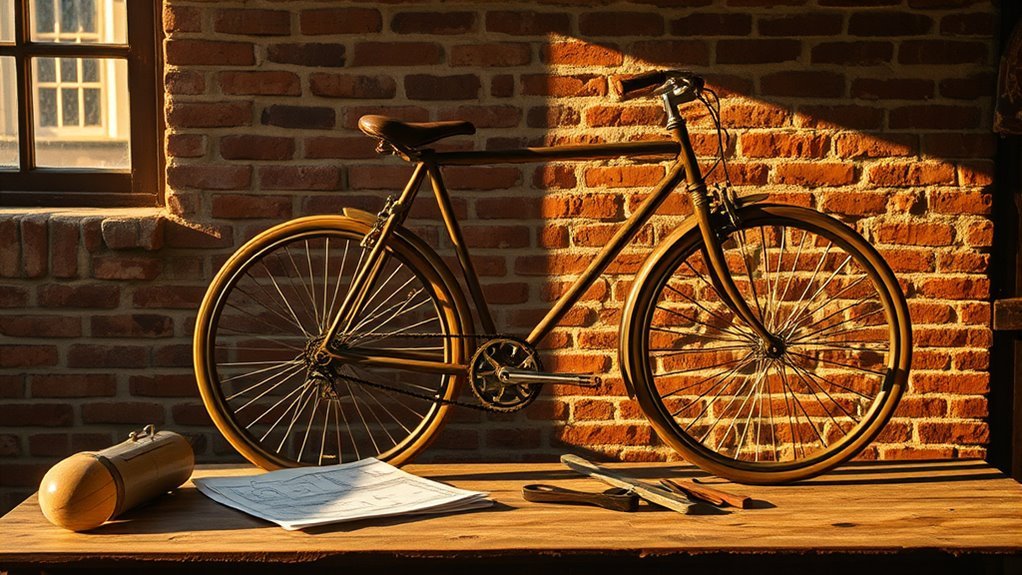
Early bicycle designs used lightweight wooden frames and steerable wheels to handle rough roads. These features made it possible to replace horses for everyday transportation.
As the designs improved with larger wheels and better materials, riding became easier and more practical.
Keep exploring, and you’ll see how these innovations solved real-world challenges and changed the way people moved from place to place.
Key Takeaways
- The bicycle was invented as a practical alternative to horse-drawn transportation during horse shortages caused by environmental crises. People needed a way to get around when horses weren’t available.
- Scarcity of horses due to climate-related crop failures motivated the creation of human-powered vehicles like the Laufmaschine. It was a clever solution to a tough problem.
- Early bicycle designs aimed to improve mobility on rough, uneven roads where traditional transport struggled. Getting around wasn’t easy back then, especially off the main roads.
- Innovations like large wheels and pneumatic tires were developed to enhance ride comfort and durability on poor road surfaces. These improvements made riding smoother and less tiring.
- The bicycle evolved to address transportation challenges, making it a reliable, everyday travel option amid infrastructural limitations. It became a go-to choice for many people because it just worked.
Why the 1816 Tambora Eruption and Horse Shortages Led to the Bicycle’s Invention
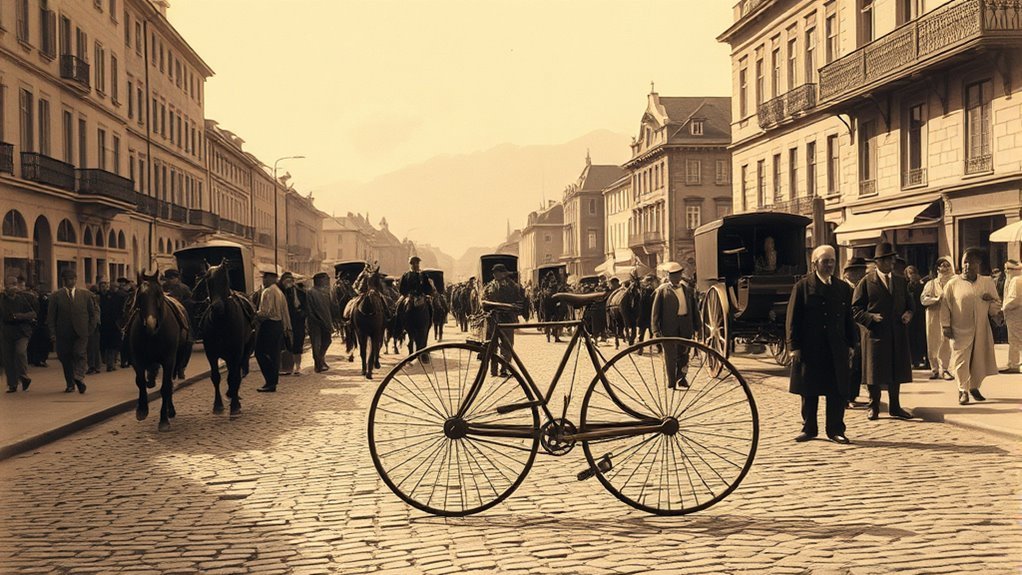
Because the 1816 Tambora eruption triggered a “year without summer,” crops failed and horses starved, making traditional transport unreliable. This dramatic climate change caused widespread crop failures, leading to severe horse shortages, which in turn disrupted established transportation systems.
You’d find it nearly impossible to rely on horse-drawn carriages when those horses were scarce and weak. This scarcity pushed innovators to seek transportation alternatives that didn’t depend on animals.
That’s where human-powered devices like the Laufmaschine came into play. The Laufmaschine, an early form of the bicycle, emerged as a clever solution to mobility challenges. Its development marked a significant step in early bicycle innovation, driven by necessity rather than mere curiosity.
Because horses were no longer dependable, inventors accelerated efforts on human-powered transportation, sparking early bicycle development. The Tambora eruption indirectly fueled this innovation wave, showing you how environmental crises can inspire practical solutions that reshape how you move around.
How Early Bicycle Designs Overcame Poor Roads and Transport Problems
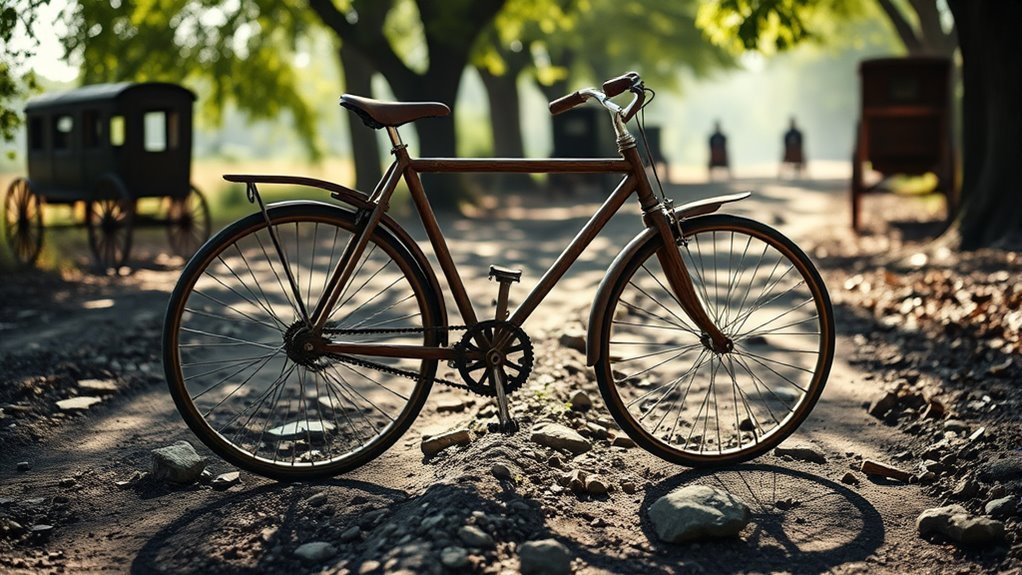
As inventors tackled the challenge of replacing horse-drawn transport, they had to confront another obstacle: the rough, uneven roads of the time. Early bicycles like the Laufmaschine used lightweight wooden frames and a steerable front wheel, helping you navigate bumpy paths better than horse-drawn carriages.
Inventors faced rough, uneven roads, using lightweight wooden frames and steerable wheels to improve early bike navigation.
The penny-farthing introduced large wheels that smoothed out vibrations on cobblestone streets, reducing shocks from rough surfaces. Later, metal frames and wire-spoked wheels increased durability, so your bike could handle constant stress on poor roads.
Pneumatic tires, invented in 1888, made a huge difference by absorbing bumps and making rides much more comfortable on rutted terrain. Innovations like chain drives and low frames gave you better control and easier handling over rough surfaces.
Each advancement tackled specific transport problems, allowing early bicycles to become practical and reliable on the challenging roads of their era. It’s pretty amazing how these designs evolved to meet real-world challenges, right?
Frequently Asked Questions
Did Bicycles Exist Before Cars?
Yes, bicycles existed before cars. You’d find early models like the Laufmaschine from 1817 and Kirkpatrick MacMillan’s 1839 design, which helped shape personal transportation long before automobiles became common on roads.
It’s pretty fascinating to think about, right? Bicycles were around way before cars started rolling out. They really set the stage for personal travel in a big way.
What Was the Purpose of the Bicycle?
The purpose of the bicycle was to help you travel faster and farther without relying on animals or heavy carts. It also gave you a fun way to exercise and boosted your personal freedom to move around easily.
You know, it was kind of a game-changer for getting from place to place on your own terms. Plus, it made staying active something enjoyable rather than a chore.
Why Was the Bicycle Not Invented Earlier?
You weren’t able to invent the bicycle earlier because materials like lightweight metals and rubber tires weren’t available. Roads were rough, making it hard for early designs to work well.
Also, society relied heavily on horses for transportation. Plus, there wasn’t enough demand or support for such innovation yet. So, the timing just wasn’t right before.
Who Really Invented the Bicycle?
You can’t credit just one person for inventing the bicycle because many inventors contributed over time. Karl von Drais, Pierre Michaux, and J. Starley all played key roles in developing what you now recognize as a bicycle.
It’s kind of a team effort, really. Each of these inventors added something important that helped shape the bike into what we know today.
Conclusion
You might not realize it, but the 1816 Tambora eruption caused such harsh conditions that horses became scarce, pushing people to invent the bicycle. Early designs cleverly tackled rough roads and transport issues, making travel easier.
Imagine this: by the late 1800s, over 100,000 bicycles were sold in just one year in the U.S. alone. This shows how quickly this invention transformed the way people moved.
The bicycle truly changed everything. It wasn’t just a new way to get around; it solved real problems like limited horse availability and rough terrain. Because of the bicycle, travel became more accessible and efficient for many people. It’s amazing how this simple invention shaped transportation and everyday life so profoundly.