How Much Do Bike Tires Cost?
Bike tire costs can really vary based on several factors like size, type, features, and brand.
For example, larger tires such as 29-inch mountain bike tires or wider 50mm gravel tires usually cost more because they require extra materials and more complex designs. On the other hand, smaller or standard tires tend to be more budget-friendly.
If you’re looking at specialized tires, tubeless-ready or reinforced models often come with a higher price tag. These features add durability and performance, but that does bump up the cost a bit.
Basic tires meant for everyday riding are generally easier on your wallet.
Also, premium brands that use advanced technology can increase the price, but don’t worry—there are plenty of budget options that still offer good quality.
Keep exploring until you find the best balance between performance and price for your bike ride.
Key Takeaways
- Basic bike tires typically cost under $20. They’re great for everyday riding and anyone watching their budget.
- Larger or wider tires, like 29-inch mountain or 50mm gravel tires, usually cost more. That’s because they use more materials.
- Tubeless-ready tires tend to be pricier than standard clinchers. But they offer better performance and are easier to maintain.
- Premium brands and specialized tires with advanced materials or reinforced casings can really bump up the price.
- It’s all about balancing tire size, type, features, and brand. That way, you can find options that won’t break the bank but still perform well.
How Bike Tire Type and Size Affect Prices
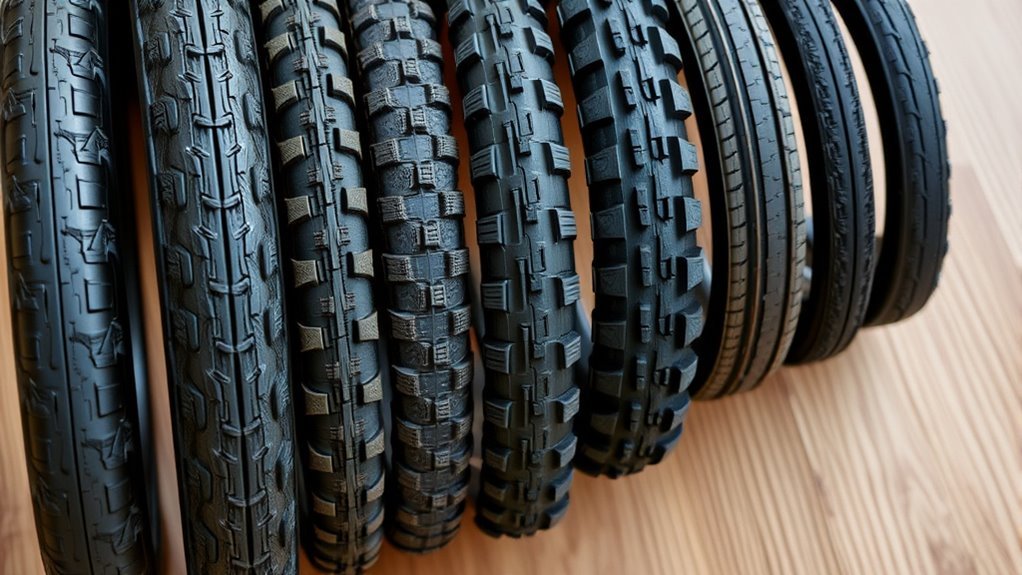
Although bike tire prices vary widely, the type and size you choose play the biggest roles in determining cost. When picking road bike tires or mountain bike tires, tire size and tire width considerably influence the cost to replace.
Larger sizes, like 29-inch mountain tires or wider 700x50c road tires, usually cost more than narrower or smaller options. This is because they require more material and have increased manufacturing complexity.
Tubeless-ready tires, which offer better performance and easier tire maintenance, often come at a higher price compared to standard clincher types. Your tire type choice impacts durability and ride quality, affecting how often you’ll need to replace tires.
While basic models cover everyday needs affordably, premium brands with reinforced casings or specialized tread patterns command higher prices. Understanding these factors helps you budget effectively for tire replacement and maintenance.
That way, you can select the best tire size and type for your riding style without overspending.
Which Features and Brands Affect Bike Tire Prices
Beyond tire size and type, specific features and brand choices play a big role in how much you’ll pay for bike tires. Premium brands like Continental, Schwalbe, and Vittoria often command a higher price thanks to advanced materials, cutting-edge technology, and enhanced durability.
Brand reputation and advanced features significantly influence the cost of bike tires beyond just size and type.
If you want tubeless or tubeless-ready tires, expect to pay more because these require specialized construction and sealing features. The size also impacts price—wider tires, like 2.3-inch mountain or 50mm gravel tires, use more material and complex designs, pushing costs up.
Performance-focused tires built for racing or tough terrains include reinforced casings, lightweight compounds, and sometimes reflective elements, all adding to the price. On the flip side, budget brands offer basic tires with simple rubber compounds and minimal features, usually costing under $20.
When choosing, weigh the features and brand reputation against your riding needs and budget to find the best tire for you.
Frequently Asked Questions
How Much Does a Typical Bike Tire Cost?
You’ll typically pay between $15 and $80 for a bike tire, depending on quality and type. Basic tires cost less, while high-performance or premium ones can be pricier.
Especially if they come with specialized features or materials. It really depends on what you need and how often you ride.
How Much Does It Cost to Replace Both Bike Tires?
Replacing both bike tires typically totals $60 to $120, depending on tire type and labor.
If you do it yourself, you’ll spend less, usually around $20 to $60, mostly on tires and tools.
It’s a pretty straightforward way to save some cash if you’re comfortable with basic bike maintenance.
How Much Do New Bike Tyres Cost?
You’ll find new bike tires typically cost between $15 and $80, depending on the type and brand you choose. High-performance tires can be pricier, while basic commuter tires usually fall on the lower end of that range.
It really depends on what you’re looking for. If you want something durable for everyday use, you might not need to spend as much. But if you’re after top-notch performance, be prepared to pay a bit more.
How Much Do 1 Tires Cost?
You’ll usually pay between $15 and $80 for one bike tire, depending on quality and type.
Budget options start around $15, while premium or specialized tires can cost $60 or more each.
Conclusion
When choosing bike tires, remember that you get what you pay for. Different types and sizes affect prices, and premium features or trusted brands usually cost more but offer better performance.
Don’t just pick the cheapest option—quality matters for your safety and ride experience. So, take your time, compare options, and invest wisely.
After all, “a stitch in time saves nine.” Good bike tires will save you from bigger headaches down the road, ensuring a smoother, safer ride. When considering how much bike tires cost, think about durability, grip, and fit. Spending a bit more upfront on quality tires can mean fewer flats, better handling, and longer-lasting performance. In the end, investing in the right bike tires is a smart choice that enhances your cycling experience and keeps you rolling without worry.