3 Factors That Affect How Long It Does Take to Bike a Mile
Your mile time on a bike depends mostly on three big things: your fitness, the terrain, and the weather.
If you’re fitter, you can pedal faster and shave off valuable minutes. Flat terrain lets you maintain speed easily, but hills slow you down.
Weather like headwinds or rain can add extra seconds or even a minute.
Small changes in your bike setup and technique can also make a noticeable difference.
Keep exploring to see how you can improve your pace further. With a few tweaks, you might find yourself biking a mile quicker than you thought!
Key Takeaways
- Rider fitness level significantly impacts mile time by improving speed and endurance. When you’re in better shape, you can push harder and go faster.
- Terrain type, such as flat or hilly, affects how quickly a mile is completed. Hills definitely slow you down, while flat roads let you pick up the pace.
- Weather conditions like headwinds and rain slow biking speed and increase mile time. It’s just tougher to keep up your usual speed when the weather’s not on your side.
- Proper bike setup and aerodynamic positioning reduce resistance and improve pace. Getting your bike fit right can make a noticeable difference in how comfortable and fast you ride.
- Efficient pedaling technique and gear shifting maintain momentum and conserve energy. Knowing when to shift gears helps keep you smooth and steady throughout your ride.
How Long Does It Typically Take to Bike a Mile?
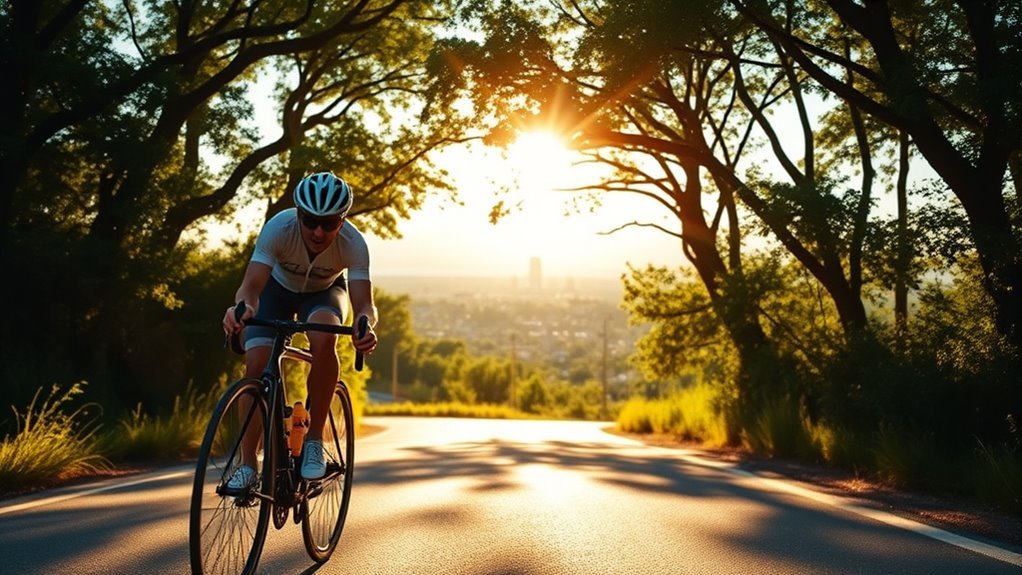
Although the time it takes to bike a mile varies, most recreational cyclists complete it in about 3.5 to 4.5 minutes, riding at speeds between 13 and 17 mph. Your average speed depends on several factors, including your riding experience and bike type.
Most recreational cyclists bike a mile in 3.5 to 4.5 minutes at 13 to 17 mph.
If you’re a beginner, your time to bike a mile might stretch to 5-6 minutes since you’re likely riding at 10-12 mph. On the other hand, faster cyclists can push their riding speed up to 20-25 mph, cutting mile time to around 2.5 to 3 minutes.
When you track your cycling distance with tools like a power meter or GPS device, you’ll get accurate insights into your performance. Keep in mind that your fitness level, terrain, and weather conditions also influence your pace, but those factors will be covered later.
For now, focus on how your riding experience and bike type shape your typical time to bike a mile.
How Fitness, Terrain, and Weather Affect Your Mile Time
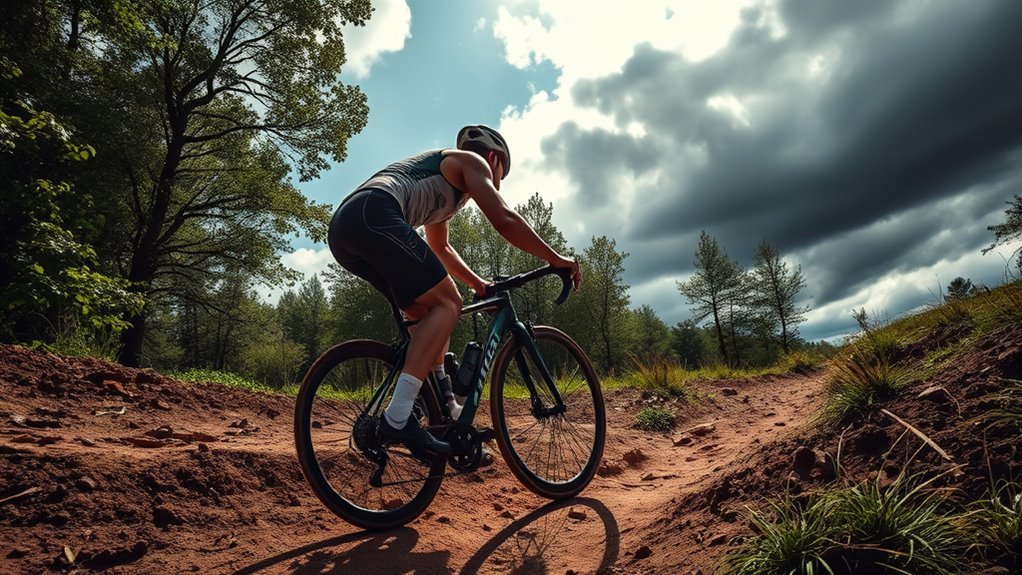
When you improve your fitness, tackle flatter terrain, or enjoy favorable weather, you’ll notice your mile times drop considerably. Higher fitness levels can shave 1-2 minutes off your mile time compared to less fit riders on the same terrain.
Flat terrain boosts cycling speed, often allowing you to complete a mile in 3-4 minutes. On the other hand, hilly terrain can add 1-2 minutes or more.
Weather plays a big role too. Headwinds can reduce your cycling speed by 2-4 mph, increasing your mile time by up to a minute.
Wet or rainy road conditions decrease traction and make you ride more cautiously. This can slow you down by 10-20 seconds or more.
Your rider experience matters as well. Efficient pedaling and bike handling help you maintain speed across varied terrain and challenging weather.
Understanding how fitness, terrain, and weather interact lets you predict and improve your mile time more effectively.
How Bike Setup and Riding Technique Can Improve Your Mile Time
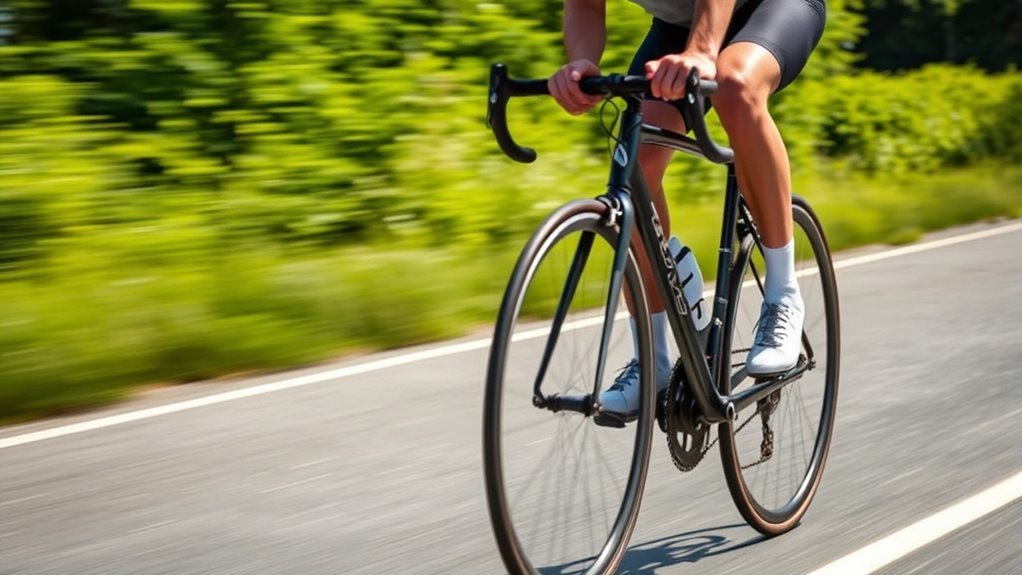
Improving your mile time isn’t just about fitness, terrain, or weather—you can also gain significant speed by optimizing your bike setup and refining your riding technique. Start by ensuring your bike setup fits you properly; adjust saddle height and handlebar position to promote efficient pedaling and reduce wasted effort.
Maintaining the right tire pressure—usually between 80-110 psi for road bikes—lowers rolling resistance, helping you ride smoother and faster.
Adopting an aerodynamic position by dropping your handlebars and keeping a flat back minimizes wind resistance, which is essential for speed improvement. It might feel a bit awkward at first, but it really makes a difference.
Focus on your riding technique by keeping a consistent cadence and practicing smooth, efficient pedaling to conserve energy. Also, mastering gear shifting at ideal points prevents power loss and helps you keep your momentum going.
When you combine all these elements, it enhances your riding posture and boosts cycling efficiency. In the end, you’ll shave seconds off your mile time and make each ride faster and way more effective.
Frequently Asked Questions
How Long Should a 1 Mile Bike Ride Take?
You should expect a 1-mile bike ride to take between 3 to 6 minutes. If you’re new, it might take closer to 6-10 minutes, but experienced cyclists usually finish in about 3-4 minutes.
It really depends on your pace and how comfortable you are on the bike. So, don’t worry if you’re on the slower side at first! With a bit of practice, you’ll likely see your times improve.
What Is the 75% Rule in Cycling?
The 75% rule means you ride at 75% of your max effort to sustain energy over long rides.
You’ll avoid burnout, maintain a steady pace, and build endurance without pushing yourself to exhaustion.
Is Biking 1 Mile in 4 Minutes Good?
Ever wonder what a good biking pace feels like? Biking 1 mile in 4 minutes is definitely good—it shows you’ve got solid fitness and efficiency.
It places you above beginner level and on par with many recreational cyclists. So yeah, you’re doing great!
Is 2 Miles in 10 Minutes Good on a Bike?
Yes, biking 2 miles in 10 minutes is good. You’re riding at a moderate pace of 12 mph, which shows decent fitness and control.
Especially if you’re a casual or beginner cyclist on flat terrain. Keep it up!
Conclusion
When you bike a mile, your time can vary a lot depending on your fitness, the terrain, and the weather. For example, did you know the average cyclist covers a mile in about 4 to 6 minutes?
By adjusting your bike setup and refining your technique, you can shave precious seconds off your time. It’s pretty cool how small changes make a big difference.
Keep these factors in mind, and you’ll not only improve your speed but also enjoy every mile you ride even more. Understanding how fitness, terrain, and weather affect your biking time can help you plan better rides and set realistic goals. So next time you hit the road, think about these things—they’re the key to biking a mile faster and having more fun while you’re at it!