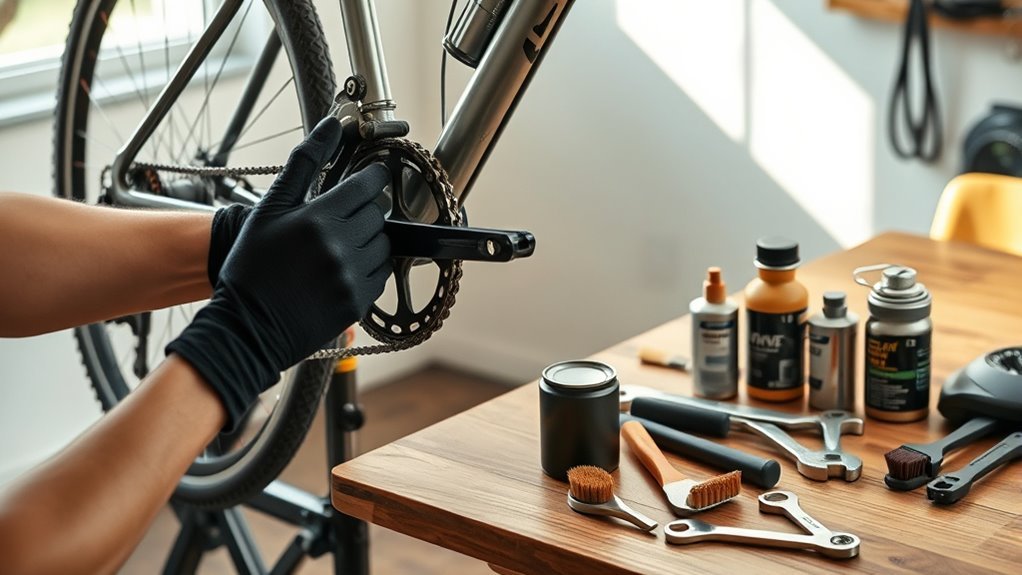
7 Essential Tips to Maintain a Bicycle
To keep your bike running smoothly, it’s important to gather the right tools like tire levers, a pump, and lubricants for regular upkeep. These essentials make maintaining your bicycle easier and more effective. Regular maintenance helps you avoid unexpected issues and extends your bike’s life.
Do the ABC check before every ride to spot issues early. This quick routine checks your Air pressure, Brakes, and Chain to keep you safe on the road.
Maintaining proper tire pressure and inspecting tires for damage go a long way in preventing flats.
Cleaning and lubricating your bike regularly prevents wear and tear. Don’t forget to adjust your brakes for safe stopping—this small step can make a big difference.
Keep an eye on your chain’s condition and replace it when needed to avoid breakdowns.
Finally, learn how to handle flats and chain breaks on the go. Being prepared for these common problems means you’ll be ready for any ride without stress.
Key Takeaways
- Regularly check tire pressure and inspect tires for cuts or debris. This helps prevent flats and extends tire life.
- Clean and lubricate the chain frequently. It keeps shifting smooth and stops premature wear.
- Perform the ABC bike check before rides: Air, Brakes, Chain, and Quick Release. It’s a quick way to stay safe on the road.
- Inspect brake pads and adjust brake tension. This makes sure your stopping power stays effective.
- Carry essential tools and spare parts like a pump, tire levers, and quick links. That way, you’re ready for on-the-go repairs.
Gather the Right Tools for Routine Bike Maintenance
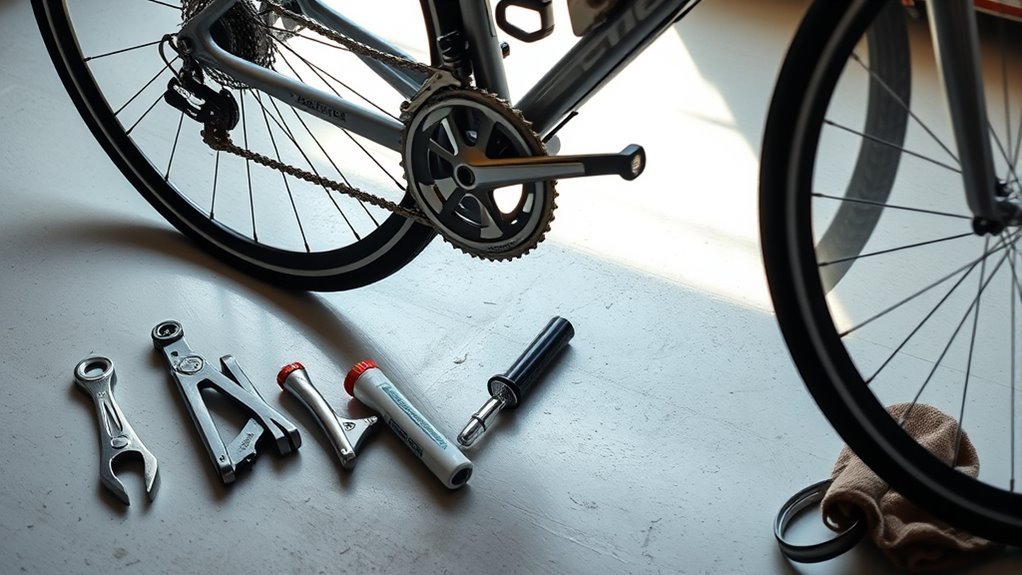
Before you plunge into any bike maintenance, make sure you’ve gathered the right tools. A well-stocked maintenance kit should include essential bike tools like tire levers, a bike pump or CO₂ inflator, a chain checker, and lubricant to keep your drivetrain smooth.
Gather the right tools before bike maintenance: tire levers, pump, chain checker, and lubricant for smooth rides.
Don’t forget a multi-tool for quick adjustments on the go. Using a bike-specific torque wrench helps you tighten bolts precisely to manufacturer settings, especially vital for carbon components.
Setting up a repair stand makes working on your bike easier and more efficient. Always keep a spare tube and patch kit handy to tackle flats without hassle.
High-quality tools reduce the risk of damaging your bike parts and make routine tasks simpler. Regularly inspect and organize your maintenance kit so you can access everything quickly when needed.
With the right tools at your fingertips, you’ll be ready to handle most routine bike maintenance confidently and effectively.
Do the ABC Bike Check Before Every Ride
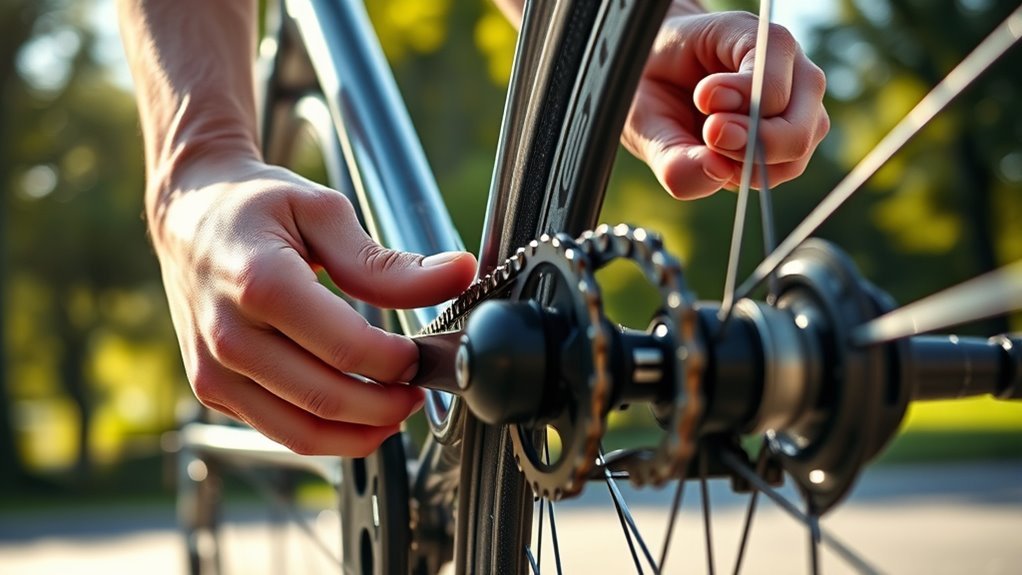
Whenever you hop on your bike, performing the ABC bike check guarantees your ride starts safely and smoothly. This quick inspection focuses on Air, Brakes, and Chain to maximize ride safety.
First, check tire pressure by pressing the tire and verifying air pressure with a pump. Next, test brake levers to ensure they engage properly; inspect brake pads and brake calipers for wear or contamination.
Finally, rotate the pedals backward to check the chain’s movement and apply chain lube if needed. Don’t forget to tighten the wheel quick-release and other quick release levers to secure your wheels firmly.
| Check Area | What to Inspect | Why It Matters |
|---|---|---|
| Air | Tire pressure, air pressure | Proper inflation for control |
| Brakes | Brake pads, brake levers, brake caliper | Effective stopping power |
| Chain | Smooth motion, chain lube | Prevents wear and slipping |
| Quick Release | Tightness of wheel quick-release | Avoids wheel accidents |
| Overall | General inspection | Ensures ride safety |
Check Bike Tire Pressure and Inspect for Damage
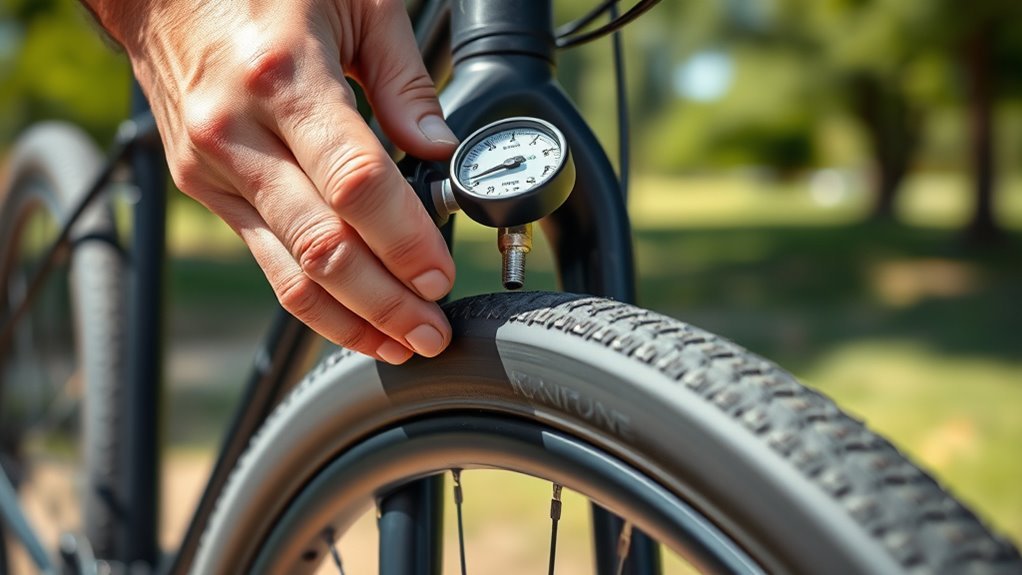
Because tire pressure directly affects your bike’s performance and safety, you should regularly press the tire sidewall to make sure it feels firm. Then, use a pressure gauge to confirm it matches the recommended PSI printed on the tire.
Proper inflation not only improves riding efficiency but also reduces the risk of punctures and enhances handling. It’s a simple step that makes a big difference.
Don’t skip inspecting your tires for cuts, embedded debris, cracks, or signs of excessive wear. These issues can lead to flat tires or even blowouts.
Pay special attention to valve stems. Make sure they’re intact and free from leaks or damage to keep your tire pressure consistent.
Performing a thorough tire inspection before each ride is key to preventing flats and staying safe. By keeping your tire pressure at the recommended level and addressing any damage promptly, you’ll extend the life of your tires.
Plus, you’ll enjoy smoother, safer rides every time. Regular checks help you avoid unexpected problems and keep your bike performing at its best.
Clean and Lubricate Your Bike to Prevent Wear
To keep your bike running smoothly, you need to clean and lubricate it regularly. Start with a thorough cleaning using water, soap, and brushes to remove dirt, salt, and grit that cause component wear and corrosion.
Regular cleaning with water, soap, and brushes removes dirt and grit to prevent wear and corrosion.
Focus on the drivetrain, including the chain, cassette, and chainrings, by degreasing them. This helps maintain smooth shifting and prevents excessive wear.
After cleaning, apply bike-specific lubricants to moving parts like the chain, gear cables, derailleurs, and pivot points. This reduces friction, slows wear, and helps prevent rust.
Don’t forget to wipe off any excess lubricant before riding, since it attracts dirt and speeds up deterioration.
Regular inspection and reapplication of lubricant are key to keeping your bike parts working well. If you make these steps part of your routine, your bike will stay in great shape, lasting longer and performing better.
Check and Adjust Your Brakes for Safe Stopping
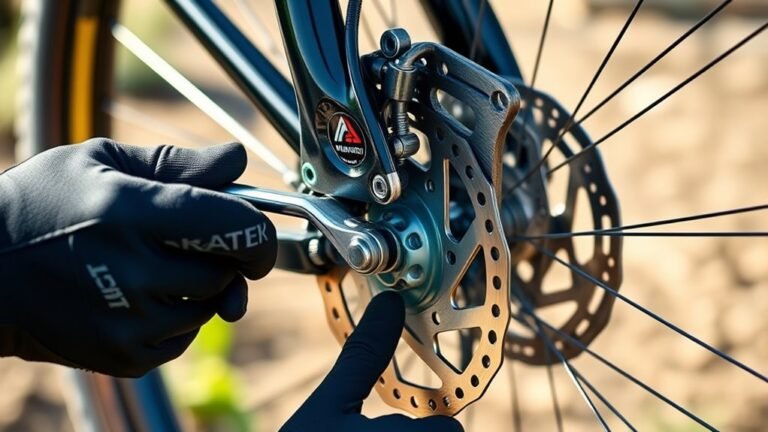
Make sure to regularly inspect your brake pads and replace them if they’re less than 1-2mm thick. This helps keep your stopping power strong.
Squeeze the brake levers to check they engage smoothly. They shouldn’t pull all the way to the handlebar.
Proper pad wear and lever tension are key to safe, effective braking. So, keeping an eye on these will help you stop safely every time.
Brake Pad Inspection
How often do you check your brake pads? Regular inspection is essential for brake safety and maximum brake performance.
Here’s what you should do:
- Measure the brake pad thickness—replace pads that are less than 1.5 mm thick or show signs of uneven wear or cracks.
- Check that brake pads contact the rim or disc evenly without rubbing the tire or rotor when released.
Use brake wear indicators if available to guide your inspection and guarantee timely replacement.
Perform brake cleaning regularly with isopropyl alcohol or dedicated brake cleaner to remove dirt and oil that impair the brake system. It really helps keep everything working smoothly.
Lever Engagement Check
When was the last time you squeezed your brake levers to check their engagement? Proper brake engagement is essential for safe stopping. Firmly pull each brake lever to verify it moves smoothly and stops your bike without excessive travel.
Check that your brake pads make full contact with the rim or disc surface—worn pads need replacing. Use barrel adjusters to fine-tune brake tension; this prevents levers from pulling too close to the handlebars or feeling too tight.
For rim brakes, make sure brake pads align evenly with the rim and don’t rub the tire or rim edges. After adjustment, test your brake performance by riding slowly and applying firm pressure to confirm consistent, reliable stopping power on both rim brakes and disc brakes.
Monitor Your Chain’s Condition and Replace When Needed
You should regularly check your chain for wear using a chain checker tool to avoid damage to your cassette and chainrings. Watch for signs like skipping gears or stiff links, and replace the chain once it reaches the recommended wear limit.
Staying on top of this helps you prevent costly repairs and keeps your bike running smoothly. It’s a simple step that makes a big difference in your ride!
Chain Wear Detection
A worn chain can quickly degrade your bike’s performance and cause costly damage to other drivetrain components.
To detect chain wear early, follow these steps using a chain checker or wear indicators:
- Measure chain elongation regularly; replace it once it stretches beyond 0.5% to 0.75%. This helps prevent damage before it happens.
- Watch for signs like stiff links, chain skipping, or rough gear shifting. These usually mean your chain is wearing out.
- Use a chain checker tool to get an accurate reading. It’s way better than guessing when to do maintenance.
- Replace the chain promptly to protect the cassette and chainrings. Doing this extends their lifespan and keeps your gear shifting smooth.
Timely Chain Replacement
Although regular chain checks require a bit of effort, monitoring your chain’s condition closely guarantees timely replacement before wear causes shifting problems or damages other drivetrain parts.
Use a chain wear indicator tool to measure chain elongation; when it reaches 0.5% to 0.75%, it’s time to replace the chain.
Ignoring a worn chain leads to chain skipping, stiff links, and increased drivetrain damage, which shortens cassette and chainring lifespan.
Proper maintenance, including cleaning and lubrication, helps you spot visible elongation or stiffness early.
Typically, chains last 2,000 to 3,000 miles depending on use and upkeep.
Timely chain replacement not only prevents costly repairs but also ensures smooth shifting and prolonged drivetrain health.
Don’t wait for problems—stay proactive to maximize your chain lifespan.
Fix Bike Flats and Broken Chains on the Go
Three essential tools you’ll want to carry on every ride include a spare tube, tire levers, and a mini-pump or CO₂ inflator to quickly fix flats. When you face a flat tire, use your tire levers to remove the wheel and either patch the tube with a patch kit or replace it with a spare tube.
For chain repair, keep a durable quick link on hand to temporarily fix broken chains, ensuring ride safety until you reach home.
Follow these steps for quick fixes on the go:
- Identify the flat tire cause—puncture or blowout—to choose patching or tube replacement.
- Use tire levers to remove the wheel and access the tube.
- Repair small punctures with a patch kit or swap in a spare tube.
- Fix broken chains using a quick link for temporary chain repair.
Always practice these repairs at home first, so you’re prepared with the right tools and supplies during your ride.
Frequently Asked Questions
How Often Should I Replace My Bike’s Cables and Housing?
You should replace your bike’s cables and housing every 6 to 12 months, or sooner if you notice stiffness, fraying, or poor shifting.
Regular checks help keep your ride smooth and safe. It’s a small step that makes a big difference!
What Is the Best Way to Store My Bike During Winter?
You should store your bike indoors, like a cat curling in a warm nook. Clean it, dry it thoroughly, and lubricate the chain.
Keep tires inflated and cover it to protect from dust and moisture during winter. It really helps keep everything in good shape until you’re ready to ride again.
Can I Use Household Oils for Lubricating Bike Parts?
You shouldn’t use household oils for your bike parts because they can attract dirt and gum up the components.
Instead, grab a lubricant made specifically for bikes to keep everything running smoothly and protect against wear. It’s definitely worth using the right stuff to avoid any hassle down the road.
How Do I Identify a Frame Crack Versus Normal Wear?
You look for sharp lines, you feel for rough spots, and you watch for unusual flex. Cracks appear as distinct breaks, while normal wear shows as smooth scratches.
If you’re unsure, it’s always best to consult a professional for safety. Better safe than sorry!
When Should I Upgrade My Bike Components for Better Performance?
You should upgrade your bike components when you notice frequent malfunctions or feel performance limitations. It’s also a good idea if you want lighter, more durable parts.
Upgrading makes sense if your current components no longer match your riding style or goals. Basically, when your bike isn’t keeping up with you, it’s time to consider an upgrade.
Conclusion
Maintaining your bike doesn’t have to be a chore—you’ve got the tools and know-how to keep it in top shape. By doing regular checks, cleaning, and timely repairs, you’ll enjoy smoother rides and avoid unexpected breakdowns.
Don’t you want every ride to feel effortless and safe? Stick to these essential tips, and your bike will thank you with years of reliable performance and fun adventures on the road or trail.
Keeping up with your bicycle maintenance ensures not only a safer ride but also extends the life of your bike. With consistent care, including cleaning, lubrication, and inspection, you’ll prevent issues before they start. So, whether you’re hitting city streets or rugged trails, following these essential tips will help your bike perform at its best every time. Enjoy the freedom and fun of cycling without the worry of breakdowns, and make every ride a smooth, enjoyable experience.