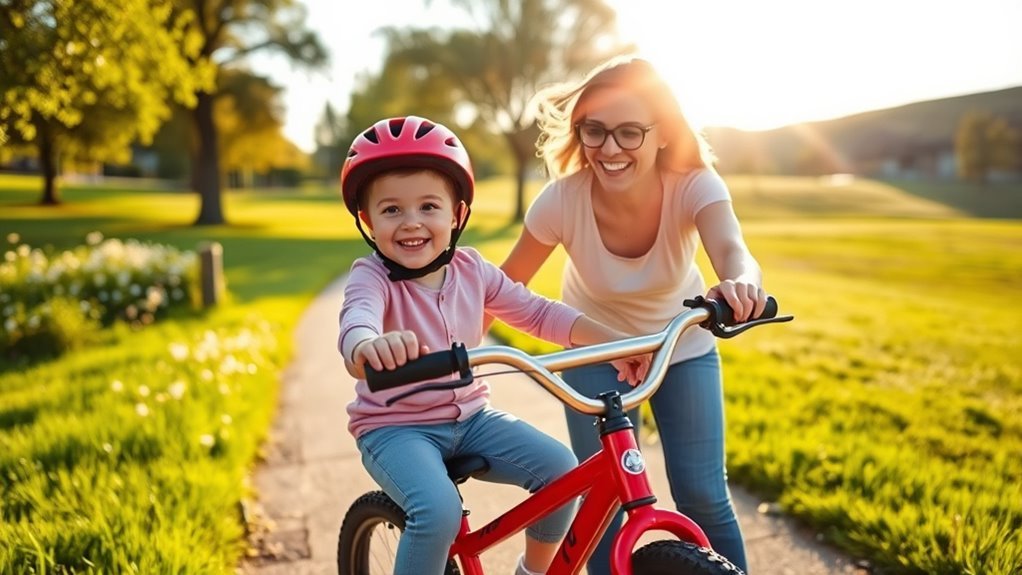
Teach Your Kid to Ride a Bike in 5 Easy Steps
Start by making sure your child’s bike fits well and that all safety gear is properly worn. This is super important to keep them protected and comfortable while learning.
You might want to use a balance bike or remove the pedals to help them focus on balancing and gliding first.
Next, practice steering by having your child ride in wide circles. It’s also a good time to teach them how to stop safely, either using hand brakes or coaster brakes on the bike.
Once they feel confident with balancing and steering, you can introduce pedaling.
Lower the seat a bit to make it easier for your child to reach the ground and support them as they start pedaling.
Slowly, step back and give them more space to ride on their own. This helps build their independence and resilience.
If you follow these steps, you’ll help your child gain confidence and new skills. Before you know it, they’ll be riding smoothly and having a blast!
Key Takeaways
- Ensure the bike fits properly and equip the child with a helmet and pads in a safe, open area. Safety first, right? It’s super important to have plenty of space to ride without any obstacles.
- Use a balance bike or remove pedals to teach balancing and gliding before pedaling. This helps your kid get the hang of staying steady on two wheels without worrying about pedaling just yet.
- Practice steering with wide turns and stopping techniques using brakes in a controlled environment. Take it slow and steady so they feel confident handling the bike.
- Introduce pedaling by lowering the seat, encouraging proper posture, and practicing starts on gentle slopes. It’s all about making pedaling feel natural and comfortable.
- Gradually reduce support, encourage independence, and allow the child to recover from small falls confidently. Let them know it’s okay to make mistakes—that’s how they learn!
Assess Readiness, Fit the Bike, and Select Safety Gear

Before your child hops on their bike, make certain it fits properly by checking that they can stand over the top tube with both feet flat on the ground. This guarantees the bike is the right size and safe to use.
Next, adjust the seat height so your child’s legs have a slight bend when the pedals are at their lowest point. This helps them pedal comfortably and avoid strain.
Don’t forget to select safety gear: a properly fitting helmet is a must, along with kneepads and elbow pads to protect against falls.
When your child is ready to learn to ride, choose a flat, open, traffic-free area like a park or parking lot. Make sure the bike has manageable features like hand brakes suited to your child’s strength and size.
While training wheels can help at first, guaranteeing the bike fits well and your child wears safety gear will build confidence for independent riding.
Use Balance Bikes to Master Balance and Gliding
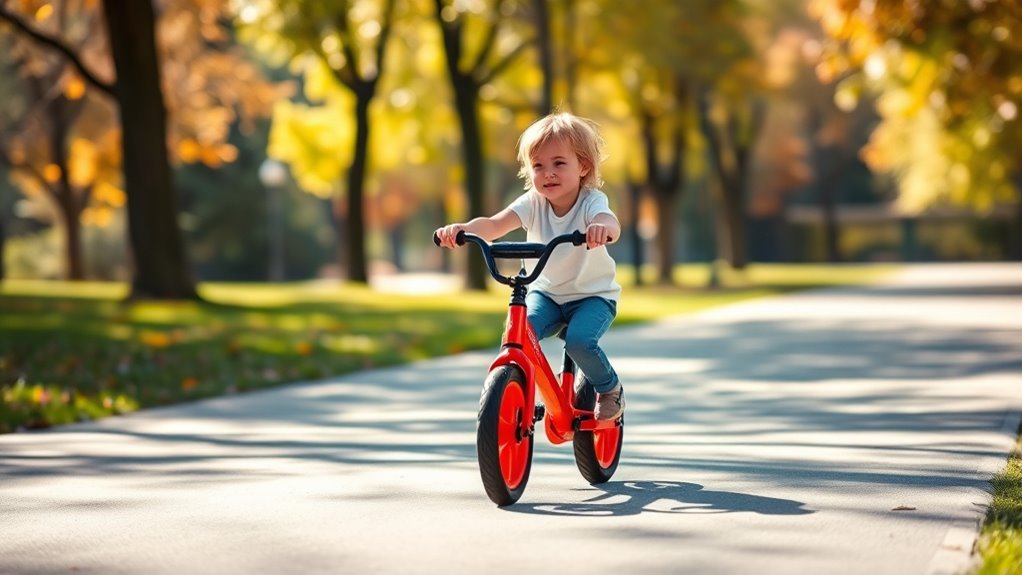
Once your child is comfortable with the right bike fit and safety gear, it’s time to help them build balance and coordination. Balance bikes are perfect for mastering balance because they remove the complexity of pedaling, allowing your child to focus solely on steering and balancing.
Starting with a balance bike helps children focus on steering and balance without the challenge of pedaling.
By pushing off with their feet and practicing gliding skills, your child gains confidence and improves coordination. This hands-on practice also enhances core stability and spatial awareness, which are key for learning to ride.
Studies show that kids who master balance and gliding on balance bikes progress to pedaling much faster on traditional bikes. The continuous movement of gliding teaches children how to maintain momentum and control, making the changeover to pedaling smoother and less intimidating.
Using a balance bike sets a solid foundation. So, when it’s time to add pedaling, your child’s confidence and skills will make learning to ride a standard bike a natural next step.
Teach Steering Control and Stopping Techniques

As your child gains balance and confidence, you’ll want to focus on teaching them how to steer smoothly and stop safely. Start by practicing large, wide circles and figure eights to build steering control.
Set up cones or objects for your child to navigate around. This makes practice fun and helps them learn to control their direction. Reinforce the habit of looking ahead while steering to maintain balance and control during turns.
Next, introduce stopping techniques by having your child practice braking at designated points. Teach them to use both coaster and hand brakes effectively.
Make sure they can stop confidently from various speeds before moving on to independent riding. Consistent practice of steering control and stopping techniques will boost their confidence and improve their ability to manage speed and direction safely.
This will prepare them for the next step in learning to ride.
Introduce Pedaling and Practice Starting Safely
Now that your child can steer and stop with confidence, it’s time to introduce pedaling and help them start safely. Focus on building their pedaling skills while maintaining balance and momentum.
Start by lowering the seat so their feet touch the ground firmly. This provides support and stability during starting. Encourage proper posture by having them look forward, not down at the pedals.
Lower the seat so your child’s feet reach the ground, ensuring stability and encouraging them to look ahead.
Follow these steps to practice pedaling and starting safely:
- Position one foot on a pedal at the top (power position) and have them push off with the other foot to gain momentum.
- Support the bike at your child’s waist or back, not the handlebars. This helps encourage independent balance and steering.
- Practice starting on a slight incline to help them naturally push off and build confidence.
- Repeat these drills regularly to strengthen pedaling skills and posture.
With consistent practice, your child will develop the confidence to pedal and start smoothly on their own.
Step Back to Build Independence and Confidence
Although it can be tempting to hold on tight, stepping back during practice helps your child develop balance and steering skills on their own. When you gradually reduce physical support, your child gains confidence and independence, learning to control the bike without relying on you.
Watching from a distance and cheering them on boosts their self-reliance and motivation. It’s important to let your child experience small falls and practice recovery, as this builds resilience and trust in their abilities.
Over-helping can slow progress, so resist the urge to intervene too soon. Instead, provide encouragement while allowing them space to grow. This approach not only enhances balance but also fosters confidence through hands-on experience.
Frequently Asked Questions
What Is the Easiest Way to Teach a Child to Ride a Bike?
The easiest way is to start your child on a balance bike without pedals. This helps them focus on balancing and steering first.
It builds confidence before introducing pedaling. This way, the learning process becomes smoother and less frustrating for both of you.
How to Teach Your Kid to Ride a Bike in 5 Minutes?
Did you know kids often master balance in just five minutes? Start by removing pedals, let your child glide and steer on a flat area.
Support gently, then release as they gain confidence—making learning quick and fun.
It’s easier than you think, and your kid will love it! Just give it a try and watch them go.
Can a 5 Year Old Learn How to Ride a Bike?
Yes, your 5-year-old can learn to ride a bike if they’re ready. Focus on balance, confidence, and safety gear.
Be patient, keep it fun, and support their progress step by step. It’s all about making the experience enjoyable for them!
At What Age Is It Appropriate to Start Teaching a Child to Ride a Bike?
You’ll know it’s time to start teaching when your child’s balance and coordination bloom like spring flowers—usually between ages 3 and 8.
Trust their readiness more than the calendar to guide your first ride together.
Conclusion
Teaching your kid to ride a bike doesn’t have to be intimidating—it’s a journey you’ll both cherish. With patience and practice, you’ll see their confidence soar like a bird taking flight.
Remember, every wobble and fall is just a step closer to freedom on two wheels. So, gear up, stay positive, and watch as your child transforms from a cautious learner into a joyful rider ready to explore the world.
Learning to ride a bike is all about encouragement and fun. Celebrate the small victories and keep the experience light-hearted. Before you know it, your kid will be cruising confidently, enjoying the thrill of biking.
Teaching your kid to ride a bike is not just about balance and pedals; it’s about building trust and resilience. With these simple steps, your child will develop skills and confidence that last a lifetime. So, get ready to enjoy the ride together and make lasting memories on this exciting journey of learning to ride a bike!