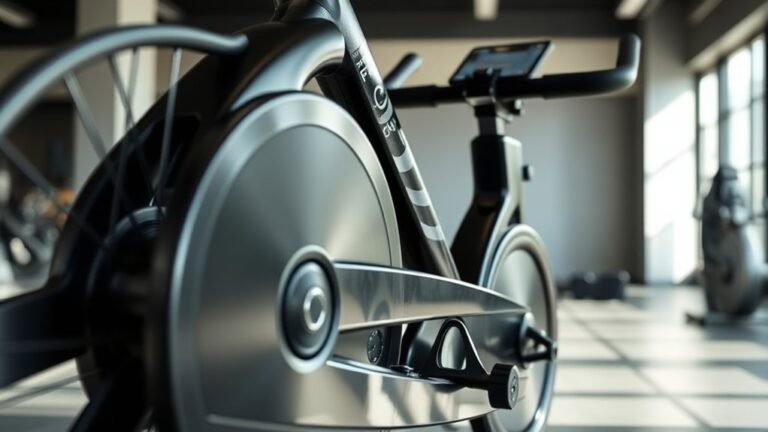

How Riding a Bike Can Help You Lose Weight Effectively
Riding a bike is a fantastic way to lose weight effectively because it burns between 300-600 calories per hour. It works large muscle groups, which boosts your heart rate and helps you shed fat faster.
Plus, cycling is a low-impact exercise, making it easier on your joints compared to running or other high-impact activities.
Mixing steady rides with high-intensity intervals is a great strategy. This combo maximizes calorie burn and helps build endurance over time.
Don’t forget to pair your workouts with smart nutrition—like eating carbs before you ride and protein afterward. This helps preserve muscle while you lose fat.
Cycling isn’t just about weight loss; it also improves your heart health and metabolism.
Keep riding, and you’ll discover even more effective cycling workouts and nutrition tips to speed up your fat loss journey.
Key Takeaways
- Cycling engages large muscle groups and burns 300-600 calories per hour, which really helps with effective weight loss.
- Adding high-intensity intervals into your rides can boost calorie burn even more. It also helps you lose fat faster after your workouts.
- Going for endurance rides that last between 45 to 90 minutes improves your metabolism. This supports sustained fat reduction over time.
- When you combine cycling with a calorie deficit and good nutrition, you preserve muscle and speed up fat loss.
- Plus, regular cycling strengthens your heart and improves circulation. It also helps reduce visceral fat, which is linked to metabolic issues.
Why Cycling Is Great for Weight Loss and Heart Health

Because cycling engages large muscle groups and raises your heart rate, it effectively boosts calorie burn and strengthens your cardiovascular system. When you cycle regularly, you not only burn 300-600 calories per hour but also enhance your overall fitness by improving cardiac endurance and circulation.
This combination supports weight loss and fat reduction, especially visceral fat linked to metabolic conditions and heart disease. Cycling benefits heart health by lowering blood pressure and improving cholesterol levels, making it a smart choice for cardiovascular care.
You can increase these benefits by incorporating high-intensity intervals into your rides, which further elevate your calorie burn and endurance. As you ride, you build a stronger heart and improve your metabolism, contributing to healthier body composition and reduced risk of chronic illnesses.
Ultimately, cycling offers an efficient, enjoyable way to boost your weight loss efforts while protecting and enhancing your heart health. It’s a great choice if you want to feel good and stay healthy at the same time.
Best Cycling Workouts and Nutrition Tips to Burn Fat Faster

To burn fat faster on your bike, you need to combine effective workouts with smart nutrition. Cycling workouts that target fat loss can greatly improve your results when paired with proper fueling and a calorie deficit.
Here’s how to maximize your efforts:
- Incorporate high-intensity interval training (HIIT) by doing 30-60 second sprints. These fat-burning sessions boost calorie burn and the afterburn effect, speeding up fat loss.
- Add endurance rides lasting 45-90 minutes at moderate intensity to increase overall calorie expenditure and reduce belly fat effectively.
- Follow structured workouts using platforms like ROUVY or TrainerRoad to optimize your cycling routine and maintain muscle preservation through balanced training.
For nutrition tips, maintain a daily calorie deficit of 300-500 calories. Fuel your rides with carbohydrates and consume protein afterward to support muscle preservation.
Combining these cycling workouts and nutrition strategies ensures faster, sustainable fat loss. Give it a try and see the difference!
Frequently Asked Questions
Can I Lose Belly Fat by Riding a Bike?
Yes, you can lose belly fat by riding a bike. Regular cycling burns calories and boosts your metabolism. It also helps target abdominal fat.
When you combine cycling with a healthy diet, your efforts become even more effective. So, keep at it and enjoy the ride while trimming that belly fat!
How Long Should You Ride Your Bike to Lose Weight?
You should ride your bike at least 150 minutes weekly, splitting it into 30- to 60-minute sessions.
Try mixing in some longer rides and intervals to boost calorie burn. That way, you’ll keep your weight loss steady and effective.
How to Drop 30 Pounds for Cycling?
You’ll drop 30 pounds by cycling consistently, creating a 500-750 calorie daily deficit, and adding HIIT sessions. Eating a balanced, protein-rich diet also helps a lot.
Plus, gradually increasing your ride’s intensity and duration keeps burning fat efficiently. It’s all about steady progress and mixing things up to stay motivated.
How Much Biking Equals 10,000 Steps?
You might think biking can’t match walking 10,000 steps, but 30 minutes cycling at a moderate pace burns similar calories.
Conclusion
Picture yourself cruising down a sunlit path, the wind brushing past as your heart pounds with purpose. Riding your bike isn’t just a ride—it’s your ticket to shedding pounds and boosting heart health.
With every pedal stroke, you’re burning fat and fueling your body right. So grab your helmet, hit the road, and let cycling transform your weight loss journey into an exhilarating adventure you’ll look forward to every day.
Cycling is a fun, effective way to lose weight because it combines cardio and muscle toning. It increases your metabolism, helping you burn calories even after you stop riding. Plus, it’s gentle on your joints, making it accessible for almost everyone.
By making bike riding a regular part of your routine, you’ll see improvements in your fitness and heart health while dropping those extra pounds. So, hop on your bike and start your weight loss journey today—cycling is the enjoyable, sustainable path to a healthier you!