
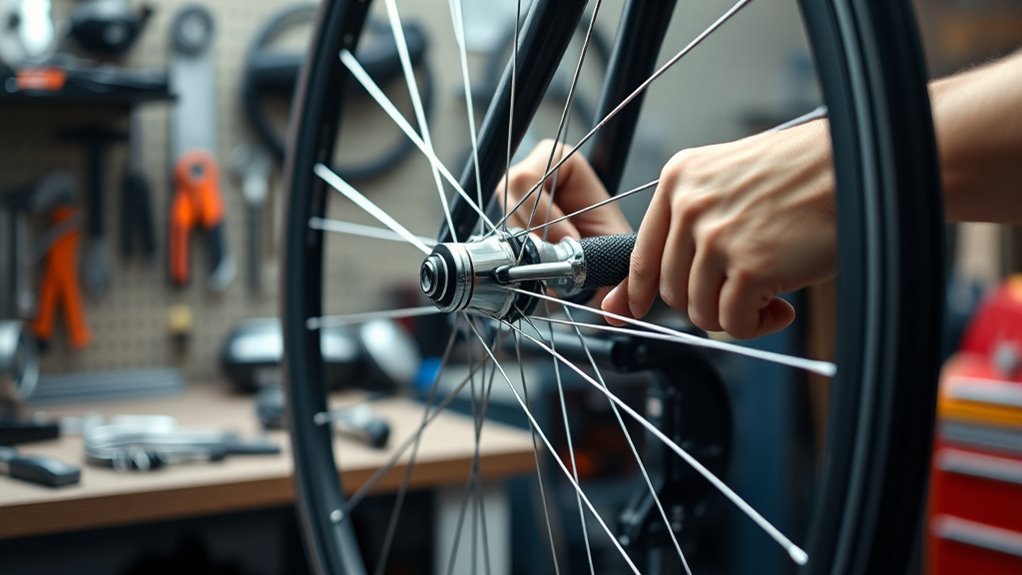
How to True a Bicycle Wheel in 5 Easy Steps
To true your bicycle wheel, start by gathering your spoke wrench and stabilizing the wheel. This simple bike maintenance skill helps keep your rides smooth and safe. Spin the wheel slowly to spot any side-to-side wobbles and mark those points with a piece of tape or a marker.
Next, tighten the spokes opposite the wobble and loosen those on the same side. Make small adjustments while spinning the wheel to check your progress. It’s all about fine-tuning bit by bit until the wheel spins straight.
After that, look for up-and-down bumps on the rim. Tighten the spokes near low spots and loosen those near high areas to level everything out.
Finally, make sure the spoke tension is even all around for a balanced, strong wheel.
With these basics, you’re set to keep your bicycle wheel rolling smoothly. Once you get comfortable, you can explore more advanced tuning tips to perfect your ride even further!
Key Takeaways
- Inspect the wheel for damage and spin it to identify any wobbles or misalignments. Take your time to really watch how the wheel moves.
- Use a truing stand or brake pads as a guide to detect side-to-side rim wobbles. These tools make it easier to see even small shifts in the wheel.
- Adjust spoke tension by tightening opposite the wobble and loosening on the same side incrementally. Don’t rush this step; small changes make a big difference.
- Identify high and low spots to fix radial bumps by tightening spokes near dips and loosening near peaks. This helps smooth out the wheel’s surface.
- Ensure even spoke tension by checking with a tension meter or pitch, adjusting spokes gradually and evenly. Keeping tension balanced is key for a strong, true wheel.
Get Your Wheel and Tools Ready
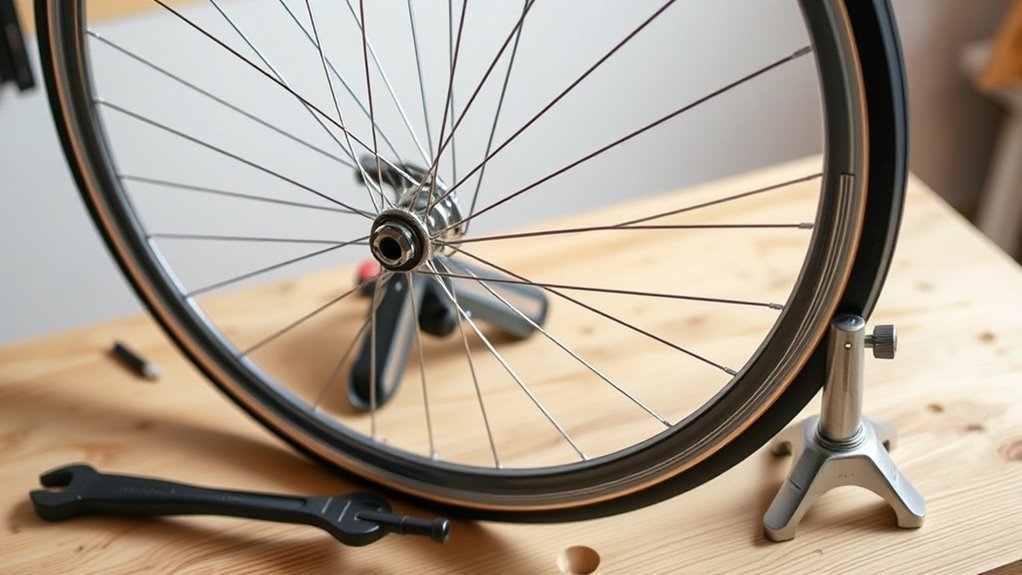
Before you begin truing your bicycle wheel, make sure you have the right tools and setup ready. Start by gathering a properly sized spoke wrench and a truing stand. If you don’t have one, flipping your bike upside down offers a stable alternative.
Ensure you have a spoke wrench and truing stand before starting, or flip your bike for stability.
Remove the tire if needed to clearly see the rim, spokes, and spoke nipples. Take a good look at the wheel for any damage or bends before you start. This way, you know exactly what you’re dealing with.
Spin the wheel slowly to watch how it rotates. Make sure it moves freely without touching the brake pads. This initial check helps you understand the baseline wheel alignment.
Keep a light lubricant and clean rags handy to make adjustments easier and prevent corrosion on the spoke nipples and spokes. Proper spoke tension is key to radial truing, which focuses on the rim’s roundness.
With your tools and wheel prepared, you’ll be ready to make precise adjustments for a smoothly spinning, well-aligned wheel.
Identify and Track Side-to-Side Wobbles
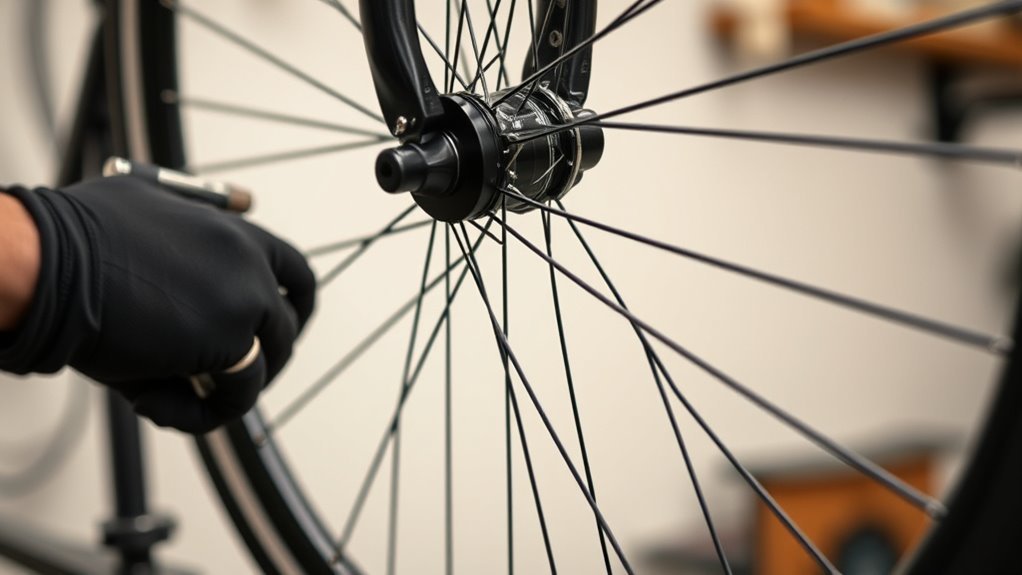
While spinning the wheel, watch the rim closely as it passes near the brake pads or a fixed indicator to spot any side-to-side wobbles. Use a stationary indicator like a zip tie or a truing stand’s built-in gauge placed near the rim to detect lateral wobble precisely.
As the wheel rotation continues, note the side-to-side deviations by marking points where the rim moves closest or farthest from the indicator or brake pads. These marking points guide your adjustments later.
| Observation Tool | Purpose |
|---|---|
| Brake Pads | Visual reference for rim movement |
| Zip Tie | Simple stationary indicator |
| Truing Stand | Precise rim alignment tool |
| Marking Points | Reference spots for wobble |
Tracking these details helps you understand where the rim needs pulling. Always observe rim movement carefully during wheel rotation to identify every lateral wobble before moving on to adjustments.
Adjust Spokes to Fix Side-to-Side Wobbles
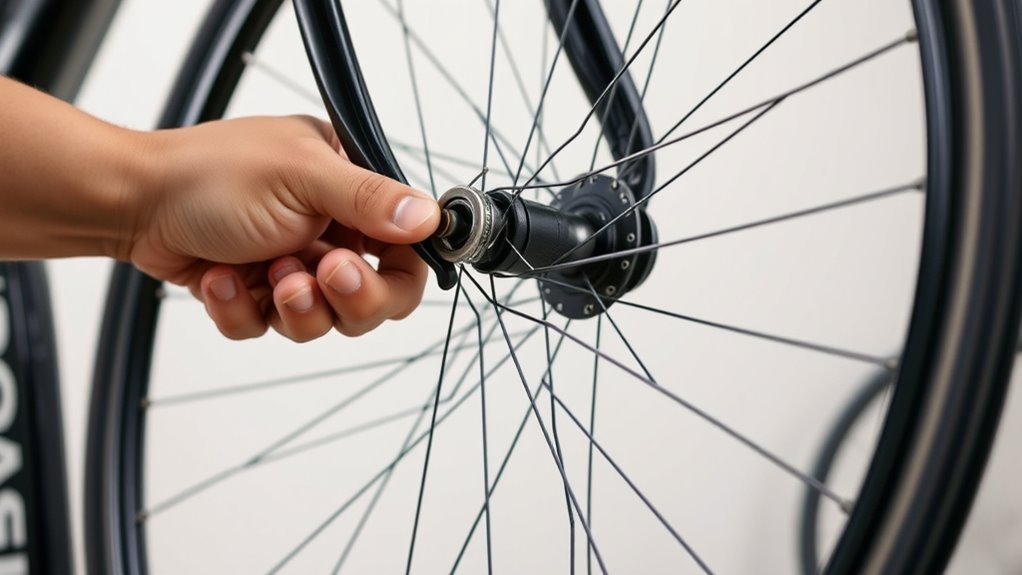
When you spot a side-to-side wobble, focus on the spokes near the rim’s lean to begin adjustments. First, identify whether the rim leans toward or away from the brake pads to determine which spokes need tightening or loosening.
To true your wheel and correct lateral alignment, adjust spoke tension carefully by following these steps:
To true your wheel and fix lateral alignment, carefully adjust spoke tension in small, controlled increments.
- Tighten the spokes opposite the wobble direction by about a quarter to half a turn to pull the rim back toward center.
- Loosen the spokes on the same side as the wobble if the rim is pulling away, allowing it to settle properly.
Make small, incremental spoke adjustments to avoid overcorrecting and creating new wheel wobbles. Spin the wheel frequently to monitor the rim’s side-to-side movement and ensure the wheel true improves steadily.
Spot and Fix Up-and-Down Wheel Bumps
After smoothing out side-to-side wobbles by adjusting spoke tension, you’ll want to check for up-and-down bumps caused by radial deviations. Spin the wheel on your truing stand and watch closely for any rim movement indicating rim bumps.
These up-and-down hops mean you’ve got high spots pushing outward and low spots pulling inward. Mark these areas to guide your spoke adjustments.
To fix low spots, tighten the spokes nearby to pull the rim closer to the hub, reducing the bump. Conversely, loosen spokes near high spots to let the rim move inward, smoothing the surface.
After each adjustment, spin the wheel again to see how the radial deviations improve. Keep repeating this process until the rim movement is minimal—ideally within 1mm.
This precise wheel truing eliminates unwanted wheel wobble and ensures a smoother ride. By carefully managing spoke tension at these critical points, you’ll restore your wheel’s perfect roundness and performance.
Confirm Even Spoke Tension for a True Wheel
Because uneven spoke tension can cause your wheel to warp again, you need to confirm that all spokes have balanced tension before finishing your truing process.
Start by checking spoke tension using a tension meter or by plucking spokes to listen for a consistent feel and uniform pitch. This helps reveal if spokes are evenly tensioned or if some need adjustment.
Follow these steps to balance spokes effectively:
- Identify spokes that sound slack or feel loose; tighten spokes gradually, about a quarter-turn each.
- Find spokes that sound too tight and loosen spokes carefully to avoid over-tensioning.
- Maintain a consistent tension pattern by alternating adjustments around the wheel.
- Recheck spoke tension after each tweak to ensure spokes stay balanced.
Frequently Asked Questions
How to True a Bike Wheel for Beginners?
You’ll start by securing the wheel, then spin it to spot wobbles. Use a spoke wrench to make small adjustments opposite the bends.
Keep checking and tweaking until the wheel spins smoothly and straight. It might take a few tries, but don’t rush—it’s all about patience.
How Do You True up a Bike Wheel?
You just tighten spokes like a wizard fixing a wonky wand—turn opposite the wobble, quarter-turn at a time.
Spin, adjust, repeat until your wheel’s straighter than your morning coffee line.
Easy, right?
How to Fix a Bike Wheel That Isn’t True?
You fix an untrue bike wheel by tightening or loosening spokes opposite the wobble, making small adjustments. Spin the wheel frequently to check progress.
If problems persist, don’t hesitate to visit a professional mechanic. Sometimes it’s just easier to get expert help!
How Do You Truing Wheels at Home?
You don’t need fancy tools to true wheels at home. Just secure the wheel, spin it, and spot wobbles using brake pads or a marker.
Then, tighten or loosen spokes gradually with a wrench until it’s straight. It might take a bit of patience, but you’ll get the hang of it!
Conclusion
Truing your tire takes time and technique, but tackling it step-by-step makes it simpler. Trust the tools, track those tiny twists, and tweak the tension thoughtfully.
Taking care to turn your wheel true transforms your ride, trimming troubles and boosting balance. With patience and practice, you’ll perfect your spokes, polish your performance, and pedal smoothly.
So, stick to the steps, stay steady, and soon you’ll spin with superb, seamless strength! By following these simple steps, you’ll master how to true a bicycle wheel with confidence. It’s all about patience, attention to detail, and gentle adjustments. True wheels not only enhance your bike’s balance but also improve overall ride quality, making every journey smoother and safer. Keep at it, and your wheel truing skills will grow, giving you a reliable, well-tuned bike that performs at its best every time you hit the road or trail.