How to Ride a Bike in 10 Easy Steps
First, gear up with a properly fitted helmet and bright clothes for visibility. Safety is key when you learn how to ride a bike. Adjust your seat so you can reach the pedals comfortably with a slight knee bend.
Practice getting on and off slowly, then check and use your brakes gradually. This helps you get a feel for the bike without rushing.
Learn to balance by coasting on flat surfaces, and master steering and turning smoothly. It might feel tricky at first, but with practice, it becomes second nature.
Build confidence through repetition, then tackle small hills while following road rules. Remember, patience is your best friend here.
Keep going—there’s plenty more to improve your bike skills safely and smoothly. Enjoy every ride and watch your skills grow!
Gear Up for Safety
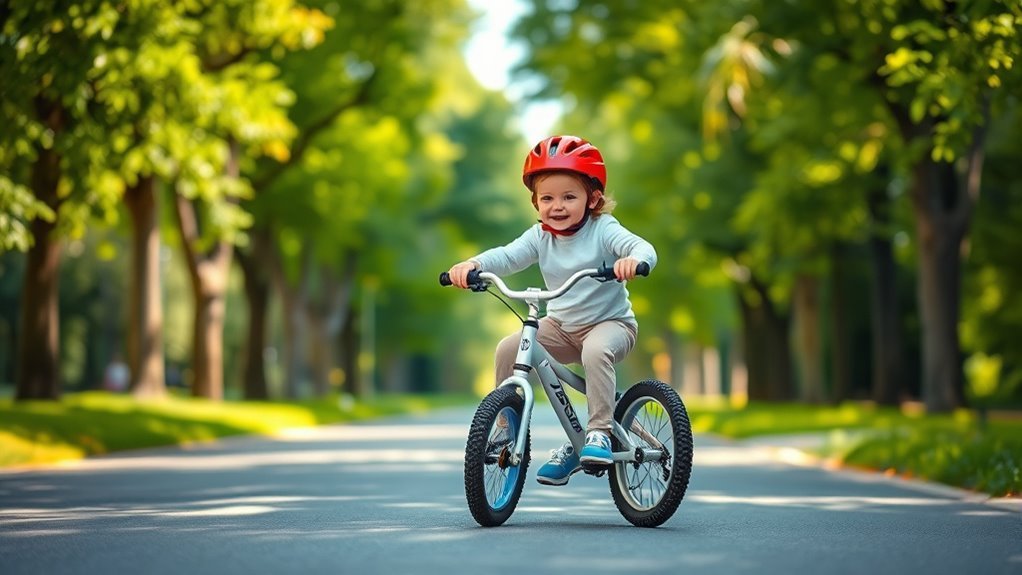
Before you hit the road, make sure you gear up for safety by wearing a properly fitted helmet that sits level with your eyebrows and fastens snugly under your chin. Your helmet is your first line of defense, so never skip it.
Along with your helmet, put on additional protective gear like knee and elbow pads to guard against scrapes and bruises if you fall.
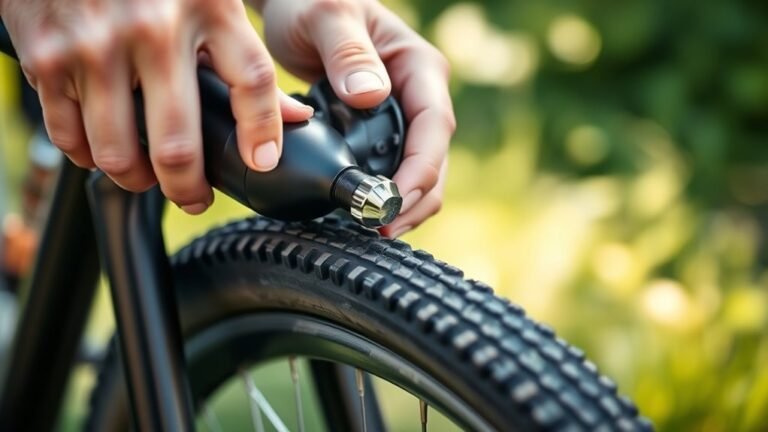
Before every ride, perform a quick safety check using the ABC Quick Check: inspect the Air in your tires, test the Brakes, examine the Chain, and ensure the Quick Release is secure.
This simple safety check helps prevent mechanical issues while riding. Taking these steps seriously keeps you safer and more confident on your bike.
Adjust the Seat Height Properly
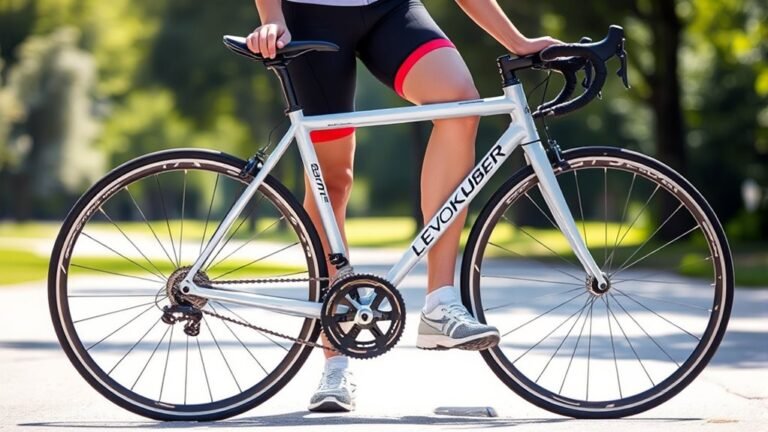
When you adjust your bike’s seat height correctly, you’ll pedal more efficiently and avoid unnecessary knee strain. Start by setting the saddle so your heel comfortably touches the pedal at its lowest point.
Proper seat height helps you pedal efficiently and prevents knee strain by aligning your heel with the lowest pedal point.
This ensures your knee bends slightly—about 15 degrees—when you pedal, which is key for smooth pedaling and maintaining balance. For kids, adjust the seat height so their feet can rest flat on the ground, helping them feel stable and confident.
Keep in mind that as you grow or gain experience, you’ll need to readjust the seat height to match your changing needs. Proper seat height makes your ride more comfortable and helps you stay balanced while pedaling.
This way, you can enjoy every moment on your bike without discomfort or wobbling.
Get Comfortable Getting On and Off
Before you start riding, practice getting on and off your bike slowly to build confidence. Make sure the bike stays upright and stable as you mount and dismount.
Mastering smooth shifts will help you stay balanced and in control. It’s all about feeling comfortable and in charge of your ride.
Practice Mounting Techniques
Although mounting a bike might seem tricky at first, practicing on a stable surface using a wall or support can boost your confidence and control. Start by leaning the bike slightly toward you and use the support to steady it.
This helps you focus on mounting smoothly without worrying about balance. Make deliberate, slow movements to avoid sudden shifts that could throw you off.
Repeat mounting several times, each time checking that the bike is stable and on flat ground. As you practice, your muscles will remember the motions, making mounting feel natural.
Using a support allows you to build balance and confidence gradually, so don’t rush. With consistent practice, getting on your bike will soon become second nature.
Master Smooth Dismounts
Mastering smooth dismounts means getting comfortable with controlled, deliberate movements as you come to a stop.
To build your confidence, start by gently squeezing the brakes while seated to understand how your bike slows down.
When it’s time to dismount, lean the bike toward you to keep it stable and prevent tipping.
Use slow, deliberate motions to place your feet securely on the ground.
Repeating this process regularly helps you feel more natural getting on and off.
- Practice leaning the bike toward you before dismounting to stabilize it.
- Squeeze the brakes gently to get a feel for stopping power.
- Move slowly and deliberately to step off safely and confidently.
With time, your dismounts will become smooth and effortless.
Practice Using the Brakes
Since controlling your speed is vital for safe biking, you should practice squeezing both the front and rear brakes gradually to get a feel for effective stopping power.
Find a flat, open space and practice braking every 15-20 feet, focusing on smooth, controlled stops. Engaging the brakes early prevents sudden halts that could cause you to lose control or fall.
Start at slower speeds and gradually increase your pace to build confidence in your braking ability. Always check your brakes before riding to make sure they’re functioning properly—this is essential for your safety.
Learn to Balance by Coasting
To get comfortable with balance, start by removing the pedals so you can push off and coast using your feet. Focus on gliding smoothly while keeping your body steady and eyes forward.
Practice controlled coasting on a gentle slope until you can maintain balance for several seconds without pedaling. It might feel tricky at first, but keep at it—you’ll get the hang of it in no time!
Practicing Balance Without Pedals
When you start practicing balance without pedals, push off with your feet and coast on a flat, smooth surface like a parking lot. This helps you focus on mastering balance and stability without the distraction of pedaling.
Keep your body upright, look straight ahead, and use your arms to steady yourself as you glide. Gradually increase the distance you coast to build confidence.
To improve your coasting balance, remember to maintain a steady speed to avoid sudden wobbles. Steer gently with the handlebars to stay on course.
Also, keep your eyes forward, not down, to enhance stability. It might feel a bit tricky at first, but with practice, you’ll get the hang of it!
Controlled Coasting Techniques
Although coasting without pedaling might feel challenging at first, you can develop strong balance and control by practicing on a flat, open surface.
Start by lifting your feet off the pedals and focus on maintaining a steady, straight line. Use gentle steering to navigate small turns and keep your body upright and relaxed for better stability.
| Practice Step | Key Focus |
|---|---|
| Glide with feet up | Develop balance |
| Increase distance | Maintain straight line |
| Gentle turns | Improve steering |
Remember to apply brakes gently to control your speed and build confidence. Controlled coasting hones your balance and steering, making riding smoother and safer.
Reinstall Pedals and Start Pedaling
After securely tightening the pedals onto the crank arms with a wrench, you’ll want to position one pedal at about the 2 o’clock or 10 o’clock angle to give yourself a strong push-off. Place your foot firmly on this raised pedal and push down to start pedaling.
Keep your eyes looking ahead, not down at the pedals, to maintain your balance. Once you begin moving, sit upright and ride tall to stabilize the bike and stay in control.
Remember to make sure the pedals are tightly secured to avoid slipping. Also, focus on smooth, steady pushes to build momentum.
And don’t forget to maintain your balance by keeping your posture straight and eyes forward. This approach helps you confidently start pedaling and enjoy a steady ride.
Master Steering and Turning
Once you’ve got the pedals turning smoothly and feel balanced, it’s time to focus on steering and turning. Start by practicing wide, gentle turns to build control and confidence.
Use smooth handlebar movements to steer, steering more gently as your speed increases to maintain stability. Gradually lean the bike into each turn while keeping your balance steady.
Always look where you want to go—your head and eyes guide your bike’s direction, making turning more precise. To sharpen your skills, try obstacle courses or figure-eight exercises; these help improve your steering accuracy and handling.
Mastering steering and turning with balance ensures you’ll navigate corners safely and confidently. This sets a solid foundation for more challenging rides ahead.
Build Confidence With Repetition
Because riding a bike involves coordinating balance, pedaling, and steering, practicing these skills repeatedly helps your body remember how to perform them smoothly.
Repetition builds muscle memory, making your movements automatic and fluid. As you practice regularly, you’ll notice your confidence growing, and your fear of falling will lessen.
Keep repeating essential exercises to gain control and feel comfortable on the bike. Focus on:
- Braking and turning consistently to ensure smooth, controlled rides
- Recognizing your progress to motivate continued practice
- Reinforcing balance and pedaling so they become second nature
With steady repetition, you’ll evolve from a hesitant beginner to a confident rider who handles the bike independently and with ease.
Keep practicing to build lasting confidence.
Navigate Small Hills and Turns
When you approach small hills and turns, maintaining a steady, moderate pace helps you keep control and momentum. Shift to a lower gear if you have one to make pedaling easier on gentle inclines.
Keep your weight centered over the bike, leaning slightly forward as you climb and shifting back on descents to maintain bike control. Before entering turns on hills, slow down and steer with smooth, controlled handlebar movements to stay balanced.
Center your weight, lean forward on climbs, shift back on descents, and steer smoothly for balanced turns.
Practice adjusting your body position and bike handling on various small hills and turns until you feel confident. Gradually increase the difficulty to build skill and maintain control in different situations.
These techniques ensure you navigate small hills and turns safely and smoothly every ride. Give them a try, and you’ll see how much easier it gets!
Understand and Follow Road Rules
You need to follow the same traffic laws as cars, including obeying signals and signs. Always ride with traffic, use bike lanes, and signal your turns clearly to stay safe.
Wearing visible clothing and checking local rules will help keep you protected on the road. It’s all about being seen and staying aware, so you can enjoy your ride without any trouble.
Bicycle Traffic Laws
How should you navigate the road safely while riding your bike? It starts with following bicycle traffic laws just like any other vehicle on the road. You must obey all traffic signals and signs to stay safe and legal.
Remember, in Pennsylvania, the helmet law requires children under 12 to wear helmets, so protect your head accordingly. To communicate with drivers and other cyclists, use clear hand signals for turns and stops.
Keep these key rules in mind:
- Follow traffic signals precisely to avoid accidents.
- Wear a helmet if you’re under 12, as required by the helmet law.
- Use hand signals to show your intentions while riding.
Safe Riding Practices
Following bicycle traffic laws lays the foundation for safe riding, but understanding and practicing specific road rules will keep you secure every time you hit the road. Always wear a helmet to protect yourself and make sure your clothing is visible.
Use hand signals to clearly communicate your intentions, like turning or stopping, so drivers and other cyclists know what to expect. Ride in the same direction as traffic, stay in bike lanes, and keep a safe distance from vehicles.
Pay special attention at intersections and driveways where accidents happen most. Practice smooth braking to slow down safely without sudden stops.
In low-light conditions, use front and rear lights to increase your visibility. These safe riding practices make every ride safer and more enjoyable.
Conclusion
Learning to ride a bike is like planting a seed—you start with safety and balance as your roots. Each pedal stroke is nurturing growth, building confidence until you’re ready to face hills and turns, like branches reaching out boldly.
Just as a tree stands firm through storms by following nature’s rules, you’ll find freedom and strength by practicing and respecting the road. Keep riding, and watch yourself grow into something unstoppable.
Remember, riding a bike isn’t just about movement; it’s about gaining balance, control, and confidence step by step. With patience and practice, you’ll master each skill and enjoy every ride. So grab your helmet, trust the process, and get ready to explore the joy of cycling. Keep these tips in mind, and soon riding a bike will feel as natural as breathing.