What Is a Fixie Bike?
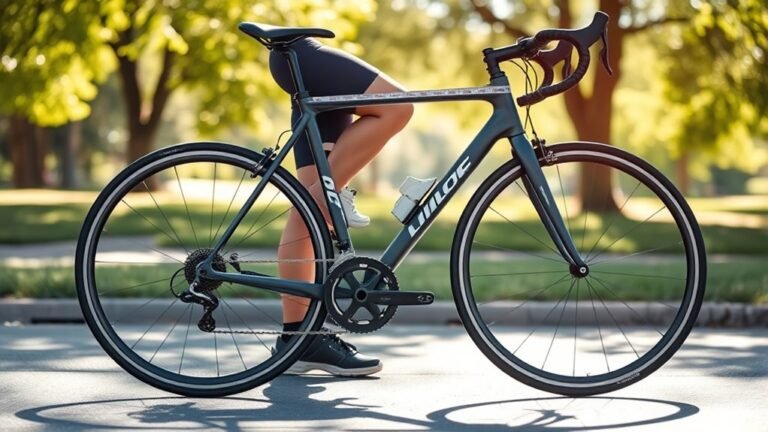
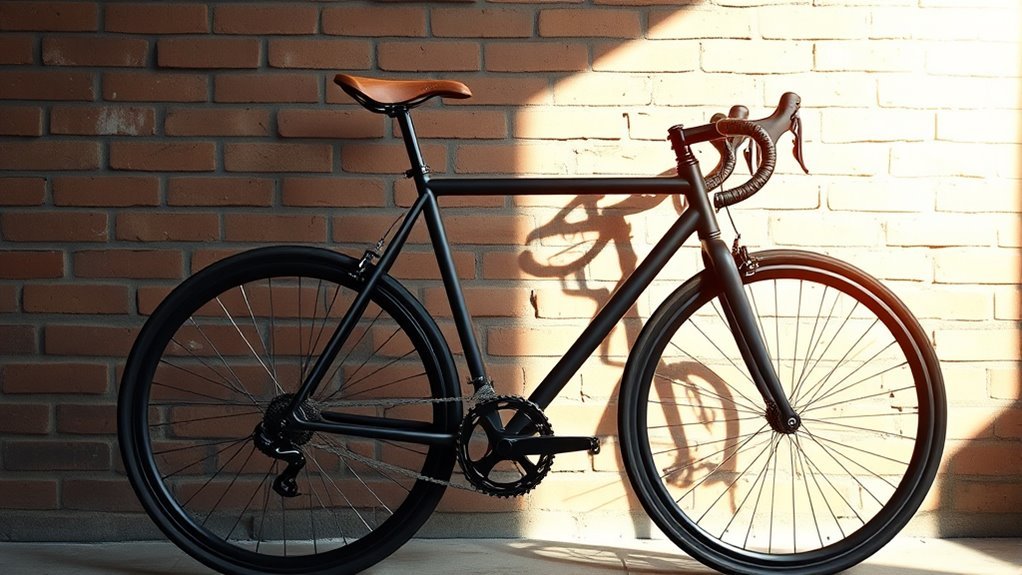
A fixie bike directly connects your pedals to the rear wheel, so every pedal stroke moves the bike—there’s no coasting. This means the chain stays tight, and the drivetrain is simple with just one sprocket and no gears or shifters.
Because of this direct connection, you have full control of your speed just by pedaling or resisting pedal motion. Riding a fixie feels smooth, responsive, and super engaging. It’s a unique setup that changes how you ride and maintain your bike.
Curious how it all works? Keep exploring to discover how this simple yet efficient design affects your riding style and maintenance routine.
Key Takeaways
– A fixie bike has pedals directly connected to the rear wheel without a freewheel mechanism. It uses a single, permanently attached rear sprocket with no gears or shifters.
That means you can’t coast; you have to keep pedaling whenever the bike is moving. It’s a continuous pedal motion.
The drivetrain is simple and lightweight, so it requires less maintenance than bikes with multiple gears. Plus, fixies give you better control and direct feedback through pedal resistance.
Riding one offers a unique experience that many cyclists really enjoy. It feels different from riding a regular geared bike.
Key Mechanical Differences of Fixed-Gear Bikes
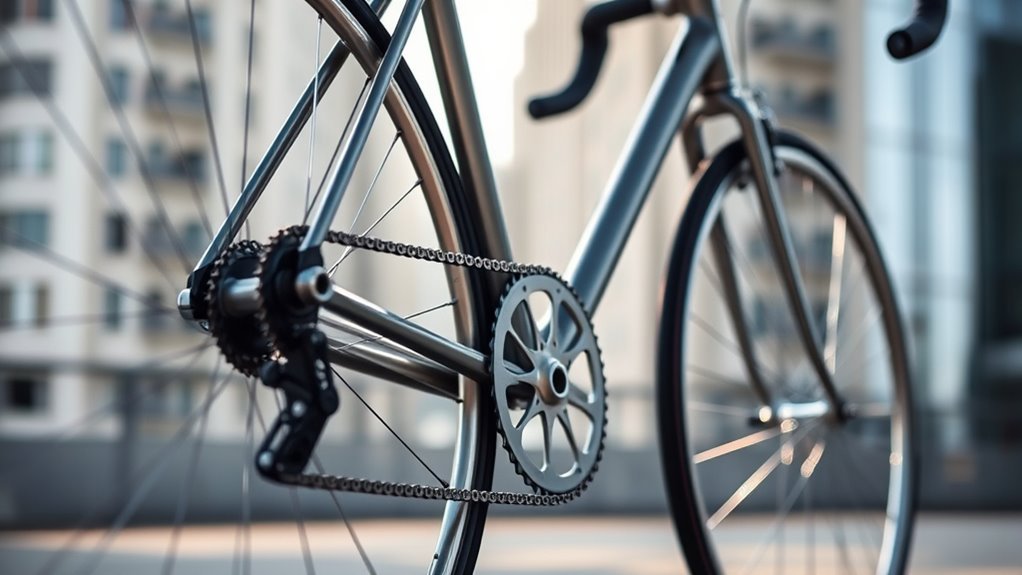
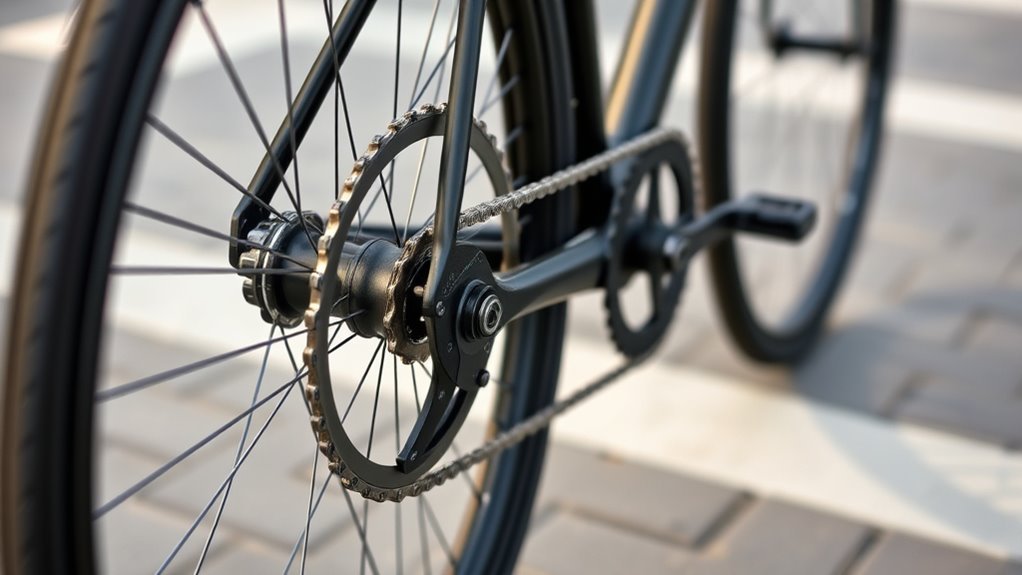
While single-speed bikes let you coast freely, fixed-gear bikes connect the pedals directly to the rear wheel, so you have to keep pedaling whenever the bike is moving. This connection happens because the fixed gear uses a single sprocket that’s permanently attached to the rear hub, eliminating the freewheel mechanism found on most single-speed bikes.
Fixed-gear bikes require constant pedaling, directly linking the pedals to the rear wheel without a freewheel mechanism.
As a result, your pedal motion directly controls the rear cog’s rotation, creating a true direct drive system. Since the sprocket screws securely onto the rear hub, chain tension stays consistent, preventing slippage and ensuring smooth power transfer.
Without a freewheel, you can’t coast or stop pedaling, even when going downhill. The fixed-gear drivetrain is simpler, lacking derailleurs and shifters, which makes maintenance easier and reduces weight.
Your gear ratio depends on the size of the front chainring and rear cog, influencing how hard or easy pedaling feels. Understanding these mechanical differences helps you appreciate what makes a fixie bike unique.
How Fixed-Gear Mechanics Shape Riding Experience
The fixed-gear drivetrain’s direct connection between pedals and rear wheel fundamentally changes how you ride. Since the pedals rotate whenever the wheel does, you can’t coast like on bikes with a freewheel. This constant pedal motion means you’re always engaged, giving you unparalleled control over speed and braking.
Without multiple gears, the single gear ratio simplifies the drivetrain, boosting responsiveness and ensuring every pedal stroke translates directly into movement. You’ll feel the chain tension constantly, which lets you modulate power precisely. This direct connection enhances your sense of connection to the bike, making riding more intuitive.
You can slow down or stop by resisting pedal motion, and skilled riders use skidding or backpedaling as unique braking techniques. Overall, the fixed gear system offers a raw, engaging experience where control, simplicity, and immediate feedback define your ride.
Frequently Asked Questions
What’s the Point of a Fixie Bike?
The point of a fixie bike is to give you direct control, simplicity, and efficiency. You’ll enjoy a lightweight ride with less maintenance, better energy transfer, and a unique connection that sharpens your riding skills.
It’s all about feeling every pedal stroke and being in tune with your bike. Plus, the minimal design means fewer parts to worry about, making your ride smoother and more enjoyable.
Why Do Fixies Have No Brakes?
Fixies often have no brakes because you control speed by resisting the pedals, keeping the bike lightweight and minimalist. It’s about skillful riding and style.
But be careful—brakeless fixies need advanced control, especially in traffic. It’s not for beginners, so make sure you know what you’re doing before you ditch the brakes.
What Are the Disadvantages of a Fixie Bike?
You’ll face challenges like constant pedaling, difficulty on hills, limited braking options, and increased fatigue.
Fixies aren’t great for varied terrains or long rides, and relying on pedal resistance for stopping can be risky.
Is It Difficult to Ride a Fixie?
Riding a fixie is like dancing on a tightrope—you’ll need balance and focus. You’ll find it tricky at first, especially managing speed and braking.
But with practice, you’ll get smooth and confident quickly. It just takes a bit of time to get the hang of it!
Conclusion
So, riding a fixie might feel like embracing a simpler dance with your bike—no fancy gears, just you and the road in sync. It’s not about having every option at your fingertips but enjoying a more straightforward, honest connection with your ride.
If you’re up for a bit of a challenge wrapped in charm, a fixed-gear bike might just become your favorite way to roll. It turns every pedal stroke into a subtle celebration of control, making each ride feel uniquely engaging.
In the world of cycling, a fixie bike offers a blend of simplicity and style. It’s perfect for those who appreciate the pure mechanics of riding without distractions. So, if you want a bike that’s low-maintenance, responsive, and a joy to ride, a fixed-gear bike could be exactly what you need.